Our Debt Free Family

Commit. Plan. Take action.

  • BUDGETING
  • DEBT REDUCTION
  • INVESTING
  • LIFESTYLE
  • TOOLS
  • ABOUT
  • Privacy Policy
  • CONTACT

10 Nostalgic Signs You Were Definitely Born in the 1950s

December 23, 2025 | Leave a Comment

10 Nostalgic Signs You Were Definitely Born in the 1950s

<p> If you were born in the 1950s, you’ve witnessed incredible changes that shaped the modern world. From the rise of rock and roll to the introduction of television, your formative years were filled with cultural moments that left a lasting impact. Let’s take a stroll down memory lane and explore 10 unmistakable signs that show you were definitely born in the 1950s. </p> :: Pexels

If you were born in the 1950s, you’ve witnessed incredible changes that shaped the modern world. From the rise of rock and roll to the introduction of television, your formative years were filled with cultural moments that left a lasting impact. Let’s take a stroll down memory lane and explore 10 unmistakable signs that show you were definitely born in the 1950s.

1. You Remember When Television Was a New Luxury

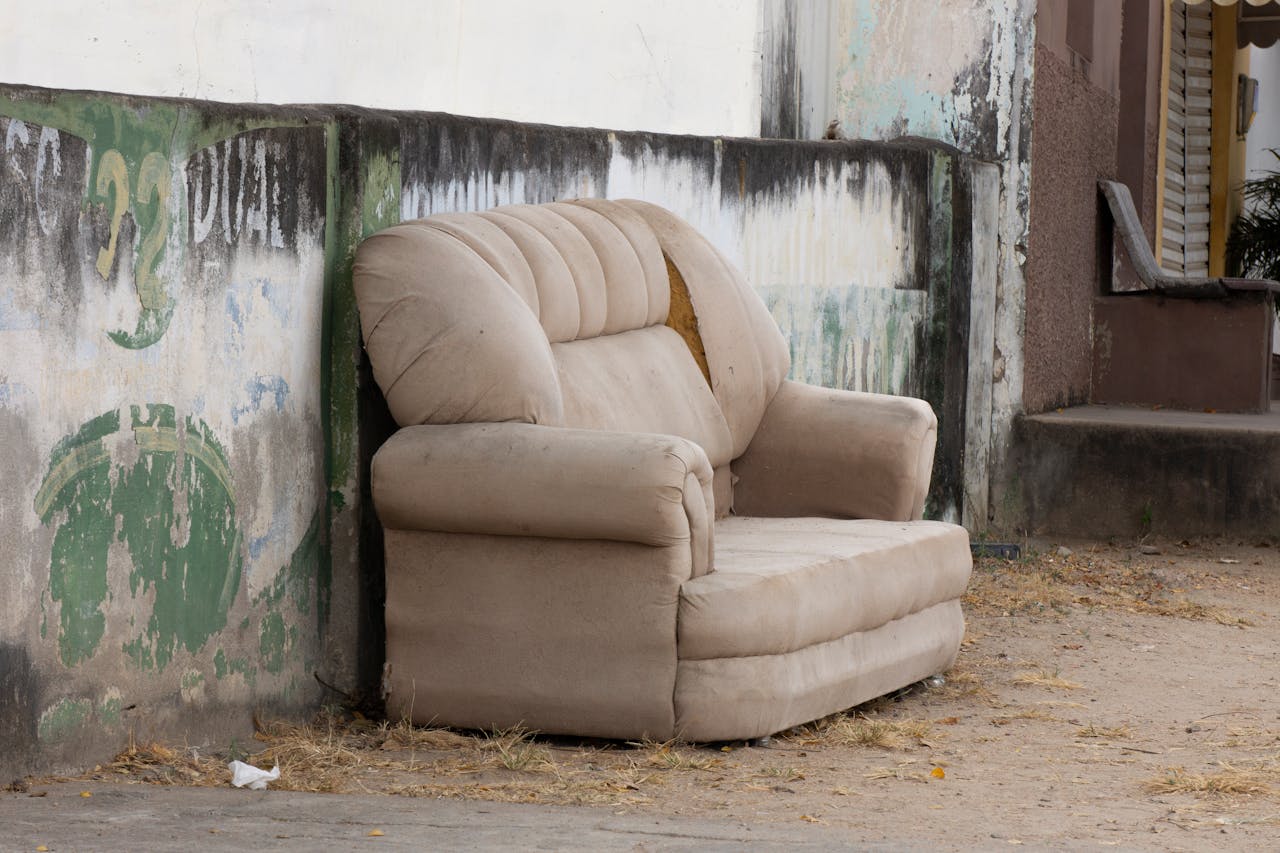
<p> Growing up in the 1950s, having a television in your home was a big deal. You probably remember gathering around the TV with your family or neighbors, eager to catch the latest episodes of I Love Lucy, The Ed Sullivan Show, or The Lone Ranger. With just a handful of channels available, you likely had to fiddle with the antenna to get a clear picture. The idea of being able to watch live entertainment from the comfort of your living room was revolutionary. If these moments still bring a smile to your face, there’s no doubt you were born in the 50s. </p> :: Pexels

Growing up in the 1950s, having a television in your home was a big deal. You probably remember gathering around the TV with your family or neighbors, eager to catch the latest episodes of I Love Lucy, The Ed Sullivan Show, or The Lone Ranger. With just a handful of channels available, you likely had to fiddle with the antenna to get a clear picture. The idea of being able to watch live entertainment from the comfort of your living room was revolutionary. If these moments still bring a smile to your face, there’s no doubt you were born in the 50s.

2. You Grew Up on the Sounds of Rock and Roll

<p> The 1950s were the birth years of rock and roll, and if you were born during this time, your teenage years were filled with the sounds of Elvis Presley, Buddy Holly, and Chuck Berry. You might remember dancing to these fresh new beats at school sock hops or blasting tunes on your home record player. Rock and roll was more than just music; it was a cultural movement that represented a youthful rebellion. If the memory of these early rock and roll hits still gets you tapping your feet, it’s a clear sign that you were born in this era. </p> :: Pexels

The 1950s were the birth years of rock and roll, and if you were born during this time, your teenage years were filled with the sounds of Elvis Presley, Buddy Holly, and Chuck Berry. You might remember dancing to these fresh new beats at school sock hops or blasting tunes on your home record player. Rock and roll was more than just music; it was a cultural movement that represented a youthful rebellion. If the memory of these early rock and roll hits still gets you tapping your feet, it’s a clear sign that you were born in this era.

3. You Have Fond Memories of Drive-In Theaters

<p> Drive-in theaters were a hallmark of the 1950s, offering a unique movie-going experience. There was nothing quite like pulling up in your car, rolling down the windows, and watching a film under the stars. Whether it was a date night or a family outing, drive-ins were the place to be. Classic films like Rebel Without a Cause and The Ten Commandments were enjoyed from the comfort of your own vehicle. The excitement of tuning your car radio to catch the movie’s audio is a nostalgic memory that can only belong to those who grew up in the 50s. </p> :: Pexels

Drive-in theaters were a hallmark of the 1950s, offering a unique movie-going experience. There was nothing quite like pulling up in your car, rolling down the windows, and watching a film under the stars. Whether it was a date night or a family outing, drive-ins were the place to be. Classic films like Rebel Without a Cause and The Ten Commandments were enjoyed from the comfort of your own vehicle. The excitement of tuning your car radio to catch the movie’s audio is a nostalgic memory that can only belong to those who grew up in the 50s.

4. You Wore Iconic Fashion of the 1950s

<p> Fashion in the 1950s was unforgettable and remains a cherished memory for many. If you were a girl, you might have worn poodle skirts, saddle shoes, and tied your hair in a ponytail. If you were a boy, you probably sported leather jackets, cuffed jeans, and styled your hair with pomade. The influence of movie stars like James Dean and Marilyn Monroe was evident in everyone’s style choices. The distinctive fashion of the era, from greased-back hair to bold red lips, made a statement and defined a generation. When you see these styles today, they likely transport you back to your younger days. </p> :: Pexels

Fashion in the 1950s was unforgettable and remains a cherished memory for many. If you were a girl, you might have worn poodle skirts, saddle shoes, and tied your hair in a ponytail. If you were a boy, you probably sported leather jackets, cuffed jeans, and styled your hair with pomade. The influence of movie stars like James Dean and Marilyn Monroe was evident in everyone’s style choices. The distinctive fashion of the era, from greased-back hair to bold red lips, made a statement and defined a generation. When you see these styles today, they likely transport you back to your younger days.

5. You Drank Soda from Glass Bottles

<p> Sipping a cold soda from a glass bottle was a simple pleasure that defined the 1950s. Back then, soda fountains were popular gathering spots, and drinks like Coca-Cola were served in thick glass bottles that made them feel special. You might remember sitting at the counter of a local diner, enjoying a root beer float or a cherry cola with friends. The experience of hearing the fizzy pop of the bottle opening and the taste of an ice-cold soda is something that today’s generation may never fully appreciate. If you recall collecting bottle caps and using openers, you were definitely part of this nostalgic era. </p> :: Pexels

Sipping a cold soda from a glass bottle was a simple pleasure that defined the 1950s. Back then, soda fountains were popular gathering spots, and drinks like Coca-Cola were served in thick glass bottles that made them feel special. You might remember sitting at the counter of a local diner, enjoying a root beer float or a cherry cola with friends. The experience of hearing the fizzy pop of the bottle opening and the taste of an ice-cold soda is something that today’s generation may never fully appreciate. If you recall collecting bottle caps and using openers, you were definitely part of this nostalgic era.

6. You Dialed Numbers on a Rotary Phone

<p> Long before smartphones became an extension of our hands, there were rotary phones. These heavy, reliable devices were a fixture in every household during the 1950s. If you remember the distinct click of the rotary dial as you carefully turned each number, you were definitely a part of this era. Back then, making a call required patience, and there was no caller ID to screen who was calling. Waiting your turn to use the family phone and memorizing phone numbers were everyday experiences. It’s a far cry from today’s instant messaging, but those who remember rotary phones often look back on them fondly. </p> :: Pexels

Long before smartphones became an extension of our hands, there were rotary phones. These heavy, reliable devices were a fixture in every household during the 1950s. If you remember the distinct click of the rotary dial as you carefully turned each number, you were definitely a part of this era. Back then, making a call required patience, and there was no caller ID to screen who was calling. Waiting your turn to use the family phone and memorizing phone numbers were everyday experiences. It’s a far cry from today’s instant messaging, but those who remember rotary phones often look back on them fondly.

7. You Grew Up Before Fast Food Chains Took Over

<p> The 1950s were the early days of fast food, but it wasn’t as widespread as it is today. The first McDonald's opened in 1955, but for many, family meals were home-cooked and eaten together at the dinner table. If you remember when grabbing a burger was a special treat rather than an everyday convenience, you were part of an era before the fast food explosion. Diners and soda shops were the social hubs where people gathered, enjoyed milkshakes, and shared stories. The simplicity of these moments is something that stands out when thinking about life before fast food chains dominated the landscape. </p> :: Pexels

The 1950s were the early days of fast food, but it wasn’t as widespread as it is today. The first McDonald’s opened in 1955, but for many, family meals were home-cooked and eaten together at the dinner table. If you remember when grabbing a burger was a special treat rather than an everyday convenience, you were part of an era before the fast food explosion. Diners and soda shops were the social hubs where people gathered, enjoyed milkshakes, and shared stories. The simplicity of these moments is something that stands out when thinking about life before fast food chains dominated the landscape.

8. You Played Outside Until the Streetlights Came On
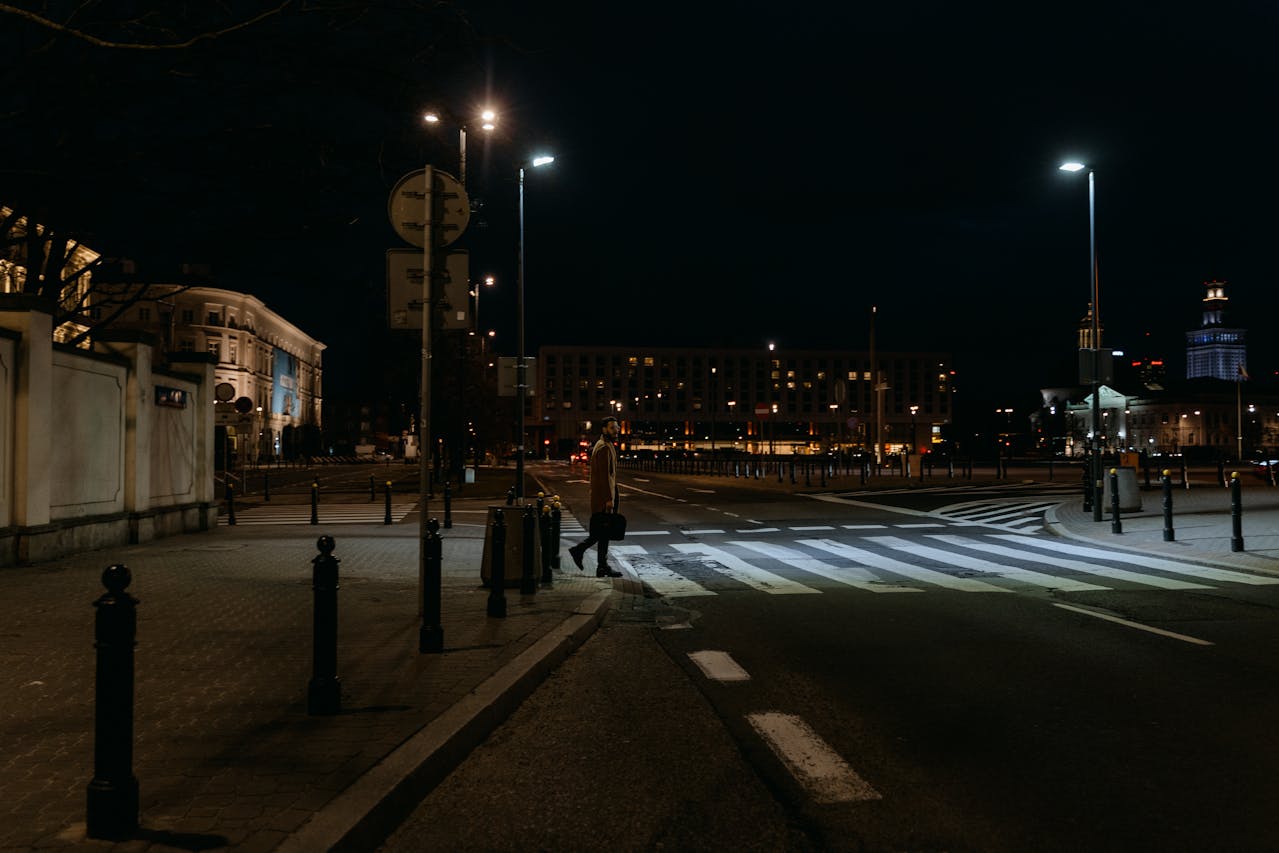
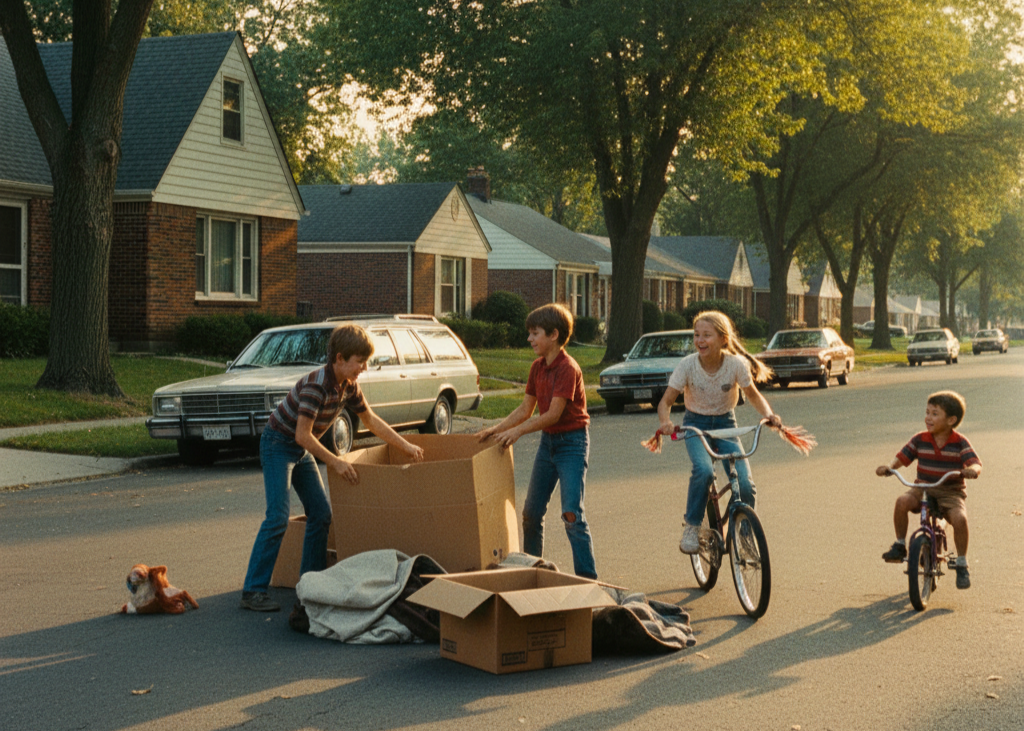
<p> Childhood in the 1950s was marked by outdoor play. If you were born in this era, you likely spent your days riding bikes, playing hopscotch, or joining neighborhood games of tag. There were no video games or smartphones to distract you, so being outside was the best form of entertainment. You probably remember your parents telling you to come home when the streetlights came on—a rule that every kid seemed to understand. This kind of freedom and sense of community is something that’s rare today. For you, it was a defining part of growing up in the 50s. </p> :: Pexels

Childhood in the 1950s was marked by outdoor play. If you were born in this era, you likely spent your days riding bikes, playing hopscotch, or joining neighborhood games of tag. There were no video games or smartphones to distract you, so being outside was the best form of entertainment. You probably remember your parents telling you to come home when the streetlights came on—a rule that every kid seemed to understand. This kind of freedom and sense of community is something that’s rare today. For you, it was a defining part of growing up in the 50s.

9. You Lived Through the Cuban Missile Crisis and the Space Race

<p> The 1950s and early 60s were a time of intense historical events, including the Cuban Missile Crisis and the start of the Space Race. You likely remember the fear and uncertainty during the Cold War, with news of potential nuclear conflict spreading across radios and televisions. The launch of Sputnik in 1957 marked the beginning of the Space Race, with the United States quickly following suit with NASA’s creation. Watching these events unfold made history feel very real and immediate. If you have vivid memories of these tense times, it’s a testament to the transformative period you grew up in. </p> :: Pexels

The 1950s and early 60s were a time of intense historical events, including the Cuban Missile Crisis and the start of the Space Race. You likely remember the fear and uncertainty during the Cold War, with news of potential nuclear conflict spreading across radios and televisions. The launch of Sputnik in 1957 marked the beginning of the Space Race, with the United States quickly following suit with NASA’s creation. Watching these events unfold made history feel very real and immediate. If you have vivid memories of these tense times, it’s a testament to the transformative period you grew up in.

10. You Played with Classic Toys and Collected Baseball Cards

<p> Toys in the 1950s were simple yet magical. If you were a child in this era, you probably spent hours playing with hula hoops, Slinkys, and Silly Putty. You might also remember the excitement of collecting baseball cards or the debut of Barbie in 1959, which quickly became a sensation among young girls. Boys often played with toy trains or pretended to be cowboys, inspired by the popular Westerns of the time. These classic toys did not need batteries or screens—they required imagination and creativity, making playtime a cherished memory for anyone who grew up in this era. </p> :: Pexels

Toys in the 1950s were simple yet magical. If you were a child in this era, you probably spent hours playing with hula hoops, Slinkys, and Silly Putty. You might also remember the excitement of collecting baseball cards or the debut of Barbie in 1959, which quickly became a sensation among young girls. Boys often played with toy trains or pretended to be cowboys, inspired by the popular Westerns of the time. These classic toys did not need batteries or screens—they required imagination and creativity, making playtime a cherished memory for anyone who grew up in this era.

Final Thoughts

<p> These signs are just a few of the many reasons why the 1950s were such a memorable time to grow up. It was a decade filled with cultural shifts, historical events, and simpler joys that shaped a generation. If you found yourself reminiscing while reading these signs, then it’s clear you were part of an era that experienced some of the most profound changes in history. Embrace the nostalgia and cherish these memories, as they are a valuable part of who you are and a reminder of the remarkable times you lived through. </p> :: Pexels

These signs are just a few of the many reasons why the 1950s were such a memorable time to grow up. It was a decade filled with cultural shifts, historical events, and simpler joys that shaped a generation. If you found yourself reminiscing while reading these signs, then it’s clear you were part of an era that experienced some of the most profound changes in history. Embrace the nostalgia and cherish these memories, as they are a valuable part of who you are and a reminder of the remarkable times you lived through.


Filed Under: Lifestyle

11 Everyday Things That Used to Be Normal But Are Now Completely Banned

December 23, 2025 | Leave a Comment

11 Everyday Things That Used to Be Normal But Are Now Completely Banned

<p> What was once considered perfectly acceptable—ordinary, even—has now been locked away in the vault of forbidden history. From smoking in the sky to playing with deadly backyard toys, many once-commonplace behaviors and products have been completely outlawed over the years. As health risks, environmental concerns, and public safety became impossible to ignore, lawmakers around the globe took action. The result? A long list of things that were once part of daily life but are now totally banned. Prepare for a trip down memory lane as we uncover 11 everyday things that used to be normal—but are now strictly off-limits. </p> :: Freepik

What was once considered perfectly acceptable—ordinary, even—has now been locked away in the vault of forbidden history. From smoking in the sky to playing with deadly backyard toys, many once-commonplace behaviors and products have been completely outlawed over the years. As health risks, environmental concerns, and public safety became impossible to ignore, lawmakers around the globe took action. The result? A long list of things that were once part of daily life but are now totally banned. Prepare for a trip down memory lane as we uncover 11 everyday things that used to be normal—but are now strictly off-limits.

1. Smoking on Airplanes

<p> Just a few decades ago, it was perfectly normal to light up a cigarette mid-flight. Airplanes even came equipped with ashtrays, and smoking sections were standard, despite the fact that smoke circulated throughout the cabin. It wasn’t until the 1980s and 1990s that mounting evidence of secondhand smoke’s dangers prompted governments to act. The United States banned smoking on most domestic flights by 1990, with international carriers following suit soon after. Today, smoking on an airplane is not only banned but tampering with smoke detectors in restrooms can result in serious legal consequences. </p> :: DALL-E

Just a few decades ago, it was perfectly normal to light up a cigarette mid-flight. Airplanes even came equipped with ashtrays, and smoking sections were standard, despite the fact that smoke circulated throughout the cabin. It wasn’t until the 1980s and 1990s that mounting evidence of secondhand smoke’s dangers prompted governments to act. The United States banned smoking on most domestic flights by 1990, with international carriers following suit soon after. Today, smoking on an airplane is not only banned but tampering with smoke detectors in restrooms can result in serious legal consequences.

2. Lead-Based Paint in Homes

<p> Lead-based paint was the go-to choice for decades due to its durability and vibrant color. It coated the walls of homes, schools, and even children's toys. However, by the late 20th century, researchers discovered the severe health effects of lead exposure, particularly in children. Lead poisoning can cause developmental delays, behavioral issues, and neurological damage. As awareness grew, the United States banned the use of lead-based paint in residential buildings in 1978, and similar regulations took hold globally. Today, selling or renting a home built before 1978 requires lead paint disclosure in many areas. </p> :: Freepik

Lead-based paint was the go-to choice for decades due to its durability and vibrant color. It coated the walls of homes, schools, and even children’s toys. However, by the late 20th century, researchers discovered the severe health effects of lead exposure, particularly in children. Lead poisoning can cause developmental delays, behavioral issues, and neurological damage. As awareness grew, the United States banned the use of lead-based paint in residential buildings in 1978, and similar regulations took hold globally. Today, selling or renting a home built before 1978 requires lead paint disclosure in many areas.

3. Lawn Darts

<p> Lawn darts, known as “Jarts,” were once a hit at family barbecues and weekend gatherings. But the metal-tipped darts turned out to be far more dangerous than fun. Thousands of injuries and several tragic deaths, primarily involving children, led to increasing scrutiny. Despite repeated warnings, it wasn’t until 1988 that the U.S. Consumer Product Safety Commission finally banned them outright. Today, owning or selling the original version is illegal in many places, and safer, plastic alternatives have taken their place on store shelves. </p> :: DALL-E

Lawn darts, known as “Jarts,” were once a hit at family barbecues and weekend gatherings. But the metal-tipped darts turned out to be far more dangerous than fun. Thousands of injuries and several tragic deaths, primarily involving children, led to increasing scrutiny. Despite repeated warnings, it wasn’t until 1988 that the U.S. Consumer Product Safety Commission finally banned them outright. Today, owning or selling the original version is illegal in many places, and safer, plastic alternatives have taken their place on store shelves.

4. Corporal Punishment in Schools

<p>Not too long ago, students could be physically punished in school for even the smallest infractions. Paddle-wielding principals and ruler-happy teachers were a normal part of many students’ lives. Over time, however, public opinion shifted as studies showed the lasting psychological harm caused by corporal punishment. Most developed nations have since outlawed the practice in schools, and in the United States, the majority of states have banned it or left it up to local jurisdictions. What was once seen as discipline is now widely regarded as abuse. </p> :: Pexels

Not too long ago, students could be physically punished in school for even the smallest infractions. Paddle-wielding principals and ruler-happy teachers were a normal part of many students’ lives. Over time, however, public opinion shifted as studies showed the lasting psychological harm caused by corporal punishment. Most developed nations have since outlawed the practice in schools, and in the United States, the majority of states have banned it or left it up to local jurisdictions. What was once seen as discipline is now widely regarded as abuse.

5. DDT Pesticides

<p> Once celebrated as a miracle pesticide, DDT was widely used after World War II to combat insects and protect crops. Entire neighborhoods were sprayed with the substance, often with little concern for its impact. That changed when scientists discovered that DDT was devastating ecosystems, especially bird populations, and possibly causing cancer in humans. Rachel Carson’s 1962 book Silent Spring sparked public outcry and a new environmental movement. By the 1970s, DDT was banned in many countries, including the United States, and remains a powerful symbol of environmental reform. </p> Pexels

Once celebrated as a miracle pesticide, DDT was widely used after World War II to combat insects and protect crops. Entire neighborhoods were sprayed with the substance, often with little concern for its impact. That changed when scientists discovered that DDT was devastating ecosystems, especially bird populations, and possibly causing cancer in humans. Rachel Carson’s 1962 book Silent Spring sparked public outcry and a new environmental movement. By the 1970s, DDT was banned in many countries, including the United States, and remains a powerful symbol of environmental reform.

6. Asbestos in Construction

<p> Asbestos was once found in everything from insulation and tiles to roofing and cement. Its fire-resistant qualities made it a construction industry favorite—until its deadly health risks became undeniable. Inhalation of asbestos fibers was linked to severe diseases like mesothelioma, lung cancer, and asbestosis. Many countries, including the United States, have since banned or heavily restricted its use. Today, buildings constructed before the 1980s are often required to undergo asbestos removal during renovations or demolitions. </p> :: Freepik

Asbestos was once found in everything from insulation and tiles to roofing and cement. Its fire-resistant qualities made it a construction industry favorite—until its deadly health risks became undeniable. Inhalation of asbestos fibers was linked to severe diseases like mesothelioma, lung cancer, and asbestosis. Many countries, including the United States, have since banned or heavily restricted its use. Today, buildings constructed before the 1980s are often required to undergo asbestos removal during renovations or demolitions.

7. Indoor Tanning for Minors

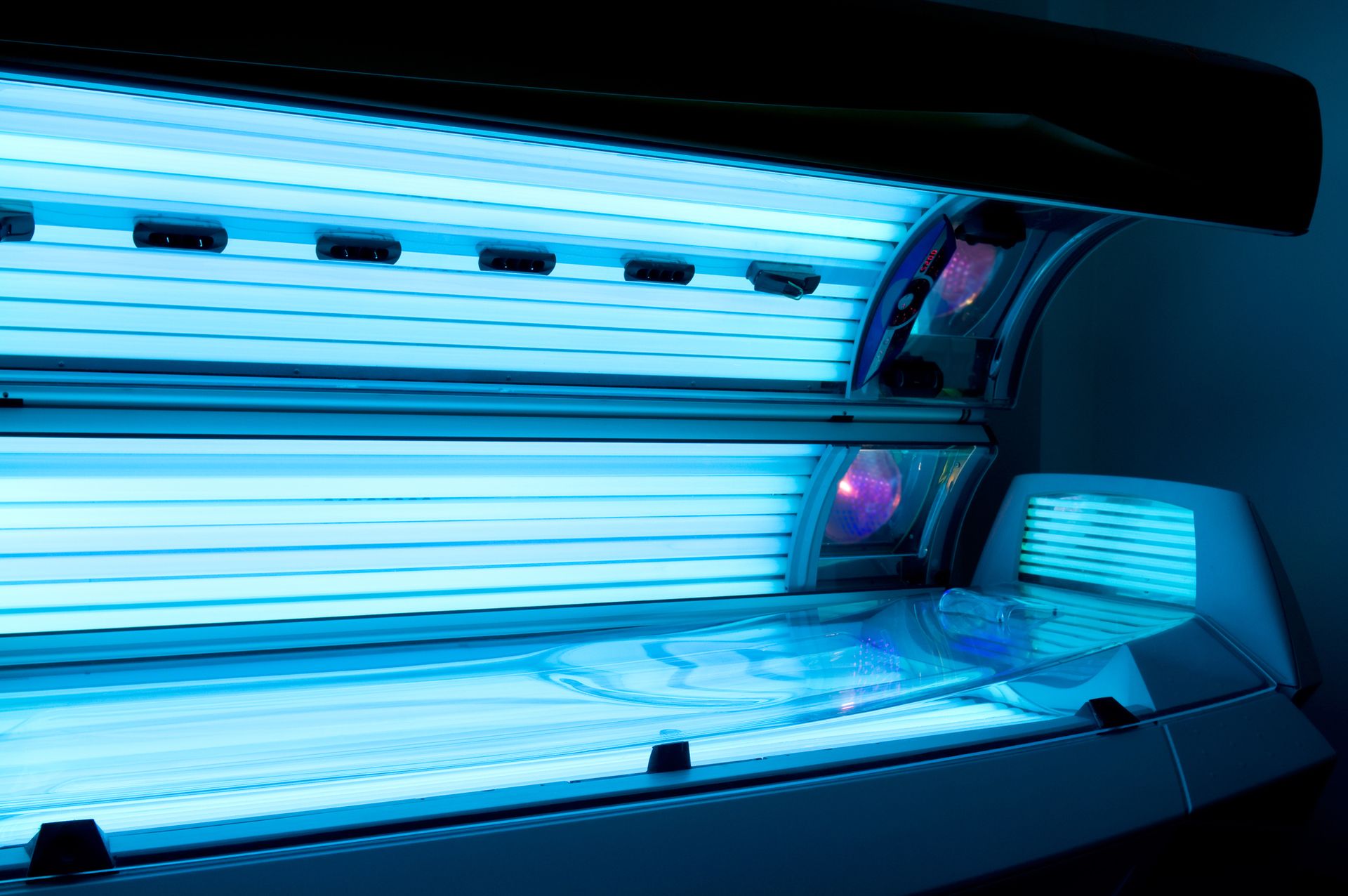
<p> There was a time when teenagers could walk into a tanning salon without a second thought. Indoor tanning was marketed as a safe and easy way to get a sun-kissed glow. But as evidence mounted linking UV tanning beds to skin cancer, especially melanoma, lawmakers took action. Countries like Brazil and Australia banned indoor tanning altogether, while many U.S. states now prohibit anyone under 18 from using tanning beds. The practice is now widely regarded as a dangerous health risk rather than a harmless beauty trend. </p> :: Pexels

There was a time when teenagers could walk into a tanning salon without a second thought. Indoor tanning was marketed as a safe and easy way to get a sun-kissed glow. But as evidence mounted linking UV tanning beds to skin cancer, especially melanoma, lawmakers took action. Countries like Brazil and Australia banned indoor tanning altogether, while many U.S. states now prohibit anyone under 18 from using tanning beds. The practice is now widely regarded as a dangerous health risk rather than a harmless beauty trend.

8. Plastic Bags in Retail Stores

<p> Plastic bags were once the default option at checkout counters, with no regard for their environmental toll. But these single-use bags started clogging oceans, harming wildlife, and littering landscapes. In response, a growing number of cities and countries have banned or heavily taxed them. Places like Kenya, Rwanda, and several U.S. states now prohibit plastic bags entirely. Reusable bags have become the new norm, and what was once seen as convenient is now recognized as a major ecological threat. </p> :: Pexels

Plastic bags were once the default option at checkout counters, with no regard for their environmental toll. But these single-use bags started clogging oceans, harming wildlife, and littering landscapes. In response, a growing number of cities and countries have banned or heavily taxed them. Places like Kenya, Rwanda, and several U.S. states now prohibit plastic bags entirely. Reusable bags have become the new norm, and what was once seen as convenient is now recognized as a major ecological threat.

9. Kinder Surprise Eggs in the United States

<p> While Kinder Surprise eggs are a beloved treat in many countries, the original version is banned in the United States. The reason? U.S. regulations prohibit embedding non-edible objects inside food products due to choking hazards. Kinder Joy, a modified version with the toy packaged separately, is available legally, but the classic Kinder Surprise remains prohibited. U.S. customs agents have even confiscated them at the border. Despite their international popularity, they are one childhood treat American kids will likely never experience in its original form. </p> :: Pexels

While Kinder Surprise eggs are a beloved treat in many countries, the original version is banned in the United States. The reason? U.S. regulations prohibit embedding non-edible objects inside food products due to choking hazards. Kinder Joy, a modified version with the toy packaged separately, is available legally, but the classic Kinder Surprise remains prohibited. U.S. customs agents have even confiscated them at the border. Despite their international popularity, they are one childhood treat American kids will likely never experience in its original form.

10. Baby Bottles Containing BPA

<p> Bisphenol A, or BPA, was once commonly used in plastic baby bottles and sippy cups. It helped harden plastics, making them durable and shatter-resistant. But over time, BPA was found to leach into liquids, disrupting hormones and potentially affecting brain development and behavior in children. In 2012, the United States banned BPA in baby bottles and infant cups, and many other countries have similar restrictions. Parents now actively seek out BPA-free labels, and glass or silicone bottles are often preferred as safer alternatives. </p> :: Pexels

Bisphenol A, or BPA, was once commonly used in plastic baby bottles and sippy cups. It helped harden plastics, making them durable and shatter-resistant. But over time, BPA was found to leach into liquids, disrupting hormones and potentially affecting brain development and behavior in children. In 2012, the United States banned BPA in baby bottles and infant cups, and many other countries have similar restrictions. Parents now actively seek out BPA-free labels, and glass or silicone bottles are often preferred as safer alternatives.

11. Hitchhiking on Highways

<p> Hitchhiking was once seen as a practical and adventurous way to travel. Travelers with thumbs out and signs in hand were a common sight along highways and interstates. But rising concerns about crime and personal safety led many regions to outlaw hitchhiking altogether. Laws now ban pedestrians from standing on highways or soliciting rides in many jurisdictions. Although still legal in certain areas with restrictions, hitchhiking has become rare, replaced by safer and more reliable transportation options like rideshare apps. </p> :: Pexels

Hitchhiking was once seen as a practical and adventurous way to travel. Travelers with thumbs out and signs in hand were a common sight along highways and interstates. But rising concerns about crime and personal safety led many regions to outlaw hitchhiking altogether. Laws now ban pedestrians from standing on highways or soliciting rides in many jurisdictions. Although still legal in certain areas with restrictions, hitchhiking has become rare, replaced by safer and more reliable transportation options like rideshare apps.

Final Thoughts

<p> It’s incredible to think how many things that were once everyday norms are now completely off the table. Some of these changes came from hard lessons, others from advances in science and social awareness. Whether driven by public health, safety, or environmental impact, these bans show just how much our world has evolved—and how quickly the “normal” of yesterday can become the outlawed of today. As we continue to learn more about the world around us, there’s no doubt that future generations will look back on some of our current practices with the same disbelief we now reserve for smoking on planes or playing with lawn darts. Progress may not always be fast, but it’s certainly real—and in many cases, life-saving. </p> :: Pexels

It’s incredible to think how many things that were once everyday norms are now completely off the table. Some of these changes came from hard lessons, others from advances in science and social awareness. Whether driven by public health, safety, or environmental impact, these bans show just how much our world has evolved—and how quickly the “normal” of yesterday can become the outlawed of today. As we continue to learn more about the world around us, there’s no doubt that future generations will look back on some of our current practices with the same disbelief we now reserve for smoking on planes or playing with lawn darts. Progress may not always be fast, but it’s certainly real—and in many cases, life-saving.

Filed Under: Lifestyle

Stop Putting These 15 Items in Your Washing Machine

December 23, 2025 | Leave a Comment

Stop Putting These 15 Items in Your Washing Machine

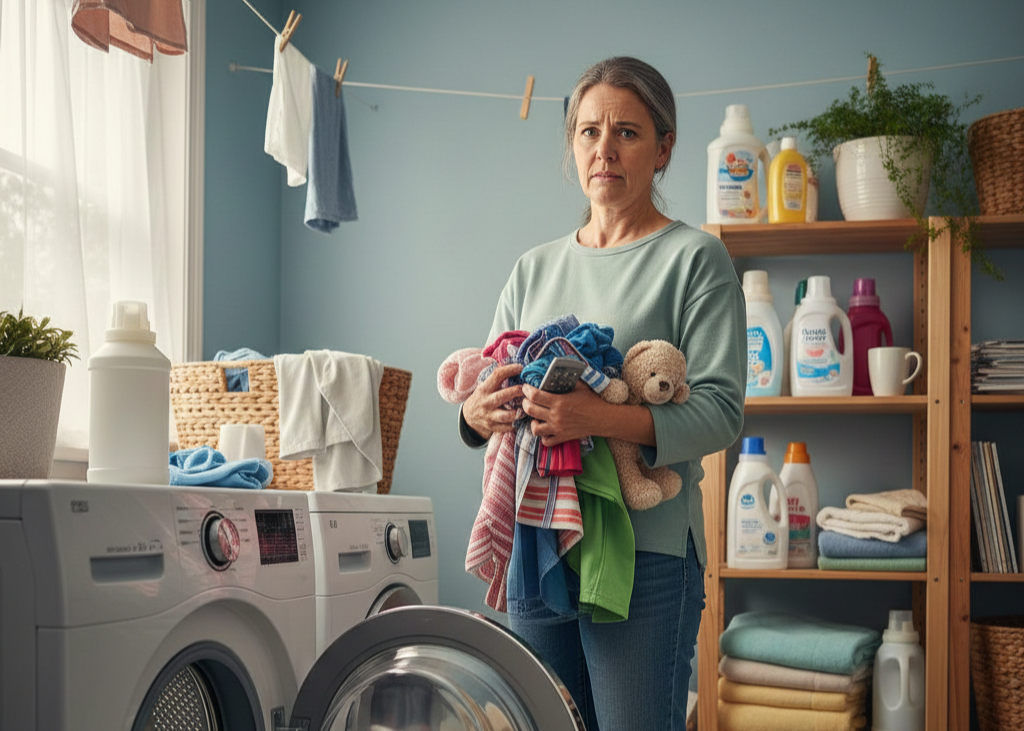
<p> Laundry day seems simple enough. You toss in your clothes, add detergent, press start, and walk away. But what if I told you that some of the items you are tossing in your washing machine could be quietly ruining your clothes, your favorite shoes, or even your washing machine itself? From delicate fabrics to everyday items you might forget to check, putting the wrong things in the washer can lead to tears, shrinkage, clogs, or worse. Think of your washing machine as a partner. Treat it right, and it will keep your clothes fresh for years. Ignore the rules, and you might be calling a repair technician before the weekend. To help you avoid laundry disasters, here are 15 items you should never put in your washing machine, along with tips on how to clean them safely. </p> :: Gemini

Laundry day seems simple enough. You toss in your clothes, add detergent, press start, and walk away. But what if I told you that some of the items you are tossing in your washing machine could be quietly ruining your clothes, your favorite shoes, or even your washing machine itself? From delicate fabrics to everyday items you might forget to check, putting the wrong things in the washer can lead to tears, shrinkage, clogs, or worse.

Think of your washing machine as a partner. Treat it right, and it will keep your clothes fresh for years. Ignore the rules, and you might be calling a repair technician before the weekend. To help you avoid laundry disasters, here are 15 items you should never put in your washing machine, along with tips on how to clean them safely.

1. Leather and Suede

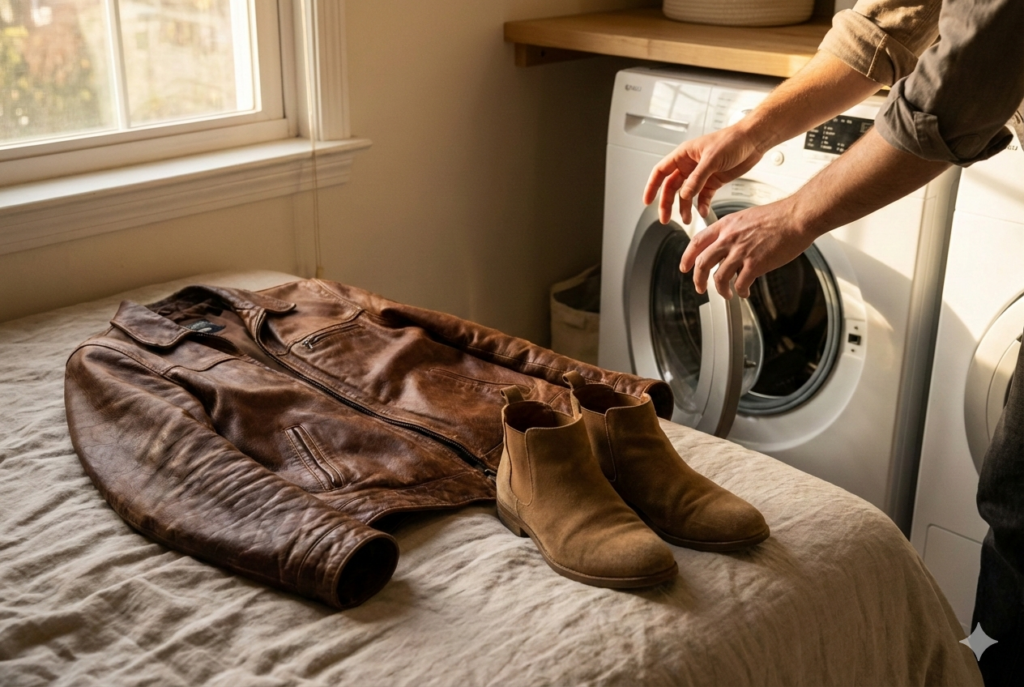
<p> Leather jackets, suede boots, and handbags might be favorites in your closet, but washing them in a machine can be disastrous. Water and agitation can cause leather to shrink, crack, or warp, while suede often stiffens or becomes misshapen. These items require special care such as spot cleaning or professional cleaning to maintain their look and texture. Washing them at home could turn a wardrobe favorite into a lost cause. </p> :: Gemini

Leather jackets, suede boots, and handbags might be favorites in your closet, but washing them in a machine can be disastrous. Water and agitation can cause leather to shrink, crack, or warp, while suede often stiffens or becomes misshapen. These items require special care such as spot cleaning or professional cleaning to maintain their look and texture. Washing them at home could turn a wardrobe favorite into a lost cause.

2. Memory Foam Pillows

<p> Memory foam pillows are perfect for a good night’s sleep, but the last place they want to be is in a washing machine. The foam can tear, lose its shape, or absorb water, leaving you with a heavy, lumpy mess. Instead, vacuum your pillows to remove dust, and spot clean with mild detergent. A clean pillow does not always require a full wash, and your neck will thank you. </p> :: Gemini

Memory foam pillows are perfect for a good night’s sleep, but the last place they want to be is in a washing machine. The foam can tear, lose its shape, or absorb water, leaving you with a heavy, lumpy mess. Instead, vacuum your pillows to remove dust, and spot clean with mild detergent. A clean pillow does not always require a full wash, and your neck will thank you.

3. Delicate Fabrics Like Silk, Wool, and Lace

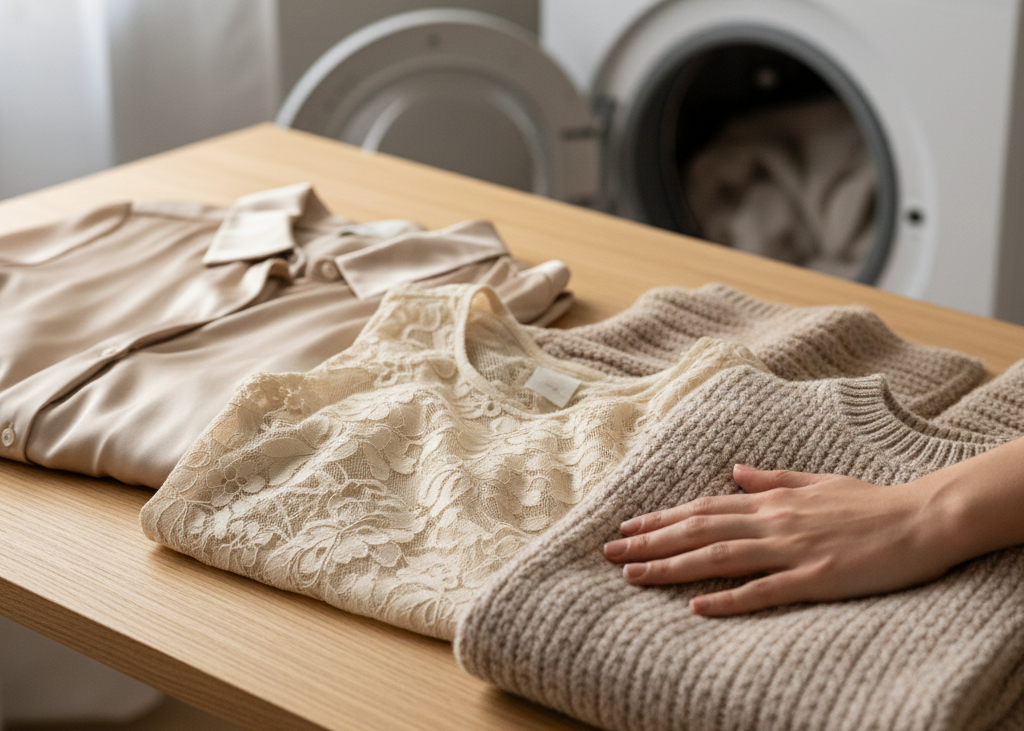
<p> Delicate fabrics are beautiful and soft, but the washing machine is not their best friend. Silk, wool, and lace are prone to shrinking, stretching, or getting damaged in a regular wash. Many delicate items are labeled “hand wash only” for a reason. Use gentle hand washing techniques or take them to a professional cleaner to preserve their quality. </p> :: Gemini


Delicate fabrics are beautiful and soft, but the washing machine is not their best friend. Silk, wool, and lace are prone to shrinking, stretching, or getting damaged in a regular wash. Many delicate items are labeled “hand wash only” for a reason. Use gentle hand washing techniques or take them to a professional cleaner to preserve their quality.


4. Bras and Lingerie Without a Laundry Bag

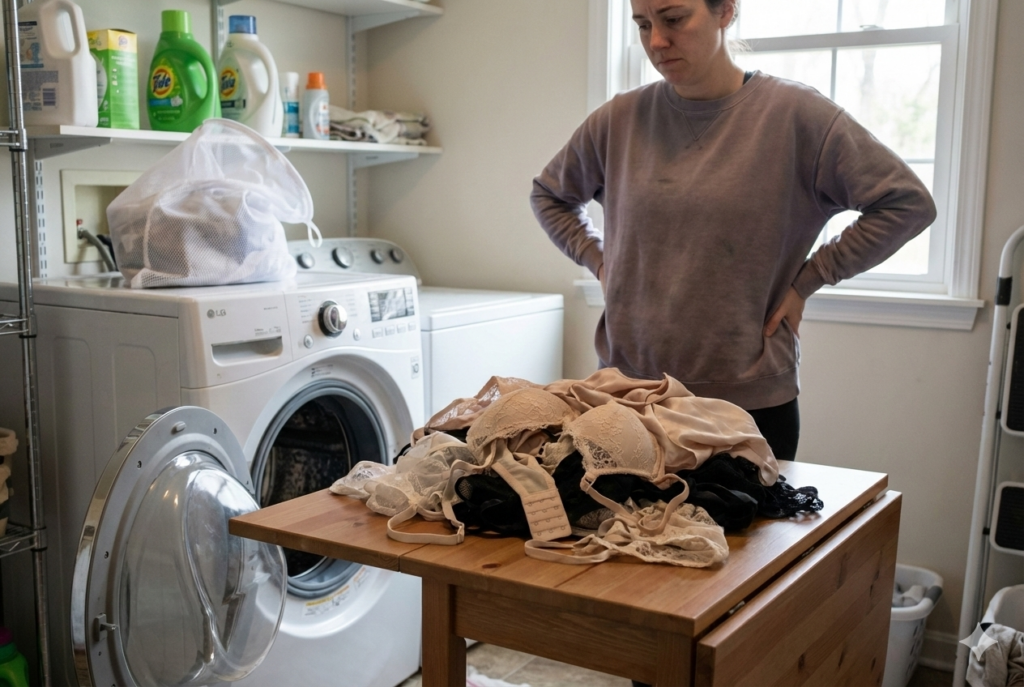
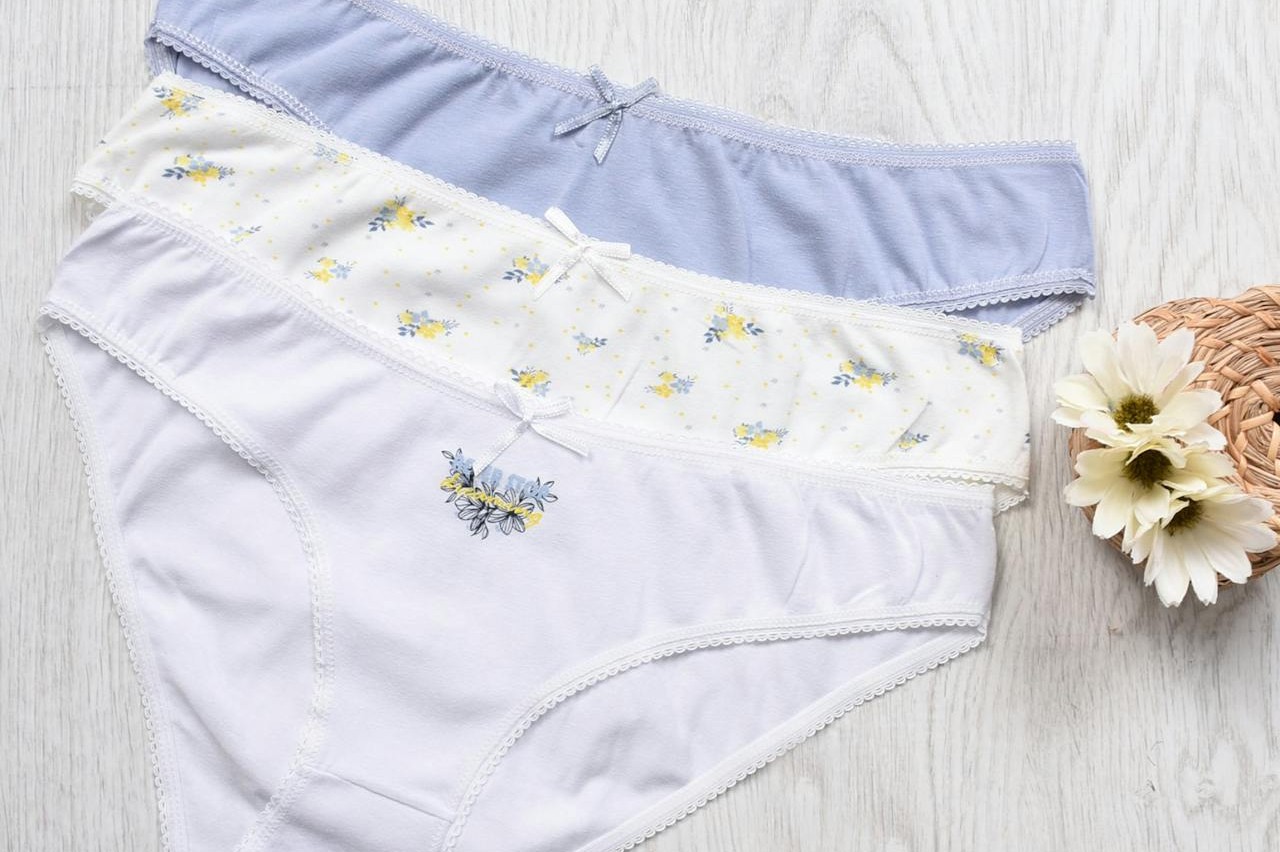
<p> Underwire bras, lace lingerie, and other delicate undergarments need extra protection in the wash. Washing them without a laundry bag can cause clasps to snag other clothing, tear fabrics, or even damage your washer drum. Use a mesh laundry bag and select a gentle cycle to keep these pieces in good shape. </p> :: Gemini

Underwire bras, lace lingerie, and other delicate undergarments need extra protection in the wash. Washing them without a laundry bag can cause clasps to snag other clothing, tear fabrics, or even damage your washer drum. Use a mesh laundry bag and select a gentle cycle to keep these pieces in good shape.

5. Clothes with Heavy Embellishments

<p> Sequins, beads, rhinestones, and other decorative elements make your clothes stand out, but they are not made for machine washing. These embellishments can snag other fabrics, come off completely, or damage the washer. Hand washing or specialized cleaning methods are the safest way to clean these statement pieces without sacrificing style. </p> :: Gemini

Sequins, beads, rhinestones, and other decorative elements make your clothes stand out, but they are not made for machine washing. These embellishments can snag other fabrics, come off completely, or damage the washer. Hand washing or specialized cleaning methods are the safest way to clean these statement pieces without sacrificing style.

6. Rubber or Neoprene Items

<p> Rubber-backed mats, wetsuits, and rain jackets might seem durable, but washing machines are harsh on these materials. Heat and detergent can cause rubber to break down or peel, potentially damaging your washer drum. Clean these items by hand or follow manufacturer instructions for the best results. </p> :: Gemini

Rubber-backed mats, wetsuits, and rain jackets might seem durable, but washing machines are harsh on these materials. Heat and detergent can cause rubber to break down or peel, potentially damaging your washer drum. Clean these items by hand or follow manufacturer instructions for the best results.

7. Oversized or Heavy Blankets

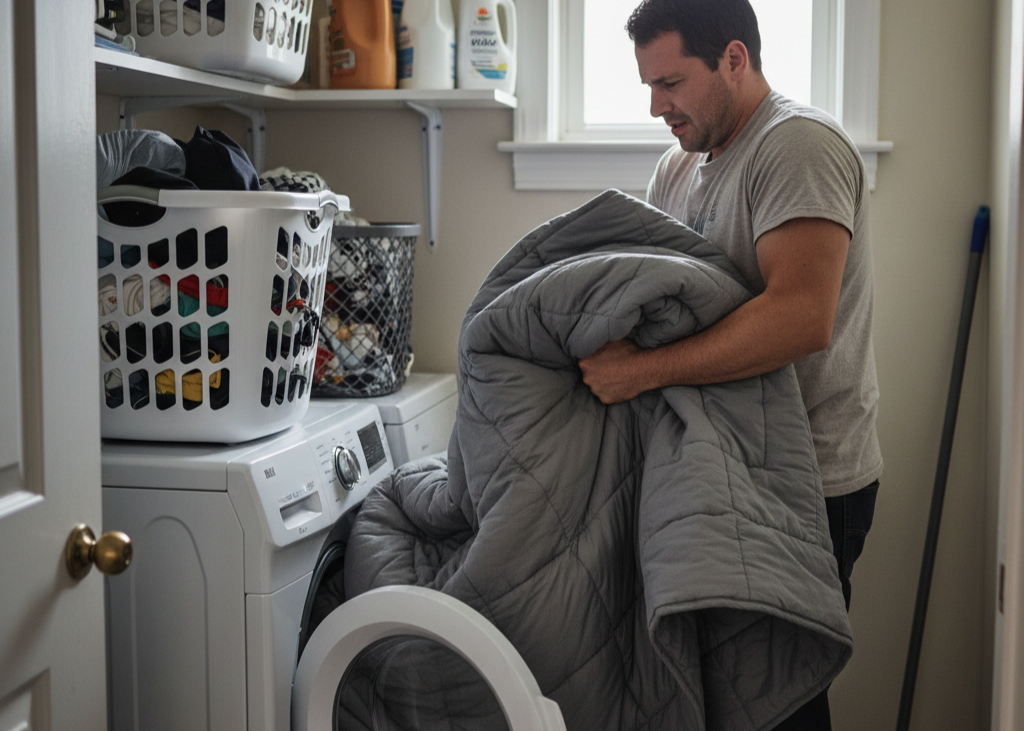
<p> Weighted blankets, comforters, and large throws are cozy, but they can be too heavy for a standard washing machine. When wet, they can throw off balance, strain the motor, and cause excessive noise or even machine damage. If you want to keep your blankets fluffy and safe, consider using a commercial washer or a professional cleaning service. </p> :: Gemini

Weighted blankets, comforters, and large throws are cozy, but they can be too heavy for a standard washing machine. When wet, they can throw off balance, strain the motor, and cause excessive noise or even machine damage. If you want to keep your blankets fluffy and safe, consider using a commercial washer or a professional cleaning service.

8. Shoes with Leather or Foam Insoles

<p> Some sneakers and athletic shoes are washer safe, but leather shoes and those with foam insoles should never go in the machine. Washing can warp the shape, damage the materials, and cause the shoes to fall apart. Hand washing with mild detergent and air drying is the safest way to keep your footwear looking new. </p> :: Gemini

Some sneakers and athletic shoes are washer safe, but leather shoes and those with foam insoles should never go in the machine. Washing can warp the shape, damage the materials, and cause the shoes to fall apart. Hand washing with mild detergent and air drying is the safest way to keep your footwear looking new.

9. Items With Coins, Keys, or Small Objects Left in Pockets

<p> It happens to everyone. You toss your laundry in the washer without checking pockets and suddenly a coin or key has made a trip around the drum. These objects can scratch the machine, damage clothing, or clog filters. Take a moment to check pockets before each load, and you will save yourself from unexpected repairs. </p> :: Gemini

It happens to everyone. You toss your laundry in the washer without checking pockets and suddenly a coin or key has made a trip around the drum. These objects can scratch the machine, damage clothing, or clog filters. Take a moment to check pockets before each load, and you will save yourself from unexpected repairs.

10. Clothes Soaked in Flammable Chemicals

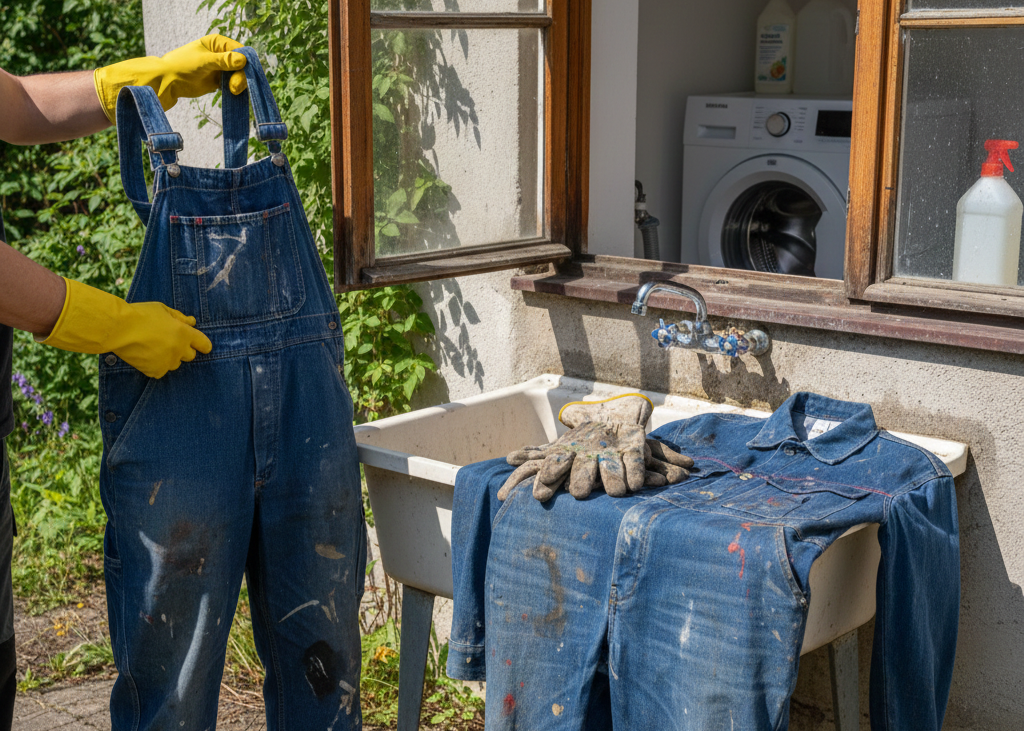
<p> Never wash clothes soaked in gasoline, paint thinner, cooking oil, or other flammable substances. Even a little residue can be extremely dangerous when exposed to heat in the washer or dryer. Pre-treat stains safely outside of the machine, or bring these items to a professional cleaner to avoid any risk. </p> :: Gemini

Never wash clothes soaked in gasoline, paint thinner, cooking oil, or other flammable substances. Even a little residue can be extremely dangerous when exposed to heat in the washer or dryer. Pre-treat stains safely outside of the machine, or bring these items to a professional cleaner to avoid any risk.

11. Heavy Pet Hair-Covered Items

<p> Blankets, pet beds, and clothing covered in pet hair can clog your washing machine and reduce cleaning efficiency. Remove as much hair as possible using a lint roller or brush before washing. You will get cleaner clothes, a healthier machine, and fewer frustrations during laundry day. </p> :: Gemini

Blankets, pet beds, and clothing covered in pet hair can clog your washing machine and reduce cleaning efficiency. Remove as much hair as possible using a lint roller or brush before washing. You will get cleaner clothes, a healthier machine, and fewer frustrations during laundry day.

12. Rubber-Backed Rugs and Mats

<p> Some rugs are lightweight and washable, but rubber-backed mats are not. Machine washing can cause the rubber to crack, peel, or crumble, leaving debris in your washer and on your clothing. Clean these rugs using a hose or hand scrub with mild detergent to maintain both your mat and your machine. </p> :: Gemini

Some rugs are lightweight and washable, but rubber-backed mats are not. Machine washing can cause the rubber to crack, peel, or crumble, leaving debris in your washer and on your clothing. Clean these rugs using a hose or hand scrub with mild detergent to maintain both your mat and your machine.

13. Heavy or Oversized Home Items

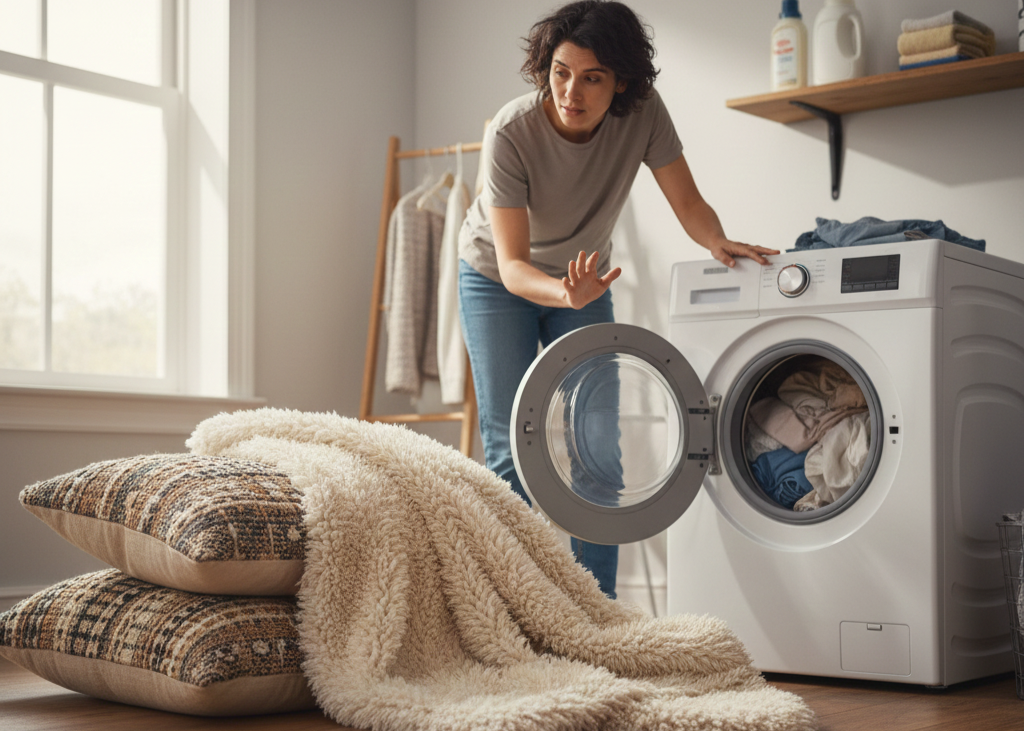
<p> Large cushion covers, shaggy rugs, and throw blankets may be tempting to toss in with your laundry, but they can easily unbalance the washer drum. An off-balance drum can cause excessive noise and even mechanical damage. For bulky items, use a larger laundromat machine or professional service to prevent headaches and costly repairs. </p> :: Gemini

Large cushion covers, shaggy rugs, and throw blankets may be tempting to toss in with your laundry, but they can easily unbalance the washer drum. An off-balance drum can cause excessive noise and even mechanical damage. For bulky items, use a larger laundromat machine or professional service to prevent headaches and costly repairs.

14. Dry Clean Only Clothes

<p> Your favorite suit jacket, silk blouse, or evening dress might have a “Dry Clean Only” label, and ignoring it can be disastrous. Machine washing can cause shrinkage, color fading, and structural damage. Respect the care label and protect your investment by taking these items to a professional cleaner. </p> :: Gemini

Your favorite suit jacket, silk blouse, or evening dress might have a “Dry Clean Only” label, and ignoring it can be disastrous. Machine washing can cause shrinkage, color fading, and structural damage. Respect the care label and protect your investment by taking these items to a professional cleaner.

15. Items with Excessive Elastic

<p> Clothes with elastic, such as fitted sheets, swimwear, and waistbands, can lose their shape in the washing machine. Agitation and heat weaken elastic fibers, reducing their lifespan. To preserve elasticity, hand wash these items or use a gentle cycle and air dry when possible. This will keep your clothes fitting well and feeling comfortable for longer. </p> :: Gemini

Clothes with elastic, such as fitted sheets, swimwear, and waistbands, can lose their shape in the washing machine. Agitation and heat weaken elastic fibers, reducing their lifespan. To preserve elasticity, hand wash these items or use a gentle cycle and air dry when possible. This will keep your clothes fitting well and feeling comfortable for longer.

Final Thoughts

<p> Your washing machine works hard for you, but it is not invincible. Knowing what not to wash is just as important as knowing how to wash. Small actions, like checking pockets, separating delicate fabrics, or using a laundry bag, can save hours of frustration and hundreds of dollars in repairs. Remember these simple guidelines: check care labels before washing, hand wash or spot clean delicate and specialty items, and avoid tossing heavy or risky items in with everyday loads. By being mindful, you will extend the life of your clothing, keep your washer running smoothly, and enjoy a stress-free laundry routine. Laundry does not have to be a dreaded chore. Treat your clothes and your machine with care, and you might even start looking forward to laundry day. Happy washing! </p> :: Gemini

Your washing machine works hard for you, but it is not invincible. Knowing what not to wash is just as important as knowing how to wash. Small actions, like checking pockets, separating delicate fabrics, or using a laundry bag, can save hours of frustration and hundreds of dollars in repairs.

Remember these simple guidelines: check care labels before washing, hand wash or spot clean delicate and specialty items, and avoid tossing heavy or risky items in with everyday loads. By being mindful, you will extend the life of your clothing, keep your washer running smoothly, and enjoy a stress-free laundry routine.

Laundry does not have to be a dreaded chore. Treat your clothes and your machine with care, and you might even start looking forward to laundry day. Happy washing!

Filed Under: Lifestyle

7 Surprising Reasons Why Employers Are Overlooking Gen X Candidates

December 22, 2025 | Leave a Comment

7 Surprising Reasons Why Employers Are Overlooking Gen X Candidates

<p> Gen Xers, the hardworking and experienced generation born between 1965 and 1980, have often been overshadowed by Millennials and Gen Z in today’s job market. With so many younger candidates taking center stage, it may seem like Gen X professionals are being pushed to the sidelines. However, this overlooks a group of workers who possess invaluable experience, adaptability, and leadership skills. In this blog, we’ll explore seven surprising reasons why employers are overlooking Gen X candidates and why it’s time to rethink this trend. </p> :: Pexels

Gen Xers, the hardworking and experienced generation born between 1965 and 1980, have often been overshadowed by Millennials and Gen Z in today’s job market. With so many younger candidates taking center stage, it may seem like Gen X professionals are being pushed to the sidelines. However, this overlooks a group of workers who possess invaluable experience, adaptability, and leadership skills. In this blog, we’ll explore seven surprising reasons why employers are overlooking Gen X candidates and why it’s time to rethink this trend.

1. Outdated Stereotypes About Work Ethic and Adaptability

<p> One major reason employers overlook Gen X candidates is the outdated stereotype that they are less adaptable and set in their ways. Many employers assume that Gen Xers are more resistant to change, especially in a workplace that demands flexibility, digital fluency, and innovative thinking. However, this generalization doesn’t hold up. Gen Xers have witnessed countless technological advancements and have consistently adapted to shifts in the workforce. Many are tech-savvy and eager to embrace new tools, making them just as flexible as their younger counterparts. By clinging to this misconception, employers are missing out on qualified candidates who bring both experience and adaptability to the table. </p> :: Pexels

One major reason employers overlook Gen X candidates is the outdated stereotype that they are less adaptable and set in their ways. Many employers assume that Gen Xers are more resistant to change, especially in a workplace that demands flexibility, digital fluency, and innovative thinking. However, this generalization doesn’t hold up. Gen Xers have witnessed countless technological advancements and have consistently adapted to shifts in the workforce. Many are tech-savvy and eager to embrace new tools, making them just as flexible as their younger counterparts. By clinging to this misconception, employers are missing out on qualified candidates who bring both experience and adaptability to the table.

2. The Focus on Youthful Energy and Innovation

<p> In today’s fast-moving business world, many employers are drawn to the energy, creativity, and “fresh ideas” often associated with younger generations like Millennials and Gen Z. The assumption is that young workers will bring innovative solutions and out-of-the-box thinking. While it’s true that younger employees can offer fresh perspectives, this focus on youth often overshadows the wealth of experience Gen Xers bring to the table. Gen Xers possess years of industry knowledge, problem-solving abilities, and a deep understanding of business dynamics that can drive long-term success. By focusing too much on youthful energy, employers might miss out on seasoned professionals who offer a more strategic, grounded approach to challenges. </p> :: Pexels

In today’s fast-moving business world, many employers are drawn to the energy, creativity, and “fresh ideas” often associated with younger generations like Millennials and Gen Z. The assumption is that young workers will bring innovative solutions and out-of-the-box thinking. While it’s true that younger employees can offer fresh perspectives, this focus on youth often overshadows the wealth of experience Gen Xers bring to the table. Gen Xers possess years of industry knowledge, problem-solving abilities, and a deep understanding of business dynamics that can drive long-term success. By focusing too much on youthful energy, employers might miss out on seasoned professionals who offer a more strategic, grounded approach to challenges.

3. Lack of Representation in Recruitment Marketing

<p> Another reason Gen X candidates are being overlooked is the lack of representation in recruitment marketing. Job advertisements and employer branding are often geared toward younger workers, using language and imagery that resonate with Millennials or Gen Z. These marketing tactics fail to speak to the interests, experiences, and needs of Gen Xers, which can make them feel excluded from the hiring process. As a result, many Gen X candidates might not even consider applying for roles because they don’t feel like they belong. Employers who fail to include this group in their recruitment campaigns risk losing out on a large pool of qualified candidates. </p> :: Pexels

Another reason Gen X candidates are being overlooked is the lack of representation in recruitment marketing. Job advertisements and employer branding are often geared toward younger workers, using language and imagery that resonate with Millennials or Gen Z. These marketing tactics fail to speak to the interests, experiences, and needs of Gen Xers, which can make them feel excluded from the hiring process. As a result, many Gen X candidates might not even consider applying for roles because they don’t feel like they belong. Employers who fail to include this group in their recruitment campaigns risk losing out on a large pool of qualified candidates.

4. Bias Toward “Cultural Fit” Over Diverse Experience

<p> In many organizations, hiring managers prioritize a candidate’s “cultural fit” over the diversity of experience they can bring. The idea is that employees who share similar interests or values with the existing team will blend in better and enhance overall cohesion. However, this can disadvantage Gen X candidates, who may not always align with the latest trends, values, or workplace culture that younger generations embrace. Instead of focusing solely on "cultural fit," employers should consider how the diverse skills, experiences, and leadership qualities that Gen Xers bring can enrich their teams. By doing so, they’ll recognize that a multi-generational team with varied perspectives is often the most effective and innovative. </p> :: Pexels

In many organizations, hiring managers prioritize a candidate’s “cultural fit” over the diversity of experience they can bring. The idea is that employees who share similar interests or values with the existing team will blend in better and enhance overall cohesion. However, this can disadvantage Gen X candidates, who may not always align with the latest trends, values, or workplace culture that younger generations embrace. Instead of focusing solely on “cultural fit,” employers should consider how the diverse skills, experiences, and leadership qualities that Gen Xers bring can enrich their teams. By doing so, they’ll recognize that a multi-generational team with varied perspectives is often the most effective and innovative.

5. Concerns Over Generational Clashes in Team Dynamics

<p> Some employers shy away from hiring Gen X candidates due to fears of generational clashes within their teams. Managers often assume that Gen Xers, who may have different working styles and life experiences than Millennials and Gen Z, will struggle to communicate or collaborate effectively. However, this assumption is often wrong. Gen Xers have worked alongside multiple generations throughout their careers, making them uniquely equipped to bridge gaps and foster intergenerational collaboration. Rather than being an obstacle, their experience and ability to adapt to diverse work styles can enhance team dynamics, leading to better communication and stronger team performance. </p> :: Pexels

Some employers shy away from hiring Gen X candidates due to fears of generational clashes within their teams. Managers often assume that Gen Xers, who may have different working styles and life experiences than Millennials and Gen Z, will struggle to communicate or collaborate effectively. However, this assumption is often wrong. Gen Xers have worked alongside multiple generations throughout their careers, making them uniquely equipped to bridge gaps and foster intergenerational collaboration. Rather than being an obstacle, their experience and ability to adapt to diverse work styles can enhance team dynamics, leading to better communication and stronger team performance.

6. Overlooking Soft Skills and Leadership Potential

<p> In today’s job market, technical skills often take the spotlight in hiring decisions. Employers may overlook the importance of soft skills like leadership, emotional intelligence, and problem-solving, which Gen Xers excel at. Many Gen X professionals have spent years honing their leadership abilities, managing teams, and navigating complex business challenges. Their experience in managing people and projects, combined with a steady, strategic approach to problem-solving, makes them highly effective leaders. By overlooking these soft skills in favor of purely technical abilities, employers may miss out on individuals who could have a lasting positive impact on their organizations. </p> :: Pexels

In today’s job market, technical skills often take the spotlight in hiring decisions. Employers may overlook the importance of soft skills like leadership, emotional intelligence, and problem-solving, which Gen Xers excel at. Many Gen X professionals have spent years honing their leadership abilities, managing teams, and navigating complex business challenges. Their experience in managing people and projects, combined with a steady, strategic approach to problem-solving, makes them highly effective leaders. By overlooking these soft skills in favor of purely technical abilities, employers may miss out on individuals who could have a lasting positive impact on their organizations.

7. Assumptions About Career Stability and Loyalty

<p> Employers sometimes overlook Gen X candidates due to concerns about their loyalty and career stability. There’s a misconception that Gen Xers, who have experienced several economic downturns and shifts in the workforce, are less likely to stay with a company long-term. However, studies show that Gen Xers are just as committed to their careers as younger generations, especially when they feel valued and appreciated. Rather than being flighty or constantly job-hopping, Gen Xers often seek stable and long-term opportunities, bringing a level of dedication and reliability to the table that can be hard to match. Employers who focus too heavily on turnover concerns may be overlooking a group of professionals who are loyal, dependable, and ready to make long-term contributions. </p> :: Pexels

Employers sometimes overlook Gen X candidates due to concerns about their loyalty and career stability. There’s a misconception that Gen Xers, who have experienced several economic downturns and shifts in the workforce, are less likely to stay with a company long-term. However, studies show that Gen Xers are just as committed to their careers as younger generations, especially when they feel valued and appreciated. Rather than being flighty or constantly job-hopping, Gen Xers often seek stable and long-term opportunities, bringing a level of dedication and reliability to the table that can be hard to match. Employers who focus too heavily on turnover concerns may be overlooking a group of professionals who are loyal, dependable, and ready to make long-term contributions.

Final Thoughts

<p> Gen Xers may not be getting the recognition they deserve in today’s workplace, but the reasons behind this are often rooted in outdated assumptions and biases. From stereotypes about their adaptability to a focus on youthful energy and innovation, many employers are overlooking the wealth of experience, leadership, and expertise that Gen X candidates bring. It’s time for businesses to reconsider their approach to hiring and recognize that Gen Xers have much to offer—both in terms of experience and fresh ideas. By embracing this generation’s unique strengths, companies can build diverse, dynamic teams that are well-equipped to tackle the challenges of today and tomorrow. </p> :: Pexels

Gen Xers may not be getting the recognition they deserve in today’s workplace, but the reasons behind this are often rooted in outdated assumptions and biases. From stereotypes about their adaptability to a focus on youthful energy and innovation, many employers are overlooking the wealth of experience, leadership, and expertise that Gen X candidates bring. It’s time for businesses to reconsider their approach to hiring and recognize that Gen Xers have much to offer—both in terms of experience and fresh ideas. By embracing this generation’s unique strengths, companies can build diverse, dynamic teams that are well-equipped to tackle the challenges of today and tomorrow.

Filed Under: Lifestyle

10 Unexpected Things That Attract Thieves to Your Home

December 22, 2025 | Leave a Comment

10 Unexpected Things That Attract Thieves to Your Home

<p> When it comes to home security, most of us focus on the obvious—installing alarms, locking doors, or getting security cameras. But did you know that certain things around your home may be unintentionally inviting burglars in? Thieves are always on the lookout for easy targets, and sometimes the smallest details can make your home more appealing to criminals. In this article, we’ll uncover 10 unexpected things that attract thieves to your home and offer simple solutions to protect your property. </p> :: Pexels

When it comes to home security, most of us focus on the obvious—installing alarms, locking doors, or getting security cameras. But did you know that certain things around your home may be unintentionally inviting burglars in? Thieves are always on the lookout for easy targets, and sometimes the smallest details can make your home more appealing to criminals. In this article, we’ll uncover 10 unexpected things that attract thieves to your home and offer simple solutions to protect your property.

1. Overgrown Bushes and Trees

<p> Lush landscaping can enhance the beauty of your home, but overgrown bushes and trees can serve as hiding spots for burglars. If your bushes are too close to windows or doors, they provide an easy place for criminals to conceal themselves while casing your property. To keep your home safe, trim back bushes and trees, particularly around entry points, so that your property is well-lit and easily visible. This simple change can prevent burglars from sneaking up unnoticed. </p> :: Pexels

Lush landscaping can enhance the beauty of your home, but overgrown bushes and trees can serve as hiding spots for burglars. If your bushes are too close to windows or doors, they provide an easy place for criminals to conceal themselves while casing your property. To keep your home safe, trim back bushes and trees, particularly around entry points, so that your property is well-lit and easily visible. This simple change can prevent burglars from sneaking up unnoticed.

2. Unattended Delivery Packages

<p> With the rise of online shopping, "porch piracy" has become an all-too-common crime. Leaving packages unattended on your doorstep or porch makes it easy for thieves to snatch them up in broad daylight. If you frequently have packages delivered, consider using a lockbox, having them sent to a local pick-up location, or asking a trusted neighbor to retrieve them for you. Many delivery services now also offer tracking options that allow you to be home when packages arrive. </p> :: Pexels

With the rise of online shopping, “porch piracy” has become an all-too-common crime. Leaving packages unattended on your doorstep or porch makes it easy for thieves to snatch them up in broad daylight. If you frequently have packages delivered, consider using a lockbox, having them sent to a local pick-up location, or asking a trusted neighbor to retrieve them for you. Many delivery services now also offer tracking options that allow you to be home when packages arrive.

3. Spare Keys Hidden Outside

<p> It’s a classic mistake: hiding a spare key under the doormat, in a flowerpot, or in a fake rock. While these spots may seem secure, burglars are well aware of the usual hiding places for spare keys. Instead of leaving your spare key in a common location, give it to a trusted friend or neighbor, or invest in a secure key lockbox. You can also upgrade to smart locks, which eliminate the need for physical keys altogether. </p> :: Pexels

It’s a classic mistake: hiding a spare key under the doormat, in a flowerpot, or in a fake rock. While these spots may seem secure, burglars are well aware of the usual hiding places for spare keys. Instead of leaving your spare key in a common location, give it to a trusted friend or neighbor, or invest in a secure key lockbox. You can also upgrade to smart locks, which eliminate the need for physical keys altogether.

4. A Pile of Mail or Newspapers at the Door

<p> Nothing screams "empty house" more than a pile of mail, newspapers, or packages left at your doorstep. Criminals know that an accumulation of these items signals that no one is home, making your property an easy target. To prevent this, ask a neighbor to collect your mail while you're away, or set up a hold with the postal service. Additionally, you can opt for digital subscriptions to minimize the amount of physical mail that piles up. </p> :: Pexels

Nothing screams “empty house” more than a pile of mail, newspapers, or packages left at your doorstep. Criminals know that an accumulation of these items signals that no one is home, making your property an easy target. To prevent this, ask a neighbor to collect your mail while you’re away, or set up a hold with the postal service. Additionally, you can opt for digital subscriptions to minimize the amount of physical mail that piles up.

5. Visible Valuables Through Windows

<p> Do you have expensive electronics, jewelry, or artwork visible through your windows? Thieves are often on the lookout for homes that showcase valuable items, making your house an easy target. It’s important to conceal your valuables by closing curtains or blinds, especially at night when visibility is higher. You can also use frosted glass or window film to obscure the view, ensuring that your home remains private and secure. </p> :: Pexels

Do you have expensive electronics, jewelry, or artwork visible through your windows? Thieves are often on the lookout for homes that showcase valuable items, making your house an easy target. It’s important to conceal your valuables by closing curtains or blinds, especially at night when visibility is higher. You can also use frosted glass or window film to obscure the view, ensuring that your home remains private and secure.

6. Leaving Your Garage Door Open

<p> It’s convenient to leave your garage door open while you’re working in the yard or bringing in groceries, but this is an open invitation for thieves. Not only can they steal items from your garage, but an open door also provides easy access to the rest of your home if there’s an interior connection. Always make sure your garage door is fully closed when you're not actively using it, and consider installing a smart garage opener that alerts you when the door is left open. </p> :: Pexels

It’s convenient to leave your garage door open while you’re working in the yard or bringing in groceries, but this is an open invitation for thieves. Not only can they steal items from your garage, but an open door also provides easy access to the rest of your home if there’s an interior connection. Always make sure your garage door is fully closed when you’re not actively using it, and consider installing a smart garage opener that alerts you when the door is left open.

7. Too Much Outdoor Lighting

<p> While security lighting can be a great deterrent, too much can create unintended consequences. Over-lighting your property can reduce the effectiveness of your security system, leaving blind spots that burglars can exploit. Instead of lighting up the entire yard, focus on key areas such as entry points, driveways, and walkways. Motion-sensor lights are also an excellent choice, as they activate when someone approaches, alerting both you and potential burglars. </p> :: Pexels

While security lighting can be a great deterrent, too much can create unintended consequences. Over-lighting your property can reduce the effectiveness of your security system, leaving blind spots that burglars can exploit. Instead of lighting up the entire yard, focus on key areas such as entry points, driveways, and walkways. Motion-sensor lights are also an excellent choice, as they activate when someone approaches, alerting both you and potential burglars.

8. Exposed Wiring or Electronics

<p> Visible wiring around your home can be a sign to thieves that your property is full of valuable electronics or security systems. Criminals may see this as an opportunity to target your home, thinking that there’s more expensive equipment hidden inside. Hide or secure any exposed wires, and consider placing outdoor electronics, such as cameras and speakers, in less obvious locations. This will make it harder for thieves to spot your valuables from the outside. </p> :: pexels

Visible wiring around your home can be a sign to thieves that your property is full of valuable electronics or security systems. Criminals may see this as an opportunity to target your home, thinking that there’s more expensive equipment hidden inside. Hide or secure any exposed wires, and consider placing outdoor electronics, such as cameras and speakers, in less obvious locations. This will make it harder for thieves to spot your valuables from the outside.

9. Leaving Windows or Doors Unlocked

<p> It may seem like a small oversight, but leaving windows or doors unlocked, especially when you’re away or asleep, makes your home an easy target for burglars. Criminals often try doors and windows to see if they’re unlocked, and if they are, they can easily enter without leaving any evidence of forced entry. Always double-check that your windows, doors, and gates are securely locked before heading out or going to bed. Installing smart locks that alert you if a door or window is left unlocked can also provide extra peace of mind. </p> :: Pexels

It may seem like a small oversight, but leaving windows or doors unlocked, especially when you’re away or asleep, makes your home an easy target for burglars. Criminals often try doors and windows to see if they’re unlocked, and if they are, they can easily enter without leaving any evidence of forced entry. Always double-check that your windows, doors, and gates are securely locked before heading out or going to bed. Installing smart locks that alert you if a door or window is left unlocked can also provide extra peace of mind.

10. Too Much Privacy with No Neighbors in Sight

<p> Privacy is great, but having too much of it can make your home a prime target for burglars. If your house is tucked far away from the street or surrounded by high fences or dense trees, criminals may assume it’s an isolated property with little chance of being caught. While you don’t need to expose your home to the entire neighborhood, it’s helpful to have some natural visibility. This can help deter burglars who prefer to target homes with no passersby or neighbors who might notice suspicious activity. </p> :: Pexels

Privacy is great, but having too much of it can make your home a prime target for burglars. If your house is tucked far away from the street or surrounded by high fences or dense trees, criminals may assume it’s an isolated property with little chance of being caught. While you don’t need to expose your home to the entire neighborhood, it’s helpful to have some natural visibility. This can help deter burglars who prefer to target homes with no passersby or neighbors who might notice suspicious activity.

Final Thoughts

<p> By keeping an eye on these unexpected things that attract thieves, you can make your home less appealing to criminals. Securing your property is not just about alarms and locks—it’s about taking simple steps to reduce the likelihood of a break-in. Whether it’s trimming back bushes, securing your packages, or hiding valuables, small changes can go a long way in protecting your home. Stay vigilant, be proactive, and make sure your property doesn’t fall victim to the unexpected things that thieves love. </p> :: Pexels

By keeping an eye on these unexpected things that attract thieves, you can make your home less appealing to criminals. Securing your property is not just about alarms and locks—it’s about taking simple steps to reduce the likelihood of a break-in. Whether it’s trimming back bushes, securing your packages, or hiding valuables, small changes can go a long way in protecting your home. Stay vigilant, be proactive, and make sure your property doesn’t fall victim to the unexpected things that thieves love.

Filed Under: Lifestyle

12 Common Mistakes People Make When Living Alone That Can Put Their Safety at Risk

December 22, 2025 | Leave a Comment

12 Common Mistakes People Make When Living Alone That Can Put Their Safety at Risk

<p> Living alone can be a thrilling experience, filled with newfound freedom and personal space. However, it also comes with its own set of challenges, especially when it comes to safety. When you are living by yourself, it’s easy to overlook potential hazards or become too comfortable with your surroundings. While this may seem harmless, certain habits can put your safety in jeopardy. We’ll walk you through 12 common mistakes that people often make when living alone and offer practical tips on how to avoid them. By the end, you’ll have a better understanding of how to stay safe and secure in your home, allowing you to truly enjoy the benefits of living independently. </p> :: Pexels

Living alone can be a thrilling experience, filled with newfound freedom and personal space. However, it also comes with its own set of challenges, especially when it comes to safety. When you are living by yourself, it’s easy to overlook potential hazards or become too comfortable with your surroundings. While this may seem harmless, certain habits can put your safety in jeopardy. In this blog, we’ll walk you through 12 common mistakes that people often make when living alone and offer practical tips on how to avoid them. By the end, you’ll have a better understanding of how to stay safe and secure in your home, allowing you to truly enjoy the benefits of living independently.

1. Neglecting Home Security Systems

<p> One of the most common safety mistakes when living alone is overlooking home security. Many people think their neighborhood is safe or that there’s no need for extra security measures, but break-ins can happen at any time. Installing a security system or even basic measures like door and window locks can make a big difference in protecting your home. Consider setting up a security alarm, adding surveillance cameras, and using smart home technology that lets you monitor your home remotely. These small investments can help you feel more secure in your space. </p> :: Pexels

One of the most common safety mistakes when living alone is overlooking home security. Many people think their neighborhood is safe or that there’s no need for extra security measures, but break-ins can happen at any time. Installing a security system or even basic measures like door and window locks can make a big difference in protecting your home. Consider setting up a security alarm, adding surveillance cameras, and using smart home technology that lets you monitor your home remotely. These small investments can help you feel more secure in your space.

2. Failing to Keep Emergency Contacts Accessible

<p> Living alone means you don’t have someone nearby to assist in emergencies, which is why keeping emergency contacts on hand is so important. Whether it's a trusted friend, family member, or medical professional, having easy access to important phone numbers is essential. If you need immediate help, you want to ensure you can reach the right person quickly. Keep these contacts in your phone, on your fridge, or even in a dedicated notebook, and don’t forget to regularly update the information. </p> :: Pexels

Living alone means you don’t have someone nearby to assist in emergencies, which is why keeping emergency contacts on hand is so important. Whether it’s a trusted friend, family member, or medical professional, having easy access to important phone numbers is essential. If you need immediate help, you want to ensure you can reach the right person quickly. Keep these contacts in your phone, on your fridge, or even in a dedicated notebook, and don’t forget to regularly update the information.

3. Skipping Regular Home Maintenance

<p> When living solo, it’s easy to let home maintenance slip through the cracks, but neglecting regular upkeep can lead to safety risks. Items like smoke detectors, carbon monoxide detectors, and fire extinguishers need to be checked regularly to ensure they are in working order. If your smoke detectors aren't functioning correctly or if there’s a problem with your heating system, you may not notice it until it's too late. Make sure to schedule time to inspect these critical items, replace batteries, and address any home maintenance needs. </p> :: Pexels

When living solo, it’s easy to let home maintenance slip through the cracks, but neglecting regular upkeep can lead to safety risks. Items like smoke detectors, carbon monoxide detectors, and fire extinguishers need to be checked regularly to ensure they are in working order. If your smoke detectors aren’t functioning correctly or if there’s a problem with your heating system, you may not notice it until it’s too late. Make sure to schedule time to inspect these critical items, replace batteries, and address any home maintenance needs.

4. Not Planning a Safe Meeting Spot

<p> In the event of an emergency, having a designated meeting spot can be a lifesaver. If something goes wrong in your home or you’re unable to get in touch with someone, knowing where to go or who to contact is crucial. Choose a nearby friend’s house, a neighbor’s home, or a public place as your meeting spot. This will provide you with a safe place to go if you ever need to evacuate or if you feel your home is compromised. Don’t forget to communicate this plan with people close to you so that they know what to do in case of an emergency. </p> :: Pexels

In the event of an emergency, having a designated meeting spot can be a lifesaver. If something goes wrong in your home or you’re unable to get in touch with someone, knowing where to go or who to contact is crucial. Choose a nearby friend’s house, a neighbor’s home, or a public place as your meeting spot. This will provide you with a safe place to go if you ever need to evacuate or if you feel your home is compromised. Don’t forget to communicate this plan with people close to you so that they know what to do in case of an emergency.

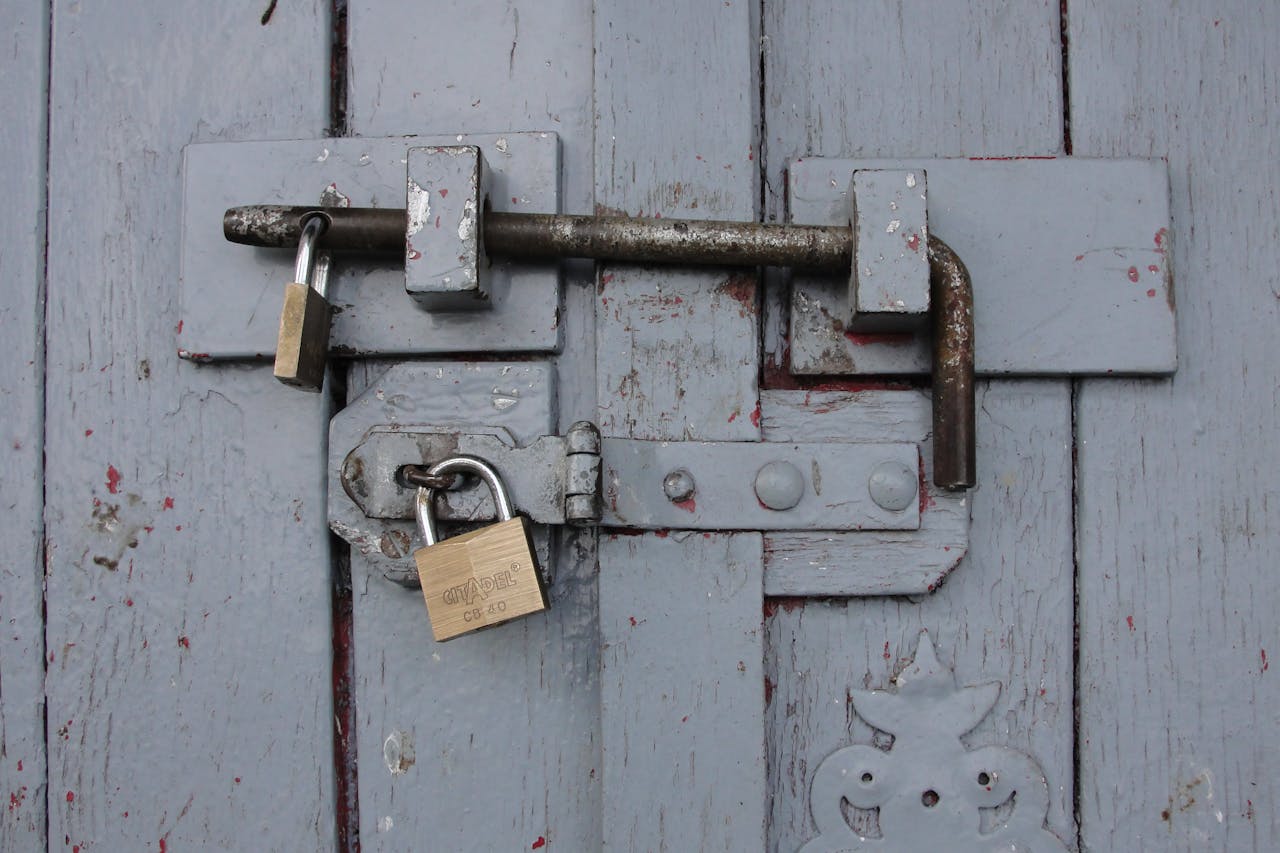
5. Leaving Doors and Windows Unlocked

<p> When you live alone, it can be tempting to leave doors or windows unlocked, especially if you’re just stepping out for a few minutes. However, this is one of the biggest mistakes you can make. An unlocked door or window is an open invitation for burglars, and break-ins often occur in places where these basic safety measures are ignored. Always make sure to lock all doors and windows before leaving your home, even if you’re just running errands. This simple habit can protect your home and personal belongings. </p> :: Pexels

When you live alone, it can be tempting to leave doors or windows unlocked, especially if you’re just stepping out for a few minutes. However, this is one of the biggest mistakes you can make. An unlocked door or window is an open invitation for burglars, and break-ins often occur in places where these basic safety measures are ignored. Always make sure to lock all doors and windows before leaving your home, even if you’re just running errands. This simple habit can protect your home and personal belongings.

6. Ignoring Your Gut Instincts

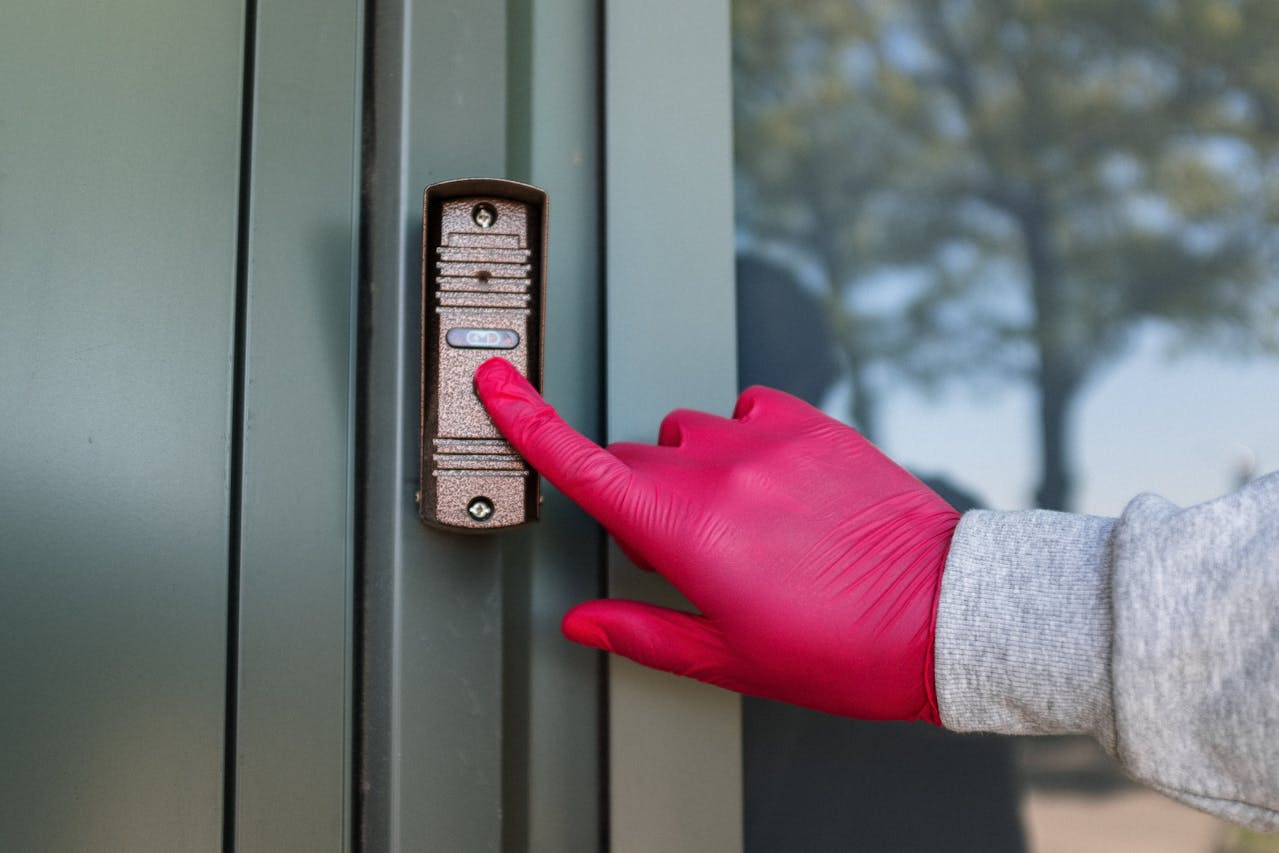
<p> When you live alone, you rely on your intuition more than you may realize. If something doesn’t feel right, whether it's a person knocking on your door or a situation on the street, trust your gut. Many people ignore their instincts, thinking they’re being overly cautious. However, when it comes to safety, it’s always better to be safe than sorry. If you ever feel uncomfortable or uneasy about a situation, remove yourself from it immediately. Don’t hesitate to reach out for help if necessary. </p> :: Pexels

When you live alone, you rely on your intuition more than you may realize. If something doesn’t feel right, whether it’s a person knocking on your door or a situation on the street, trust your gut. Many people ignore their instincts, thinking they’re being overly cautious. However, when it comes to safety, it’s always better to be safe than sorry. If you ever feel uncomfortable or uneasy about a situation, remove yourself from it immediately. Don’t hesitate to reach out for help if necessary.

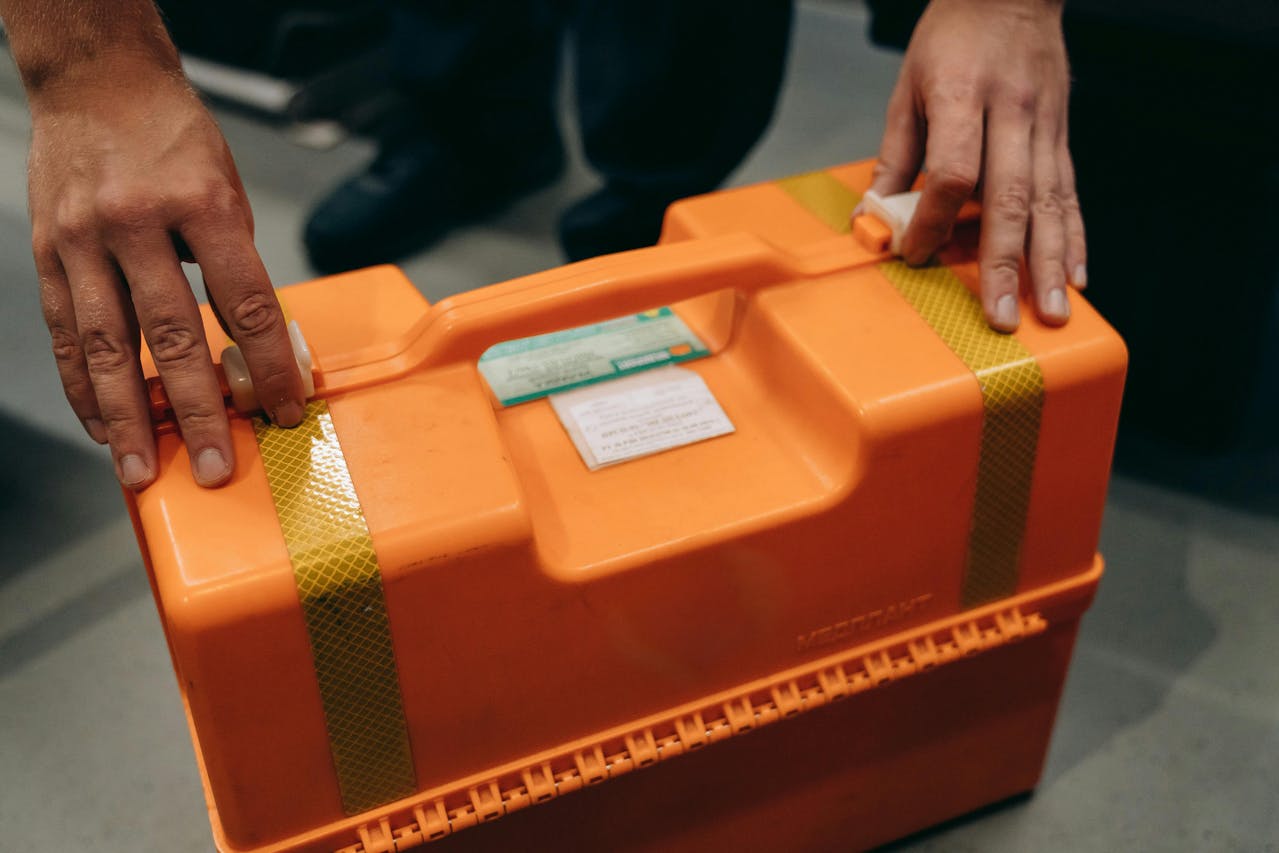
7. Not Having a First Aid Kit

<p> In case of an accident or injury, having a well-stocked first aid kit can be a life-saver. When you live alone, it’s especially important to have immediate access to medical supplies. You might not always have someone nearby to help you, so being prepared with basic items like bandages, antiseptics, gauze, and pain relief is essential. Take a few minutes to create your own first aid kit and keep it in a place that’s easy to reach. It’s a small investment that can go a long way in an emergency. </p> :: Pexels

In case of an accident or injury, having a well-stocked first aid kit can be a life-saver. When you live alone, it’s especially important to have immediate access to medical supplies. You might not always have someone nearby to help you, so being prepared with basic items like bandages, antiseptics, gauze, and pain relief is essential. Take a few minutes to create your own first aid kit and keep it in a place that’s easy to reach. It’s a small investment that can go a long way in an emergency.

8. Overloading Electrical Outlets

<p> Overloading electrical outlets is a common yet dangerous mistake that many people make, especially when living alone. It may seem harmless to plug multiple devices into a single outlet, but doing so can increase the risk of electrical fires. Be mindful of how many devices you plug in and avoid using faulty extension cords or power strips. If your outlets start to feel warm or you notice flickering lights, it’s time to call an electrician to check for wiring problems. Staying on top of electrical safety can help prevent disasters before they occur. </p> :: Pexels

Overloading electrical outlets is a common yet dangerous mistake that many people make, especially when living alone. It may seem harmless to plug multiple devices into a single outlet, but doing so can increase the risk of electrical fires. Be mindful of how many devices you plug in and avoid using faulty extension cords or power strips. If your outlets start to feel warm or you notice flickering lights, it’s time to call an electrician to check for wiring problems. Staying on top of electrical safety can help prevent disasters before they occur.

9. Not Properly Lighting Key Areas

<p> Poor lighting is another mistake that many people overlook when living alone. Areas like stairways, hallways, and entrances need to be well-lit to reduce the risk of falls or accidents. If you frequently get up in the middle of the night, consider installing motion-sensor lights or using night lights to help guide your way. Keeping these areas properly illuminated will reduce the chances of tripping, falling, or hurting yourself in the dark. </p> :: Pexels

Poor lighting is another mistake that many people overlook when living alone. Areas like stairways, hallways, and entrances need to be well-lit to reduce the risk of falls or accidents. If you frequently get up in the middle of the night, consider installing motion-sensor lights or using night lights to help guide your way. Keeping these areas properly illuminated will reduce the chances of tripping, falling, or hurting yourself in the dark.

10. Failing to Prepare for Natural Disasters

<p> Natural disasters like earthquakes, floods, or storms can strike without warning. While we can’t always predict when they’ll happen, we can prepare for them. Living alone means you won’t have anyone to help you in the event of a disaster, so it’s vital to have emergency supplies like water, non-perishable food, flashlights, batteries, and blankets on hand. Keep these items in an easily accessible location and make sure you know how to safely evacuate your home or where to go for shelter. Preparation is key to staying safe during a natural disaster. </p> :: Pexels

Natural disasters like earthquakes, floods, or storms can strike without warning. While we can’t always predict when they’ll happen, we can prepare for them. Living alone means you won’t have anyone to help you in the event of a disaster, so it’s vital to have emergency supplies like water, non-perishable food, flashlights, batteries, and blankets on hand. Keep these items in an easily accessible location and make sure you know how to safely evacuate your home or where to go for shelter. Preparation is key to staying safe during a natural disaster.

11. Hesitating to Ask for Help

<p> Living alone doesn’t mean you have to do everything yourself. Many people make the mistake of not asking for help when they need it, whether it’s lifting a heavy object or dealing with a health issue. Don’t hesitate to reach out to a neighbor, friend, or family member if you need assistance. There’s no shame in asking for help, and it’s better to be safe than risk injuring yourself or facing an emergency alone. Your support network is there for a reason—use it when necessary. </p> :: Pexels

Living alone doesn’t mean you have to do everything yourself. Many people make the mistake of not asking for help when they need it, whether it’s lifting a heavy object or dealing with a health issue. Don’t hesitate to reach out to a neighbor, friend, or family member if you need assistance. There’s no shame in asking for help, and it’s better to be safe than risk injuring yourself or facing an emergency alone. Your support network is there for a reason—use it when necessary.

12. Neglecting Your Mental Health

<p> Finally, when living alone, it’s important not to neglect your mental health. Loneliness and isolation can take a toll on your emotional well-being, especially if you’re not taking steps to stay connected with others. Make an effort to stay in touch with family and friends, engage in activities that bring you joy, and seek professional help if you feel overwhelmed. Taking care of your mental health is just as important as taking care of your physical safety, and it can make a huge difference in how you handle life’s challenges. </p> :: Pexels

Finally, when living alone, it’s important not to neglect your mental health. Loneliness and isolation can take a toll on your emotional well-being, especially if you’re not taking steps to stay connected with others. Make an effort to stay in touch with family and friends, engage in activities that bring you joy, and seek professional help if you feel overwhelmed. Taking care of your mental health is just as important as taking care of your physical safety, and it can make a huge difference in how you handle life’s challenges.

Final Thoughts

<p> Living alone offers incredible independence, but it also comes with unique safety risks. By avoiding these 12 common mistakes, you can make your living situation safer and more enjoyable. From investing in a security system to being prepared for emergencies, simple steps can make a world of difference. Keep your home secure, trust your instincts, and always be ready to ask for help when needed. With a little attention and preparation, you can ensure that living alone is both fulfilling and safe. </p> :: Pexels

Living alone offers incredible independence, but it also comes with unique safety risks. By avoiding these 12 common mistakes, you can make your living situation safer and more enjoyable. From investing in a security system to being prepared for emergencies, simple steps can make a world of difference. Keep your home secure, trust your instincts, and always be ready to ask for help when needed. With a little attention and preparation, you can ensure that living alone is both fulfilling and safe.

Filed Under: Lifestyle

11 Items You Should Never Donate to Thrift Stores and Why It’s Important

December 22, 2025 | Leave a Comment

11 Items You Should Never Donate to Thrift Stores and Why It’s Important

<p> Donating items to thrift stores is a great way to declutter your home while helping others. However, not everything in your home is suitable for donation. Some items can actually create more problems than benefits for the store, its customers, and even the environment. Before you rush to drop off your unwanted goods, it’s important to know which items should stay with you and which ones are truly beneficial to donate. In this blog, we’ll cover 11 items you should never donate to thrift stores and explain why you should avoid donating them. </p> :: Pexels

Donating items to thrift stores is a great way to declutter your home while helping others. However, not everything in your home is suitable for donation. Some items can actually create more problems than benefits for the store, its customers, and even the environment. Before you rush to drop off your unwanted goods, it’s important to know which items should stay with you and which ones are truly beneficial to donate. In this blog, we’ll cover 11 items you should never donate to thrift stores and explain why you should avoid donating them.

1. Broken Electronics

<p> It may seem like a simple way to get rid of your old electronics, but donating broken gadgets is not the best choice. Thrift stores often lack the resources to repair faulty electronics, and attempting to resell them only creates extra work for staff. Moreover, electronics that are no longer functional can end up in landfills, contributing to environmental damage. Instead, look for electronic recycling programs in your area to dispose of them properly. </p> :: Pexels

It may seem like a simple way to get rid of your old electronics, but donating broken gadgets is not the best choice. Thrift stores often lack the resources to repair faulty electronics, and attempting to resell them only creates extra work for staff. Moreover, electronics that are no longer functional can end up in landfills, contributing to environmental damage. Instead, look for electronic recycling programs in your area to dispose of them properly.

2. Used Mattresses

<p> Used mattresses, while seemingly easy to part with, are not appropriate for donation. They can harbor dust mites, allergens, and even bedbugs, making them a health risk to anyone who might receive them. Additionally, most thrift stores do not have the capacity to inspect or sanitize mattresses. For the sake of cleanliness and safety, it’s best to dispose of your old mattress through a recycling program or local disposal service. </p> :: Pexels

Used mattresses, while seemingly easy to part with, are not appropriate for donation. They can harbor dust mites, allergens, and even bedbugs, making them a health risk to anyone who might receive them. Additionally, most thrift stores do not have the capacity to inspect or sanitize mattresses. For the sake of cleanliness and safety, it’s best to dispose of your old mattress through a recycling program or local disposal service.

3. Torn or Stained Clothing

<p> Clothing donations are always in demand, but items that are torn, stained, or excessively worn out should never be donated. Thrift stores only want gently used, clean, and wearable clothes, and damaged items require time and resources to repair. If your clothes are beyond repair, consider repurposing them into rags or recycling them rather than sending them to a thrift store. </p> :: Pexels

Clothing donations are always in demand, but items that are torn, stained, or excessively worn out should never be donated. Thrift stores only want gently used, clean, and wearable clothes, and damaged items require time and resources to repair. If your clothes are beyond repair, consider repurposing them into rags or recycling them rather than sending them to a thrift store.

4. Expired Food and Medicine

<p> It’s easy to forget, but donating expired food or medicine is both unsafe and irresponsible. Expired food items can lead to health problems, and donating old medications can be harmful. Thrift stores are not equipped to handle these products, and many states have regulations prohibiting the donation of expired items. Always check expiration dates before donating and dispose of expired food and medicine through appropriate channels. </p> :: Pexels

It’s easy to forget, but donating expired food or medicine is both unsafe and irresponsible. Expired food items can lead to health problems, and donating old medications can be harmful. Thrift stores are not equipped to handle these products, and many states have regulations prohibiting the donation of expired items. Always check expiration dates before donating and dispose of expired food and medicine through appropriate channels.

5. Broken Furniture

<p> Furniture donations can be a great way to pass on your unwanted items, but broken furniture should not be on your donation list. Chairs missing legs, cracked tables, or couches with torn upholstery are not only difficult to repair, but they also pose safety risks. Thrift stores generally lack the resources to fix broken furniture, so it’s better to dispose of these items responsibly or look for alternatives like furniture recycling services. </p> :: Pexels

Furniture donations can be a great way to pass on your unwanted items, but broken furniture should not be on your donation list. Chairs missing legs, cracked tables, or couches with torn upholstery are not only difficult to repair, but they also pose safety risks. Thrift stores generally lack the resources to fix broken furniture, so it’s better to dispose of these items responsibly or look for alternatives like furniture recycling services.

6. Hazardous Household Products

<p> Common household products, such as cleaning chemicals, paints, and batteries, should never be donated. These items are considered hazardous materials and can pose a danger to the environment and anyone handling them. Thrift stores cannot safely store or sell these products, and most places have laws regulating their disposal. Always take hazardous products to a designated recycling or disposal center. </p> :: Pexels

Common household products, such as cleaning chemicals, paints, and batteries, should never be donated. These items are considered hazardous materials and can pose a danger to the environment and anyone handling them. Thrift stores cannot safely store or sell these products, and most places have laws regulating their disposal. Always take hazardous products to a designated recycling or disposal center.

7. Unmatched or Damaged Shoes

<p> If your shoes are missing a pair or are excessively worn out, don’t donate them. Thrift stores typically cannot sell single shoes, and shoes that are damaged beyond use just end up in the trash. If you want to donate shoes, make sure they are in good, wearable condition and that both shoes are included. If the shoes are no longer wearable, consider upcycling them or donating them to a shoe recycling program. </p> :: Pexels

If your shoes are missing a pair or are excessively worn out, don’t donate them. Thrift stores typically cannot sell single shoes, and shoes that are damaged beyond use just end up in the trash. If you want to donate shoes, make sure they are in good, wearable condition and that both shoes are included. If the shoes are no longer wearable, consider upcycling them or donating them to a shoe recycling program.

8. Used Underwear and Swimsuits

<p> Used underwear and swimsuits should never be donated to thrift stores. These items are considered personal hygiene products, and donating them is unsanitary. Most thrift stores will not accept them due to health concerns, and even if they did, they’re not items most people would want to buy secondhand. Dispose of old underwear or swimsuits responsibly or explore options for fabric recycling if the material is still in good condition. </p> :: Pexels

Used underwear and swimsuits should never be donated to thrift stores. These items are considered personal hygiene products, and donating them is unsanitary. Most thrift stores will not accept them due to health concerns, and even if they did, they’re not items most people would want to buy secondhand. Dispose of old underwear or swimsuits responsibly or explore options for fabric recycling if the material is still in good condition.

9. Old and Outdated Holiday Decorations

<p> Holiday decorations may seem like a fun donation, but they often don’t meet the standards of thrift stores. Outdated or worn-out decorations such as faded lights, cracked ornaments, or tattered wreaths are unlikely to sell. Many thrift stores prefer newer items that are in good condition and can be resold easily. If your holiday decor is past its prime, it’s better to recycle it, repurpose it into something new, or throw it away. </p> :: Pexels

Holiday decorations may seem like a fun donation, but they often don’t meet the standards of thrift stores. Outdated or worn-out decorations such as faded lights, cracked ornaments, or tattered wreaths are unlikely to sell. Many thrift stores prefer newer items that are in good condition and can be resold easily. If your holiday decor is past its prime, it’s better to recycle it, repurpose it into something new, or throw it away.

10. Pillows and Bedding

<p> While blankets and comforters can sometimes be donated, pillows and used bedding items often aren’t accepted at thrift stores. Pillows can harbor dust mites and allergens, and old bedding might not meet the cleanliness standards of most stores. If your pillows or bedding are in poor condition, consider replacing them rather than donating them. Recycling programs may be available in your area to handle these items properly. </p> :: Pexels

While blankets and comforters can sometimes be donated, pillows and used bedding items often aren’t accepted at thrift stores. Pillows can harbor dust mites and allergens, and old bedding might not meet the cleanliness standards of most stores. If your pillows or bedding are in poor condition, consider replacing them rather than donating them. Recycling programs may be available in your area to handle these items properly.

11. Car Seats and Cribs

<p> Car seats and cribs are some of the most critical items that should never be donated. Car seats have expiration dates, and any that are past those dates can be dangerous to children. Additionally, cribs must meet specific safety regulations, and older models may not adhere to current standards. Donating car seats or cribs can put people at risk. Instead, check with local organizations that specialize in car seat recycling or disposal services to ensure safe handling. </p> :: Pexels

Car seats and cribs are some of the most critical items that should never be donated. Car seats have expiration dates, and any that are past those dates can be dangerous to children. Additionally, cribs must meet specific safety regulations, and older models may not adhere to current standards. Donating car seats or cribs can put people at risk. Instead, check with local organizations that specialize in car seat recycling or disposal services to ensure safe handling.

Final Thoughts

<p> While donating items to thrift stores can be a helpful and rewarding experience, it’s important to remember that not everything in your home is suitable for donation. Donating broken electronics, worn-out furniture, or hazardous products only creates extra work for the store and may even put others at risk. Before you donate, take the time to assess the condition of your items and ensure they are in good shape for resale. By being thoughtful about what you donate, you can help your local thrift store thrive, support your community, and ensure that your unwanted items are used in the best way possible. </p> :: Pexels

While donating items to thrift stores can be a helpful and rewarding experience, it’s important to remember that not everything in your home is suitable for donation. Donating broken electronics, worn-out furniture, or hazardous products only creates extra work for the store and may even put others at risk. Before you donate, take the time to assess the condition of your items and ensure they are in good shape for resale. By being thoughtful about what you donate, you can help your local thrift store thrive, support your community, and ensure that your unwanted items are used in the best way possible.

Filed Under: Lifestyle

11 Polite Habits Most People Secretly Dislike—According to Research

December 22, 2025 | Leave a Comment

11 Polite Habits Most People Secretly Dislike—According to Research

<p> Good manners never go out of style—or do they? While many of us were raised to say “please,” “thank you,” and always put others first, research suggests that some traditional acts of politeness are more annoying than appreciated. Believe it or not, well-meaning habits like over-apologizing or waiting to eat might be quietly frustrating the people around you. If you’re over 50 and trying to navigate today’s evolving social norms, you’re not alone. This list breaks down 11 “polite” habits that people secretly dislike, backed by research and real-life observations. Some of these might surprise you—and might even improve your relationships once you drop them. </p> :: Pexels

Good manners never go out of style—or do they? While many of us were raised to say “please,” “thank you,” and always put others first, research suggests that some traditional acts of politeness are more annoying than appreciated. Believe it or not, well-meaning habits like over-apologizing or waiting to eat might be quietly frustrating the people around you.

If you’re over 50 and trying to navigate today’s evolving social norms, you’re not alone. This list breaks down 11 “polite” habits that people secretly dislike, backed by research and real-life observations. Some of these might surprise you—and might even improve your relationships once you drop them.

1. Over-Apologizing—Even When You’re Not at Fault

<p> Saying “I’m sorry” is a sign of humility—but overdoing it can have the opposite effect. Studies show that when people apologize constantly, even for things that aren’t their fault (like the weather, traffic, or someone else’s mistake), they’re often perceived as insecure or even insincere. While Baby Boomers were often taught that apologies are a way to maintain peace and show respect, modern social science suggests it’s better to apologize sincerely and selectively. Instead of saying, “Sorry for bothering you,” try “Thanks for taking the time.” It keeps the interaction positive and confident. </p> :: Pexels

Saying “I’m sorry” is a sign of humility—but overdoing it can have the opposite effect. Studies show that when people apologize constantly, even for things that aren’t their fault (like the weather, traffic, or someone else’s mistake), they’re often perceived as insecure or even insincere. While Baby Boomers were often taught that apologies are a way to maintain peace and show respect, modern social science suggests it’s better to apologize sincerely and selectively. Instead of saying, “Sorry for bothering you,” try “Thanks for taking the time.” It keeps the interaction positive and confident.

2. Offering Unsolicited Help

<p> Helping others is a time-honored value, especially for older generations who pride themselves on being supportive. But offering help without being asked—especially repeatedly—can make others feel incapable or judged. According to psychology research, unsolicited help can reduce the recipient’s sense of autonomy. Whether you're offering tech help to your grandkids or advising someone on how to garden better, wait for a cue or request before jumping in. This gives the other person space and helps them feel empowered, not micromanaged. </p> :: Pexels

Helping others is a time-honored value, especially for older generations who pride themselves on being supportive. But offering help without being asked—especially repeatedly—can make others feel incapable or judged. According to psychology research, unsolicited help can reduce the recipient’s sense of autonomy. Whether you’re offering tech help to your grandkids or advising someone on how to garden better, wait for a cue or request before jumping in. This gives the other person space and helps them feel empowered, not micromanaged.

3. Insisting on Formal Greetings

<p> Politeness once meant calling people “Mr.,” “Mrs.,” or “Sir.” But today, many people prefer a first-name basis—even in professional or semi-formal settings. A 2023 survey by Pew Research found that people under 60 often interpret formal greetings as outdated or stiff. So while you may be showing respect by using formal titles, the recipient might feel distant or even uncomfortable. A friendly, casual approach (“Hi Bob!”) is more in tune with today’s relaxed communication style—especially if the person has introduced themselves that way. </p> :: Pexels

Politeness once meant calling people “Mr.,” “Mrs.,” or “Sir.” But today, many people prefer a first-name basis—even in professional or semi-formal settings. A 2023 survey by Pew Research found that people under 60 often interpret formal greetings as outdated or stiff. So while you may be showing respect by using formal titles, the recipient might feel distant or even uncomfortable. A friendly, casual approach (“Hi Bob!”) is more in tune with today’s relaxed communication style—especially if the person has introduced themselves that way.

4. Holding the Door for Someone Too Far Away

<p> Holding the door is a classic courteous act—but it can go wrong when you try too hard. If someone is far away and you stand there holding the door, they might feel pressured to speed up, creating unnecessary awkwardness. According to a Journal of Social Psychology study, people feel mildly embarrassed when forced into this situation. The polite sweet spot? Hold the door if they’re within a few steps. Otherwise, don’t feel bad about letting it close naturally. It's the thought that counts—but timing matters too. </p> :: Freepik

Holding the door is a classic courteous act—but it can go wrong when you try too hard. If someone is far away and you stand there holding the door, they might feel pressured to speed up, creating unnecessary awkwardness. According to a Journal of Social Psychology study, people feel mildly embarrassed when forced into this situation. The polite sweet spot? Hold the door if they’re within a few steps. Otherwise, don’t feel bad about letting it close naturally. It’s the thought that counts—but timing matters too.

5. Forcing Thank You Responses from Others

<p> Encouraging politeness is great—especially with children—but constantly prompting someone to say “thank you” or acknowledge a gesture can feel like you’re policing their manners. Research suggests that gratitude is most effective and meaningful when it’s expressed voluntarily. Adults, in particular, may feel patronized if prompted to say thank you, especially in front of others. Instead, model the behavior yourself and let others choose how to respond. You’ll avoid awkwardness while still promoting kindness. </p> :: Pexels

Encouraging politeness is great—especially with children—but constantly prompting someone to say “thank you” or acknowledge a gesture can feel like you’re policing their manners. Research suggests that gratitude is most effective and meaningful when it’s expressed voluntarily. Adults, in particular, may feel patronized if prompted to say thank you, especially in front of others. Instead, model the behavior yourself and let others choose how to respond. You’ll avoid awkwardness while still promoting kindness.

6. Refusing Help to Be “Polite”

<p> Turning down assistance might feel like you’re being considerate—“Don’t worry about me, I’ve got it!”—but declining help too often can backfire. Studies in social reciprocity show that accepting help graciously allows others to feel valued and connected. Whether it’s someone offering to carry your groceries or help set the table, saying yes occasionally strengthens relationships. It’s not a sign of weakness—it’s a way to share moments and let others feel useful. </p> :: Pexels

Turning down assistance might feel like you’re being considerate—“Don’t worry about me, I’ve got it!”—but declining help too often can backfire. Studies in social reciprocity show that accepting help graciously allows others to feel valued and connected. Whether it’s someone offering to carry your groceries or help set the table, saying yes occasionally strengthens relationships. It’s not a sign of weakness—it’s a way to share moments and let others feel useful.

7. Over-Complimenting People

<p> Compliments are lovely when sincere—but when they’re too frequent or exaggerated, they can start to feel phony. A 2022 study on verbal praise found that people respond more positively to specific, honest compliments than to vague or excessive flattery. Saying “You’re always the best cook ever!” every time someone serves a meal can sound like overkill. Instead, a comment like, “That lemon chicken had great flavor—what’s your secret?” feels personal, thoughtful, and genuine. </p> :: Pexels

Compliments are lovely when sincere—but when they’re too frequent or exaggerated, they can start to feel phony. A 2022 study on verbal praise found that people respond more positively to specific, honest compliments than to vague or excessive flattery. Saying “You’re always the best cook ever!” every time someone serves a meal can sound like overkill. Instead, a comment like, “That lemon chicken had great flavor—what’s your secret?” feels personal, thoughtful, and genuine.

8. Laughing at Every Joke (Even When It’s Not Funny)

<p> We’ve all been in conversations where someone tells a joke that misses the mark—and we laugh politely to avoid discomfort. But studies show that consistently laughing at unfunny jokes can make others question your sincerity. It might even encourage them to keep telling bad jokes! It’s okay to give a warm smile or say, “That’s clever,” instead of chuckling at every punchline. People appreciate authentic reactions more than forced laughter. </p> :: Freepik

We’ve all been in conversations where someone tells a joke that misses the mark—and we laugh politely to avoid discomfort. But studies show that consistently laughing at unfunny jokes can make others question your sincerity. It might even encourage them to keep telling bad jokes! It’s okay to give a warm smile or say, “That’s clever,” instead of chuckling at every punchline. People appreciate authentic reactions more than forced laughter.

9. Waiting Too Long to Start Eating

<p> Back in the day, we were taught never to start eating until everyone had been served. While that rule still holds in formal settings, in today’s casual environments, it can make others uncomfortable. A survey by The Emily Post Institute found that most people now prefer you to go ahead while your food is hot—especially if they’re still waiting for theirs. A quick, “Mind if I start?” keeps things polite without making anyone feel guilty. You’ll enjoy your meal more—and so will they. </p> :: Pexels

Back in the day, we were taught never to start eating until everyone had been served. While that rule still holds in formal settings, in today’s casual environments, it can make others uncomfortable. A survey by The Emily Post Institute found that most people now prefer you to go ahead while your food is hot—especially if they’re still waiting for theirs. A quick, “Mind if I start?” keeps things polite without making anyone feel guilty. You’ll enjoy your meal more—and so will they.

10. Sending Long Thank-You Notes for Small Gestures

<p> A heartfelt thank-you note never hurts, but writing a full-page letter for every minor gesture can seem like overkill. In a world of fast communication, research shows people now appreciate brief, timely expressions of gratitude more than elaborate ones. For example, after a coffee meetup, a simple text like “Really enjoyed catching up—thanks again!” is often better received than a formal card. Save the longer notes for weddings, big favors, or meaningful gifts. </p> :: Pexels

A heartfelt thank-you note never hurts, but writing a full-page letter for every minor gesture can seem like overkill. In a world of fast communication, research shows people now appreciate brief, timely expressions of gratitude more than elaborate ones. For example, after a coffee meetup, a simple text like “Really enjoyed catching up—thanks again!” is often better received than a formal card. Save the longer notes for weddings, big favors, or meaningful gifts.

11. Trying Too Hard to Avoid Offending Anyone

<p> We all want to be respectful—but going too far to avoid even the mildest disagreement can lead to bland or robotic conversations. Research from the Personality and Social Psychology Bulletin suggests that overly cautious self-censorship can prevent authentic connection. If you're constantly worried about saying the wrong thing, your conversations might lack depth or sincerity. Instead of walking on eggshells, aim to speak honestly but kindly. Sharing your thoughts, even if they differ, builds stronger and more respectful relationships.</p> :: Pexels

We all want to be respectful—but going too far to avoid even the mildest disagreement can lead to bland or robotic conversations. Research from the Personality and Social Psychology Bulletin suggests that overly cautious self-censorship can prevent authentic connection. If you’re constantly worried about saying the wrong thing, your conversations might lack depth or sincerity. Instead of walking on eggshells, aim to speak honestly but kindly. Sharing your thoughts, even if they differ, builds stronger and more respectful relationships.

Final Thoughts

<p> Politeness isn’t just about rules—it’s about how your actions make others feel. While traditional etiquette still has its place, social expectations are always evolving. What was once considered polite may now come off as unnecessary or even irritating. The good news? You don’t have to abandon your manners—you just need to adjust them slightly to suit modern times. By understanding these subtle shifts in behavior, especially for those of us over 50, we can stay socially in tune, build better connections, and enjoy more authentic conversations. After all, being thoughtful and respectful will never go out of style—but how we show it might just need a little update. </p> :: Pexels

Politeness isn’t just about rules—it’s about how your actions make others feel. While traditional etiquette still has its place, social expectations are always evolving. What was once considered polite may now come off as unnecessary or even irritating. The good news? You don’t have to abandon your manners—you just need to adjust them slightly to suit modern times.

By understanding these subtle shifts in behavior, especially for those of us over 50, we can stay socially in tune, build better connections, and enjoy more authentic conversations. After all, being thoughtful and respectful will never go out of style—but how we show it might just need a little update.

Filed Under: Lifestyle

Forgotten Habits from the 1980s: 10 Simple Ways They Quietly Built Strong Character

December 22, 2025 | Leave a Comment

Forgotten Habits from the 1980s: 10 Simple Ways They Quietly Built Strong Character

<p> If you grew up or raised a family in the 1980s, chances are you did not think of everyday life as a character-building exercise. It was just life. You woke up, went to work or school, handled responsibilities, and figured things out as they came. Looking back now, though, it is clear that many of the ordinary habits of that era shaped resilience, patience, and personal responsibility in ways that feel increasingly rare today. This is not about claiming the 1980s were perfect. They were not. But they did offer something valuable: a slower pace that encouraged problem-solving, real human connection, and learning through experience rather than shortcuts. For baby boomers today, revisiting these habits can be surprisingly practical. They offer lessons we can still use in daily life, share with younger generations, or simply appreciate as reminders of how much strength we quietly built along the way. Here are ten forgotten habits from the 1980s that helped build strong character, even if we did not realize it at the time. </p> :: Gemini

If you grew up or raised a family in the 1980s, chances are you did not think of everyday life as a character-building exercise. It was just life. You woke up, went to work or school, handled responsibilities, and figured things out as they came. Looking back now, though, it is clear that many of the ordinary habits of that era shaped resilience, patience, and personal responsibility in ways that feel increasingly rare today.

This is not about claiming the 1980s were perfect. They were not. But they did offer something valuable: a slower pace that encouraged problem-solving, real human connection, and learning through experience rather than shortcuts. For baby boomers today, revisiting these habits can be surprisingly practical. They offer lessons we can still use in daily life, share with younger generations, or simply appreciate as reminders of how much strength we quietly built along the way.

Here are ten forgotten habits from the 1980s that helped build strong character, even if we did not realize it at the time.

1. Writing Things Down Instead of Relying on Technology

<p> In the 1980s, if something mattered, you wrote it down. Appointments lived on wall calendars. Phone numbers were memorized or kept in a little address book. Bills were tracked by hand, and letters were written with actual pens. This habit forced focus and intention. Writing things down made you slow down and think, which helped with memory and accountability.

Today, returning to this practice can still be powerful. Journaling, handwritten to-do lists, or even writing notes to loved ones creates a sense of clarity that digital tools often lack. For many baby boomers, picking up a pen again can feel grounding and satisfying, reminding us that not everything needs to be automated to be effective. </p> :: Gemini

In the 1980s, if something mattered, you wrote it down. Appointments lived on wall calendars. Phone numbers were memorized or kept in a little address book. Bills were tracked by hand, and letters were written with actual pens. This habit forced focus and intention. Writing things down made you slow down and think, which helped with memory and accountability.

Today, returning to this practice can still be powerful. Journaling, handwritten to-do lists, or even writing notes to loved ones creates a sense of clarity that digital tools often lack. For many baby boomers, picking up a pen again can feel grounding and satisfying, reminding us that not everything needs to be automated to be effective.

2. Letting Kids Play Outside Without Constant Supervision

<p> One of the most defining habits of the 1980s was unsupervised outdoor play. Kids rode bikes until dinner, built forts, explored neighborhoods, and figured out conflicts on their own. There were scraped knees and bruised egos, but there was also independence, creativity, and confidence.

This kind of freedom taught problem-solving and self-trust early in life. While times have changed, the lesson still applies. Spending time outdoors, whether walking, gardening, or simply unplugging, encourages independence and mental clarity. For grandparents especially, encouraging outdoor play and curiosity can pass along a valuable mindset that shaped an entire generation. </p> :: Gemini

One of the most defining habits of the 1980s was unsupervised outdoor play. Kids rode bikes until dinner, built forts, explored neighborhoods, and figured out conflicts on their own. There were scraped knees and bruised egos, but there was also independence, creativity, and confidence.

This kind of freedom taught problem-solving and self-trust early in life. While times have changed, the lesson still applies. Spending time outdoors, whether walking, gardening, or simply unplugging, encourages independence and mental clarity. For grandparents especially, encouraging outdoor play and curiosity can pass along a valuable mindset that shaped an entire generation.

3. Saving Up Before Buying What You Wanted

<p> In the 1980s, wanting something did not mean getting it immediately. You saved allowance money, worked extra hours, or waited until you could afford it. That delay made purchases more meaningful and taught discipline, patience, and financial awareness.

This habit is still incredibly relevant. In a world built on instant gratification and credit, choosing to save before spending builds confidence and reduces stress. For baby boomers, this mindset often feels familiar and reassuring. It reinforces the idea that self-control is not deprivation, but empowerment. </p> :: Gemini

In the 1980s, wanting something did not mean getting it immediately. You saved allowance money, worked extra hours, or waited until you could afford it. That delay made purchases more meaningful and taught discipline, patience, and financial awareness.

This habit is still incredibly relevant. In a world built on instant gratification and credit, choosing to save before spending builds confidence and reduces stress. For baby boomers, this mindset often feels familiar and reassuring. It reinforces the idea that self-control is not deprivation, but empowerment.

4. Having Real Conversations Face to Face

<p> Before texting and social media, communication happened in person or on the phone. Conversations required eye contact, listening, and thoughtful responses. Misunderstandings had to be worked through in real time, which built empathy and emotional intelligence.

Reclaiming this habit can be deeply rewarding. Meeting friends for coffee, having uninterrupted conversations with family, or simply listening without distractions strengthens relationships. These moments remind us that meaningful connection does not come from speed, but from presence. </p> :: Gemini

Before texting and social media, communication happened in person or on the phone. Conversations required eye contact, listening, and thoughtful responses. Misunderstandings had to be worked through in real time, which built empathy and emotional intelligence.

Reclaiming this habit can be deeply rewarding. Meeting friends for coffee, having uninterrupted conversations with family, or simply listening without distractions strengthens relationships. These moments remind us that meaningful connection does not come from speed, but from presence.

5. Knowing Your Neighbors and Talking to Strangers

<p> In many communities during the 1980s, neighbors knew each other. People waved, stopped to chat, and looked out for one another. Children learned how to speak respectfully to adults, and adults felt a shared responsibility for the neighborhood.

This habit built trust and community pride. While modern life often feels more isolated, the value of simple friendliness has not disappeared. Saying hello, checking in on a neighbor, or starting a conversation can still create a sense of belonging and security that technology cannot replace. </p> :: Gemini

In many communities during the 1980s, neighbors knew each other. People waved, stopped to chat, and looked out for one another. Children learned how to speak respectfully to adults, and adults felt a shared responsibility for the neighborhood.

This habit built trust and community pride. While modern life often feels more isolated, the value of simple friendliness has not disappeared. Saying hello, checking in on a neighbor, or starting a conversation can still create a sense of belonging and security that technology cannot replace.

6. Appreciating Limited Entertainment Options

<p> Entertainment in the 1980s required planning. You rented a movie for the weekend, waited for your favorite show to air, or saved money for concert tickets. Because options were limited, experiences felt special and memorable.

Today, unlimited choices often lead to less satisfaction. Revisiting intentional entertainment, such as choosing one movie to truly enjoy or setting aside time for a favorite hobby, can restore that sense of appreciation. It reminds us that enjoyment deepens when we are not constantly distracted by endless options. </p> :: Gemini

Entertainment in the 1980s required planning. You rented a movie for the weekend, waited for your favorite show to air, or saved money for concert tickets. Because options were limited, experiences felt special and memorable.

Today, unlimited choices often lead to less satisfaction. Revisiting intentional entertainment, such as choosing one movie to truly enjoy or setting aside time for a favorite hobby, can restore that sense of appreciation. It reminds us that enjoyment deepens when we are not constantly distracted by endless options.

7. Waiting for Information Instead of Getting Instant Answers

<p> When you had a question in the 1980s, you looked it up in a book, asked someone knowledgeable, or figured it out over time. Learning required effort and persistence. That process strengthened critical thinking and patience.

For baby boomers, this habit reinforces lifelong learning. Whether learning new technology, picking up a skill, or exploring a personal interest, allowing yourself to struggle a bit before finding the answer builds confidence and mental resilience. </p> :: Gemini

When you had a question in the 1980s, you looked it up in a book, asked someone knowledgeable, or figured it out over time. Learning required effort and persistence. That process strengthened critical thinking and patience.

For baby boomers, this habit reinforces lifelong learning. Whether learning new technology, picking up a skill, or exploring a personal interest, allowing yourself to struggle a bit before finding the answer builds confidence and mental resilience.

8. Fixing Things Yourself Whenever Possible

<p> When something broke in the 1980s, the first instinct was often to fix it. You tinkered, asked for advice, or figured it out through trial and error. This hands-on approach built self-reliance and problem-solving skills.

Even today, small do-it-yourself projects can be empowering. Fixing something around the house, maintaining a car, or learning basic repairs reinforces the belief that you are capable. It also brings a sense of pride that comes from effort rather than convenience. </p> :: Gemini


When something broke in the 1980s, the first instinct was often to fix it. You tinkered, asked for advice, or figured it out through trial and error. This hands-on approach built self-reliance and problem-solving skills.

Even today, small do-it-yourself projects can be empowering. Fixing something around the house, maintaining a car, or learning basic repairs reinforces the belief that you are capable. It also brings a sense of pride that comes from effort rather than convenience.

9. Learning to Be Bored and Using Imagination

<p> Boredom was a normal part of life in the 1980s. Without constant entertainment, people learned to daydream, create, and entertain themselves. This habit fueled imagination and creativity in subtle but lasting ways.

Relearning how to be bored can be surprisingly beneficial. Quiet moments allow reflection, creativity, and emotional balance. For baby boomers, embracing downtime without guilt can improve mental well-being and spark interests that were once set aside. </p> :: Gemini

Boredom was a normal part of life in the 1980s. Without constant entertainment, people learned to daydream, create, and entertain themselves. This habit fueled imagination and creativity in subtle but lasting ways.

Relearning how to be bored can be surprisingly beneficial. Quiet moments allow reflection, creativity, and emotional balance. For baby boomers, embracing downtime without guilt can improve mental well-being and spark interests that were once set aside.

10. Valuing Privacy and Personal Boundaries

<p> In the 1980s, personal life stayed personal. Not every thought or moment was shared publicly. This created space for reflection, emotional processing, and healthy boundaries.

Today, protecting privacy is more important than ever. Choosing what to share, limiting online exposure, and keeping some moments just for yourself builds emotional strength. It reinforces the idea that self-worth does not depend on constant visibility or validation. </p> :: Gemini

In the 1980s, personal life stayed personal. Not every thought or moment was shared publicly. This created space for reflection, emotional processing, and healthy boundaries.

Today, protecting privacy is more important than ever. Choosing what to share, limiting online exposure, and keeping some moments just for yourself builds emotional strength. It reinforces the idea that self-worth does not depend on constant visibility or validation.

Final Thoughts

<p> The habits that shaped character in the 1980s were not flashy or intentional. They were simply the result of living in a world that required patience, effort, and connection. For baby boomers today, these habits offer more than nostalgia. They provide practical tools for living with confidence, clarity, and purpose in a fast-moving world.

Revisiting even one or two of these practices can make daily life feel more grounded. Writing things down, slowing conversations, saving intentionally, or embracing quiet moments are small choices that carry lasting benefits. Strong character was built quietly back then, and it can still be strengthened now, one simple habit at a time. </p> :: Gemini

The habits that shaped character in the 1980s were not flashy or intentional. They were simply the result of living in a world that required patience, effort, and connection. For baby boomers today, these habits offer more than nostalgia. They provide practical tools for living with confidence, clarity, and purpose in a fast-moving world.

Revisiting even one or two of these practices can make daily life feel more grounded. Writing things down, slowing conversations, saving intentionally, or embracing quiet moments are small choices that carry lasting benefits. Strong character was built quietly back then, and it can still be strengthened now, one simple habit at a time.

Filed Under: Lifestyle

12 Everyday Tasks Americans Used to Do Themselves That No One Bothers With Anymore

December 22, 2025 | Leave a Comment

12 Everyday Tasks Americans Used to Do Themselves That No One Bothers With Anymore

<p> There was a time when Americans took pride in doing things on their own. Whether it was fixing a leaky faucet, cooking dinner from scratch, or even writing a heartfelt thank-you note, people handled the basics of life without hesitation. These tasks weren't just about saving money—they were part of everyday self-reliance, passed down through generations. But in today’s fast-paced world of convenience, apps, and automation, many of these once-routine responsibilities have become relics of the past. With just a few taps on a screen, someone else can do your errands, cook your meals, or clean your house. So, what happened to the do-it-yourself spirit that once defined American households? Let’s take a nostalgic look back at 12 everyday tasks Americans used to do themselves—now, most people don’t even think twice about outsourcing them. </p> :: Freepik

There was a time when Americans took pride in doing things on their own. Whether it was fixing a leaky faucet, cooking dinner from scratch, or even writing a heartfelt thank-you note, people handled the basics of life without hesitation. These tasks weren’t just about saving money—they were part of everyday self-reliance, passed down through generations. But in today’s fast-paced world of convenience, apps, and automation, many of these once-routine responsibilities have become relics of the past. With just a few taps on a screen, someone else can do your errands, cook your meals, or clean your house.

So, what happened to the do-it-yourself spirit that once defined American households? Let’s take a nostalgic look back at 12 everyday tasks Americans used to do themselves—now, most people don’t even think twice about outsourcing them.

1. Changing Their Own Oil

<p> Back in the day, changing your own oil was a basic part of car ownership. Teenagers learned it from their parents, and weekend oil changes were a common sight in suburban driveways. Doing it yourself saved money and gave you a sense of control over your vehicle. Today, however, quick-service oil change shops have made the process so fast and inexpensive that most people don’t bother with the mess. With newer cars becoming more complicated, even the most die-hard DIYers are handing this chore over to the pros. </p> :: Pexels

Back in the day, changing your own oil was a basic part of car ownership. Teenagers learned it from their parents, and weekend oil changes were a common sight in suburban driveways. Doing it yourself saved money and gave you a sense of control over your vehicle. Today, however, quick-service oil change shops have made the process so fast and inexpensive that most people don’t bother with the mess. With newer cars becoming more complicated, even the most die-hard DIYers are handing this chore over to the pros.

2. Sewing and Mending Clothes

<p> Need to fix a hem or sew on a button? There was a time when every household had a sewing kit, and people—especially women—were taught basic sewing skills at a young age. Mending clothes was routine, not a novelty. But with the rise of fast fashion and cheap, disposable clothing, sewing has become a dying art. Rather than patching a hole, most people toss the item and buy something new. Even tailors, once a common stop for families, are becoming rarer as clothing repairs fall by the wayside. </p> :: Pexels

Need to fix a hem or sew on a button? There was a time when every household had a sewing kit, and people—especially women—were taught basic sewing skills at a young age. Mending clothes was routine, not a novelty. But with the rise of fast fashion and cheap, disposable clothing, sewing has become a dying art. Rather than patching a hole, most people toss the item and buy something new. Even tailors, once a common stop for families, are becoming rarer as clothing repairs fall by the wayside.

3. Balancing a Checkbook

<p> Before online banking and budgeting apps, Americans carefully recorded every transaction in a paper checkbook register. This task helped people stay financially disciplined and avoid overdraft fees. Balancing a checkbook was once considered a basic life skill. Today, digital banking has all but replaced this practice. Most people rely on their bank’s app to monitor spending and never even think to do the math themselves. For younger generations, balancing a checkbook is as foreign as using a rotary phone. </p> :: Pexels

Before online banking and budgeting apps, Americans carefully recorded every transaction in a paper checkbook register. This task helped people stay financially disciplined and avoid overdraft fees. Balancing a checkbook was once considered a basic life skill. Today, digital banking has all but replaced this practice. Most people rely on their bank’s app to monitor spending and never even think to do the math themselves. For younger generations, balancing a checkbook is as foreign as using a rotary phone.

4. Cooking Meals from Scratch

<p> There was a time when the average household cooked every meal from basic ingredients. Home-cooked meals were the norm, filled with family recipes, fresh vegetables, and time in the kitchen. But today, busy schedules and the rise of takeout, delivery, and prepackaged meal kits have changed the game. Even when people do cook at home, it’s often with shortcuts like frozen ingredients or boxed mixes. The idea of making a full dinner from scratch every night now feels like a luxury rather than a routine. </p> :: Pexels

There was a time when the average household cooked every meal from basic ingredients. Home-cooked meals were the norm, filled with family recipes, fresh vegetables, and time in the kitchen. But today, busy schedules and the rise of takeout, delivery, and prepackaged meal kits have changed the game. Even when people do cook at home, it’s often with shortcuts like frozen ingredients or boxed mixes. The idea of making a full dinner from scratch every night now feels like a luxury rather than a routine.

5. Ironing Clothes

<p> Ironing used to be a regular chore in many American households. People pressed everything from dress shirts to bed linens, and a wrinkle-free outfit was a sign of care and professionalism. These days, most people skip the iron altogether. With wrinkle-resistant fabrics, casual dress codes, and affordable dry cleaning or garment steamers, the need to iron has faded. Many younger adults have never even owned an iron, let alone mastered the art of a crisp crease. </p> :: Pexels

Ironing used to be a regular chore in many American households. People pressed everything from dress shirts to bed linens, and a wrinkle-free outfit was a sign of care and professionalism. These days, most people skip the iron altogether. With wrinkle-resistant fabrics, casual dress codes, and affordable dry cleaning or garment steamers, the need to iron has faded. Many younger adults have never even owned an iron, let alone mastered the art of a crisp crease.

6. Fixing Things Around the House

<p> From replacing a light switch to repairing a leaky pipe, basic home repairs were once considered common knowledge. Homeowners took pride in tackling small maintenance issues themselves, armed with a toolbox and maybe a DIY guidebook. Now, even minor tasks often lead to a call to a professional. While YouTube has made tutorials accessible, many people prefer the convenience and peace of mind that comes with hiring a handyman. DIY home repairs are increasingly seen as risky or time-consuming. </p> :: Pexels

From replacing a light switch to repairing a leaky pipe, basic home repairs were once considered common knowledge. Homeowners took pride in tackling small maintenance issues themselves, armed with a toolbox and maybe a DIY guidebook. Now, even minor tasks often lead to a call to a professional. While YouTube has made tutorials accessible, many people prefer the convenience and peace of mind that comes with hiring a handyman. DIY home repairs are increasingly seen as risky or time-consuming.

7. Washing Their Own Cars

<p> Washing the family car was once a Saturday tradition. Armed with a bucket, hose, and some elbow grease, people enjoyed cleaning their vehicles in the driveway. It was a simple pleasure and a money saver. But with drive-thru car washes popping up on every corner and water restrictions in many urban areas, this ritual has all but disappeared. Today, convenience wins, and most people are happy to pay a few bucks to have someone—or something—else do it. </p> :: Pexels

Washing the family car was once a Saturday tradition. Armed with a bucket, hose, and some elbow grease, people enjoyed cleaning their vehicles in the driveway. It was a simple pleasure and a money saver. But with drive-thru car washes popping up on every corner and water restrictions in many urban areas, this ritual has all but disappeared. Today, convenience wins, and most people are happy to pay a few bucks to have someone—or something—else do it.

8. Writing Letters or Thank-You Notes

<p> Handwritten letters and notes were once the gold standard for communication, especially for showing appreciation. Thank-you cards after weddings, birthdays, or job interviews were expected, and letter-writing was an important way to stay in touch. In the age of texting, email, and social media, this form of communication has become rare. Digital messages may be faster, but they lack the personal touch of a handwritten note. Most people now find writing letters outdated, despite its enduring charm. </p> :: Pexels

Handwritten letters and notes were once the gold standard for communication, especially for showing appreciation. Thank-you cards after weddings, birthdays, or job interviews were expected, and letter-writing was an important way to stay in touch. In the age of texting, email, and social media, this form of communication has become rare. Digital messages may be faster, but they lack the personal touch of a handwritten note. Most people now find writing letters outdated, despite its enduring charm.

9. Doing Their Own Taxes

<p> Tax season used to involve pencils, calculators, and long hours reading IRS instructions. Many Americans took pride in filing their own taxes without professional help. But the ever-growing complexity of tax laws and fear of making mistakes have pushed most people toward tax software or paid preparers. While online platforms have made the process easier, they’ve also created a dependency that keeps people from understanding their finances at a deeper level. </p> :: Pexels

Tax season used to involve pencils, calculators, and long hours reading IRS instructions. Many Americans took pride in filing their own taxes without professional help. But the ever-growing complexity of tax laws and fear of making mistakes have pushed most people toward tax software or paid preparers. While online platforms have made the process easier, they’ve also created a dependency that keeps people from understanding their finances at a deeper level.

10. Growing Their Own Food

<p> Victory gardens and backyard vegetable patches were once common features of American homes. Growing your own tomatoes, cucumbers, and herbs was a way to save money, eat healthier, and enjoy the satisfaction of self-sufficiency. While there’s been a small gardening resurgence, especially during the pandemic, most people now rely entirely on grocery stores and delivery services for food. For many, gardening is more of a novelty or aesthetic hobby than a means of survival. </p> :: Pexels

Victory gardens and backyard vegetable patches were once common features of American homes. Growing your own tomatoes, cucumbers, and herbs was a way to save money, eat healthier, and enjoy the satisfaction of self-sufficiency. While there’s been a small gardening resurgence, especially during the pandemic, most people now rely entirely on grocery stores and delivery services for food. For many, gardening is more of a novelty or aesthetic hobby than a means of survival.

11. Navigating Without GPS

<p> Before smartphones told us where to go, people used maps, atlases, and handwritten directions. Planning a road trip or navigating a new city required focus and spatial awareness. Today, GPS apps have eliminated the need to remember routes or understand geography. Most people follow their phone’s instructions without question—and many would be lost without it. As a result, navigation skills are slowly disappearing, and asking someone for directions feels almost quaint. </p> :: Pexels

Before smartphones told us where to go, people used maps, atlases, and handwritten directions. Planning a road trip or navigating a new city required focus and spatial awareness. Today, GPS apps have eliminated the need to remember routes or understand geography. Most people follow their phone’s instructions without question—and many would be lost without it. As a result, navigation skills are slowly disappearing, and asking someone for directions feels almost quaint.

12. Hosting Guests Without Catering or Delivery

<p> Entertaining used to mean cooking, cleaning, and setting up everything yourself. Whether it was a family dinner or a birthday party, hosts prepared the food, cleaned the home, and created a warm, welcoming atmosphere. Nowadays, people often outsource everything—from catering and cleaning to entertainment and décor. Even casual get-togethers are dominated by takeout and disposable dishes. While this makes life easier, it also removes the personal touches that made hosting so special. </p> :: Pexels

Entertaining used to mean cooking, cleaning, and setting up everything yourself. Whether it was a family dinner or a birthday party, hosts prepared the food, cleaned the home, and created a warm, welcoming atmosphere. Nowadays, people often outsource everything—from catering and cleaning to entertainment and décor. Even casual get-togethers are dominated by takeout and disposable dishes. While this makes life easier, it also removes the personal touches that made hosting so special.

Final Thoughts

<p> Life has certainly become more convenient, but that convenience comes with a cost. These 12 everyday tasks were once seen as essential parts of being a responsible, capable adult. They taught patience, independence, and pride in a job well done. While technology and services have made things faster and easier, they’ve also distanced us from the skills that helped build strong, self-reliant households. The good news? It's never too late to bring some of these habits back. Whether it’s learning how to sew a button, cook a family recipe from scratch, or fix a small leak, taking the time to do things for yourself can save money, build confidence, and reconnect you with a simpler, more intentional way of living. </p> :: Pexels

Life has certainly become more convenient, but that convenience comes with a cost. These 12 everyday tasks were once seen as essential parts of being a responsible, capable adult. They taught patience, independence, and pride in a job well done. While technology and services have made things faster and easier, they’ve also distanced us from the skills that helped build strong, self-reliant households.

The good news? It’s never too late to bring some of these habits back. Whether it’s learning how to sew a button, cook a family recipe from scratch, or fix a small leak, taking the time to do things for yourself can save money, build confidence, and reconnect you with a simpler, more intentional way of living.

Filed Under: Lifestyle

  • « Previous Page
  • 1
  • …
  • 25
  • 26
  • 27
  • 28
  • 29
  • …
  • 60
  • Next Page »
  • Email
  • Facebook
  • Pinterest
  • Twitter

Our Most Popular Articles

ClickCashGo Review: Should You Avoid At All Costs?

Ultimate Guide to Mastering Your Credit Score

The 'YOLO' Mindset is a Dangerous Thing

Dave Ramsey's Financial Peace University Review: Is it Worth the Money?

Cash App Glitch 2025: Is the Free Money Glitch Real?

Five Steps To Debt Freedom

Here are five simple guidlines that will help you pay off debt.  

1) Get an emergency fund so you don’t take on debt when something comes up.

2) List your debts. This way you know where you stand.

3) Use the debt snowball. Pay your debts from smallest to largest, or most expensive to least expensive.

4) Avoid new debt. No new credit cards or loans. Period.

5) Go all cash. After everything is paid off, switch to all cash.

Helpful Resources

U of Tennesse Debt Repayment Plan Basics

Vertex 42's Debt Payoff Calculator

Savingadvice's Helpful Debt Forums

Jackie Becks Debt Blog