Our Debt Free Family

Commit. Plan. Take action.

  • BUDGETING
  • DEBT REDUCTION
  • INVESTING
  • LIFESTYLE
  • TOOLS
  • ABOUT
  • Privacy Policy
  • CONTACT
You are here: Home / Lifestyle / Decluttering Habits That Instantly Simplify Daily Life: 6 Practical Changes That Actually Stick
Decluttering Habits That Instantly Simplify Daily Life: 6 Practical Changes That Actually Stick

April 24, 2026 | Leave a Comment

Decluttering Habits That Instantly Simplify Daily Life: 6 Practical Changes That Actually Stick

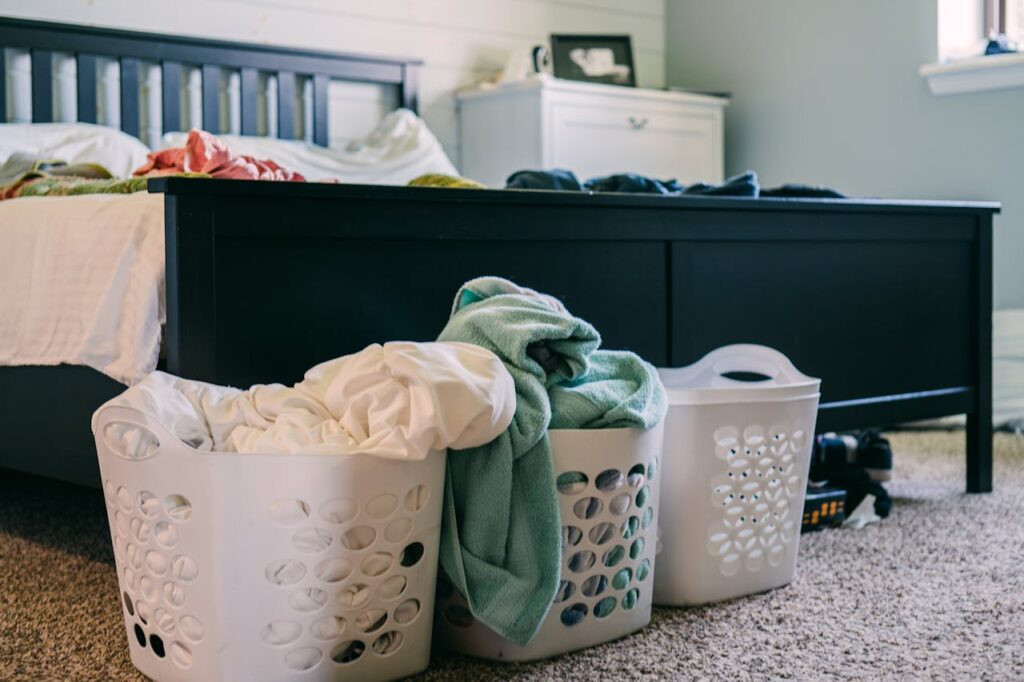
<p> Clutter has a sneaky way of building up when you are not paying attention. One day your space feels calm and manageable, and the next, you are stepping over shoes, digging through drawers, and wondering how everything got so out of hand. It is not usually one big mess that causes the problem. It is the small, repeated habits that slowly pile up over time.

The good news is that the opposite is also true. You do not need a full weekend overhaul or a dramatic lifestyle change to feel more in control of your space. Small habits, done consistently, can shift your environment in a noticeable way. The kind of change that makes your mornings smoother, your evenings calmer, and your mind a little less cluttered.

If you have ever felt like staying organized is something you start strong but cannot maintain, you are not alone. Most people struggle not because they lack motivation, but because they rely on big bursts of effort instead of simple daily systems. The habits below are designed to fit into real life. They are easy to start, easy to maintain, and surprisingly effective.

Let’s walk through six decluttering habits that can simplify your daily life almost instantly. </p> :: Pexels

Clutter has a sneaky way of building up when you are not paying attention. One day your space feels calm and manageable, and the next, you are stepping over shoes, digging through drawers, and wondering how everything got so out of hand. It is not usually one big mess that causes the problem. It is the small, repeated habits that slowly pile up over time.

The good news is that the opposite is also true. You do not need a full weekend overhaul or a dramatic lifestyle change to feel more in control of your space. Small habits, done consistently, can shift your environment in a noticeable way. The kind of change that makes your mornings smoother, your evenings calmer, and your mind a little less cluttered.

If you have ever felt like staying organized is something you start strong but cannot maintain, you are not alone. Most people struggle not because they lack motivation, but because they rely on big bursts of effort instead of simple daily systems. The habits below are designed to fit into real life. They are easy to start, easy to maintain, and surprisingly effective.

Let’s walk through six decluttering habits that can simplify your daily life almost instantly.

1. Follow the One Minute Rule for Immediate Action
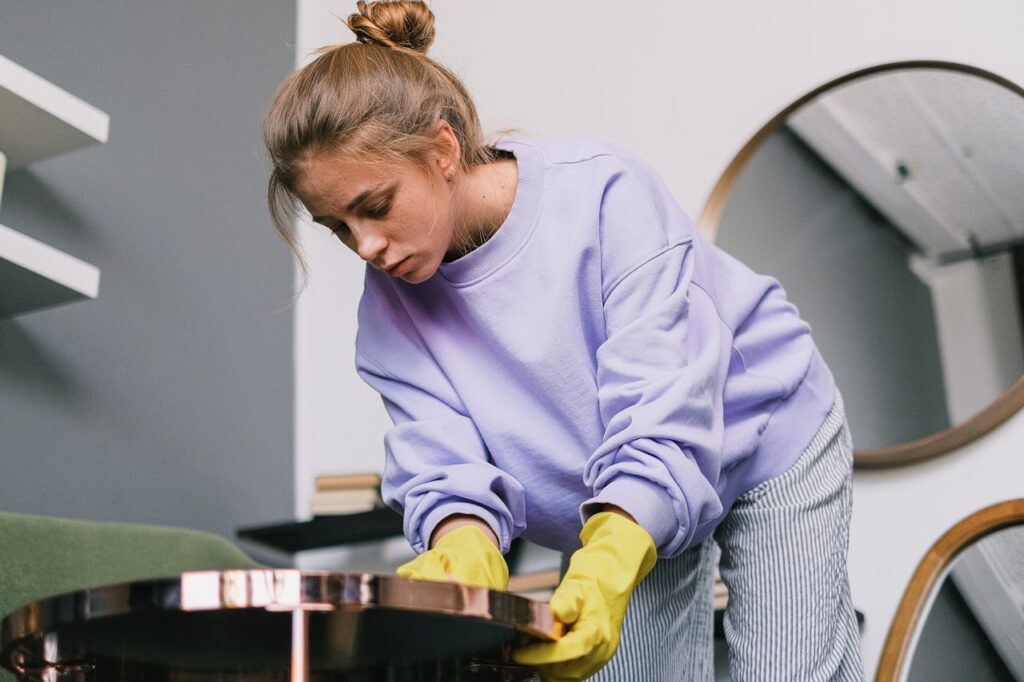
<p> If something takes less than a minute to do, handle it right away. It sounds basic, but it can completely change how clutter forms in your home. Think about how often small tasks get postponed. A jacket gets tossed on a chair instead of hung up. A coffee mug sits in the sink instead of going into the dishwasher. Mail lands on the counter and stays there for days.

These tiny delays seem harmless in the moment, but they add up quickly. Before you know it, you are dealing with a pile of unfinished tasks that take much longer to fix. The one minute rule stops that cycle before it begins. Instead of letting things accumulate, you deal with them on the spot.

What makes this habit so effective is that it does not require extra time. You are not adding more to your to do list. You are simply shifting when you complete these small tasks. Over time, your space stays naturally tidier without requiring a major cleanup session. It also creates a subtle mental shift. You begin to see small actions as opportunities to stay ahead, rather than chores to put off. </p> :: Pexels

If something takes less than a minute to do, handle it right away. It sounds basic, but it can completely change how clutter forms in your home. Think about how often small tasks get postponed. A jacket gets tossed on a chair instead of hung up. A coffee mug sits in the sink instead of going into the dishwasher. Mail lands on the counter and stays there for days.

These tiny delays seem harmless in the moment, but they add up quickly. Before you know it, you are dealing with a pile of unfinished tasks that take much longer to fix. The one minute rule stops that cycle before it begins. Instead of letting things accumulate, you deal with them on the spot.

What makes this habit so effective is that it does not require extra time. You are not adding more to your to do list. You are simply shifting when you complete these small tasks. Over time, your space stays naturally tidier without requiring a major cleanup session. It also creates a subtle mental shift. You begin to see small actions as opportunities to stay ahead, rather than chores to put off.

2. Use the One In, One Out Approach to Control Growth
<p> One of the easiest ways to keep clutter under control is to limit how much comes into your home in the first place. The one in, one out rule is simple. Every time you bring something new into your space, you let go of something else.

This habit works particularly well for clothing, kitchen tools, and everyday items that tend to multiply without notice. For example, if you buy a new pair of shoes, choose an older pair you no longer wear and donate or discard it. If you upgrade a gadget, let go of the one collecting dust in a drawer.

Over time, this creates a natural balance. Your home does not slowly fill up with items you do not need. Instead, it stays at a manageable level without requiring frequent purges. It also encourages more thoughtful decisions. When you know something has to go, you pause and consider whether the new item is truly worth it.

This approach is not about restriction. It is about awareness. You are making space for what matters by letting go of what does not. </p> :: Pexels

One of the easiest ways to keep clutter under control is to limit how much comes into your home in the first place. The one in, one out rule is simple. Every time you bring something new into your space, you let go of something else.

This habit works particularly well for clothing, kitchen tools, and everyday items that tend to multiply without notice. For example, if you buy a new pair of shoes, choose an older pair you no longer wear and donate or discard it. If you upgrade a gadget, let go of the one collecting dust in a drawer.

Over time, this creates a natural balance. Your home does not slowly fill up with items you do not need. Instead, it stays at a manageable level without requiring frequent purges. It also encourages more thoughtful decisions. When you know something has to go, you pause and consider whether the new item is truly worth it.

This approach is not about restriction. It is about awareness. You are making space for what matters by letting go of what does not.

3. Set Up Drop Zones That Match Your Routine
<p> Clutter tends to collect in predictable places. Keys end up on the kitchen counter. Bags get dropped on chairs. Mail piles up wherever it lands first. Instead of trying to fight these habits, it is much easier to work with them.

Creating simple drop zones can make a big difference. A small tray or bowl near your entryway can hold keys and wallets. Hooks by the door can catch bags and jackets. A dedicated spot for mail can keep papers from spreading across surfaces.

The key is convenience. If the designated spot is easy to use, you will naturally use it without thinking. When everything has a home that matches your daily routine, clutter has fewer opportunities to build up.

This habit also reduces the frustration of misplaced items. You know exactly where to look because everything has a consistent place. It may seem like a small change, but it can save you time and reduce stress every single day. </p> :: Pexels

Clutter tends to collect in predictable places. Keys end up on the kitchen counter. Bags get dropped on chairs. Mail piles up wherever it lands first. Instead of trying to fight these habits, it is much easier to work with them.

Creating simple drop zones can make a big difference. A small tray or bowl near your entryway can hold keys and wallets. Hooks by the door can catch bags and jackets. A dedicated spot for mail can keep papers from spreading across surfaces.

The key is convenience. If the designated spot is easy to use, you will naturally use it without thinking. When everything has a home that matches your daily routine, clutter has fewer opportunities to build up.

This habit also reduces the frustration of misplaced items. You know exactly where to look because everything has a consistent place. It may seem like a small change, but it can save you time and reduce stress every single day.

4. Do a Ten Minute Reset Before the Day Ends
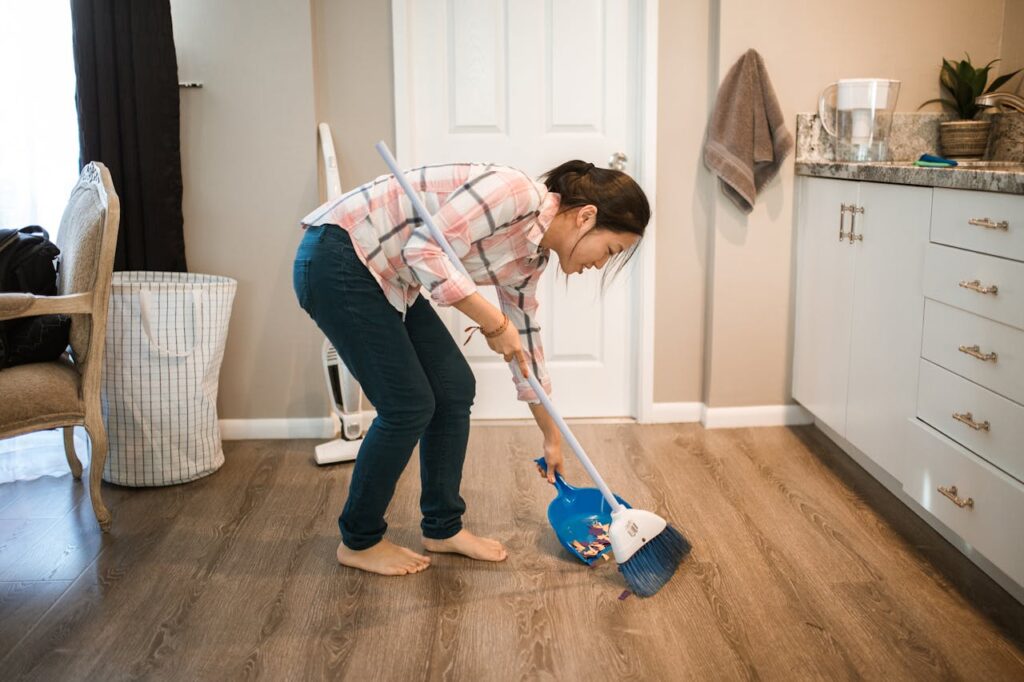
<p> At the end of the day, it is tempting to leave things as they are and deal with the mess later. The problem is that later often turns into a bigger and more overwhelming task. A simple ten minute reset can prevent that from happening.

Set a timer and spend just ten minutes tidying up your main living areas. Put items back where they belong, clear off surfaces, and take care of anything that is out of place. You do not need to deep clean or organize every detail. The goal is to bring your space back to a basic level of order.

This habit is powerful because it keeps clutter from building up over time. Instead of facing a large mess at the end of the week, you maintain a steady baseline each day. It also has a surprising effect on your mindset. Waking up to a clean and organized space can make your morning feel calmer and more manageable.

Even on busy days, ten minutes is realistic. It is a small investment that pays off in a big way. </p> :: Pexels

At the end of the day, it is tempting to leave things as they are and deal with the mess later. The problem is that later often turns into a bigger and more overwhelming task. A simple ten minute reset can prevent that from happening.

Set a timer and spend just ten minutes tidying up your main living areas. Put items back where they belong, clear off surfaces, and take care of anything that is out of place. You do not need to deep clean or organize every detail. The goal is to bring your space back to a basic level of order.

This habit is powerful because it keeps clutter from building up over time. Instead of facing a large mess at the end of the week, you maintain a steady baseline each day. It also has a surprising effect on your mindset. Waking up to a clean and organized space can make your morning feel calmer and more manageable.

Even on busy days, ten minutes is realistic. It is a small investment that pays off in a big way.

5. Declutter by Category Instead of by Room

<p> When it comes to deeper decluttering, many people go room by room. While this can work, it often leads to incomplete results. You might organize one space only to realize that similar items are scattered elsewhere in your home.

Decluttering by category takes a different approach. Instead of focusing on a single room, you gather all items from one category in one place. This could be clothing, books, kitchen tools, or even paperwork.

Seeing everything together gives you a clearer picture of how much you actually own. It is easier to spot duplicates, identify what you no longer use, and make more confident decisions about what to keep.

This method also helps you avoid the trap of organizing clutter instead of removing it. By reducing the number of items first, you make organizing much simpler and more effective. The end result is a space that feels lighter and easier to maintain. </p> :: Pexels

When it comes to deeper decluttering, many people go room by room. While this can work, it often leads to incomplete results. You might organize one space only to realize that similar items are scattered elsewhere in your home.

Decluttering by category takes a different approach. Instead of focusing on a single room, you gather all items from one category in one place. This could be clothing, books, kitchen tools, or even paperwork.

Seeing everything together gives you a clearer picture of how much you actually own. It is easier to spot duplicates, identify what you no longer use, and make more confident decisions about what to keep.

This method also helps you avoid the trap of organizing clutter instead of removing it. By reducing the number of items first, you make organizing much simpler and more effective. The end result is a space that feels lighter and easier to maintain.

6. Make Letting Go Part of Your Daily Routine

<p> One of the biggest barriers to decluttering is the effort it takes to get rid of things. Items pile up because it feels inconvenient to deal with them in the moment. Making the process easier can change everything.

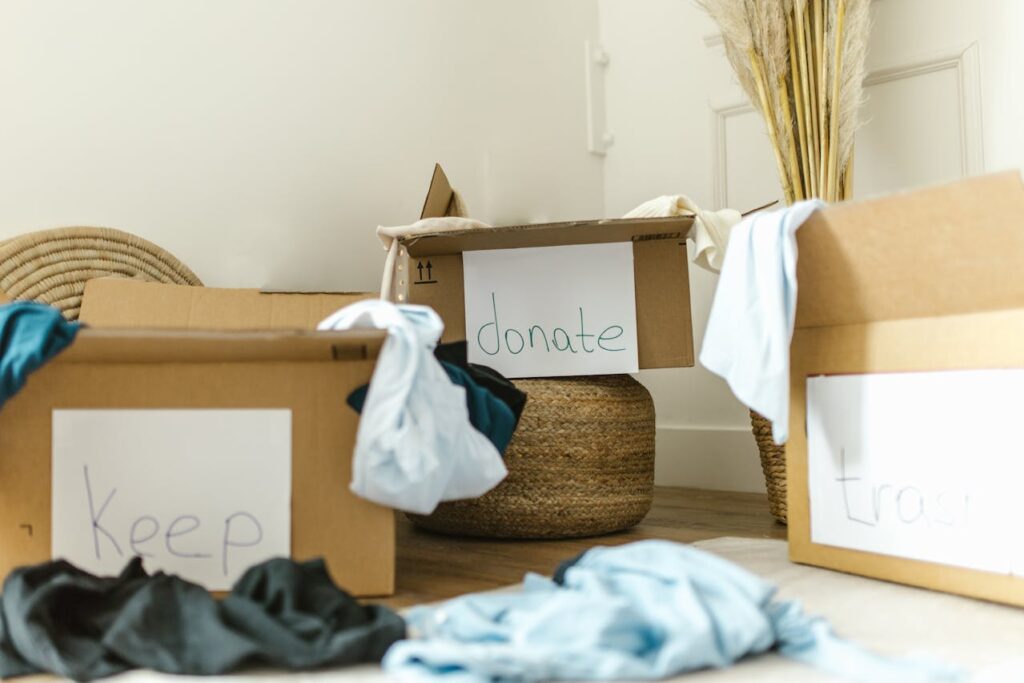
Keep a donation box or bag in an accessible spot. Whenever you come across something you no longer need, place it inside. Once the container is full, take it to a donation center or set it aside for pickup if that option is available in your area.

This habit removes the pressure of having to declutter all at once. Instead of waiting for the perfect time, you handle it gradually as part of your routine. It also reduces decision fatigue because you are making small choices over time instead of facing a large pile later.

Letting go becomes a normal part of your day rather than a task you keep postponing. Over time, this creates a steady flow of items leaving your home, which helps keep your space under control. </p> :: Pexels

One of the biggest barriers to decluttering is the effort it takes to get rid of things. Items pile up because it feels inconvenient to deal with them in the moment. Making the process easier can change everything.

Keep a donation box or bag in an accessible spot. Whenever you come across something you no longer need, place it inside. Once the container is full, take it to a donation center or set it aside for pickup if that option is available in your area.

This habit removes the pressure of having to declutter all at once. Instead of waiting for the perfect time, you handle it gradually as part of your routine. It also reduces decision fatigue because you are making small choices over time instead of facing a large pile later.

Letting go becomes a normal part of your day rather than a task you keep postponing. Over time, this creates a steady flow of items leaving your home, which helps keep your space under control.

Final Thoughts

<p> Decluttering does not have to be overwhelming or time consuming to be effective. In fact, the most lasting changes often come from the smallest habits. When you shift your focus from big cleanups to simple daily actions, everything starts to feel more manageable.

These six habits are not about creating a perfect home. They are about creating a space that supports your everyday life. A place where you can find what you need without frustration, move through your routine with ease, and feel a sense of calm instead of chaos.

You do not need to adopt all of these habits at once. Start with one that feels natural and build from there. As these small actions become part of your routine, you will notice a gradual but meaningful difference. Your space will stay more organized, your mind will feel clearer, and your daily life will run a little smoother.

That is the real goal of decluttering. Not perfection, but simplicity that actually lasts. </p> :: Pexels

Decluttering does not have to be overwhelming or time consuming to be effective. In fact, the most lasting changes often come from the smallest habits. When you shift your focus from big cleanups to simple daily actions, everything starts to feel more manageable.

These six habits are not about creating a perfect home. They are about creating a space that supports your everyday life. A place where you can find what you need without frustration, move through your routine with ease, and feel a sense of calm instead of chaos.

You do not need to adopt all of these habits at once. Start with one that feels natural and build from there. As these small actions become part of your routine, you will notice a gradual but meaningful difference. Your space will stay more organized, your mind will feel clearer, and your daily life will run a little smoother.

That is the real goal of decluttering. Not perfection, but simplicity that actually lasts.

Filed Under: Lifestyle

Leave a Reply Cancel reply

Your email address will not be published. Required fields are marked *

  • Email
  • Facebook
  • Pinterest
  • Twitter

Our Most Popular Articles

ClickCashGo Review: Should You Avoid At All Costs?

Ultimate Guide to Mastering Your Credit Score

The 'YOLO' Mindset is a Dangerous Thing

Dave Ramsey's Financial Peace University Review: Is it Worth the Money?

Cash App Glitch 2025: Is the Free Money Glitch Real?

Five Steps To Debt Freedom

Here are five simple guidlines that will help you pay off debt.  

1) Get an emergency fund so you don’t take on debt when something comes up.

2) List your debts. This way you know where you stand.

3) Use the debt snowball. Pay your debts from smallest to largest, or most expensive to least expensive.

4) Avoid new debt. No new credit cards or loans. Period.

5) Go all cash. After everything is paid off, switch to all cash.

Helpful Resources

U of Tennesse Debt Repayment Plan Basics

Vertex 42's Debt Payoff Calculator

Savingadvice's Helpful Debt Forums

Jackie Becks Debt Blog