Our Debt Free Family

Commit. Plan. Take action.

  • BUDGETING
  • DEBT REDUCTION
  • INVESTING
  • LIFESTYLE
  • TOOLS
  • ABOUT
  • Privacy Policy
  • CONTACT

12 Warning Signs That Indicate It’s Time to Buy a New Vehicle If Your Old Car Has These Problems

January 7, 2026 | Leave a Comment

12 Warning Signs That Indicate It’s Time to Buy a New Vehicle If Your Old Car Has These Problems

<p> When it comes to your car, it's easy to brush off warning signs and hold on to it for as long as possible, especially if you've had it for years. However, as your vehicle ages, certain issues can crop up that signal it's time to make a change. Continuing to drive a car that's no longer in good condition can cost you money and time and even become a safety risk. But how do you know when it's time to let go? Here are 12 warning signs to look for that indicate it might be time to invest in a new car. </p> :: Pexels

When it comes to your car, it’s easy to brush off warning signs and hold on to it for as long as possible, especially if you’ve had it for years. However, as your vehicle ages, certain issues can crop up that signal it’s time to make a change. Continuing to drive a car that’s no longer in good condition can cost you money and time and even become a safety risk. But how do you know when it’s time to let go? Here are 12 warning signs to look for that indicate it might be time to invest in a new car.

1. Frequent and Expensive Repairs

<p> If you're spending more on repairs than the car is worth, it's a clear sign that your vehicle may be on its last legs. Regularly replacing major parts like the transmission, engine, or suspension can quickly drain your savings. Rather than continuing to invest in a car that's no longer reliable, it might be wiser to consider upgrading to a new vehicle. </p> :: Pexels

If you’re spending more on repairs than the car is worth, it’s a clear sign that your vehicle may be on its last legs. Regularly replacing major parts like the transmission, engine, or suspension can quickly drain your savings. Rather than continuing to invest in a car that’s no longer reliable, it might be wiser to consider upgrading to a new vehicle.

2. Decreased Fuel Efficiency
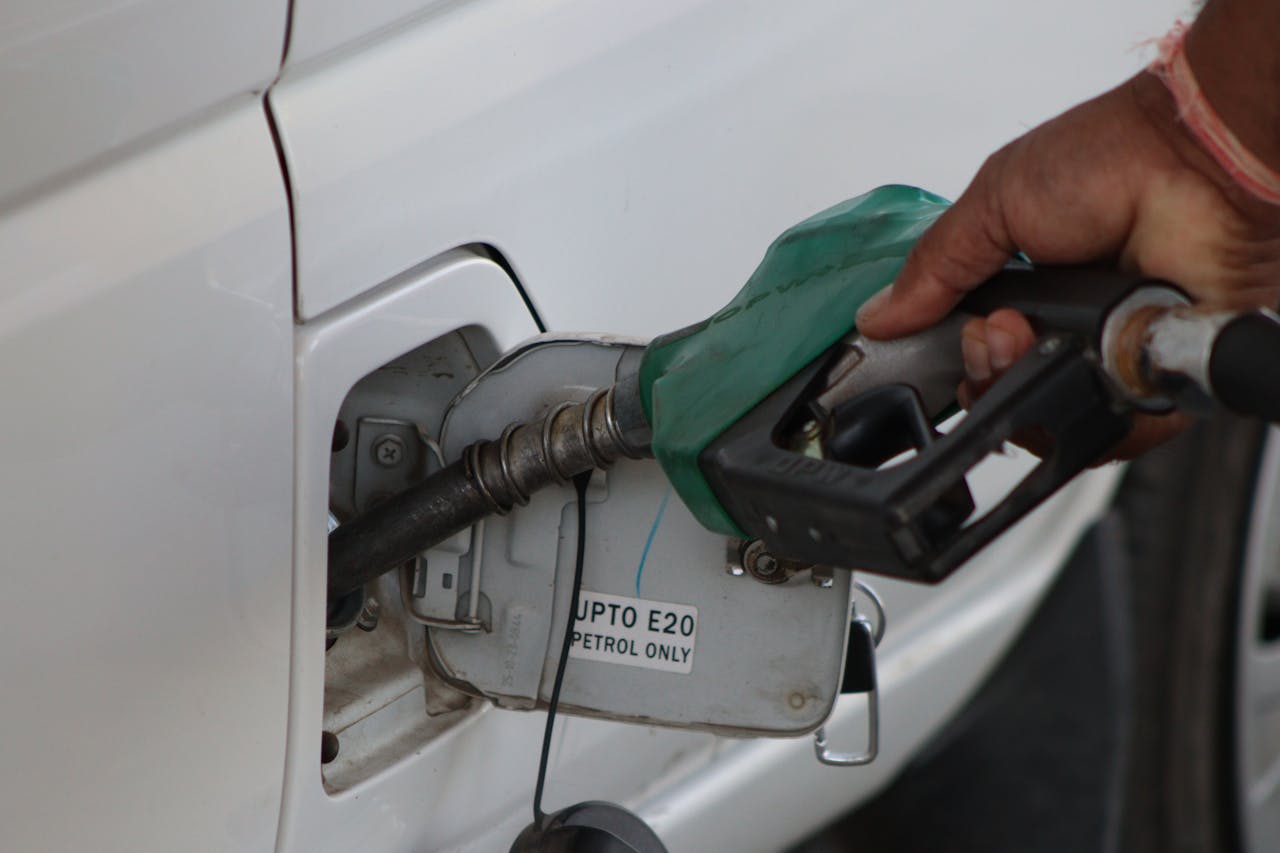
<p> As cars age, they tend to lose fuel efficiency due to engine wear, poor maintenance, or outdated technology. If you’ve noticed your car is suddenly guzzling more gas than usual, even after fixing small issues, it could be time to evaluate whether purchasing a new car with better fuel economy is a more practical and cost-effective solution in the long run. </p> :: Pexels

As cars age, they tend to lose fuel efficiency due to engine wear, poor maintenance, or outdated technology. If you’ve noticed your car is suddenly guzzling more gas than usual, even after fixing small issues, it could be time to evaluate whether purchasing a new car with better fuel economy is a more practical and cost-effective solution in the long run.

3. Constantly Dying Battery

<p> An old, unreliable battery can make your daily routine a lot more stressful. While replacing a dead battery may seem like a quick fix, if you’re constantly needing to jump-start your car or replacing the battery every year, it may be a sign that your car is aging in a way that’s hard to repair. This issue can quickly escalate, leaving you stranded at inconvenient times. </p> :: Pexels

An old, unreliable battery can make your daily routine a lot more stressful. While replacing a dead battery may seem like a quick fix, if you’re constantly needing to jump-start your car or replacing the battery every year, it may be a sign that your car is aging in a way that’s hard to repair. This issue can quickly escalate, leaving you stranded at inconvenient times.

4. Rust or Extensive Body Damage

<p> Visible rust or deep body damage can significantly affect the integrity of your car, especially if it’s left untreated. While minor scratches are one thing, large rust patches or structural damage can affect the safety and performance of your vehicle. If the frame is compromised, it may be safer and more cost-efficient to buy a new car than to repair the damage. </p> :: Pexels

Visible rust or deep body damage can significantly affect the integrity of your car, especially if it’s left untreated. While minor scratches are one thing, large rust patches or structural damage can affect the safety and performance of your vehicle. If the frame is compromised, it may be safer and more cost-efficient to buy a new car than to repair the damage.

5. Unreliable Starting

<p> If your car has trouble starting or regularly requires more than one attempt to turn on, this could indicate serious electrical issues, such as with the alternator or starter motor. These issues, when left unchecked, can make your car unreliable and difficult to depend on for daily use. When repair costs start adding up, it’s better to consider a new vehicle before the problem worsens. </p> :: Pexels

If your car has trouble starting or regularly requires more than one attempt to turn on, this could indicate serious electrical issues, such as with the alternator or starter motor. These issues, when left unchecked, can make your car unreliable and difficult to depend on for daily use. When repair costs start adding up, it’s better to consider a new vehicle before the problem worsens.

6. Transmission Problems

<p> Transmission problems are one of the most expensive and difficult repairs to handle on an old car. If your car is experiencing slipping gears, strange noises, or difficulty shifting, it's often a sign that the transmission is failing. This could cost thousands of dollars to repair or replace, making it a much smarter financial choice to buy a new car instead. </p> :: Pexels

Transmission problems are one of the most expensive and difficult repairs to handle on an old car. If your car is experiencing slipping gears, strange noises, or difficulty shifting, it’s often a sign that the transmission is failing. This could cost thousands of dollars to repair or replace, making it a much smarter financial choice to buy a new car instead.

7. Overheating Issues

<p> A car that constantly overheats could be suffering from a number of problems, including a broken radiator, leaking coolant, or a failing water pump. While occasional overheating can be managed with some repairs, if your car overheats regularly, it may indicate a bigger issue with the engine that could cost more than the car is worth. It might be more cost-effective to buy a new vehicle. </p> :: Pexels

A car that constantly overheats could be suffering from a number of problems, including a broken radiator, leaking coolant, or a failing water pump. While occasional overheating can be managed with some repairs, if your car overheats regularly, it may indicate a bigger issue with the engine that could cost more than the car is worth. It might be more cost-effective to buy a new vehicle.

8. Air Conditioning and Heating System Failures

<p> If your air conditioning or heating system is no longer working properly, this can severely impact your comfort while driving, especially during extreme weather conditions. While these systems can often be repaired, a complete failure of both may suggest a broader issue with your vehicle’s electrical or mechanical systems. Replacing these systems in an older car can be expensive and may not justify the investment. </p> :: Pexels

If your air conditioning or heating system is no longer working properly, this can severely impact your comfort while driving, especially during extreme weather conditions. While these systems can often be repaired, a complete failure of both may suggest a broader issue with your vehicle’s electrical or mechanical systems. Replacing these systems in an older car can be expensive and may not justify the investment.

9. Check Engine Light That Won’t Turn Off

<p> A check engine light is a warning sign that should never be ignored. While it could simply indicate a minor issue, persistent or recurring problems with the check engine light can signal larger, more costly issues. If you’ve already had several diagnostic tests and repairs with little improvement, it might be time to consider a replacement vehicle. </p> :: Pexels

A check engine light is a warning sign that should never be ignored. While it could simply indicate a minor issue, persistent or recurring problems with the check engine light can signal larger, more costly issues. If you’ve already had several diagnostic tests and repairs with little improvement, it might be time to consider a replacement vehicle.

10. Poor Handling and Steering Problems

<p> If your car starts pulling to one side or has difficulty steering, this could indicate problems with the suspension, alignment, or steering system. These issues can make driving hazardous, especially on highways or in poor weather conditions. Fixing these problems on an aging car can be costly, and if the steering system continues to fail, it’s a major safety concern that should not be overlooked. </p> :: Pexels

If your car starts pulling to one side or has difficulty steering, this could indicate problems with the suspension, alignment, or steering system. These issues can make driving hazardous, especially on highways or in poor weather conditions. Fixing these problems on an aging car can be costly, and if the steering system continues to fail, it’s a major safety concern that should not be overlooked.

11. Outdated Technology

<p> If your car is equipped with outdated technology, such as a non-functional infotainment system or a lack of modern safety features, you might find yourself frustrated with its limitations. Newer vehicles come with features like Bluetooth connectivity, advanced driver assistance systems, and improved safety technology. Upgrading to a car with more modern conveniences and safety systems could be well worth the investment for your daily driving experience. </p> :: Pexels

If your car is equipped with outdated technology, such as a non-functional infotainment system or a lack of modern safety features, you might find yourself frustrated with its limitations. Newer vehicles come with features like Bluetooth connectivity, advanced driver assistance systems, and improved safety technology. Upgrading to a car with more modern conveniences and safety systems could be well worth the investment for your daily driving experience.

12. Excessive Mileage

<p> High mileage is a significant factor in a car’s overall value and reliability. Cars that have crossed the 150,000-mile mark, especially without major repairs, often begin to develop serious issues. If your car has high mileage and is starting to show multiple warning signs, it may not be worth the cost of maintaining it much longer. At this point, upgrading to a newer car might save you more money and hassle. </p> :: Pexels

High mileage is a significant factor in a car’s overall value and reliability. Cars that have crossed the 150,000-mile mark, especially without major repairs, often begin to develop serious issues. If your car has high mileage and is starting to show multiple warning signs, it may not be worth the cost of maintaining it much longer. At this point, upgrading to a newer car might save you more money and hassle.

Final Thoughts

<p> If you’ve noticed any of these warning signs with your current vehicle, it may be time to seriously consider purchasing a new one. While it can be difficult to say goodbye to a car that has served you well, the long-term costs and risks associated with keeping an aging vehicle are simply not worth it. From frequent repairs to safety concerns, it’s important to weigh the cost of maintaining your current car against the benefits of buying a new one. After all, a new car can provide you with greater reliability, modern features, and more peace of mind on the road. </p> :: Pexels

If you’ve noticed any of these warning signs with your current vehicle, it may be time to seriously consider purchasing a new one. While it can be difficult to say goodbye to a car that has served you well, the long-term costs and risks associated with keeping an aging vehicle are simply not worth it. From frequent repairs to safety concerns, it’s important to weigh the cost of maintaining your current car against the benefits of buying a new one. After all, a new car can provide you with greater reliability, modern features, and more peace of mind on the road.


Filed Under: Autos

10 Simple Bread Baking Tricks Every Home Baker Should Know

January 7, 2026 | Leave a Comment

10 Simple Bread Baking Tricks Every Home Baker Should Know

<p> Baking bread at home is one of the most satisfying experiences. The aroma, the crispy crust, the soft and chewy interior—there’s nothing like freshly baked bread straight from your oven. However, the process can sometimes feel intimidating, especially if you're just starting out. Fear not! With a few simple bread baking tricks, you can elevate your bread-making skills and achieve perfect loaves every time. Whether you are a beginner or an experienced baker, these 10 tips will help you bake like a pro. </p> :: Pexels

Baking bread at home is one of the most satisfying experiences. The aroma, the crispy crust, the soft and chewy interior—there’s nothing like freshly baked bread straight from your oven. However, the process can sometimes feel intimidating, especially if you’re just starting out. Fear not! With a few simple bread baking tricks, you can elevate your bread-making skills and achieve perfect loaves every time. Whether you are a beginner or an experienced baker, these 10 tips will help you bake like a pro.

1. Use the Right Flour for Your Recipe

<p> Choosing the right flour is crucial for the texture and structure of your bread. Bread flour, which has a higher protein content than all-purpose flour, creates the perfect gluten structure for chewy, hearty loaves. If you’re aiming for a softer bread like brioche or dinner rolls, all-purpose flour can do the job, but for artisan loaves like sourdough or baguettes, bread flour is ideal. Always measure flour correctly by spooning it into the measuring cup and leveling it off for accuracy. </p> :: Pexels

Choosing the right flour is crucial for the texture and structure of your bread. Bread flour, which has a higher protein content than all-purpose flour, creates the perfect gluten structure for chewy, hearty loaves. If you’re aiming for a softer bread like brioche or dinner rolls, all-purpose flour can do the job, but for artisan loaves like sourdough or baguettes, bread flour is ideal. Always measure flour correctly by spooning it into the measuring cup and leveling it off for accuracy.

2. Invest in a Kitchen Scale for Accurate Measurements

<p> While using measuring cups works fine, a kitchen scale provides the most accurate measurements, which is critical when it comes to baking. Flour can vary in density depending on how it’s scooped, which could lead to inconsistent results. By weighing your ingredients, you ensure that your dough has the right consistency. Aim for 500g of flour per loaf and adjust other ingredients proportionally. This small investment can take your baking to the next level, ensuring your bread turns out perfectly every time. </p> :: Pexels

While using measuring cups works fine, a kitchen scale provides the most accurate measurements, which is critical when it comes to baking. Flour can vary in density depending on how it’s scooped, which could lead to inconsistent results. By weighing your ingredients, you ensure that your dough has the right consistency. Aim for 500g of flour per loaf and adjust other ingredients proportionally. This small investment can take your baking to the next level, ensuring your bread turns out perfectly every time.

3. Don’t Skip the Resting Time

<p> Patience is key in bread baking, especially when it comes to allowing the dough to rest and rise. After mixing your dough, let it rest for at least an hour, or until it has doubled in size. Resting gives the yeast time to work, creating the air pockets that make bread light and airy. If you skip this step or rush it, your bread will lack the proper texture and flavor. If you have the time, a slow, overnight rise in the fridge will develop even more complex flavors in your bread. </p> :: Pexels

Patience is key in bread baking, especially when it comes to allowing the dough to rest and rise. After mixing your dough, let it rest for at least an hour, or until it has doubled in size. Resting gives the yeast time to work, creating the air pockets that make bread light and airy. If you skip this step or rush it, your bread will lack the proper texture and flavor. If you have the time, a slow, overnight rise in the fridge will develop even more complex flavors in your bread.

4. Master the Art of Kneading

<p> Kneading helps develop the gluten in the dough, which gives your bread structure and chewiness. However, over-kneading can make your bread tough. The goal is to knead just enough to get the dough smooth and elastic. A good trick is to perform the "windowpane test." Take a small piece of dough and stretch it between your fingers. If it forms a thin, translucent window without tearing, your dough is ready. If it tears, continue kneading for a few more minutes. </p> :: Pexels

Kneading helps develop the gluten in the dough, which gives your bread structure and chewiness. However, over-kneading can make your bread tough. The goal is to knead just enough to get the dough smooth and elastic. A good trick is to perform the “windowpane test.” Take a small piece of dough and stretch it between your fingers. If it forms a thin, translucent window without tearing, your dough is ready. If it tears, continue kneading for a few more minutes.

5. Use Warm Water, Not Hot

<p> Water temperature plays an important role in the yeast activation process. If the water is too hot, it will kill the yeast; if it’s too cold, the yeast will not activate properly. Aim for water that is warm to the touch, around 100-110°F (38-43°C). This will provide the perfect environment for the yeast to thrive, resulting in a beautifully risen loaf. For extra caution, use a thermometer to ensure the water temperature is ideal. </p> :: Pexels

Water temperature plays an important role in the yeast activation process. If the water is too hot, it will kill the yeast; if it’s too cold, the yeast will not activate properly. Aim for water that is warm to the touch, around 100-110°F (38-43°C). This will provide the perfect environment for the yeast to thrive, resulting in a beautifully risen loaf. For extra caution, use a thermometer to ensure the water temperature is ideal.

6. Create Steam in Your Oven

<p> One of the secrets to achieving a crispy, professional-quality crust on your homemade bread is creating steam in your oven. When bread dough hits the hot oven, it needs moisture to expand and rise before the crust forms. A simple way to do this is by placing a pan of water at the bottom of the oven or spritzing the bread with water just before baking. If you have a pizza stone or baking cloche, the steam will be trapped around the dough, allowing it to rise beautifully and form a perfect golden-brown crust. </p> :: Pexels

One of the secrets to achieving a crispy, professional-quality crust on your homemade bread is creating steam in your oven. When bread dough hits the hot oven, it needs moisture to expand and rise before the crust forms. A simple way to do this is by placing a pan of water at the bottom of the oven or spritzing the bread with water just before baking. If you have a pizza stone or baking cloche, the steam will be trapped around the dough, allowing it to rise beautifully and form a perfect golden-brown crust.

7. Score Your Dough Before Baking

<p> Scoring, or making shallow slashes in the dough, serves both a functional and decorative purpose. Functionally, it allows the dough to expand and rise evenly during baking, preventing it from cracking in undesirable places. A sharp knife or bread lame is ideal for this task. Decorative scoring patterns, like a simple cross or intricate leaf shapes, can also enhance the visual appeal of your bread. Just be sure to score your dough gently—pressing too hard could deflate it. </p> :: Pexels

Scoring, or making shallow slashes in the dough, serves both a functional and decorative purpose. Functionally, it allows the dough to expand and rise evenly during baking, preventing it from cracking in undesirable places. A sharp knife or bread lame is ideal for this task. Decorative scoring patterns, like a simple cross or intricate leaf shapes, can also enhance the visual appeal of your bread. Just be sure to score your dough gently—pressing too hard could deflate it.

8. Use a Proofing Basket for Better Shape

<p> A proofing basket (also called a banneton) is a wonderful tool for shaping and supporting your dough as it rises. These baskets help your bread hold its shape and develop beautiful ridges. If you don't have a proofing basket, you can also use a bowl lined with a clean kitchen towel dusted with flour. After the final rise, gently transfer the dough from the basket or bowl to your baking surface to avoid deflation. </p> :: Pexels

A proofing basket (also called a banneton) is a wonderful tool for shaping and supporting your dough as it rises. These baskets help your bread hold its shape and develop beautiful ridges. If you don’t have a proofing basket, you can also use a bowl lined with a clean kitchen towel dusted with flour. After the final rise, gently transfer the dough from the basket or bowl to your baking surface to avoid deflation.

9. Preheat Your Oven Properly

<p> Properly preheating your oven ensures that your bread bakes at the right temperature from the moment it goes in. Many people make the mistake of not allowing enough time for the oven to reach its full heat before putting the dough inside. This can lead to uneven baking and poor oven spring. Preheat your oven for at least 30 minutes, especially if you're using a baking stone or a Dutch oven. Once the oven is properly heated, you can be confident that your bread will bake evenly and achieve that perfect rise. </p> :: Pexels

Properly preheating your oven ensures that your bread bakes at the right temperature from the moment it goes in. Many people make the mistake of not allowing enough time for the oven to reach its full heat before putting the dough inside. This can lead to uneven baking and poor oven spring. Preheat your oven for at least 30 minutes, especially if you’re using a baking stone or a Dutch oven. Once the oven is properly heated, you can be confident that your bread will bake evenly and achieve that perfect rise.

10. Let Your Bread Cool Before Slicing

<p> While it’s tempting to slice into your freshly baked loaf as soon as it comes out of the oven, it’s important to let it cool down first. Cutting into the bread while it’s still hot will result in a gummy texture, as the interior hasn’t had time to fully set. Let your bread cool for at least 30 minutes on a wire rack before slicing. This cooling period allows the bread to firm up and develop its full flavor. Plus, it’ll make the slicing process much easier. </p> :: Pexels

While it’s tempting to slice into your freshly baked loaf as soon as it comes out of the oven, it’s important to let it cool down first. Cutting into the bread while it’s still hot will result in a gummy texture, as the interior hasn’t had time to fully set. Let your bread cool for at least 30 minutes on a wire rack before slicing. This cooling period allows the bread to firm up and develop its full flavor. Plus, it’ll make the slicing process much easier.

Final Thoughts

<p> Baking bread at home doesn’t need to be a daunting task. By following these 10 simple tricks, you can create bread that rivals what you’d find at a bakery, all with just a few ingredients and a little time. Whether you are baking for yourself or sharing with friends and family, homemade bread is a rewarding treat that’s worth the effort. Remember to practice patience, and soon you’ll be the proud baker of perfect loaves every time. Happy baking! </p> :: Pexels

Baking bread at home doesn’t need to be a daunting task. By following these 10 simple tricks, you can create bread that rivals what you’d find at a bakery, all with just a few ingredients and a little time. Whether you are baking for yourself or sharing with friends and family, homemade bread is a rewarding treat that’s worth the effort. Remember to practice patience, and soon you’ll be the proud baker of perfect loaves every time. Happy baking!

Filed Under: Food & Drink

Car Problems Mechanics Hope You Never Learn to Fix: 12 Issues That Could Cost You Big

January 7, 2026 | Leave a Comment

Car Problems Mechanics Hope You Never Learn to Fix: 12 Issues That Could Cost You Big

<p> Owning a car in the United States comes with a mix of independence and occasional panic. Cars make life easier, but when something goes wrong, even small problems can turn into major headaches. Most of us enjoy tinkering a little, whether it is changing oil, swapping brake pads, or fixing a headlight. But some car problems are far beyond the average DIY enthusiast’s reach. Mechanics quietly hope you never attempt these fixes yourself. Not because they want to keep you spending money, but because some repairs are complicated, dangerous, or extremely easy to get wrong—and the consequences can be expensive or even life threatening.

Here is a practical and relatable breakdown of the top car problems mechanics hope you never learn to fix. Knowing what to leave to the professionals can save you money, frustration, and a lot of stress. </p> :: Freepik

Owning a car in the United States comes with a mix of independence and occasional panic. Cars make life easier, but when something goes wrong, even small problems can turn into major headaches. Most of us enjoy tinkering a little, whether it is changing oil, swapping brake pads, or fixing a headlight. But some car problems are far beyond the average DIY enthusiast’s reach. Mechanics quietly hope you never attempt these fixes yourself. Not because they want to keep you spending money, but because some repairs are complicated, dangerous, or extremely easy to get wrong—and the consequences can be expensive or even life threatening.

Here is a practical and relatable breakdown of the top car problems mechanics hope you never learn to fix. Knowing what to leave to the professionals can save you money, frustration, and a lot of stress.

1. Brake System Repairs

<p> Brakes are one of the most critical safety features of your car, which is why mechanics get nervous when someone tries to fix them without proper training. Modern braking systems include complex parts such as anti-lock brake sensors, hydraulic lines, and master cylinders. Even a small mistake, like misrouting a brake line or improperly bleeding the system, can result in brake failure. While changing brake pads or rotors is manageable for a careful DIYer, anything beyond that should be left to a professional. A safe braking system is not something worth taking risks with. </p> :: Gemini

Brakes are one of the most critical safety features of your car, which is why mechanics get nervous when someone tries to fix them without proper training. Modern braking systems include complex parts such as anti-lock brake sensors, hydraulic lines, and master cylinders. Even a small mistake, like misrouting a brake line or improperly bleeding the system, can result in brake failure. While changing brake pads or rotors is manageable for a careful DIYer, anything beyond that should be left to a professional. A safe braking system is not something worth taking risks with.

2. Transmission Overhauls

<p> Your car’s transmission is essentially its heart, moving power from the engine to the wheels with incredible precision. Transmission repairs are extremely complex, whether it is a manual gearbox or an automatic transmission. With dozens of gears, clutches, and hydraulic circuits working together, one small error can cause slipping gears or total transmission failure. Without the right tools and years of experience, tackling a transmission at home is more likely to create a bigger problem than it solves. </p> :: Gemini

Your car’s transmission is essentially its heart, moving power from the engine to the wheels with incredible precision. Transmission repairs are extremely complex, whether it is a manual gearbox or an automatic transmission. With dozens of gears, clutches, and hydraulic circuits working together, one small error can cause slipping gears or total transmission failure. Without the right tools and years of experience, tackling a transmission at home is more likely to create a bigger problem than it solves.

3. Engine Diagnostics and Fixes

<p> Engines are more than metal and hoses; they are sophisticated systems requiring diagnostic tools and trained eyes to spot problems. Misinterpreting engine codes or guessing what part to replace can lead to unnecessary expenses or further damage. For example, replacing a sensor without fully understanding the cause of a warning light might not fix anything and could even make the problem worse. Professional mechanics have the tools and knowledge to diagnose issues accurately, saving you time and money in the long run. </p> :: Gemini

Engines are more than metal and hoses; they are sophisticated systems requiring diagnostic tools and trained eyes to spot problems. Misinterpreting engine codes or guessing what part to replace can lead to unnecessary expenses or further damage. For example, replacing a sensor without fully understanding the cause of a warning light might not fix anything and could even make the problem worse. Professional mechanics have the tools and knowledge to diagnose issues accurately, saving you time and money in the long run.

4. Timing Belt Replacement

<p> The timing belt is small but vital, keeping the engine’s valves and pistons perfectly synchronized. One tooth off on the belt, and the results can be catastrophic, including bent valves or damaged pistons. Timing belt replacement often requires removing several components, careful measurement, and precise tensioning. Mechanics deal with these tasks every day, but for a DIYer, the margin for error is tiny. Mistakes can quickly become one of the most expensive engine repairs you could face. </p> :: Gemini

The timing belt is small but vital, keeping the engine’s valves and pistons perfectly synchronized. One tooth off on the belt, and the results can be catastrophic, including bent valves or damaged pistons. Timing belt replacement often requires removing several components, careful measurement, and precise tensioning. Mechanics deal with these tasks every day, but for a DIYer, the margin for error is tiny. Mistakes can quickly become one of the most expensive engine repairs you could face.

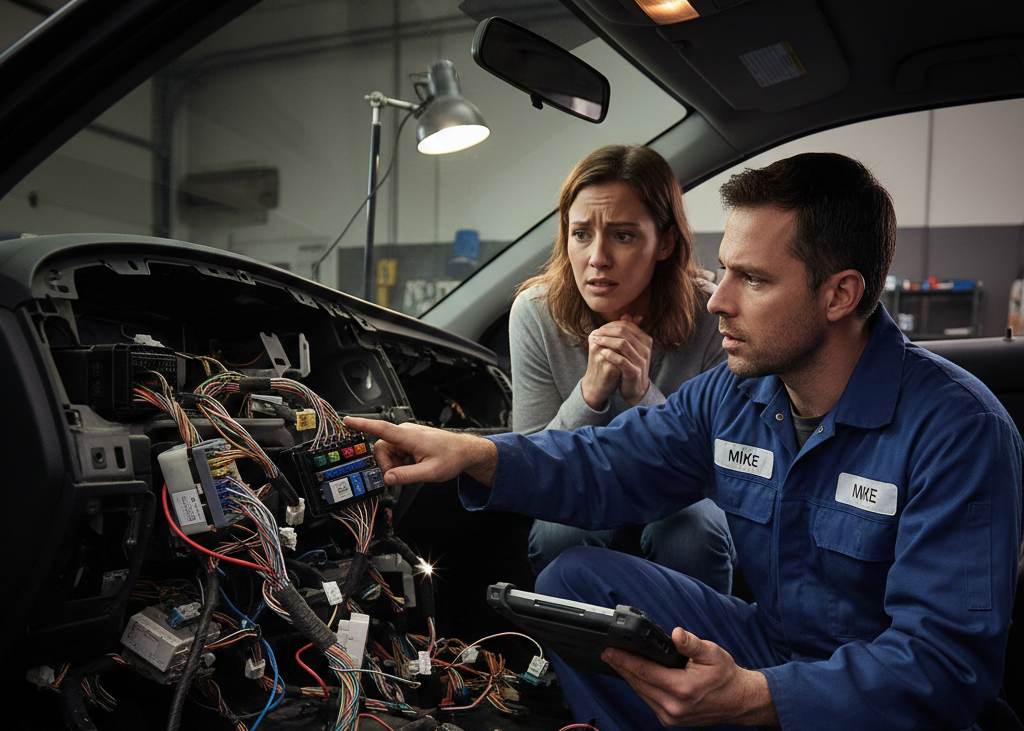
5. Electrical System Repairs

<p> Modern vehicles are essentially computers on wheels, with dozens of sensors and electronic control modules. One incorrect connection or a short circuit can disable your ECU, airbag systems, or safety features. Electrical problems may seem straightforward, but diagnosing and fixing them without specialized tools is a risky venture. Even a single miswired component can turn a small issue into a major headache, making this type of repair a job for professionals who understand vehicle electronics inside and out. </p> :: Gemini

Modern vehicles are essentially computers on wheels, with dozens of sensors and electronic control modules. One incorrect connection or a short circuit can disable your ECU, airbag systems, or safety features. Electrical problems may seem straightforward, but diagnosing and fixing them without specialized tools is a risky venture. Even a single miswired component can turn a small issue into a major headache, making this type of repair a job for professionals who understand vehicle electronics inside and out.

6. Windshield and Glass Replacement

<p> Replacing a cracked windshield or side window may look simple, but it is trickier than it appears. Proper adhesion and sealing are critical to maintaining structural integrity and keeping water out. If the installation is done incorrectly, leaks can form, and the car’s safety in an accident may be compromised. Professionals have the proper adhesives, tools, and curing methods to do the job safely and effectively. Trying it at home could end up costing more than having it done professionally in the first place. </p> :: Gemini

Replacing a cracked windshield or side window may look simple, but it is trickier than it appears. Proper adhesion and sealing are critical to maintaining structural integrity and keeping water out. If the installation is done incorrectly, leaks can form, and the car’s safety in an accident may be compromised. Professionals have the proper adhesives, tools, and curing methods to do the job safely and effectively. Trying it at home could end up costing more than having it done professionally in the first place.

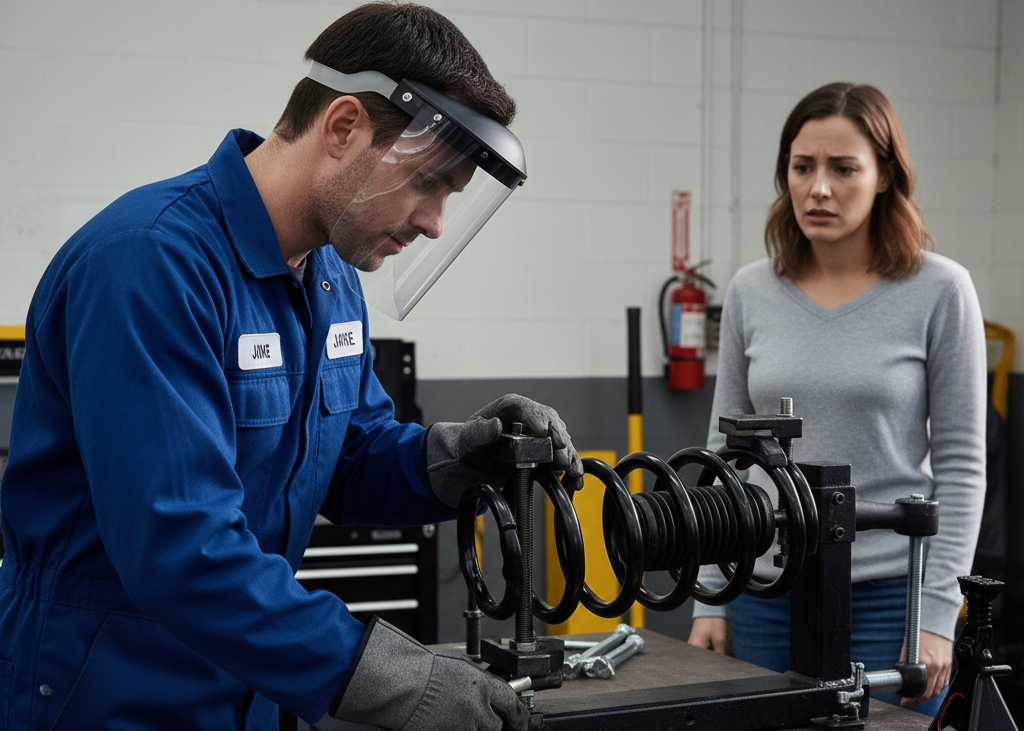
7. Coil Spring Replacement

<p> Coil springs store an incredible amount of energy, which makes them extremely dangerous if handled incorrectly. Compressing and installing them without the right tools can lead to springs launching violently, causing serious injury. Mechanics use specialized compressors and know the proper safety protocols to prevent accidents. Coil spring replacement is one of those jobs where experience and equipment are absolutely critical. </p> :: Gemini

Coil springs store an incredible amount of energy, which makes them extremely dangerous if handled incorrectly. Compressing and installing them without the right tools can lead to springs launching violently, causing serious injury. Mechanics use specialized compressors and know the proper safety protocols to prevent accidents. Coil spring replacement is one of those jobs where experience and equipment are absolutely critical.

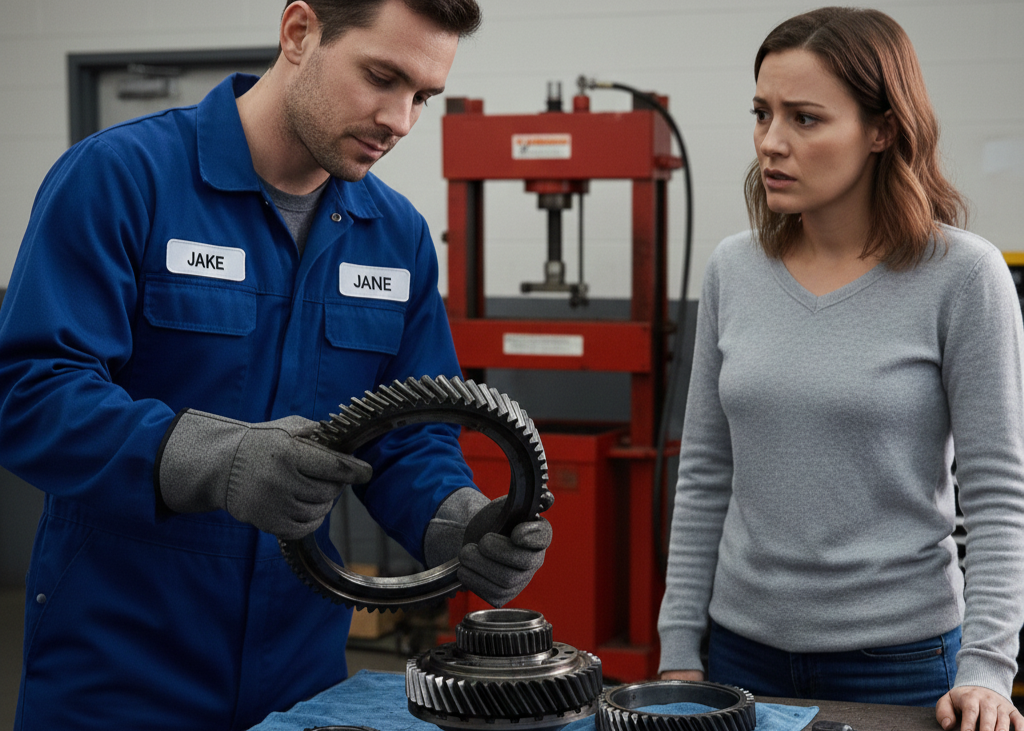
8. Differential and Gearbox Repairs

<p> Differentials and gearboxes are highly precise assemblies with gears, bearings, and tolerances that must be perfect. A small misalignment can cause grinding gears, overheating, or complete failure. Even experienced DIYers with a well-stocked garage would struggle with these repairs. Attempting this at home without the right tools and training can result in costly damage and a lot of frustration. </p> :: Gemini

Differentials and gearboxes are highly precise assemblies with gears, bearings, and tolerances that must be perfect. A small misalignment can cause grinding gears, overheating, or complete failure. Even experienced DIYers with a well-stocked garage would struggle with these repairs. Attempting this at home without the right tools and training can result in costly damage and a lot of frustration.

9. ABS and Sensor System Calibration

<p> Anti-lock braking systems interact with traction control and stability systems, making them more complex than traditional brakes. Replacing a sensor without recalibrating the system can leave safety features offline or trigger false warnings. These systems require specific scanning and programming tools to ensure they work correctly. A small mistake here can compromise your car’s safety, so it is best to leave it to a professional. </p> :: Gemini

Anti-lock braking systems interact with traction control and stability systems, making them more complex than traditional brakes. Replacing a sensor without recalibrating the system can leave safety features offline or trigger false warnings. These systems require specific scanning and programming tools to ensure they work correctly. A small mistake here can compromise your car’s safety, so it is best to leave it to a professional.

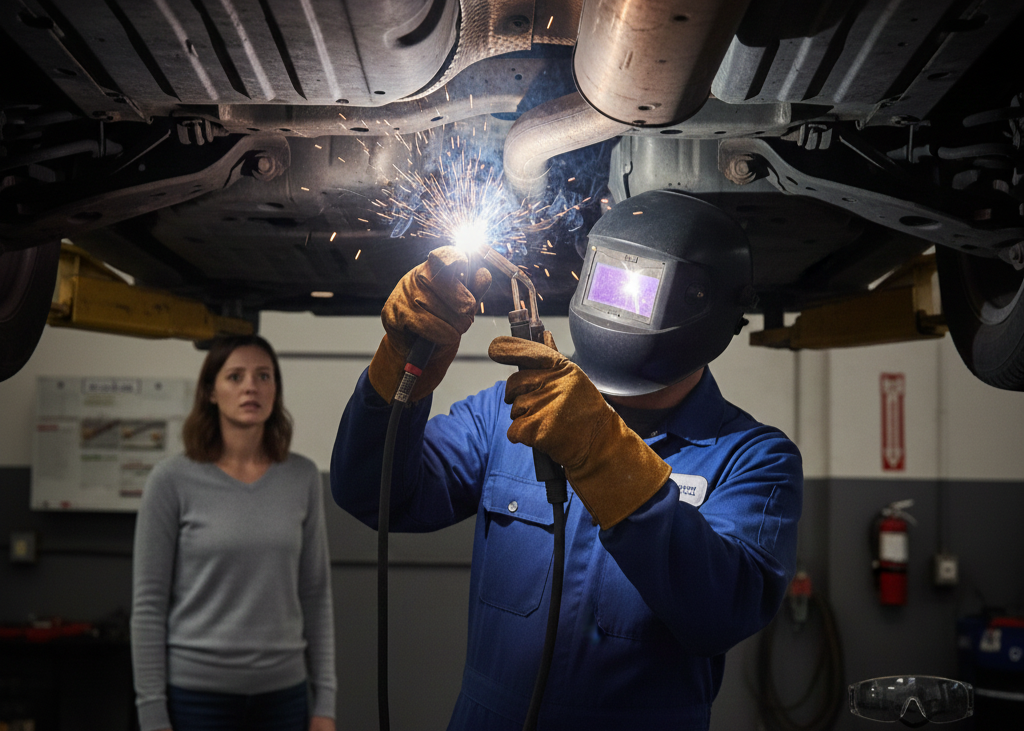
10. Exhaust System Welding

<p> Exhaust repairs may seem like a good DIY project, but welding exhaust pipes can be dangerous. Working in tight spaces with rusted parts, high heat, and toxic fumes is risky. A poorly welded exhaust can leak carbon monoxide into your cabin, creating a severe health hazard. Mechanics have the right equipment and experience to perform exhaust work safely and effectively, protecting both the vehicle and your well-being. </p> :: Gemini

Exhaust repairs may seem like a good DIY project, but welding exhaust pipes can be dangerous. Working in tight spaces with rusted parts, high heat, and toxic fumes is risky. A poorly welded exhaust can leak carbon monoxide into your cabin, creating a severe health hazard. Mechanics have the right equipment and experience to perform exhaust work safely and effectively, protecting both the vehicle and your well-being.

11. High-Voltage Hybrid or Electric Systems

<p> If you drive a hybrid or fully electric car, one of the biggest risks comes from the high-voltage electrical system. These systems can deliver potentially fatal shocks if handled incorrectly. Only technicians trained in electric vehicle safety should attempt repairs or even minor work on these components. Handling high-voltage systems without proper knowledge is extremely dangerous and should never be attempted at home. </p> :: Gemini

If you drive a hybrid or fully electric car, one of the biggest risks comes from the high-voltage electrical system. These systems can deliver potentially fatal shocks if handled incorrectly. Only technicians trained in electric vehicle safety should attempt repairs or even minor work on these components. Handling high-voltage systems without proper knowledge is extremely dangerous and should never be attempted at home.

12. Coolant System Repairs

<p> The coolant system keeps your engine at a safe operating temperature, but it is more complicated than just filling a radiator. Incorrect installation of hoses, pumps, or thermostats, or failing to remove trapped air, can lead to rapid engine overheating. Overheating can warp cylinder heads, blow gaskets, and cause thousands of dollars in damage. This is another area where professional knowledge and precision tools make all the difference. </p> :: Gemini

The coolant system keeps your engine at a safe operating temperature, but it is more complicated than just filling a radiator. Incorrect installation of hoses, pumps, or thermostats, or failing to remove trapped air, can lead to rapid engine overheating. Overheating can warp cylinder heads, blow gaskets, and cause thousands of dollars in damage. This is another area where professional knowledge and precision tools make all the difference.

Final Thoughts

<p> It is tempting to try every repair yourself, especially with YouTube tutorials and online guides. However, some car problems are simply not worth the risk. From brakes and transmissions to coil springs and high-voltage systems, the complexity, safety risks, and costs of mistakes make these jobs best left to professionals.

That does not mean you cannot be a hands-on car owner. There are plenty of repairs and maintenance tasks you can safely learn, like changing oil, swapping air filters, or rotating tires. These small projects can save money, teach you valuable skills, and give you a deeper appreciation for your vehicle.

Understanding your limits and knowing when to call a professional will save you headaches, prevent expensive mistakes, and keep you and your passengers safe. A little knowledge is empowering, but some repairs truly are worth leaving in the hands of trained mechanics. After all, your safety and the long-term health of your car are priceless. </p> :: Gemini

It is tempting to try every repair yourself, especially with YouTube tutorials and online guides. However, some car problems are simply not worth the risk. From brakes and transmissions to coil springs and high-voltage systems, the complexity, safety risks, and costs of mistakes make these jobs best left to professionals.

That does not mean you cannot be a hands-on car owner. There are plenty of repairs and maintenance tasks you can safely learn, like changing oil, swapping air filters, or rotating tires. These small projects can save money, teach you valuable skills, and give you a deeper appreciation for your vehicle.

Understanding your limits and knowing when to call a professional will save you headaches, prevent expensive mistakes, and keep you and your passengers safe. A little knowledge is empowering, but some repairs truly are worth leaving in the hands of trained mechanics. After all, your safety and the long-term health of your car are priceless.

Filed Under: Autos

7 Ways Baby Boomers Can Use AI to Simplify Everyday Life

January 7, 2026 | Leave a Comment

7 Ways Baby Boomers Can Use AI to Simplify Everyday Life

<p> Technology can feel overwhelming at times, especially for Baby Boomers who did not grow up with it at their fingertips. From smartphones to smart home devices, there seems to be a new tool or gadget to learn every day. But here is some good news: artificial intelligence is not just for tech experts or young professionals. It is quietly making its way into everyday tools that can make life easier, safer, and more enjoyable.

Imagine having a helper who never sleeps, remembers everything for you, and can even make your daily tasks more fun. That is exactly what AI can do. From managing schedules to keeping you connected with family, AI has practical uses that can simplify life in ways many Boomers might not realize. The best part is that you do not need a degree in computer science or a lifetime of experience with gadgets to benefit. A little curiosity and willingness to try can open the door to more independence and less daily stress.

If you have ever thought, “I wish I had a little help with all of this,” AI might be the answer. Here are seven ways Baby Boomers can use AI to take some of the stress out of everyday life, save time, and even enjoy new opportunities for connection and fun. </p> :: Freepik

Technology can feel overwhelming at times, especially for Baby Boomers who did not grow up with it at their fingertips. From smartphones to smart home devices, there seems to be a new tool or gadget to learn every day. But here is some good news: artificial intelligence is not just for tech experts or young professionals. It is quietly making its way into everyday tools that can make life easier, safer, and more enjoyable.

Imagine having a helper who never sleeps, remembers everything for you, and can even make your daily tasks more fun. That is exactly what AI can do. From managing schedules to keeping you connected with family, AI has practical uses that can simplify life in ways many Boomers might not realize. The best part is that you do not need a degree in computer science or a lifetime of experience with gadgets to benefit. A little curiosity and willingness to try can open the door to more independence and less daily stress.

If you have ever thought, “I wish I had a little help with all of this,” AI might be the answer. Here are seven ways Baby Boomers can use AI to take some of the stress out of everyday life, save time, and even enjoy new opportunities for connection and fun.

1. Use Voice Assistants to Manage Daily Tasks

<p> Voice assistants like Amazon Alexa or Google Assistant are more than just gadgets; they are digital helpers that respond to your voice. You can ask them to remind you to take medication, set appointments, check the weather, play your favorite music, or even call a grandchild. For people with limited mobility or vision challenges, these devices provide independence and convenience. Instead of fumbling with phones, calendars, or sticky notes, you can simply speak your request and let the assistant handle it.

Many Baby Boomers have found that using voice assistants feels like having a personal assistant at home. For example, if you wake up and suddenly remember a doctor’s appointment, you can simply say, “Alexa, remind me about my appointment at 2 p.m.,” and it will take care of the rest. Beyond reminders, voice assistants can help with fun tasks, too. They can play your favorite oldies from the 1960s or 1970s, tell jokes, or even read audiobooks aloud. This kind of support can make daily life easier and more enjoyable while reducing stress about forgetting tasks. </p> :: Gemini

Voice assistants like Amazon Alexa or Google Assistant are more than just gadgets; they are digital helpers that respond to your voice. You can ask them to remind you to take medication, set appointments, check the weather, play your favorite music, or even call a grandchild. For people with limited mobility or vision challenges, these devices provide independence and convenience. Instead of fumbling with phones, calendars, or sticky notes, you can simply speak your request and let the assistant handle it.

Many Baby Boomers have found that using voice assistants feels like having a personal assistant at home. For example, if you wake up and suddenly remember a doctor’s appointment, you can simply say, “Alexa, remind me about my appointment at 2 p.m.,” and it will take care of the rest. Beyond reminders, voice assistants can help with fun tasks, too. They can play your favorite oldies from the 1960s or 1970s, tell jokes, or even read audiobooks aloud. This kind of support can make daily life easier and more enjoyable while reducing stress about forgetting tasks.

2. Let AI Help You Write Emails and Messages

<p> Sometimes finding the right words is harder than it seems. Whether you want to send a quick email to a friend, respond to a family member, or even write a more formal letter, AI can make the process much smoother. Writing assistants like ChatGPT can help you draft messages, organize your thoughts, summarize information, and even suggest creative ways to express yourself.

For example, if you want to send a birthday message to a grandchild but are unsure what to write, you can type in a few key ideas and let AI turn them into a polished, thoughtful message. It can also help with everyday communication, such as summarizing a long email or turning a grocery list into a neat, organized format. Using AI in this way saves time, reduces frustration, and ensures that your messages are clear and effective. Over time, many Boomers find that these tools feel like a friendly assistant sitting right next to them, ready to help whenever needed. </p> :: Gemini

Sometimes finding the right words is harder than it seems. Whether you want to send a quick email to a friend, respond to a family member, or even write a more formal letter, AI can make the process much smoother. Writing assistants like ChatGPT can help you draft messages, organize your thoughts, summarize information, and even suggest creative ways to express yourself.

For example, if you want to send a birthday message to a grandchild but are unsure what to write, you can type in a few key ideas and let AI turn them into a polished, thoughtful message. It can also help with everyday communication, such as summarizing a long email or turning a grocery list into a neat, organized format. Using AI in this way saves time, reduces frustration, and ensures that your messages are clear and effective. Over time, many Boomers find that these tools feel like a friendly assistant sitting right next to them, ready to help whenever needed.

3. Organize Your Photos Automatically

<p> Do you have hundreds of digital photos scattered across your phone, tablet, or computer? Or perhaps boxes of old printed photos that you wish could be digitized and organized? AI-powered photo apps like Google Photos can do the heavy lifting for you. These apps automatically sort pictures by date, location, or even by the people in the photos. You can type a search like “Hawaii 2012” or “family reunion,” and the app will bring up exactly what you are looking for.

This feature is more than just convenience; it can help preserve memories in a meaningful way. You can easily create albums to share with family, design digital scrapbooks, or even print photo books for special occasions. Organizing photos manually is time-consuming and often discouraging, but AI simplifies the process so you can enjoy the memories without the headache of sorting thousands of images. For many Boomers, this has transformed how they interact with family photos, turning it into a joyful experience rather than a chore. </p> :: Gemini

Do you have hundreds of digital photos scattered across your phone, tablet, or computer? Or perhaps boxes of old printed photos that you wish could be digitized and organized? AI-powered photo apps like Google Photos can do the heavy lifting for you. These apps automatically sort pictures by date, location, or even by the people in the photos. You can type a search like “Hawaii 2012” or “family reunion,” and the app will bring up exactly what you are looking for.

This feature is more than just convenience; it can help preserve memories in a meaningful way. You can easily create albums to share with family, design digital scrapbooks, or even print photo books for special occasions. Organizing photos manually is time-consuming and often discouraging, but AI simplifies the process so you can enjoy the memories without the headache of sorting thousands of images. For many Boomers, this has transformed how they interact with family photos, turning it into a joyful experience rather than a chore.

4. Get Support and Companionship from AI Devices

<p> AI can also provide companionship, which is especially valuable for those who live alone or have limited social interaction. Devices like ElliQ are designed for older adults and can engage users in friendly conversation, offer reminders for health and wellness, suggest cognitive exercises, and even facilitate video calls with family and caregivers.

Many Baby Boomers report that these devices are more than functional tools; they can feel like a supportive companion. For instance, ElliQ might prompt you to take a short walk, ask how your day is going, or remind you to drink water. The social element is subtle but significant. Knowing that you have a friendly voice to interact with throughout the day can reduce feelings of isolation and keep your routine structured. These devices blend practical support with emotional engagement, offering a gentle and reassuring presence at home. </p> :: Gemini

AI can also provide companionship, which is especially valuable for those who live alone or have limited social interaction. Devices like ElliQ are designed for older adults and can engage users in friendly conversation, offer reminders for health and wellness, suggest cognitive exercises, and even facilitate video calls with family and caregivers.

Many Baby Boomers report that these devices are more than functional tools; they can feel like a supportive companion. For instance, ElliQ might prompt you to take a short walk, ask how your day is going, or remind you to drink water. The social element is subtle but significant. Knowing that you have a friendly voice to interact with throughout the day can reduce feelings of isolation and keep your routine structured. These devices blend practical support with emotional engagement, offering a gentle and reassuring presence at home.

5. Use AI Tools to Track Your Money

<p> Managing finances can be stressful, but AI tools make it easier than ever. Budgeting apps like Mint or the AI features in many banking apps automatically track spending, categorize transactions, and provide alerts for unusual activity. They can also remind you of upcoming bills or deadlines, helping prevent missed payments.

For example, if you are trying to stick to a monthly grocery budget, these tools can give a real-time view of spending and offer insights into where you might save money. Some apps even analyze patterns and provide suggestions for adjusting habits, such as alerting you when subscriptions renew or highlighting recurring expenses you might not need. The result is less stress, more control, and a clearer understanding of your finances without spending hours manually reviewing bank statements. Many Boomers find that these AI-driven tools allow them to make smarter decisions while keeping their financial routines simple and manageable. </p> :: Gemini

Managing finances can be stressful, but AI tools make it easier than ever. Budgeting apps like Mint or the AI features in many banking apps automatically track spending, categorize transactions, and provide alerts for unusual activity. They can also remind you of upcoming bills or deadlines, helping prevent missed payments.

For example, if you are trying to stick to a monthly grocery budget, these tools can give a real-time view of spending and offer insights into where you might save money. Some apps even analyze patterns and provide suggestions for adjusting habits, such as alerting you when subscriptions renew or highlighting recurring expenses you might not need. The result is less stress, more control, and a clearer understanding of your finances without spending hours manually reviewing bank statements. Many Boomers find that these AI-driven tools allow them to make smarter decisions while keeping their financial routines simple and manageable.

6. Stay Healthy with Smart Reminders and Monitoring

<p> Health management can become more complex with age, but AI can help keep it organized and manageable. Smartphone apps and wearable devices can remind you to take medication, track your steps, monitor sleep patterns, and even offer suggestions based on your habits. Some advanced systems alert you to potential health issues early or provide notifications for upcoming doctor’s appointments.

For example, a wearable device might track your daily activity levels and alert you if your routine changes significantly, helping you stay aware of changes that may need attention. Apps can also provide reminders to drink water, stretch, or take short walks during the day. By integrating these tools into daily life, Baby Boomers can take a proactive approach to wellness, improve overall health, and enjoy the confidence that comes from knowing they are monitoring key health indicators without the stress of remembering every detail manually. </p> :: Gemini

Health management can become more complex with age, but AI can help keep it organized and manageable. Smartphone apps and wearable devices can remind you to take medication, track your steps, monitor sleep patterns, and even offer suggestions based on your habits. Some advanced systems alert you to potential health issues early or provide notifications for upcoming doctor’s appointments.

For example, a wearable device might track your daily activity levels and alert you if your routine changes significantly, helping you stay aware of changes that may need attention. Apps can also provide reminders to drink water, stretch, or take short walks during the day. By integrating these tools into daily life, Baby Boomers can take a proactive approach to wellness, improve overall health, and enjoy the confidence that comes from knowing they are monitoring key health indicators without the stress of remembering every detail manually.

7. Let AI Make Shopping Easier

<p> Shopping, both in-store and online, is another area where AI can save time and money. Many apps and browser extensions can automatically compare prices, find deals, and apply coupons when you shop online. This eliminates the need to clip coupons, visit multiple websites, or spend hours searching for the best price.

For example, you can add an item to your online shopping cart, and AI will alert you if a better deal becomes available elsewhere. Some apps can even predict when prices might drop, helping you time purchases for maximum savings. Beyond online shopping, AI tools can also help create grocery lists, suggest meal plans based on dietary preferences, and provide reminders when it is time to restock household essentials. These capabilities make shopping more efficient and less stressful, freeing up time for the activities and hobbies you enjoy most. </p> :: Gemini

Shopping, both in-store and online, is another area where AI can save time and money. Many apps and browser extensions can automatically compare prices, find deals, and apply coupons when you shop online. This eliminates the need to clip coupons, visit multiple websites, or spend hours searching for the best price.

For example, you can add an item to your online shopping cart, and AI will alert you if a better deal becomes available elsewhere. Some apps can even predict when prices might drop, helping you time purchases for maximum savings. Beyond online shopping, AI tools can also help create grocery lists, suggest meal plans based on dietary preferences, and provide reminders when it is time to restock household essentials. These capabilities make shopping more efficient and less stressful, freeing up time for the activities and hobbies you enjoy most.

Final Thoughts

<p> Artificial intelligence is often misunderstood as complicated or intimidating, but it is increasingly becoming a helpful tool that can simplify everyday life in meaningful ways. For Baby Boomers, AI can handle tasks that once felt overwhelming, from organizing photos and sending messages to managing health, finances, and shopping. Using AI does not mean giving up independence or relying on technology for everything. Instead, it can provide support, convenience, and even a little fun along the way.

The key is to start small and focus on the areas of your life where AI can make the most difference. Begin with one tool, learn its features at your own pace, and gradually expand to others as you feel comfortable. Over time, what once seemed like complex technology can become a trusted companion that helps you live more freely, enjoy your time, and focus on the things that truly matter.

Embracing AI is not about keeping up with the latest trends or gadgets. It is about making life easier, safer, and more connected. With the right tools, Baby Boomers can take advantage of the benefits of technology without stress or confusion, gaining more time for family, hobbies, travel, and simple everyday joys.

With curiosity, patience, and a willingness to explore, AI can become a valuable partner in navigating modern life. By using the tools outlined above, Baby Boomers can not only simplify routines but also feel empowered, independent, and confident in a world that is becoming increasingly digital. </p> :: Gemini

Artificial intelligence is often misunderstood as complicated or intimidating, but it is increasingly becoming a helpful tool that can simplify everyday life in meaningful ways. For Baby Boomers, AI can handle tasks that once felt overwhelming, from organizing photos and sending messages to managing health, finances, and shopping. Using AI does not mean giving up independence or relying on technology for everything. Instead, it can provide support, convenience, and even a little fun along the way.

The key is to start small and focus on the areas of your life where AI can make the most difference. Begin with one tool, learn its features at your own pace, and gradually expand to others as you feel comfortable. Over time, what once seemed like complex technology can become a trusted companion that helps you live more freely, enjoy your time, and focus on the things that truly matter.

Embracing AI is not about keeping up with the latest trends or gadgets. It is about making life easier, safer, and more connected. With the right tools, Baby Boomers can take advantage of the benefits of technology without stress or confusion, gaining more time for family, hobbies, travel, and simple everyday joys.

With curiosity, patience, and a willingness to explore, AI can become a valuable partner in navigating modern life. By using the tools outlined above, Baby Boomers can not only simplify routines but also feel empowered, independent, and confident in a world that is becoming increasingly digital.

Filed Under: Tech

Stay Connected in 2026 with These 7 Tech Tools Perfect for Baby Boomers

January 6, 2026 | Leave a Comment

Stay Connected in 2026 with These 7 Tech Tools Perfect for Baby Boomers

<p> Staying connected with family and friends has never been more important than it is today. In 2026, many Baby Boomers find themselves living farther from loved ones, balancing busy schedules, or navigating life changes such as retirement or downsizing. While technology promises connection, it can also feel intimidating. Tiny screens, constant updates, confusing menus, and unfamiliar terminology often make modern devices feel more frustrating than helpful. If you have ever squinted at a screen, tapped the wrong button, or thought, “This wasn’t made for people like me,” you are certainly not alone. The good news is that technology has evolved. In 2026, many devices are now specifically designed with older adults in mind—prioritizing simplicity, clarity, and real-life usefulness over flashy features. From easy-to-use tablets to voice-controlled smart displays and even friendly companion robots, today’s tech tools are more human, approachable, and supportive than ever. These tools are not about keeping up with trends; they are about maintaining meaningful relationships, staying informed, and enjoying everyday life. Below are seven tech tools that make staying connected easier, more enjoyable, and far less stressful for Baby Boomers in 2026. </p> :: Freepik

Staying connected with family and friends has never been more important than it is today. In 2026, many Baby Boomers find themselves living farther from loved ones, balancing busy schedules, or navigating life changes such as retirement or downsizing. While technology promises connection, it can also feel intimidating. Tiny screens, constant updates, confusing menus, and unfamiliar terminology often make modern devices feel more frustrating than helpful.

If you have ever squinted at a screen, tapped the wrong button, or thought, “This wasn’t made for people like me,” you are certainly not alone. The good news is that technology has evolved. In 2026, many devices are now specifically designed with older adults in mind—prioritizing simplicity, clarity, and real-life usefulness over flashy features.

From easy-to-use tablets to voice-controlled smart displays and even friendly companion robots, today’s tech tools are more human, approachable, and supportive than ever. These tools are not about keeping up with trends; they are about maintaining meaningful relationships, staying informed, and enjoying everyday life. Below are seven tech tools that make staying connected easier, more enjoyable, and far less stressful for Baby Boomers in 2026.

1. GrandPad – A Tablet Designed for Comfort and Simplicity

<p> GrandPad is often considered one of the most senior-friendly tablets available, and for good reason. Unlike standard tablets that can feel overwhelming, GrandPad is built from the ground up with simplicity in mind. It features large, clearly labeled icons, a clutter-free interface, and a bright, easy-to-read display that reduces eye strain. With GrandPad, you can make video calls, send messages, receive photos, play simple games, check the weather, and read the news—all without worrying about complicated settings or accidental downloads. One standout feature is its family-managed system. Loved ones can remotely add contacts, share photos, or update features, ensuring you only interact with trusted people and content. This tablet is especially helpful for Baby Boomers who may have struggled with smartphones or traditional tablets in the past. GrandPad removes the guesswork, making technology feel friendly rather than intimidating. It is less about learning tech and more about enjoying connection. </p> :: Gemini

GrandPad is often considered one of the most senior-friendly tablets available, and for good reason. Unlike standard tablets that can feel overwhelming, GrandPad is built from the ground up with simplicity in mind. It features large, clearly labeled icons, a clutter-free interface, and a bright, easy-to-read display that reduces eye strain.

With GrandPad, you can make video calls, send messages, receive photos, play simple games, check the weather, and read the news—all without worrying about complicated settings or accidental downloads. One standout feature is its family-managed system. Loved ones can remotely add contacts, share photos, or update features, ensuring you only interact with trusted people and content.

This tablet is especially helpful for Baby Boomers who may have struggled with smartphones or traditional tablets in the past. GrandPad removes the guesswork, making technology feel friendly rather than intimidating. It is less about learning tech and more about enjoying connection.

2. Zoom and Video Chat Apps – Face-to-Face Made Easy

<p> Few technologies have transformed communication like video calling. Apps such as Zoom, FaceTime, Skype, and Google Duo continue to be essential tools for staying connected in 2026. They allow you to see and hear loved ones in real time, no matter where they live. Video chat apps are perfect for virtual family gatherings, birthday celebrations, holiday check-ins, or casual weekly chats. Many Baby Boomers find that seeing facial expressions and body language makes conversations feel more personal and emotionally fulfilling than phone calls or text messages. Most video apps now offer simplified interfaces, larger buttons, and better audio and video quality. Once you learn the basics—answering a call, muting the microphone, or turning the camera on and off—it quickly becomes second nature. Video calls can restore a sense of closeness, especially for grandparents who want to stay involved in their grandchildren’s lives. </p> :: Gemini

Few technologies have transformed communication like video calling. Apps such as Zoom, FaceTime, Skype, and Google Duo continue to be essential tools for staying connected in 2026. They allow you to see and hear loved ones in real time, no matter where they live.

Video chat apps are perfect for virtual family gatherings, birthday celebrations, holiday check-ins, or casual weekly chats. Many Baby Boomers find that seeing facial expressions and body language makes conversations feel more personal and emotionally fulfilling than phone calls or text messages.

Most video apps now offer simplified interfaces, larger buttons, and better audio and video quality. Once you learn the basics—answering a call, muting the microphone, or turning the camera on and off—it quickly becomes second nature. Video calls can restore a sense of closeness, especially for grandparents who want to stay involved in their grandchildren’s lives.

3. Facebook Portal – Smart Home Calling Made Simple

<p> Facebook Portal is designed for people who want video calling without the hassle of holding a device or navigating multiple screens. This smart display allows you to make hands-free video calls using simple voice commands through Messenger or WhatsApp. One of Portal’s most appreciated features is its smart camera, which automatically follows you as you move around the room, keeping you centered in the frame. This makes conversations feel natural and relaxed, whether you are sitting, standing, or walking around. Beyond video calls, Portal can display family photos, play music, share news updates, or even act as a digital photo frame. For Baby Boomers who dislike tapping through menus on phones or tablets, Portal offers a straightforward and comfortable way to stay in touch. </p> :: Gemini

Facebook Portal is designed for people who want video calling without the hassle of holding a device or navigating multiple screens. This smart display allows you to make hands-free video calls using simple voice commands through Messenger or WhatsApp.

One of Portal’s most appreciated features is its smart camera, which automatically follows you as you move around the room, keeping you centered in the frame. This makes conversations feel natural and relaxed, whether you are sitting, standing, or walking around.

Beyond video calls, Portal can display family photos, play music, share news updates, or even act as a digital photo frame. For Baby Boomers who dislike tapping through menus on phones or tablets, Portal offers a straightforward and comfortable way to stay in touch.

4. Echo Show and Smart Displays – Connect, Stay Informed, and Have Fun

<p> Smart displays like Amazon’s Echo Show combine voice assistance with visual interaction, making them incredibly useful for Baby Boomers. With simple voice commands such as, “Alexa, call my son,” you can place a video call without touching a screen. Echo Show devices can also display family photos, show weather forecasts, set reminders, play music, read audiobooks, and provide news updates. This makes them ideal for everyday use, not just communication. They fit naturally into daily routines, whether you are cooking, relaxing, or getting ready for the day. The hands-free nature of smart displays is especially helpful for individuals with mobility issues, arthritis, or vision challenges. These devices make staying connected feel effortless, turning technology into a helpful household companion rather than a complicated tool. </p> :: Gemini

Smart displays like Amazon’s Echo Show combine voice assistance with visual interaction, making them incredibly useful for Baby Boomers. With simple voice commands such as, “Alexa, call my son,” you can place a video call without touching a screen.

Echo Show devices can also display family photos, show weather forecasts, set reminders, play music, read audiobooks, and provide news updates. This makes them ideal for everyday use, not just communication. They fit naturally into daily routines, whether you are cooking, relaxing, or getting ready for the day.

The hands-free nature of smart displays is especially helpful for individuals with mobility issues, arthritis, or vision challenges. These devices make staying connected feel effortless, turning technology into a helpful household companion rather than a complicated tool.

5. ViewClix Smart Frame – Photos and Calls Without Complication

<p> For Baby Boomers who prefer minimal technology, the ViewClix Smart Frame offers a beautifully simple solution. At first glance, it looks like a traditional digital photo frame, displaying a rotating selection of family pictures. But it does much more. Family members can send photos directly to the frame from anywhere, keeping memories fresh and up to date. Even better, ViewClix allows automatic video calls to come through without requiring you to press buttons or manage apps. When a loved one calls, the frame simply connects. This device is ideal for those who want connection without learning new technology. It brings warmth, familiarity, and interaction into the home while maintaining an elegant, non-technical feel. </p> :: Gemini

For Baby Boomers who prefer minimal technology, the ViewClix Smart Frame offers a beautifully simple solution. At first glance, it looks like a traditional digital photo frame, displaying a rotating selection of family pictures. But it does much more.

Family members can send photos directly to the frame from anywhere, keeping memories fresh and up to date. Even better, ViewClix allows automatic video calls to come through without requiring you to press buttons or manage apps. When a loved one calls, the frame simply connects.

This device is ideal for those who want connection without learning new technology. It brings warmth, familiarity, and interaction into the home while maintaining an elegant, non-technical feel.

6. Companion Robots such as ElliQ – A Cheerful, Interactive Friend

<p> Companion robots like ElliQ represent one of the most innovative developments in technology for older adults. These AI-powered companions are designed to engage, encourage, and support daily life. ElliQ can start conversations, suggest activities, offer reminders, play music, tell jokes, and even help facilitate video calls with family members. It is proactive, often checking in and encouraging social interaction throughout the day. While the idea of a robot companion may feel unfamiliar at first, many Baby Boomers report feeling comforted and supported by these devices. ElliQ does not replace human relationships but enhances them by reducing loneliness and encouraging connection. It is particularly valuable for individuals who live alone or have limited daily interaction. </p> :: Gemini

Companion robots like ElliQ represent one of the most innovative developments in technology for older adults. These AI-powered companions are designed to engage, encourage, and support daily life.

ElliQ can start conversations, suggest activities, offer reminders, play music, tell jokes, and even help facilitate video calls with family members. It is proactive, often checking in and encouraging social interaction throughout the day.

While the idea of a robot companion may feel unfamiliar at first, many Baby Boomers report feeling comforted and supported by these devices. ElliQ does not replace human relationships but enhances them by reducing loneliness and encouraging connection. It is particularly valuable for individuals who live alone or have limited daily interaction.

7. Wearables and Emergency-Friendly Devices – Stay Connected and Safe

<p> Connection is not just about conversation—it is also about safety and peace of mind. Wearable devices designed for seniors, such as simplified smartwatches, offer easy calling, messaging, and emergency support. Many wearables now include fall detection, heart rate monitoring, medication reminders, and emergency alert systems that notify loved ones if something goes wrong. These features allow Baby Boomers to live independently while staying connected to family and caregivers. Knowing that help is just a button press—or automatic alert—away provides reassurance for both users and their families. These devices blend communication, safety, and health support into one convenient tool. </p> :: Gemini

Connection is not just about conversation—it is also about safety and peace of mind. Wearable devices designed for seniors, such as simplified smartwatches, offer easy calling, messaging, and emergency support.

Many wearables now include fall detection, heart rate monitoring, medication reminders, and emergency alert systems that notify loved ones if something goes wrong. These features allow Baby Boomers to live independently while staying connected to family and caregivers.

Knowing that help is just a button press—or automatic alert—away provides reassurance for both users and their families. These devices blend communication, safety, and health support into one convenient tool.

Final Thoughts

<p> In 2026, technology is no longer reserved for the tech-savvy or younger generations. It has become more inclusive, intuitive, and human-centered. The right tools can strengthen relationships, reduce isolation, and bring joy into everyday life. From simplified tablets and smart displays to digital frames, companion robots, and wearable safety devices, there is a solution for every comfort level and lifestyle. The key is to start small, choose what feels right, and allow yourself time to learn and adapt. Do not hesitate to ask family members for help setting things up or customizing settings. Technology works best when it is tailored to your needs and preferences. Staying connected today is about more than screens—it is about shared laughter, familiar faces, and meaningful moments. With these seven tech tools, Baby Boomers can stay engaged, independent, and socially connected in 2026 and beyond. When technology is designed with care and simplicity, it becomes not just useful, but truly life-enhancing. </p> :: Gemini

In 2026, technology is no longer reserved for the tech-savvy or younger generations. It has become more inclusive, intuitive, and human-centered. The right tools can strengthen relationships, reduce isolation, and bring joy into everyday life.

From simplified tablets and smart displays to digital frames, companion robots, and wearable safety devices, there is a solution for every comfort level and lifestyle. The key is to start small, choose what feels right, and allow yourself time to learn and adapt.

Do not hesitate to ask family members for help setting things up or customizing settings. Technology works best when it is tailored to your needs and preferences. Staying connected today is about more than screens—it is about shared laughter, familiar faces, and meaningful moments.

With these seven tech tools, Baby Boomers can stay engaged, independent, and socially connected in 2026 and beyond. When technology is designed with care and simplicity, it becomes not just useful, but truly life-enhancing.

Filed Under: Tech

7 Worst Lies You Can Tell on a First Date and How They Backfire

January 6, 2026 | Leave a Comment

7 Worst Lies You Can Tell on a First Date and How They Backfire

<p> First dates are a mix of excitement and anxiety. You want to impress, show your best side, and maybe even spark that instant connection. But sometimes, in the effort to look perfect, people tell little white lies they think are harmless. The problem is that even small fibs can quickly turn into awkward moments or lost opportunities.

Whether it is stretching the truth about your income, pretending to love someone’s hobbies, or hiding parts of your dating history, these lies can create more problems than they solve. The reality is that honesty makes a stronger impression than trying to craft a flawless persona. Being real on a first date shows confidence, maturity, and the ability to connect authentically.

Here are seven of the worst lies people tell on a first date and why you should avoid them at all costs. </p> :: Gemini

First dates are a mix of excitement and anxiety. You want to impress, show your best side, and maybe even spark that instant connection. But sometimes, in the effort to look perfect, people tell little white lies they think are harmless. The problem is that even small fibs can quickly turn into awkward moments or lost opportunities.

Whether it is stretching the truth about your income, pretending to love someone’s hobbies, or hiding parts of your dating history, these lies can create more problems than they solve. The reality is that honesty makes a stronger impression than trying to craft a flawless persona. Being real on a first date shows confidence, maturity, and the ability to connect authentically.

Here are seven of the worst lies people tell on a first date and why you should avoid them at all costs.

1. Faking Your Income or Job Status

<p> Talking about money can feel uncomfortable, but exaggerating your salary or job title is a fast way to raise red flags. Even if your date seems impressed in the moment, the truth usually surfaces later. Misrepresenting your financial situation can set unrealistic expectations and damage trust before you even get a second date.

Instead of inflating your income, focus on what excites you about your work. Talk about your passions, your goals, or a project you are proud of. Showing enthusiasm for what you do communicates confidence and ambition, which are far more attractive than numbers on a paycheck. </p> :: Gemini

Talking about money can feel uncomfortable, but exaggerating your salary or job title is a fast way to raise red flags. Even if your date seems impressed in the moment, the truth usually surfaces later. Misrepresenting your financial situation can set unrealistic expectations and damage trust before you even get a second date.

Instead of inflating your income, focus on what excites you about your work. Talk about your passions, your goals, or a project you are proud of. Showing enthusiasm for what you do communicates confidence and ambition, which are far more attractive than numbers on a paycheck.

2. Pretending You Haven’t Dated Much

<p> Some people downplay their dating history to appear more appealing or less complicated. Claiming to have been single for longer than you actually have, or minimizing past relationships, can backfire when the truth comes out. It can make you seem less trustworthy and create tension later.

Be honest about your dating past without going into too many details. A simple acknowledgment that you have had past relationships is enough. Sharing gradually as trust develops is better than pretending a part of your life never happened. </p> :: Gemini

Some people downplay their dating history to appear more appealing or less complicated. Claiming to have been single for longer than you actually have, or minimizing past relationships, can backfire when the truth comes out. It can make you seem less trustworthy and create tension later.

Be honest about your dating past without going into too many details. A simple acknowledgment that you have had past relationships is enough. Sharing gradually as trust develops is better than pretending a part of your life never happened.

3. Pretending to Love Every Hobby

<p> It is tempting to agree with every hobby, favorite movie, or activity your date mentions, but pretending to love things you do not actually enjoy can create problems down the road. Whether it is hiking, yoga, or that TV series they adore, exaggerating your interest can lead to disappointment or awkwardness when future plans arise.

Instead, show genuine curiosity and openness. You can say something like, “I have never tried that, but I would love to hear more about why you enjoy it.” This approach keeps the conversation authentic and allows you to learn about your date without faking enthusiasm. </p> :: Gemini

It is tempting to agree with every hobby, favorite movie, or activity your date mentions, but pretending to love things you do not actually enjoy can create problems down the road. Whether it is hiking, yoga, or that TV series they adore, exaggerating your interest can lead to disappointment or awkwardness when future plans arise.

Instead, show genuine curiosity and openness. You can say something like, “I have never tried that, but I would love to hear more about why you enjoy it.” This approach keeps the conversation authentic and allows you to learn about your date without faking enthusiasm.

4. Misrepresenting Personal Traits

<p> Altering personal details, such as how much you drink, your fitness habits, or even your age, may seem harmless, but these lies are easy to spot. People often exaggerate their height, downplay their weight, or pretend to be more active than they are. When your date notices inconsistencies, it can break trust and leave a bad impression.

The best approach is to embrace authenticity. Confidence in who you are, flaws and all, is far more appealing than trying to fit an idealized image. Your true self is enough to make a lasting impression. </p> :: Gemini

Altering personal details, such as how much you drink, your fitness habits, or even your age, may seem harmless, but these lies are easy to spot. People often exaggerate their height, downplay their weight, or pretend to be more active than they are. When your date notices inconsistencies, it can break trust and leave a bad impression.

The best approach is to embrace authenticity. Confidence in who you are, flaws and all, is far more appealing than trying to fit an idealized image. Your true self is enough to make a lasting impression.

5. Claiming You Are Not Seeing Anyone Else

<p> Many people lie about their dating status to appear more committed or desirable. Saying that you are not seeing anyone else when you actually are sets up false expectations and can lead to hurt feelings. Honesty about your situation shows respect for your date and prevents misunderstandings down the line.

You can acknowledge that you are casually dating or exploring options without oversharing. Being upfront allows both parties to know where they stand and helps build a foundation of trust from the start. </p> :: Gemini

Many people lie about their dating status to appear more committed or desirable. Saying that you are not seeing anyone else when you actually are sets up false expectations and can lead to hurt feelings. Honesty about your situation shows respect for your date and prevents misunderstandings down the line.

You can acknowledge that you are casually dating or exploring options without oversharing. Being upfront allows both parties to know where they stand and helps build a foundation of trust from the start.

6. Pretending You Want Serious Commitment Immediately

<p> Some daters try to fast-track intimacy or commitment by claiming they see a serious future too soon. Expressing serious intentions when you barely know someone can come across as intense or insincere. First dates should be about discovering compatibility and enjoying each other’s company, not promising a future that might not exist.

It is better to share what you are looking for in the long term while keeping the focus on getting to know each other. This approach shows thoughtfulness without putting undue pressure on your date. </p> :: Gemini

Some daters try to fast-track intimacy or commitment by claiming they see a serious future too soon. Expressing serious intentions when you barely know someone can come across as intense or insincere. First dates should be about discovering compatibility and enjoying each other’s company, not promising a future that might not exist.

It is better to share what you are looking for in the long term while keeping the focus on getting to know each other. This approach shows thoughtfulness without putting undue pressure on your date.

7. Claiming to Love Everything Your Date Loves

<p> This might seem like a harmless way to connect, but saying you adore everything your date enjoys is a slippery slope. Whether it is their favorite foods, hobbies, or weekend habits, pretending to share all their preferences creates unrealistic expectations. Eventually, the truth emerges, and it can feel like a betrayal.

Instead of pretending, express curiosity and interest in their passions. Asking questions and showing willingness to explore their interests demonstrates engagement and keeps the connection genuine. </p> :: Gemini

This might seem like a harmless way to connect, but saying you adore everything your date enjoys is a slippery slope. Whether it is their favorite foods, hobbies, or weekend habits, pretending to share all their preferences creates unrealistic expectations. Eventually, the truth emerges, and it can feel like a betrayal.

Instead of pretending, express curiosity and interest in their passions. Asking questions and showing willingness to explore their interests demonstrates engagement and keeps the connection genuine.

Final Thoughts

<p> First dates can feel like navigating a minefield of potential missteps. It is natural to want to impress, but stretching the truth usually creates more stress than it is worth. Lies, even small ones, tend to snowball and can damage trust before a relationship has a chance to grow.

Honesty makes dating simpler and more rewarding. When you are authentic, you attract people who appreciate you for who you truly are. Genuine conversations build stronger connections, and your quirks and truths are far more interesting than any fabricated persona.

Next time you sit across from a potential match, focus on being real. Show curiosity, share honestly, and let your personality shine. You do not need to be perfect to make a great impression. Being yourself is the best way to start any relationship, and it increases the chances of finding someone who truly fits with you.

Remember, the goal of a first date is not to impress but to connect. Be honest, be present, and enjoy discovering someone new. The right person will value your authenticity more than any clever lie you could invent. </p> :: Gemini

First dates can feel like navigating a minefield of potential missteps. It is natural to want to impress, but stretching the truth usually creates more stress than it is worth. Lies, even small ones, tend to snowball and can damage trust before a relationship has a chance to grow.

Honesty makes dating simpler and more rewarding. When you are authentic, you attract people who appreciate you for who you truly are. Genuine conversations build stronger connections, and your quirks and truths are far more interesting than any fabricated persona.

Next time you sit across from a potential match, focus on being real. Show curiosity, share honestly, and let your personality shine. You do not need to be perfect to make a great impression. Being yourself is the best way to start any relationship, and it increases the chances of finding someone who truly fits with you.

Remember, the goal of a first date is not to impress but to connect. Be honest, be present, and enjoy discovering someone new. The right person will value your authenticity more than any clever lie you could invent.

Filed Under: Lifestyle

8 Popular Fruits That Also Work as Natural Remedies, According to Experts

January 5, 2026 | Leave a Comment

8 Popular Fruits That Also Work as Natural Remedies, According to Experts

<p> Ever reach for a fruit just because it tastes good? That’s great—but what if that same piece of fruit could help ease your digestion, clear up your skin, or boost your immune system? That’s the real power of nature at work. More and more, nutritionists and holistic health experts are pointing us back to our kitchens and produce aisles, showing how some of the world’s most popular fruits also double as natural remedies. These aren’t exotic or hard-to-find superfoods—they’re the everyday fruits you already know and love, now with a deeper purpose. Whether you're battling stress, looking to boost energy, or want to protect your heart, your fruit bowl might already hold the key. Here are eight popular fruits with powerful healing properties, backed by science and expert advice. </p> :: Pexels

Ever reach for a fruit just because it tastes good? That’s great—but what if that same piece of fruit could help ease your digestion, clear up your skin, or boost your immune system? That’s the real power of nature at work. More and more, nutritionists and holistic health experts are pointing us back to our kitchens and produce aisles, showing how some of the world’s most popular fruits also double as natural remedies. These aren’t exotic or hard-to-find superfoods—they’re the everyday fruits you already know and love, now with a deeper purpose. Whether you’re battling stress, looking to boost energy, or want to protect your heart, your fruit bowl might already hold the key. Here are eight popular fruits with powerful healing properties, backed by science and expert advice.

1. Lemons – The Ultimate Detoxifier and Immunity Booster

<p> Lemons have long been revered for their medicinal properties, and experts confirm they’re among the best fruits for detoxifying the body naturally. Rich in vitamin C, lemons strengthen the immune system and help fight off infections. Nutritionists also highlight their alkalizing effect on the body, despite their acidic taste, which helps balance pH levels and promote overall wellness. Drinking warm lemon water in the morning is known to aid digestion, flush out toxins, and even support liver function. The citric acid in lemons also helps prevent kidney stones by increasing urine volume and pH. With antimicrobial and anti-inflammatory properties, lemons are a go-to natural remedy for sore throats, indigestion, and skin breakouts. </p> :: Pexels

Lemons have long been revered for their medicinal properties, and experts confirm they’re among the best fruits for detoxifying the body naturally. Rich in vitamin C, lemons strengthen the immune system and help fight off infections. Nutritionists also highlight their alkalizing effect on the body, despite their acidic taste, which helps balance pH levels and promote overall wellness. Drinking warm lemon water in the morning is known to aid digestion, flush out toxins, and even support liver function. The citric acid in lemons also helps prevent kidney stones by increasing urine volume and pH. With antimicrobial and anti-inflammatory properties, lemons are a go-to natural remedy for sore throats, indigestion, and skin breakouts.

2. Pineapples – Nature’s Anti-Inflammatory Powerhouse

<p> This tropical favorite isn’t just for summer smoothies—pineapples are packed with bromelain, a powerful enzyme known for its anti-inflammatory and pain-relieving properties. According to experts in natural medicine, bromelain can help reduce swelling, support wound healing, and even ease symptoms of arthritis. Pineapple is also rich in vitamin C and manganese, which support immune health and metabolic function. Its high water and fiber content aid digestion and prevent constipation. Many holistic health practitioners recommend pineapple juice to soothe sore throats and reduce mucus. With natural sweetness and healing compounds, pineapples serve as both a delicious treat and a potent remedy for inflammation and digestion issues. </p> :: Pexels

This tropical favorite isn’t just for summer smoothies—pineapples are packed with bromelain, a powerful enzyme known for its anti-inflammatory and pain-relieving properties. According to experts in natural medicine, bromelain can help reduce swelling, support wound healing, and even ease symptoms of arthritis. Pineapple is also rich in vitamin C and manganese, which support immune health and metabolic function. Its high water and fiber content aid digestion and prevent constipation. Many holistic health practitioners recommend pineapple juice to soothe sore throats and reduce mucus. With natural sweetness and healing compounds, pineapples serve as both a delicious treat and a potent remedy for inflammation and digestion issues.

3. Bananas – The Stress-Relieving Energy Booster

<p> Bananas are more than a convenient snack—they’re loaded with nutrients that help the body relax and recharge. Rich in potassium, bananas support heart health and help regulate blood pressure. But what makes them especially healing is their high levels of tryptophan, which the body converts into serotonin, the “feel-good” neurotransmitter. Experts say this makes bananas effective at relieving stress, anxiety, and mild depression. They also provide a quick energy boost thanks to their natural sugars and are easy on the stomach, making them ideal for recovery from gastrointestinal distress or after a workout. Additionally, the resistant starch in bananas helps feed good gut bacteria, contributing to better digestive health. </p> :: Pexels

Bananas are more than a convenient snack—they’re loaded with nutrients that help the body relax and recharge. Rich in potassium, bananas support heart health and help regulate blood pressure. But what makes them especially healing is their high levels of tryptophan, which the body converts into serotonin, the “feel-good” neurotransmitter. Experts say this makes bananas effective at relieving stress, anxiety, and mild depression. They also provide a quick energy boost thanks to their natural sugars and are easy on the stomach, making them ideal for recovery from gastrointestinal distress or after a workout. Additionally, the resistant starch in bananas helps feed good gut bacteria, contributing to better digestive health.

4. Apples – A Daily Dose of Digestive and Heart Health

<p> You’ve heard the saying, “an apple a day keeps the doctor away,” and science backs it up. Apples are rich in fiber, particularly pectin, which helps regulate digestion and feeds beneficial gut bacteria. According to dietitians, this makes apples excellent for maintaining bowel regularity and reducing cholesterol levels. The antioxidants in apples—like quercetin and catechin—also protect against oxidative stress, which is linked to chronic diseases including heart disease and diabetes. Research shows that regular apple consumption may help lower blood pressure and improve cardiovascular health. Their low glycemic index and natural sweetness also make them a great snack for blood sugar control. Whether raw or baked, apples are a versatile remedy for digestive health and disease prevention. </p> :: Pexels

You’ve heard the saying, “an apple a day keeps the doctor away,” and science backs it up. Apples are rich in fiber, particularly pectin, which helps regulate digestion and feeds beneficial gut bacteria. According to dietitians, this makes apples excellent for maintaining bowel regularity and reducing cholesterol levels. The antioxidants in apples—like quercetin and catechin—also protect against oxidative stress, which is linked to chronic diseases including heart disease and diabetes. Research shows that regular apple consumption may help lower blood pressure and improve cardiovascular health. Their low glycemic index and natural sweetness also make them a great snack for blood sugar control. Whether raw or baked, apples are a versatile remedy for digestive health and disease prevention.

5. Papayas – The Digestive Aid with Skin-Healing Benefits

<p> Papayas are often overlooked in Western diets, but they’re a staple in natural healing practices thanks to the enzyme papain. Experts tout papain’s ability to break down proteins and support digestion, particularly for people with digestive disorders like IBS or bloating. Papayas are also high in vitamins A, C, and E, which promote skin health and support the immune system. Studies suggest that the antioxidants in papaya can reduce oxidative damage and inflammation, helping with conditions like acne, sunburn, and aging skin. Some skincare specialists even recommend applying mashed papaya topically to improve complexion and accelerate wound healing. Internally and externally, this tropical fruit is a true multi-tasking remedy. </p> :: Pexels

Papayas are often overlooked in Western diets, but they’re a staple in natural healing practices thanks to the enzyme papain. Experts tout papain’s ability to break down proteins and support digestion, particularly for people with digestive disorders like IBS or bloating. Papayas are also high in vitamins A, C, and E, which promote skin health and support the immune system. Studies suggest that the antioxidants in papaya can reduce oxidative damage and inflammation, helping with conditions like acne, sunburn, and aging skin. Some skincare specialists even recommend applying mashed papaya topically to improve complexion and accelerate wound healing. Internally and externally, this tropical fruit is a true multi-tasking remedy.

6. Blueberries – Brain-Boosting and Age-Defying

<p> Small but mighty, blueberries are considered one of the most antioxidant-rich fruits on the planet. Experts highlight their high levels of anthocyanins, the compounds responsible for their deep blue color, which have been shown to protect brain cells from damage and improve cognitive function. Research suggests that regular blueberry consumption may help delay age-related memory decline and reduce the risk of neurodegenerative diseases like Alzheimer’s. Blueberries are also anti-inflammatory and support heart health by lowering blood pressure and improving cholesterol levels. With fiber and vitamins C and K, they contribute to overall immune function and gut health. Whether fresh, frozen, or in a smoothie, blueberries make a deliciously smart choice for your body and brain. </p> :: Pexels

Small but mighty, blueberries are considered one of the most antioxidant-rich fruits on the planet. Experts highlight their high levels of anthocyanins, the compounds responsible for their deep blue color, which have been shown to protect brain cells from damage and improve cognitive function. Research suggests that regular blueberry consumption may help delay age-related memory decline and reduce the risk of neurodegenerative diseases like Alzheimer’s. Blueberries are also anti-inflammatory and support heart health by lowering blood pressure and improving cholesterol levels. With fiber and vitamins C and K, they contribute to overall immune function and gut health. Whether fresh, frozen, or in a smoothie, blueberries make a deliciously smart choice for your body and brain.

7. Oranges – The Classic Immune System Ally

<p> When cold and flu season hits, oranges are often the first fruit people reach for—and for good reason. Packed with vitamin C, oranges stimulate white blood cell production and enhance the immune system’s ability to fight infections. But their benefits don’t stop there. Oranges are also high in hesperidin, a plant compound that improves blood circulation and lowers inflammation. Studies have shown that drinking orange juice can reduce the duration and severity of colds, and regular consumption may also help lower cholesterol and support heart health. Oranges are hydrating and alkalizing, making them great for detoxification and skin health. Experts suggest eating whole oranges rather than juice for the added benefit of fiber, which helps regulate blood sugar levels and improve digestion. </p> :: Pexels

When cold and flu season hits, oranges are often the first fruit people reach for—and for good reason. Packed with vitamin C, oranges stimulate white blood cell production and enhance the immune system’s ability to fight infections. But their benefits don’t stop there. Oranges are also high in hesperidin, a plant compound that improves blood circulation and lowers inflammation. Studies have shown that drinking orange juice can reduce the duration and severity of colds, and regular consumption may also help lower cholesterol and support heart health. Oranges are hydrating and alkalizing, making them great for detoxification and skin health. Experts suggest eating whole oranges rather than juice for the added benefit of fiber, which helps regulate blood sugar levels and improve digestion.

8. Grapes – Natural Detoxifiers and Heart Protectors

<p> Grapes, particularly red and purple varieties, are loaded with resveratrol, a powerful antioxidant linked to heart health and longevity. Nutritionists often recommend grapes for their ability to improve blood flow, lower inflammation, and reduce the risk of blood clots. Resveratrol has also been shown in studies to protect brain function and may play a role in slowing the aging process. Grapes contain high levels of water, making them excellent for hydration and flushing out toxins. The skins and seeds are also rich in polyphenols that fight free radical damage. According to holistic health experts, grapes can even help alleviate symptoms of fatigue and improve liver function. Enjoy them fresh, frozen, or in natural juice form—just steer clear of sugar-loaded versions to get the most medicinal value. </p> :: Pexels

Grapes, particularly red and purple varieties, are loaded with resveratrol, a powerful antioxidant linked to heart health and longevity. Nutritionists often recommend grapes for their ability to improve blood flow, lower inflammation, and reduce the risk of blood clots. Resveratrol has also been shown in studies to protect brain function and may play a role in slowing the aging process. Grapes contain high levels of water, making them excellent for hydration and flushing out toxins. The skins and seeds are also rich in polyphenols that fight free radical damage. According to holistic health experts, grapes can even help alleviate symptoms of fatigue and improve liver function. Enjoy them fresh, frozen, or in natural juice form—just steer clear of sugar-loaded versions to get the most medicinal value.

Final Thoughts

<p> Fruits aren’t just good for you—they’re powerful tools for healing that are easy to incorporate into your daily routine. Whether you’re tossing a few blueberries into your morning oatmeal or sipping warm lemon water before breakfast, small changes can make a big difference in how you feel. These eight popular fruits have been spotlighted by nutritionists and natural health experts not only for their taste and versatility but for their targeted healing benefits. They help fight inflammation, improve mental clarity, aid digestion, support immunity, and more—all without the side effects of synthetic supplements or medications. So the next time you're dealing with low energy, digestive troubles, stress, or just trying to stay healthy, look to your fruit bowl before heading to the pharmacy. Nature has already done the hard work; all you have to do is eat. </p> :: Pexels

Fruits aren’t just good for you—they’re powerful tools for healing that are easy to incorporate into your daily routine. Whether you’re tossing a few blueberries into your morning oatmeal or sipping warm lemon water before breakfast, small changes can make a big difference in how you feel. These eight popular fruits have been spotlighted by nutritionists and natural health experts not only for their taste and versatility but for their targeted healing benefits. They help fight inflammation, improve mental clarity, aid digestion, support immunity, and more—all without the side effects of synthetic supplements or medications.

So the next time you’re dealing with low energy, digestive troubles, stress, or just trying to stay healthy, look to your fruit bowl before heading to the pharmacy. Nature has already done the hard work; all you have to do is eat.

Filed Under: Health & Fitness

10 Annoying Work Habits That Drive Your Boss Crazy

January 5, 2026 | Leave a Comment

10 Annoying Work Habits That Drive Your Boss Crazy

<p> Maintaining a good relationship with your boss is essential for career growth and workplace harmony. However, certain habits could be pushing your boss's patience to its limit without you even realizing it. These seemingly small actions can add up, leading to frustration and even hindering your chances of promotion. Here are 10 annoying work habits that may be driving your boss crazy and tips on how to improve. </p> :: Pexels

Maintaining a good relationship with your boss is essential for career growth and workplace harmony. However, certain habits could be pushing your boss’s patience to its limit without you even realizing it. These seemingly small actions can add up, leading to frustration and even hindering your chances of promotion. Here are 10 annoying work habits that may be driving your boss crazy and tips on how to improve.

1. Constantly Missing Deadlines

<p> One of the biggest frustrations for any boss is when an employee regularly fails to meet deadlines. Missing deadlines disrupts the flow of projects, delays deliverables, and impacts the entire team's productivity. Your boss may have to deal with complaints from clients or upper management because of the delays, which puts unnecessary pressure on them. To avoid this, try breaking your tasks into smaller, manageable parts and setting mini-deadlines. If you realize you might miss a deadline, communicate it to your boss early, so they can adjust their expectations and plan accordingly. </p> :: Pexels

One of the biggest frustrations for any boss is when an employee regularly fails to meet deadlines. Missing deadlines disrupts the flow of projects, delays deliverables, and impacts the entire team’s productivity. Your boss may have to deal with complaints from clients or upper management because of the delays, which puts unnecessary pressure on them. To avoid this, try breaking your tasks into smaller, manageable parts and setting mini-deadlines. If you realize you might miss a deadline, communicate it to your boss early, so they can adjust their expectations and plan accordingly.

2. Overloading Email with Minor Issues

<p> While email is a great communication tool, overusing it for minor issues can be a major annoyance to your boss. Sending emails for small matters that could be solved through a quick search or a simple chat with a colleague can flood their inbox and waste valuable time. Your boss likely receives dozens, if not hundreds, of emails each day, so unnecessary emails can quickly become overwhelming. Before sending an email, consider if the issue is urgent or if it could wait until your next check-in meeting. This simple step can help keep their inbox manageable and their focus on more critical tasks. </p> :: Pexels

While email is a great communication tool, overusing it for minor issues can be a major annoyance to your boss. Sending emails for small matters that could be solved through a quick search or a simple chat with a colleague can flood their inbox and waste valuable time. Your boss likely receives dozens, if not hundreds, of emails each day, so unnecessary emails can quickly become overwhelming. Before sending an email, consider if the issue is urgent or if it could wait until your next check-in meeting. This simple step can help keep their inbox manageable and their focus on more critical tasks.

3. Regularly Arriving Late

<p> Tardiness can be a significant source of frustration for your boss. Arriving late to work or meetings sends a message that you do not value the company's time or respect others' schedules. It can disrupt workflows and make it harder for the team to stay on track. Habitual lateness may lead your boss to question your commitment and reliability. To fix this, plan your morning routine with extra time to account for potential delays, whether it is traffic or transportation issues. Being punctual shows that you are serious about your role and respect the time of those around you. </p> :: Pexels

Tardiness can be a significant source of frustration for your boss. Arriving late to work or meetings sends a message that you do not value the company’s time or respect others’ schedules. It can disrupt workflows and make it harder for the team to stay on track. Habitual lateness may lead your boss to question your commitment and reliability. To fix this, plan your morning routine with extra time to account for potential delays, whether it is traffic or transportation issues. Being punctual shows that you are serious about your role and respect the time of those around you.

4. Poor Meeting Etiquette

<p> Bad behavior during meetings can quickly frustrate your boss and disrupt the team's productivity. Interrupting others, coming unprepared, or spending the entire meeting looking at your phone are habits that show a lack of respect for the meeting process. When you do not actively participate, it not only wastes your time but also the time of everyone involved. To improve, make sure you are fully prepared, listen actively, and contribute when appropriate. By being present and engaged, you demonstrate your commitment to the team's success and help make meetings more efficient. </p> :: Pexels


Bad behavior during meetings can quickly frustrate your boss and disrupt the team’s productivity. Interrupting others, coming unprepared, or spending the entire meeting looking at your phone are habits that show a lack of respect for the meeting process. When you do not actively participate, it not only wastes your time but also the time of everyone involved. To improve, make sure you are fully prepared, listen actively, and contribute when appropriate. By being present and engaged, you demonstrate your commitment to the team’s success and help make meetings more efficient.

5. Having a Negative Attitude

<p> No one enjoys working with someone who constantly complains or brings a negative attitude to the workplace. A consistently negative outlook can drag down team morale and create a toxic environment that affects everyone, including your boss. If you are always the one pointing out problems without offering solutions, it sends a message that you are not invested in the company's success. Instead of focusing on what is wrong, try to approach challenges with a positive mindset and offer constructive feedback. Showing enthusiasm and a willingness to help can make a significant difference in how you are perceived. </p> :: Pexels

No one enjoys working with someone who constantly complains or brings a negative attitude to the workplace. A consistently negative outlook can drag down team morale and create a toxic environment that affects everyone, including your boss. If you are always the one pointing out problems without offering solutions, it sends a message that you are not invested in the company’s success. Instead of focusing on what is wrong, try to approach challenges with a positive mindset and offer constructive feedback. Showing enthusiasm and a willingness to help can make a significant difference in how you are perceived.

6. Lacking Initiative

<p> Bosses value employees who take the initiative and do not wait to be told what to do. If you are always waiting for instructions and never take the lead on projects, it can be frustrating for your boss. It may seem like you are not interested in growing or contributing to the team's success. Taking initiative shows that you are proactive, resourceful, and willing to go the extra mile. Whether it is offering to help a colleague, suggesting new ideas, or tackling tasks without being asked, stepping up can impress your boss and make you stand out as a valuable team member. </p> :: Pexels

Bosses value employees who take the initiative and do not wait to be told what to do. If you are always waiting for instructions and never take the lead on projects, it can be frustrating for your boss. It may seem like you are not interested in growing or contributing to the team’s success. Taking initiative shows that you are proactive, resourceful, and willing to go the extra mile. Whether it is offering to help a colleague, suggesting new ideas, or tackling tasks without being asked, stepping up can impress your boss and make you stand out as a valuable team member.

7. Avoiding Responsibility for Mistakes

<p> Everyone makes mistakes, but refusing to take responsibility for them is a habit that can quickly irritate your boss. Blaming others or making excuses instead of owning up to your errors shows a lack of accountability and professionalism. Your boss wants to see employees who can admit their mistakes, learn from them, and take steps to prevent them in the future. When you make a mistake, acknowledge it right away, apologize if necessary, and focus on finding a solution. This approach demonstrates maturity and a willingness to grow, which are traits every boss appreciates. </p> :: Pexels

Everyone makes mistakes, but refusing to take responsibility for them is a habit that can quickly irritate your boss. Blaming others or making excuses instead of owning up to your errors shows a lack of accountability and professionalism. Your boss wants to see employees who can admit their mistakes, learn from them, and take steps to prevent them in the future. When you make a mistake, acknowledge it right away, apologize if necessary, and focus on finding a solution. This approach demonstrates maturity and a willingness to grow, which are traits every boss appreciates.

8. Excessive Socializing During Work Hours

<p> Building good relationships with your colleagues is important, but excessive socializing during work hours can be a distraction. If you spend too much time chatting at your desk or in common areas, it can take away from your work time and also distract your coworkers. Your boss may perceive this as a lack of focus and commitment to your tasks. To maintain a balance, keep personal conversations brief and save longer discussions for lunch breaks or after work. Staying focused on your tasks during work hours shows your boss that you are dedicated and serious about your role. </p> :: Pexels

Building good relationships with your colleagues is important, but excessive socializing during work hours can be a distraction. If you spend too much time chatting at your desk or in common areas, it can take away from your work time and also distract your coworkers. Your boss may perceive this as a lack of focus and commitment to your tasks. To maintain a balance, keep personal conversations brief and save longer discussions for lunch breaks or after work. Staying focused on your tasks during work hours shows your boss that you are dedicated and serious about your role.

9. Ignoring Feedback

<p> Feedback is a tool your boss uses to help you improve and grow in your role. Ignoring it or reacting defensively can be frustrating for them and may signal that you are not interested in professional development. When your boss takes the time to give you feedback, it means they want to help you succeed. Dismissing their input can come across as stubborn or uninterested in bettering yourself. Instead, listen to the feedback with an open mind and take actionable steps to improve. This will show your boss that you value their insights and are willing to put in the effort to enhance your performance. </p> :: Pexels

Feedback is a tool your boss uses to help you improve and grow in your role. Ignoring it or reacting defensively can be frustrating for them and may signal that you are not interested in professional development. When your boss takes the time to give you feedback, it means they want to help you succeed. Dismissing their input can come across as stubborn or uninterested in bettering yourself. Instead, listen to the feedback with an open mind and take actionable steps to improve. This will show your boss that you value their insights and are willing to put in the effort to enhance your performance.

10. Poor Communication Skills

<p> Good communication is essential in any workplace, and poor communication habits can drive your boss crazy. This includes not responding to messages promptly, being unclear in your communications, or failing to keep your boss informed about the progress of your tasks. When your boss has to repeatedly ask for updates or chase you down for information, it creates unnecessary stress and delays. To improve, focus on being clear, concise, and timely in your responses. If you are facing delays, let your boss know ahead of time rather than leaving them in the dark. Strong communication skills can help you build a positive relationship with your boss and ensure smoother workflows. </p> :: Pexels

Good communication is essential in any workplace, and poor communication habits can drive your boss crazy. This includes not responding to messages promptly, being unclear in your communications, or failing to keep your boss informed about the progress of your tasks. When your boss has to repeatedly ask for updates or chase you down for information, it creates unnecessary stress and delays. To improve, focus on being clear, concise, and timely in your responses. If you are facing delays, let your boss know ahead of time rather than leaving them in the dark. Strong communication skills can help you build a positive relationship with your boss and ensure smoother workflows.

Final Thoughts

<p> These habits may seem minor, but over time, they can significantly impact your relationship with your boss and your overall career prospects. By recognizing and addressing these annoying work habits, you can make a positive change in your professional life. Your boss will appreciate your efforts to be more proactive, communicative, and respectful, making you a more valuable member of the team. Taking small steps to improve your work habits can lead to better job satisfaction, stronger relationships with your boss and coworkers, and a more successful career overall. Start making these changes today, and watch how it positively affects your workplace dynamics. </p> :: Pexels

These habits may seem minor, but over time, they can significantly impact your relationship with your boss and your overall career prospects. By recognizing and addressing these annoying work habits, you can make a positive change in your professional life. Your boss will appreciate your efforts to be more proactive, communicative, and respectful, making you a more valuable member of the team. Taking small steps to improve your work habits can lead to better job satisfaction, stronger relationships with your boss and coworkers, and a more successful career overall. Start making these changes today, and watch how it positively affects your workplace dynamics.

Filed Under: Lifestyle

Want to Build Wealth? Stop Making These 8 Costly Mistakes

January 5, 2026 | Leave a Comment

Want to Build Wealth? Stop Making These 8 Costly Mistakes

<p> Building wealth is not just about earning a higher income. It is about avoiding the financial pitfalls that drain your resources and keep you from reaching your goals. Many people unknowingly sabotage their financial futures by making mistakes that could be easily corrected. In this blog, we will cover eight common mistakes that can hinder your progress and how you can avoid them to build lasting wealth. </p> :: Pexels

Building wealth is not just about earning a higher income. It is about avoiding the financial pitfalls that drain your resources and keep you from reaching your goals. Many people unknowingly sabotage their financial futures by making mistakes that could be easily corrected. In this blog, we will cover eight common mistakes that can hinder your progress and how you can avoid them to build lasting wealth.

1. Living Without a Budget

<p> If you do not have a budget, it is like navigating life without a map. A budget helps you track your income, prioritize expenses, and identify areas where you can cut back. Without one, it is easy to lose track of spending and find yourself in debt. Take the time to create a realistic budget based on your income and goals. This essential tool will allow you to manage your money better and stay focused on building wealth. </p> :: Pexels

If you do not have a budget, it is like navigating life without a map. A budget helps you track your income, prioritize expenses, and identify areas where you can cut back. Without one, it is easy to lose track of spending and find yourself in debt. Take the time to create a realistic budget based on your income and goals. This essential tool will allow you to manage your money better and stay focused on building wealth.

2. Ignoring the Importance of an Emergency Fund

<p> Life is unpredictable, and unexpected expenses like medical bills or car repairs can derail even the best financial plans. Without an emergency fund, you may end up relying on credit cards or loans, creating more financial stress. Aim to save three to six months’ worth of living expenses in a separate savings account. An emergency fund not only protects you from debt but also provides peace of mind during uncertain times. </p> :: Pexels

Life is unpredictable, and unexpected expenses like medical bills or car repairs can derail even the best financial plans. Without an emergency fund, you may end up relying on credit cards or loans, creating more financial stress. Aim to save three to six months’ worth of living expenses in a separate savings account. An emergency fund not only protects you from debt but also provides peace of mind during uncertain times.

3. Relying Too Much on Debt

<p> Debt can be a significant barrier to wealth building, especially if it is used for non-essential purchases or lifestyle upgrades. High-interest credit card debt and payday loans can quickly spiral out of control, making it difficult to save or invest. To reduce your reliance on debt, focus on paying off existing balances and avoid unnecessary borrowing. Use strategies like the snowball or avalanche method to tackle debt systematically, and prioritize living within your means. </p> :: Pexels

Debt can be a significant barrier to wealth building, especially if it is used for non-essential purchases or lifestyle upgrades. High-interest credit card debt and payday loans can quickly spiral out of control, making it difficult to save or invest. To reduce your reliance on debt, focus on paying off existing balances and avoid unnecessary borrowing. Use strategies like the snowball or avalanche method to tackle debt systematically, and prioritize living within your means.

4. Delaying Investments

<p> Putting off investing is one of the biggest mistakes when it comes to building wealth. Many people avoid investing due to fear or lack of knowledge, but this can cost you years of growth potential. Investments, like stocks or retirement accounts, allow your money to grow over time through compounding returns. Start small if necessary, and educate yourself about low-risk options, such as index funds. The earlier you start investing, the more you can benefit from long-term growth. </p> :: Pexels

Putting off investing is one of the biggest mistakes when it comes to building wealth. Many people avoid investing due to fear or lack of knowledge, but this can cost you years of growth potential. Investments, like stocks or retirement accounts, allow your money to grow over time through compounding returns. Start small if necessary, and educate yourself about low-risk options, such as index funds. The earlier you start investing, the more you can benefit from long-term growth.

5. Failing to Diversify Your Portfolio

<p> Investing is critical, but putting all your money into one type of investment is risky. Whether it is stocks, real estate, or another asset, a lack of diversification exposes you to significant losses if the market fluctuates. A diversified portfolio spreads your investments across different assets, industries, and regions, reducing overall risk. Work with a financial advisor or do your research to create a balanced portfolio that aligns with your financial goals. </p> :: Pexels

Investing is critical, but putting all your money into one type of investment is risky. Whether it is stocks, real estate, or another asset, a lack of diversification exposes you to significant losses if the market fluctuates. A diversified portfolio spreads your investments across different assets, industries, and regions, reducing overall risk. Work with a financial advisor or do your research to create a balanced portfolio that aligns with your financial goals.

6. Overspending on Luxuries

<p> Overspending on non-essentials is one of the most common ways people derail their financial progress. It is easy to justify frequent dining out, upgrading gadgets, or buying luxury items, but these expenses add up over time. Practicing mindful spending can help you distinguish between wants and needs. Set limits on discretionary spending and redirect that money toward savings or investments. Small sacrifices today can lead to significant wealth-building opportunities in the future. </p> :: Pexels

Overspending on non-essentials is one of the most common ways people derail their financial progress. It is easy to justify frequent dining out, upgrading gadgets, or buying luxury items, but these expenses add up over time. Practicing mindful spending can help you distinguish between wants and needs. Set limits on discretionary spending and redirect that money toward savings or investments. Small sacrifices today can lead to significant wealth-building opportunities in the future.

7. Neglecting Retirement Planning

<p> Delaying retirement planning can have serious long-term consequences. Many people think they have plenty of time to save, but waiting means missing out on years of compounding growth. Whether through a 401(k), IRA, or other retirement savings account, start contributing as early as possible. Even small contributions can grow into substantial savings over time. Prioritizing retirement savings now will ensure financial stability in your later years. </p> :: Pexels

Delaying retirement planning can have serious long-term consequences. Many people think they have plenty of time to save, but waiting means missing out on years of compounding growth. Whether through a 401(k), IRA, or other retirement savings account, start contributing as early as possible. Even small contributions can grow into substantial savings over time. Prioritizing retirement savings now will ensure financial stability in your later years.

8. Skipping Financial Education

<p> A lack of financial literacy is a silent wealth killer. Without understanding basic money management principles, you are more likely to make poor financial decisions or fall victim to scams. Take the time to educate yourself on personal finance by reading books, taking online courses, or following credible financial experts. Building your financial knowledge will empower you to make smarter decisions about saving, investing, and spending. </p> :: Pexels

A lack of financial literacy is a silent wealth killer. Without understanding basic money management principles, you are more likely to make poor financial decisions or fall victim to scams. Take the time to educate yourself on personal finance by reading books, taking online courses, or following credible financial experts. Building your financial knowledge will empower you to make smarter decisions about saving, investing, and spending.

Final Thoughts

<p> Building wealth is not about quick fixes or shortcuts—it is about making thoughtful decisions and avoiding costly mistakes. By creating a budget, investing early, diversifying your portfolio, and improving your financial literacy, you can take control of your financial future. These small but significant changes can lead to lasting wealth and a more secure life. Start today, and watch your efforts pay off in the years to come. </p> :: Pexels

Building wealth is not about quick fixes or shortcuts—it is about making thoughtful decisions and avoiding costly mistakes. By creating a budget, investing early, diversifying your portfolio, and improving your financial literacy, you can take control of your financial future. These small but significant changes can lead to lasting wealth and a more secure life. Start today, and watch your efforts pay off in the years to come.

Filed Under: Money

10 Outdated Boomer Habits That Make Millennials Cringe Today

January 3, 2026 | Leave a Comment

10 Outdated Boomer Habits That Make Millennials Cringe Today

<p> The generational clash between Baby Boomers and Millennials is nothing new, but as the world continues to evolve at lightning speed, some long-held habits of Boomers are becoming more than just old-fashioned—they're downright cringe-worthy to younger generations. Millennials, raised in the digital age with different social norms and values, often find themselves puzzled or even irritated by behaviors that Boomers still swear by. These aren’t just harmless quirks—they represent deep cultural divides in how each generation views technology, communication, money, work, and even personal identity. From paper bills to landline phones, from rigid professionalism to excessive nostalgia, Boomers often hold on tight to habits that Millennials consider unnecessary or outdated. But why do these behaviors persist, and what do they say about the world each generation came from? In this blog, we’re diving into 10 of the most outdated Boomer habits that make Millennials cringe—and exploring the reasons why Boomers still haven’t let them go. </p> :: Pexels

The generational clash between Baby Boomers and Millennials is nothing new, but as the world continues to evolve at lightning speed, some long-held habits of Boomers are becoming more than just old-fashioned—they’re downright cringe-worthy to younger generations. Millennials, raised in the digital age with different social norms and values, often find themselves puzzled or even irritated by behaviors that Boomers still swear by. These aren’t just harmless quirks—they represent deep cultural divides in how each generation views technology, communication, money, work, and even personal identity.

From paper bills to landline phones, from rigid professionalism to excessive nostalgia, Boomers often hold on tight to habits that Millennials consider unnecessary or outdated. But why do these behaviors persist, and what do they say about the world each generation came from? In this blog, we’re diving into 10 of the most outdated Boomer habits that make Millennials cringe—and exploring the reasons why Boomers still haven’t let them go.

1. The Phone Call Obsession

<p> For Baby Boomers, a phone call is the gold standard of communication. Whether it's a quick question or a long conversation, many Boomers instinctively reach for the phone. Millennials, on the other hand, often dread unexpected calls, preferring to communicate through texts, emails, or instant messages. To Millennials, calls can feel intrusive and unnecessary—especially when the same message could have been conveyed in a few typed words. Boomers, however, see phone calls as personal, polite, and efficient. The disconnect stems from generational norms around availability and privacy—Boomers were raised in a time when real-time communication was limited to the phone, while Millennials grew up in a world of digital flexibility. </p> :: Pexels

For Baby Boomers, a phone call is the gold standard of communication. Whether it’s a quick question or a long conversation, many Boomers instinctively reach for the phone. Millennials, on the other hand, often dread unexpected calls, preferring to communicate through texts, emails, or instant messages. To Millennials, calls can feel intrusive and unnecessary—especially when the same message could have been conveyed in a few typed words. Boomers, however, see phone calls as personal, polite, and efficient. The disconnect stems from generational norms around availability and privacy—Boomers were raised in a time when real-time communication was limited to the phone, while Millennials grew up in a world of digital flexibility.

2. Avoiding Emojis and GIFs in Messages

<p> In the Millennial world, emojis, GIFs, and memes aren’t just fun—they’re an essential part of communication. These visual tools help express tone, sarcasm, humor, and emotions in a way that plain text can’t. Boomers, however, often find them childish, confusing, or even inappropriate in professional settings. Many avoid using them altogether, sticking to traditional, text-only messages that Millennials often interpret as cold or overly serious. This resistance to modern communication norms can make Boomer messages feel tone-deaf or out of place. Millennials cringe when they receive a stiff, emoji-less text, while Boomers might feel that expressive digital symbols dilute the message's sincerity. </p> :: Pexels

In the Millennial world, emojis, GIFs, and memes aren’t just fun—they’re an essential part of communication. These visual tools help express tone, sarcasm, humor, and emotions in a way that plain text can’t. Boomers, however, often find them childish, confusing, or even inappropriate in professional settings. Many avoid using them altogether, sticking to traditional, text-only messages that Millennials often interpret as cold or overly serious. This resistance to modern communication norms can make Boomer messages feel tone-deaf or out of place. Millennials cringe when they receive a stiff, emoji-less text, while Boomers might feel that expressive digital symbols dilute the message’s sincerity.

3. Clinging to Paper Bills and Documents

<p> Despite the convenience of online statements, digital receipts, and cloud storage, many Boomers still insist on using paper for everything—utility bills, bank statements, insurance documents, and more. Millennials, by contrast, favor digital alternatives that are easier to store, search, and organize. The idea of filing paper copies in a cabinet or binder seems outdated and wasteful to younger generations. Boomers argue that paper feels more secure and tangible, but Millennials see it as clutter. The environmental impact of unnecessary paper use also plays into Millennial discomfort, as sustainability is a core value for many in this generation. </p> :: Pexels

Despite the convenience of online statements, digital receipts, and cloud storage, many Boomers still insist on using paper for everything—utility bills, bank statements, insurance documents, and more. Millennials, by contrast, favor digital alternatives that are easier to store, search, and organize. The idea of filing paper copies in a cabinet or binder seems outdated and wasteful to younger generations. Boomers argue that paper feels more secure and tangible, but Millennials see it as clutter. The environmental impact of unnecessary paper use also plays into Millennial discomfort, as sustainability is a core value for many in this generation.

4. Still Using Landline Phones

<p> To Millennials, landline phones are as obsolete as VHS tapes. Yet many Boomers continue to keep and use them, seeing them as reliable backups in case mobile networks fail. Millennials argue that mobile phones do everything a landline can do—and more—so paying for a separate line feels redundant. The attachment to landlines highlights a generational comfort with “what’s always worked.” But for Millennials, the idea of having a stationary phone plugged into the wall is not only outdated, it’s inconvenient and unnecessary. </p> :: Pexels

To Millennials, landline phones are as obsolete as VHS tapes. Yet many Boomers continue to keep and use them, seeing them as reliable backups in case mobile networks fail. Millennials argue that mobile phones do everything a landline can do—and more—so paying for a separate line feels redundant. The attachment to landlines highlights a generational comfort with “what’s always worked.” But for Millennials, the idea of having a stationary phone plugged into the wall is not only outdated, it’s inconvenient and unnecessary.

5. Refusing to Adapt to New Technology

<p> Millennials adapt quickly to new tech—they grew up with it and continue to thrive in a constantly evolving digital environment. Boomers, on the other hand, often approach new tools and platforms with skepticism or even resistance. Whether it’s refusing to update their operating system, avoiding mobile apps, or sticking with outdated browsers, many Boomers struggle with or avoid tech learning curves. Millennials often find this resistance frustrating, especially when technology could improve their parents’ or grandparents’ lives. It’s not about age—there are plenty of tech-savvy Boomers—but the pattern of resistance is common enough to cause friction. Millennials cringe when a Boomer says, “I don’t trust that app,” without understanding how it works. </p> :: Freepik

Millennials adapt quickly to new tech—they grew up with it and continue to thrive in a constantly evolving digital environment. Boomers, on the other hand, often approach new tools and platforms with skepticism or even resistance. Whether it’s refusing to update their operating system, avoiding mobile apps, or sticking with outdated browsers, many Boomers struggle with or avoid tech learning curves. Millennials often find this resistance frustrating, especially when technology could improve their parents’ or grandparents’ lives. It’s not about age—there are plenty of tech-savvy Boomers—but the pattern of resistance is common enough to cause friction. Millennials cringe when a Boomer says, “I don’t trust that app,” without understanding how it works.

6. Using Overly Formal Email Etiquette

<p> Boomers often bring traditional business communication etiquette into every email—complete with formal greetings and closings like “Dear Sir or Madam” and “Sincerely yours.” Millennials, however, prefer a casual, conversational tone that matches today’s fast-paced, informal work culture. Long email threads with formal language can feel robotic and unnecessary to Millennials, especially when a quick Slack message or short email would suffice. While Boomers value the professionalism that formality brings, Millennials prioritize clarity and brevity. These differences in tone can cause emails to feel awkward or outdated, making Millennials roll their eyes at the stiff and overly polite language. </p> :: Pexels

Boomers often bring traditional business communication etiquette into every email—complete with formal greetings and closings like “Dear Sir or Madam” and “Sincerely yours.” Millennials, however, prefer a casual, conversational tone that matches today’s fast-paced, informal work culture. Long email threads with formal language can feel robotic and unnecessary to Millennials, especially when a quick Slack message or short email would suffice. While Boomers value the professionalism that formality brings, Millennials prioritize clarity and brevity. These differences in tone can cause emails to feel awkward or outdated, making Millennials roll their eyes at the stiff and overly polite language.

7. Idealizing Homeownership as a Life Goal

<p> Boomers grew up with the belief that owning a home was the cornerstone of the American Dream. For them, buying property represented success, stability, and adulthood. Millennials, however, face a much different economic reality: high housing prices, student loan debt, and stagnant wages. As a result, many have shifted priorities toward flexibility, renting, and investing in experiences rather than property. When Boomers lecture Millennials on the importance of buying a home, it can come off as tone-deaf or disconnected. Millennials cringe not because they don’t want homes, but because they’re tired of being judged for financial choices shaped by a very different economy. </p> :: Pexels

Boomers grew up with the belief that owning a home was the cornerstone of the American Dream. For them, buying property represented success, stability, and adulthood. Millennials, however, face a much different economic reality: high housing prices, student loan debt, and stagnant wages. As a result, many have shifted priorities toward flexibility, renting, and investing in experiences rather than property. When Boomers lecture Millennials on the importance of buying a home, it can come off as tone-deaf or disconnected. Millennials cringe not because they don’t want homes, but because they’re tired of being judged for financial choices shaped by a very different economy.

8. Depending on Traditional Banks and Checks

<p> While Millennials use apps like Venmo, Cash App, and digital wallets to manage their finances, many Boomers still rely on in-person banking, handwritten checks, and paper statements. Visiting a bank branch to deposit a check or transferring funds through a teller seems incredibly inefficient to Millennials, who are accustomed to doing everything through their phones. This generational divide in financial habits underscores a larger issue—Boomers often associate physical presence with trust and security, while Millennials prioritize speed, convenience, and digital control. Seeing a Boomer pull out a checkbook at the grocery store is a common cringe moment for tech-savvy Millennials. </p> :: Pexels

While Millennials use apps like Venmo, Cash App, and digital wallets to manage their finances, many Boomers still rely on in-person banking, handwritten checks, and paper statements. Visiting a bank branch to deposit a check or transferring funds through a teller seems incredibly inefficient to Millennials, who are accustomed to doing everything through their phones. This generational divide in financial habits underscores a larger issue—Boomers often associate physical presence with trust and security, while Millennials prioritize speed, convenience, and digital control. Seeing a Boomer pull out a checkbook at the grocery store is a common cringe moment for tech-savvy Millennials.

9. Romanticizing the Past

<p> Boomers often reminisce about the “good old days” with a kind of rose-colored nostalgia that can feel dismissive of present-day struggles and advancements. While it’s natural to reflect fondly on one’s youth, constantly comparing modern life unfavorably to the past can come off as judgmental or condescending. Millennials, who are dealing with climate change, economic instability, and rapid societal shifts, often feel like Boomers are ignoring the realities of today. Constantly hearing about how things were “so much better back then” can feel like invalidation, especially when younger generations are working to build a better future. This backward-looking mindset often leads to eye-rolls and awkward silences in cross-generational conversations. </p> :: Pexels

Boomers often reminisce about the “good old days” with a kind of rose-colored nostalgia that can feel dismissive of present-day struggles and advancements. While it’s natural to reflect fondly on one’s youth, constantly comparing modern life unfavorably to the past can come off as judgmental or condescending. Millennials, who are dealing with climate change, economic instability, and rapid societal shifts, often feel like Boomers are ignoring the realities of today. Constantly hearing about how things were “so much better back then” can feel like invalidation, especially when younger generations are working to build a better future. This backward-looking mindset often leads to eye-rolls and awkward silences in cross-generational conversations.

10. Equating Hard Work with Long Hours

<p> One of the biggest philosophical differences between Boomers and Millennials is how they view work. Boomers often equate success with long hours, company loyalty, and climbing the corporate ladder. Millennials, however, are pushing for work-life balance, remote flexibility, mental health support, and meaningful work. To Boomers, clocking out at 5 p.m. might signal laziness; to Millennials, it signals boundaries. Millennials cringe when Boomers shame them for wanting personal time or imply that working from home isn’t “real” work. The modern workforce is evolving, and Millennials are leading the charge for a healthier approach to career and life. Boomers’ dedication to the grind may be admirable, but their resistance to modern workplace values often feels outdated. </p> :: Pexels

One of the biggest philosophical differences between Boomers and Millennials is how they view work. Boomers often equate success with long hours, company loyalty, and climbing the corporate ladder. Millennials, however, are pushing for work-life balance, remote flexibility, mental health support, and meaningful work. To Boomers, clocking out at 5 p.m. might signal laziness; to Millennials, it signals boundaries. Millennials cringe when Boomers shame them for wanting personal time or imply that working from home isn’t “real” work. The modern workforce is evolving, and Millennials are leading the charge for a healthier approach to career and life. Boomers’ dedication to the grind may be admirable, but their resistance to modern workplace values often feels outdated.

Final Thoughts

<p> The generational gap between Boomers and Millennials is more than a matter of age—it’s a reflection of how the world has changed. While Boomers hold tight to habits that once defined success, communication, and security, Millennials are forging new paths that prioritize flexibility, efficiency, and digital innovation. These differences often lead to eye rolls, misunderstandings, and cultural cringes, but they also present an opportunity for both sides to learn from each other. Boomers can benefit from the Millennial embrace of technology, balance, and open-mindedness, while Millennials might gain insight from the resilience and dedication that shaped the Boomer generation. At the end of the day, bridging the gap starts with empathy. But it’s still fair to say—some habits just need to be left in the past. </p> :: Pexels

The generational gap between Boomers and Millennials is more than a matter of age—it’s a reflection of how the world has changed. While Boomers hold tight to habits that once defined success, communication, and security, Millennials are forging new paths that prioritize flexibility, efficiency, and digital innovation. These differences often lead to eye rolls, misunderstandings, and cultural cringes, but they also present an opportunity for both sides to learn from each other.

Boomers can benefit from the Millennial embrace of technology, balance, and open-mindedness, while Millennials might gain insight from the resilience and dedication that shaped the Boomer generation. At the end of the day, bridging the gap starts with empathy. But it’s still fair to say—some habits just need to be left in the past.

Filed Under: Lifestyle

  • « Previous Page
  • 1
  • …
  • 57
  • 58
  • 59
  • 60
  • 61
  • …
  • 192
  • Next Page »
  • Email
  • Facebook
  • Pinterest
  • Twitter

Our Most Popular Articles

ClickCashGo Review: Should You Avoid At All Costs?

Ultimate Guide to Mastering Your Credit Score

The 'YOLO' Mindset is a Dangerous Thing

Dave Ramsey's Financial Peace University Review: Is it Worth the Money?

Cash App Glitch 2025: Is the Free Money Glitch Real?

Five Steps To Debt Freedom

Here are five simple guidlines that will help you pay off debt.  

1) Get an emergency fund so you don’t take on debt when something comes up.

2) List your debts. This way you know where you stand.

3) Use the debt snowball. Pay your debts from smallest to largest, or most expensive to least expensive.

4) Avoid new debt. No new credit cards or loans. Period.

5) Go all cash. After everything is paid off, switch to all cash.

Helpful Resources

U of Tennesse Debt Repayment Plan Basics

Vertex 42's Debt Payoff Calculator

Savingadvice's Helpful Debt Forums

Jackie Becks Debt Blog