Our Debt Free Family

Commit. Plan. Take action.

  • BUDGETING
  • DEBT REDUCTION
  • INVESTING
  • LIFESTYLE
  • TOOLS
  • ABOUT
  • Privacy Policy
  • CONTACT

9 Childhood Habits That Make Surprisingly Great Adult Self-Care

December 9, 2025 | Leave a Comment

9 Childhood Habits That Make Surprisingly Great Adult Self-Care

<p>When we were kids, we did a lot of things just because they felt good. We didn’t call them self-care. We didn’t think about brain health, stress, or wellness. We just knew how to pass the time in a way that made us happy. As adults, we often forget those simple joys. But the truth is, many of the things we did as kids are perfect for taking care of ourselves now. Here are nine childhood habits that still work wonders—and why you might want to bring them back.</p> ::Pexels

When we were kids, we did a lot of things just because they felt good. We didn’t call them self-care. We didn’t think about brain health, stress, or wellness. We just knew how to pass the time in a way that made us happy. As adults, we often forget those simple joys. But the truth is, many of the things we did as kids are perfect for taking care of ourselves now. Here are nine childhood habits that still work wonders—and why you might want to bring them back.

Coloring for Fun

<p>Remember when you could sit with crayons and lose track of time? That’s still a thing—and now there are coloring books made just for grown-ups. They help you slow down, shut out the noise, and focus. It’s like meditation with color. You don’t have to be “good” at it either. Studies show that even 10 minutes of coloring can cut stress and calm your mind.</p> ::Pexels

Remember when you could sit with crayons and lose track of time? That’s still a thing—and now there are coloring books made just for grown-ups. They help you slow down, shut out the noise, and focus. It’s like meditation with color. You don’t have to be “good” at it either. Studies show that even 10 minutes of coloring can cut stress and calm your mind.

Taking Naps

<p>As kids, we fought naps. As adults, we beg for them. A short nap in the middle of the day—just 20 to 30 minutes—can boost focus, mood, and memory. It’s not lazy. It’s smart rest. NASA even found that pilots who took naps did better on tests than those who didn’t. The best part? You don’t need a full nap setup—just a quiet spot and a short timer.</p> ::Pexels

As kids, we fought naps. As adults, we beg for them. A short nap in the middle of the day—just 20 to 30 minutes—can boost focus, mood, and memory. It’s not lazy. It’s smart rest. NASA even found that pilots who took naps did better on tests than those who didn’t. The best part? You don’t need a full nap setup—just a quiet spot and a short timer.

Playing Outside

<p>Running, jumping, swinging, climbing—it wasn’t called a “workout” back then. It was just fun. But now, we know that getting outside improves mood, boosts vitamin D, and helps lower blood pressure. A walk in the park, some time in the yard, or even a quick trip to the beach or trail can recharge you fast. Nature is good for the brain. So is fresh air.</p> ::Pexels

Running, jumping, swinging, climbing—it wasn’t called a “workout” back then. It was just fun. But now, we know that getting outside improves mood, boosts vitamin D, and helps lower blood pressure. A walk in the park, some time in the yard, or even a quick trip to the beach or trail can recharge you fast. Nature is good for the brain. So is fresh air.

Watching Cartoons

<p>There’s a reason Saturday mornings were special. Cartoons made us laugh, relax, and feel light. These days, you can still get that joy with animated shows or films that lift your mood. Laughter lowers stress and helps your brain release feel-good chemicals. You might even enjoy rewatching your old favorites. Nostalgia can be powerful—it reminds us of safer, simpler times.</p> ::Pexels

There’s a reason Saturday mornings were special. Cartoons made us laugh, relax, and feel light. These days, you can still get that joy with animated shows or films that lift your mood. Laughter lowers stress and helps your brain release feel-good chemicals. You might even enjoy rewatching your old favorites. Nostalgia can be powerful—it reminds us of safer, simpler times.

Journaling or Drawing

<p>Kids don’t think twice about doodling or keeping a diary. They just do it because it feels right. And as grown-ups, journaling or drawing can help us sort out our thoughts and let go of stress. It doesn’t have to look good or be deep. It just has to be honest. Plus, it gives your mind space to breathe without screen time.</p> ::Pexels

Kids don’t think twice about doodling or keeping a diary. They just do it because it feels right. And as grown-ups, journaling or drawing can help us sort out our thoughts and let go of stress. It doesn’t have to look good or be deep. It just has to be honest. Plus, it gives your mind space to breathe without screen time.

Playing Dress-Up

<p>You don’t have to put on a costume—but wearing clothes that make you feel bold, comfy, or even silly can lift your mood. As kids, we knew that how we dressed could change how we felt. Try it again as an adult: wear bright socks, a funky hat, or that one outfit that makes you feel awesome. It’s not about fashion. It’s about play.</p> ::Pexels

You don’t have to put on a costume—but wearing clothes that make you feel bold, comfy, or even silly can lift your mood. As kids, we knew that how we dressed could change how we felt. Try it again as an adult: wear bright socks, a funky hat, or that one outfit that makes you feel awesome. It’s not about fashion. It’s about play.

Having a Bedtime Routine

<p>Kids have bedtime rules for a reason. A routine helps signal to the brain that it’s time to rest. Adults who have a wind-down ritual—like reading, stretching, or dimming the lights—tend to sleep better. And sleep is one of the most powerful tools we have for healing, focus, and health. You don’t need to get strict. Just try doing the same three things every night before bed.</p> ::Pexels

Kids have bedtime rules for a reason. A routine helps signal to the brain that it’s time to rest. Adults who have a wind-down ritual—like reading, stretching, or dimming the lights—tend to sleep better. And sleep is one of the most powerful tools we have for healing, focus, and health. You don’t need to get strict. Just try doing the same three things every night before bed.

Talking to Imaginary Friends (Sort Of)

<p>Okay, you don’t have to bring back your stuffed animal or give names to your socks. But talking things out—either to yourself or in a voice memo—can help process thoughts and lower stress. It’s like giving your brain a way to hear what’s bothering you. You might even come up with solutions just by saying them out loud. Fun fact: some top athletes and CEOs use this trick to prep for big events.</p> ::Pexels

Okay, you don’t have to bring back your stuffed animal or give names to your socks. But talking things out—either to yourself or in a voice memo—can help process thoughts and lower stress. It’s like giving your brain a way to hear what’s bothering you. You might even come up with solutions just by saying them out loud. Fun fact: some top athletes and CEOs use this trick to prep for big events.

Playing Just to Play

<p>We played with toys, puzzles, cards, and games—not for a goal, but just to play. As adults, we often forget that fun doesn’t need to be productive. Doing something just for the joy of it is a form of care. Try building something, solving a jigsaw puzzle, or playing a game with no winners or losers. Let your brain rest. Let your hands move. Let go of the need to “win.”</p> ::Pexels

We played with toys, puzzles, cards, and games—not for a goal, but just to play. As adults, we often forget that fun doesn’t need to be productive. Doing something just for the joy of it is a form of care. Try building something, solving a jigsaw puzzle, or playing a game with no winners or losers. Let your brain rest. Let your hands move. Let go of the need to “win.”

Conclusion

<p>It turns out we knew what we were doing as kids. The things that made us happy back then can still bring calm, focus, and joy now. Self-care doesn’t always have to be deep or fancy. Sometimes, it’s as simple as crayons, naps, or fresh air. So go ahead—reclaim those small habits. They might be the smartest grown-up moves you make all week.</p> ::Pexels

It turns out we knew what we were doing as kids. The things that made us happy back then can still bring calm, focus, and joy now. Self-care doesn’t always have to be deep or fancy. Sometimes, it’s as simple as crayons, naps, or fresh air. So go ahead—reclaim those small habits. They might be the smartest grown-up moves you make all week.


Filed Under: Lifestyle

Fun Things to Do as a Family This Holiday Season: 10 Ideas to Make Memories

December 9, 2025 | Leave a Comment

Fun Things to Do as a Family This Holiday Season: 10 Ideas to Make Memories

<p> The holiday season is a magical time of year, filled with twinkling lights, cozy nights, and that warm, fuzzy feeling of being with loved ones. But between busy schedules, shopping lists, and winter weather, it can be easy to forget the simplest yet most meaningful part of the season: spending quality time together as a family. This is the perfect opportunity to slow down, laugh, create memories, and enjoy each other’s company. Whether your family loves being creative, adventurous, or just cozying up indoors, there are plenty of activities that can make this holiday season unforgettable. Here are 10 fun and practical ways to bring the family together and celebrate the magic of the holidays. </p> :: Gemini

The holiday season is a magical time of year, filled with twinkling lights, cozy nights, and that warm, fuzzy feeling of being with loved ones. But between busy schedules, shopping lists, and winter weather, it can be easy to forget the simplest yet most meaningful part of the season: spending quality time together as a family. This is the perfect opportunity to slow down, laugh, create memories, and enjoy each other’s company. Whether your family loves being creative, adventurous, or just cozying up indoors, there are plenty of activities that can make this holiday season unforgettable. Here are 10 fun and practical ways to bring the family together and celebrate the magic of the holidays.

1. Host a Holiday Baking Day

<p> There is something truly special about the aroma of fresh cookies filling the house. Holiday baking is not just about making treats; it is about creating memories as a family. Invite everyone into the kitchen to bake sugar cookies, gingerbread men, or festive cupcakes. Let the kids help mix, decorate, and even taste test along the way. To add some extra fun, turn it into a friendly competition or create a theme for your baked goods. Baking together is a perfect mix of creativity, laughter, and, of course, delicious results that everyone can enjoy or share with neighbors and friends. </p> :: Gemini

There is something truly special about the aroma of fresh cookies filling the house. Holiday baking is not just about making treats; it is about creating memories as a family. Invite everyone into the kitchen to bake sugar cookies, gingerbread men, or festive cupcakes. Let the kids help mix, decorate, and even taste test along the way. To add some extra fun, turn it into a friendly competition or create a theme for your baked goods. Baking together is a perfect mix of creativity, laughter, and, of course, delicious results that everyone can enjoy or share with neighbors and friends.

2. Build a Gingerbread House

<p> Gingerbread houses are a classic holiday tradition that can become a treasured family memory. Whether you use a pre-made kit or bake everything from scratch, constructing a gingerbread house encourages teamwork and creativity. Let each family member take charge of a section or a decorative element. Don’t worry about perfection; the joy comes from the process, the laughs over tricky icing, and the colorful candy decorations. To make it more exciting, turn it into a friendly family contest for the most whimsical roof or the most inventive candy design. And the best part? Everyone gets to enjoy eating the masterpiece when it is complete. </p> :: Gemini

Gingerbread houses are a classic holiday tradition that can become a treasured family memory. Whether you use a pre-made kit or bake everything from scratch, constructing a gingerbread house encourages teamwork and creativity. Let each family member take charge of a section or a decorative element. Don’t worry about perfection; the joy comes from the process, the laughs over tricky icing, and the colorful candy decorations. To make it more exciting, turn it into a friendly family contest for the most whimsical roof or the most inventive candy design. And the best part? Everyone gets to enjoy eating the masterpiece when it is complete.

3. Plan a Holiday-Themed Game Night

<p> Game nights are a fantastic way to bring the family together for some lighthearted fun. Dust off board games or card decks and add a festive twist. You can include holiday-themed challenges, trivia about traditions, or even a silly “snowball” toss using cotton balls. For extra laughs, invite everyone to wear a holiday sweater during the games. This activity is simple, budget-friendly, and full of opportunities for shared laughter, playful competition, and quality time that strengthens family bonds. </p> :: Gemini

Game nights are a fantastic way to bring the family together for some lighthearted fun. Dust off board games or card decks and add a festive twist. You can include holiday-themed challenges, trivia about traditions, or even a silly “snowball” toss using cotton balls. For extra laughs, invite everyone to wear a holiday sweater during the games. This activity is simple, budget-friendly, and full of opportunities for shared laughter, playful competition, and quality time that strengthens family bonds.

4. Enjoy a Holiday Movie Marathon

<p> Sometimes, the simplest activities create the most cherished memories. Gather blankets, make hot cocoa, and settle in for a family movie marathon. Allow each family member to pick their favorite holiday film, whether it is a classic like “It’s a Wonderful Life” or a modern favorite. After watching, take a few moments to talk about the movie, share your favorite scenes, or discuss memories it evokes. A holiday movie marathon is a cozy, relaxing way to connect, unwind, and enjoy the magic of the season together. </p> :: Gemini

Sometimes, the simplest activities create the most cherished memories. Gather blankets, make hot cocoa, and settle in for a family movie marathon. Allow each family member to pick their favorite holiday film, whether it is a classic like “It’s a Wonderful Life” or a modern favorite. After watching, take a few moments to talk about the movie, share your favorite scenes, or discuss memories it evokes. A holiday movie marathon is a cozy, relaxing way to connect, unwind, and enjoy the magic of the season together.

5. Make Homemade Ornaments and Crafts

<p> Crafting is a wonderful way to engage creativity while adding a personal touch to your holiday décor. Gather supplies such as paper, glue, glitter, paints, and popsicle sticks and let everyone create their own ornaments or holiday decorations. Kids especially love seeing their creations displayed on the tree or around the house. Crafting together encourages imagination and collaboration, and it gives the family a collection of unique decorations that carry memories year after year. </p> :: Gemini

Crafting is a wonderful way to engage creativity while adding a personal touch to your holiday décor. Gather supplies such as paper, glue, glitter, paints, and popsicle sticks and let everyone create their own ornaments or holiday decorations. Kids especially love seeing their creations displayed on the tree or around the house. Crafting together encourages imagination and collaboration, and it gives the family a collection of unique decorations that carry memories year after year.

6. Start a “Thankful Tree” or Gratitude Activity

<p> The holiday season is a perfect time to reflect on what we are grateful for. Create a “thankful tree” using a real branch in a vase or a paper tree on a wall, and have each family member write something they appreciate on paper leaves. Display the leaves throughout the house and allow everyone to add new ones as the season goes on. This simple activity encourages mindfulness, reflection, and gratitude. It also serves as a visual reminder of the things that matter most and can spark meaningful conversations between family members. </p> :: Gemini

The holiday season is a perfect time to reflect on what we are grateful for. Create a “thankful tree” using a real branch in a vase or a paper tree on a wall, and have each family member write something they appreciate on paper leaves. Display the leaves throughout the house and allow everyone to add new ones as the season goes on. This simple activity encourages mindfulness, reflection, and gratitude. It also serves as a visual reminder of the things that matter most and can spark meaningful conversations between family members.

7. Take a Holiday Lights Walk or Drive

<p> One of the simplest ways to enjoy the holiday spirit is by experiencing festive lights together. Many neighborhoods put up impressive displays, so bundle up in cozy scarves and hats and go for a walk or drive to explore them. Bring along a thermos of hot cocoa to sip while you admire the decorations. To make it more interactive, let everyone vote on their favorite house or design. This activity is not only free or low-cost but also encourages outdoor movement and appreciation for your community’s creativity and holiday cheer. </p> :: Gemini

One of the simplest ways to enjoy the holiday spirit is by experiencing festive lights together. Many neighborhoods put up impressive displays, so bundle up in cozy scarves and hats and go for a walk or drive to explore them. Bring along a thermos of hot cocoa to sip while you admire the decorations. To make it more interactive, let everyone vote on their favorite house or design. This activity is not only free or low-cost but also encourages outdoor movement and appreciation for your community’s creativity and holiday cheer.

8. Write Holiday Cards or Letters

<p> Handwritten cards and letters bring a personal touch to the holidays that store-bought cards cannot match. Gather paper, pens, stickers, and other craft supplies and have each family member create cards for loved ones, friends, or even write letters to Santa if the kids are excited about it. This activity allows everyone to express gratitude and thoughtfulness while giving children a fun, creative project. Sending or delivering these letters can be just as rewarding as creating them, spreading joy beyond your own household. </p> :: Gemini

Handwritten cards and letters bring a personal touch to the holidays that store-bought cards cannot match. Gather paper, pens, stickers, and other craft supplies and have each family member create cards for loved ones, friends, or even write letters to Santa if the kids are excited about it. This activity allows everyone to express gratitude and thoughtfulness while giving children a fun, creative project. Sending or delivering these letters can be just as rewarding as creating them, spreading joy beyond your own household.

9. Host a Family Talent Show or Karaoke Night

<p> Transform your living room into a festive stage and let everyone showcase their talents. Whether it is singing a holiday tune, performing a skit, dancing, or even showing off a magic trick, a family talent show or karaoke night is full of laughs and memorable moments. Encourage creativity and celebrate each family member’s unique personality. The key is fun, not perfection. This activity is a wonderful way to build confidence, share joy, and maybe even start a new family tradition that everyone looks forward to every year. </p> :: Gemini

Transform your living room into a festive stage and let everyone showcase their talents. Whether it is singing a holiday tune, performing a skit, dancing, or even showing off a magic trick, a family talent show or karaoke night is full of laughs and memorable moments. Encourage creativity and celebrate each family member’s unique personality. The key is fun, not perfection. This activity is a wonderful way to build confidence, share joy, and maybe even start a new family tradition that everyone looks forward to every year.

10. Reflect on the Year and Share Memories

<p> The end of the year is a natural time for reflection. Gather as a family to share favorite moments, accomplishments, and funny experiences from the past year. You can also create a “family wish jar” where everyone writes down hopes and goals for the upcoming year. This activity not only fosters gratitude and mindfulness but also helps the family focus on meaningful connections rather than material gifts. It is a calming and heartfelt way to end the holiday season while building anticipation for the year ahead. </p> :: Gemini

The end of the year is a natural time for reflection. Gather as a family to share favorite moments, accomplishments, and funny experiences from the past year. You can also create a “family wish jar” where everyone writes down hopes and goals for the upcoming year. This activity not only fosters gratitude and mindfulness but also helps the family focus on meaningful connections rather than material gifts. It is a calming and heartfelt way to end the holiday season while building anticipation for the year ahead.

Final Thoughts

<p> The holidays are a time for warmth, laughter, and connection. Beyond the decorations and presents, the real magic lies in the moments spent together as a family. Whether you are baking, crafting, watching movies, or simply reflecting on the past year, these shared experiences create memories that last long after the season is over.

This year, choose a few activities that feel meaningful to your family. Adapt them to your unique style and pace. Embrace the joy in simple traditions, the laughter in playful moments, and the comfort of just being together. By prioritizing quality time, creativity, and connection, you can make this holiday season not just festive, but unforgettable.

Remember, the best gift you can give your loved ones is your presence and your attention. Celebrate the holidays with heart, and the memories you create will be cherished for years to come. </p> :: Gemini

The holidays are a time for warmth, laughter, and connection. Beyond the decorations and presents, the real magic lies in the moments spent together as a family. Whether you are baking, crafting, watching movies, or simply reflecting on the past year, these shared experiences create memories that last long after the season is over.

This year, choose a few activities that feel meaningful to your family. Adapt them to your unique style and pace. Embrace the joy in simple traditions, the laughter in playful moments, and the comfort of just being together. By prioritizing quality time, creativity, and connection, you can make this holiday season not just festive, but unforgettable.

Remember, the best gift you can give your loved ones is your presence and your attention. Celebrate the holidays with heart, and the memories you create will be cherished for years to come.

Filed Under: Lifestyle

Daily Chores That 60s Kids Know All Too Well: 11 Tasks That Shaped a Generation

December 8, 2025 | Leave a Comment

Daily Chores That 60s Kids Know All Too Well: 11 Tasks That Shaped a Generation

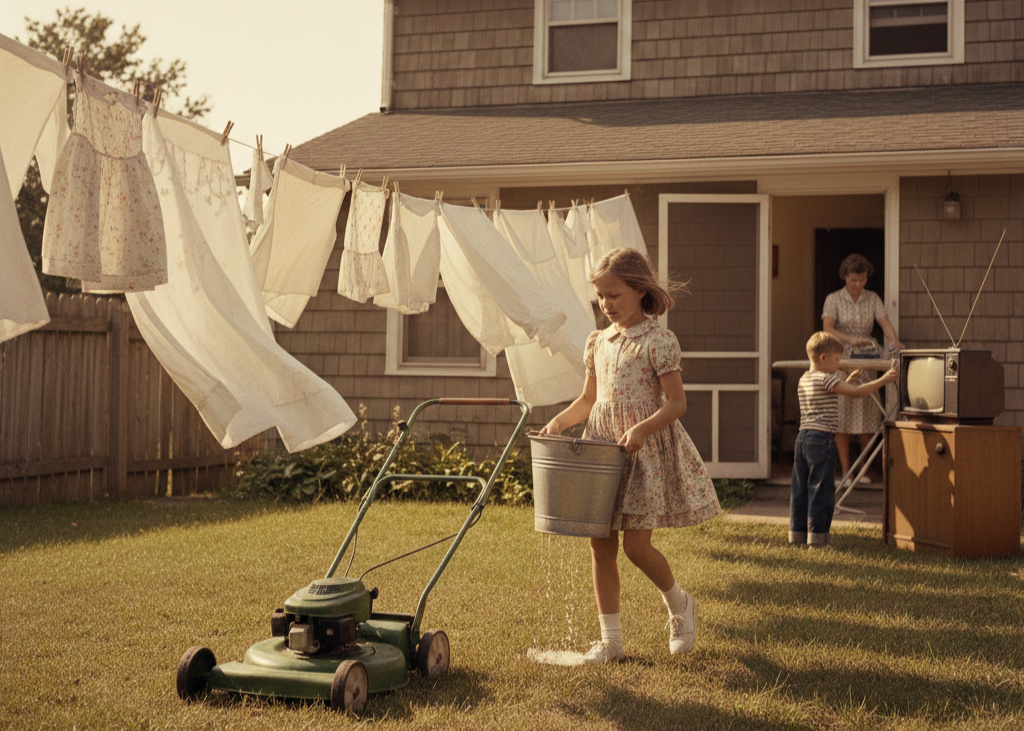
<p> Growing up in the 1960s in the United States meant childhood came with its share of responsibilities. While today’s kids might spend hours on video games or texting friends, kids back then were busy learning life lessons through daily chores. These tasks were not optional. They were part of growing up, helping the family, and understanding the value of hard work. If you were raised in a 60s household, you probably remember the satisfaction, exhaustion, and sometimes the frustration that came with these everyday tasks. Many of these chores shaped who we became as adults, teaching lessons that went beyond the surface. Here are 11 daily chores that 60s kids know all too well. </p> :: Gemini

Growing up in the 1960s in the United States meant childhood came with its share of responsibilities. While today’s kids might spend hours on video games or texting friends, kids back then were busy learning life lessons through daily chores. These tasks were not optional. They were part of growing up, helping the family, and understanding the value of hard work.

If you were raised in a 60s household, you probably remember the satisfaction, exhaustion, and sometimes the frustration that came with these everyday tasks. Many of these chores shaped who we became as adults, teaching lessons that went beyond the surface. Here are 11 daily chores that 60s kids know all too well.

1. Hanging Laundry on the Line

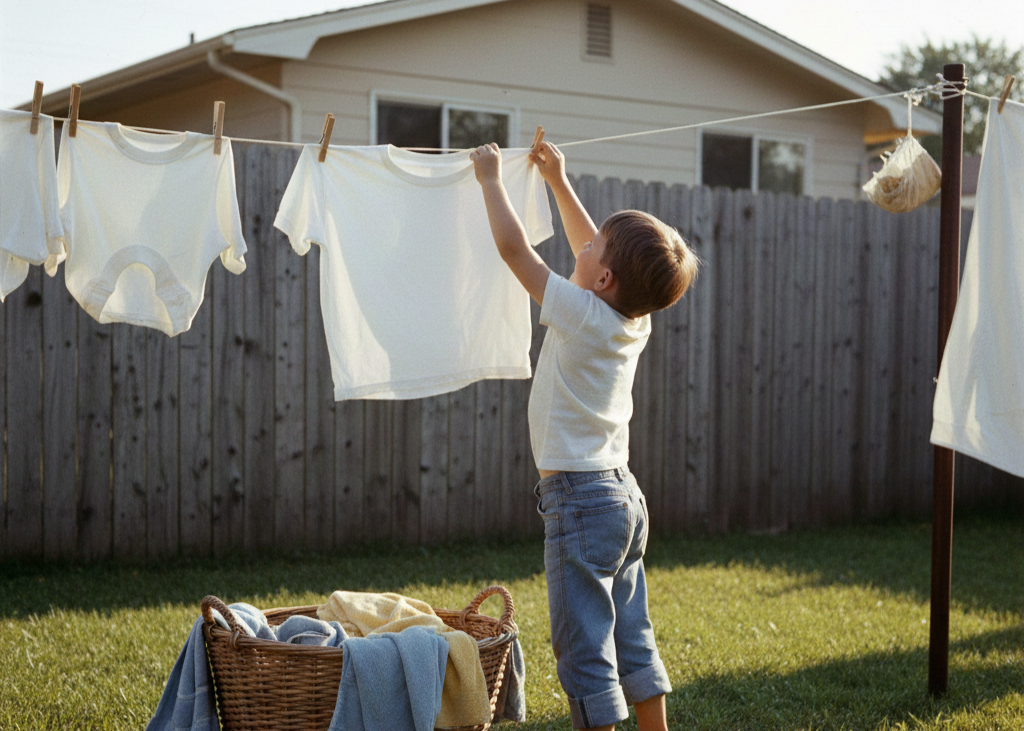
<p> Before the days of tumble dryers, laundry had to be hung outside to dry. Kids carried heavy baskets of wet clothes, towels, and sheets and pinned them to the clothesline, sometimes stretching on tiptoes to reach the highest line. Rain clouds added an element of urgency, turning laundry duty into a small race against time. This chore taught patience, observation, and responsibility. There was a certain pride in seeing a backyard full of sun-dried clothes fluttering in the breeze, the scent of fresh linen filling the air. It was more than just a task; it was a daily ritual that connected kids to the rhythms of life and the satisfaction of a job done well. </p> :: Gemini

Before the days of tumble dryers, laundry had to be hung outside to dry. Kids carried heavy baskets of wet clothes, towels, and sheets and pinned them to the clothesline, sometimes stretching on tiptoes to reach the highest line. Rain clouds added an element of urgency, turning laundry duty into a small race against time.

This chore taught patience, observation, and responsibility. There was a certain pride in seeing a backyard full of sun-dried clothes fluttering in the breeze, the scent of fresh linen filling the air. It was more than just a task; it was a daily ritual that connected kids to the rhythms of life and the satisfaction of a job done well.

2. Ironing the Family’s Clothes

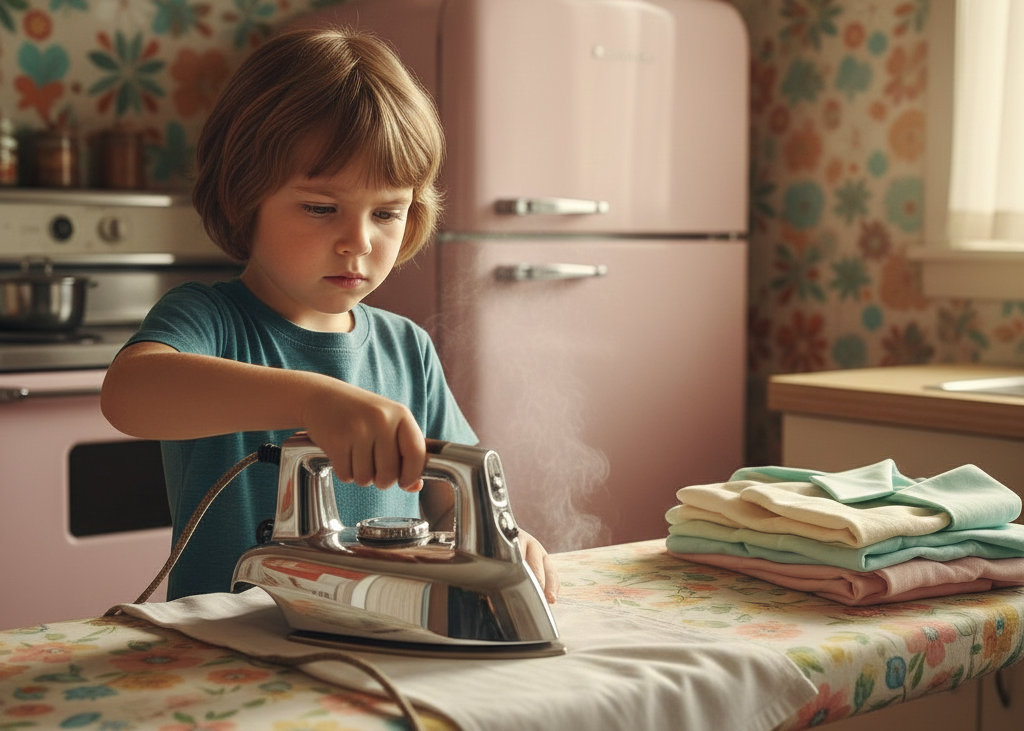
<p> Wrinkle-free fabrics were rare in the 1960s, which meant ironing was often a daily necessity. Kids frequently had to iron their own clothes and sometimes the family’s wardrobe, including shirts, pillowcases, and handkerchiefs. Using a heavy metal iron, often heated on a stove, required care, concentration, and a little bit of courage. Scorching a shirt could mean a gentle scolding, but mastering the art of pressing clothes perfectly gave kids a sense of accomplishment. Ironing taught attention to detail and patience, skills that stayed with many long into adulthood. </p> :: Gemini

Wrinkle-free fabrics were rare in the 1960s, which meant ironing was often a daily necessity. Kids frequently had to iron their own clothes and sometimes the family’s wardrobe, including shirts, pillowcases, and handkerchiefs.

Using a heavy metal iron, often heated on a stove, required care, concentration, and a little bit of courage. Scorching a shirt could mean a gentle scolding, but mastering the art of pressing clothes perfectly gave kids a sense of accomplishment. Ironing taught attention to detail and patience, skills that stayed with many long into adulthood.

3. Scrubbing Floors on Hands and Knees

<p> Floor cleaning was far from effortless in the 60s. Without modern mops or steam cleaners, kids often scrubbed floors on their hands and knees using brushes, buckets of soapy water, and rags. Kitchens, hallways, and bathrooms all demanded thorough attention. Though it could be exhausting, this chore taught a strong work ethic and the tangible results of effort. A clean floor was more than just aesthetically pleasing; it was proof that diligence and hard work paid off. </p> :: Gemini

Floor cleaning was far from effortless in the 60s. Without modern mops or steam cleaners, kids often scrubbed floors on their hands and knees using brushes, buckets of soapy water, and rags. Kitchens, hallways, and bathrooms all demanded thorough attention.

Though it could be exhausting, this chore taught a strong work ethic and the tangible results of effort. A clean floor was more than just aesthetically pleasing; it was proof that diligence and hard work paid off.

4. Mowing Lawns with a Heavy Push Mower

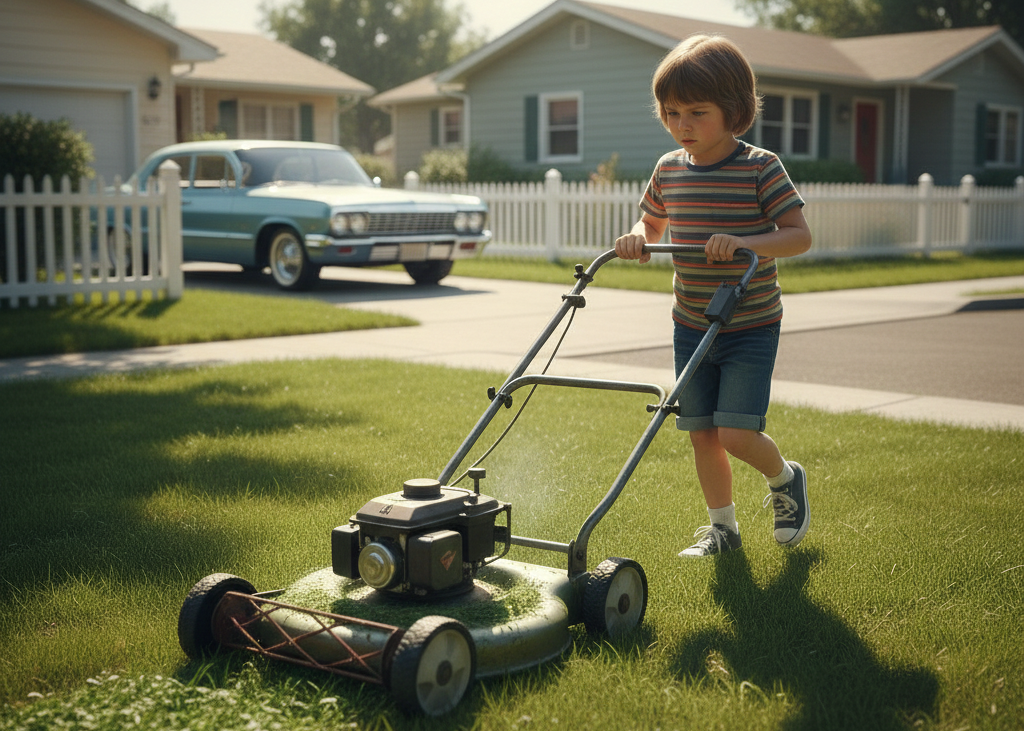
<p> Lawns in the 1960s were rarely maintained with gas-powered equipment. Many kids had to push heavy reel mowers across their yards, sweating under the summer sun. It was hard work, often requiring multiple trips back and forth across the grass. While tiring, mowing the lawn gave kids a sense of pride and ownership. Seeing a neatly trimmed, even lawn was a small but meaningful reward for effort. It was also a subtle lesson in patience and persistence, teaching that the satisfaction of a job well done often comes only after hard work. </p> :: Gemini

Lawns in the 1960s were rarely maintained with gas-powered equipment. Many kids had to push heavy reel mowers across their yards, sweating under the summer sun. It was hard work, often requiring multiple trips back and forth across the grass.

While tiring, mowing the lawn gave kids a sense of pride and ownership. Seeing a neatly trimmed, even lawn was a small but meaningful reward for effort. It was also a subtle lesson in patience and persistence, teaching that the satisfaction of a job well done often comes only after hard work.

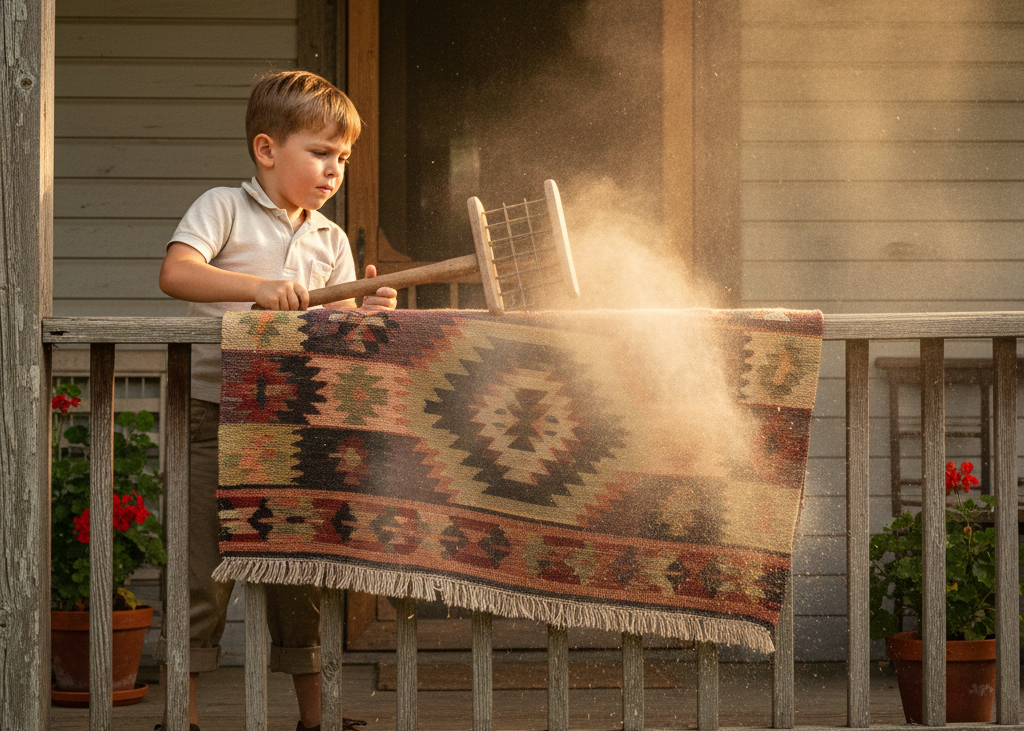
5. Beating Rugs Outdoors

<p> Vacuum cleaners were not always commonplace, and rugs often needed to be beaten to remove dust and dirt. Kids carried rugs outside, hung them over porch rails or clotheslines, and used wooden rug beaters to remove embedded debris. The clouds of dust that rose with each strike were a small price to pay for a clean rug. This chore was physically demanding but oddly satisfying. There was something almost ceremonial about transforming a dusty rug into a fresh, clean surface ready for use. </p> :: Gemini

Vacuum cleaners were not always commonplace, and rugs often needed to be beaten to remove dust and dirt. Kids carried rugs outside, hung them over porch rails or clotheslines, and used wooden rug beaters to remove embedded debris.

The clouds of dust that rose with each strike were a small price to pay for a clean rug. This chore was physically demanding but oddly satisfying. There was something almost ceremonial about transforming a dusty rug into a fresh, clean surface ready for use.

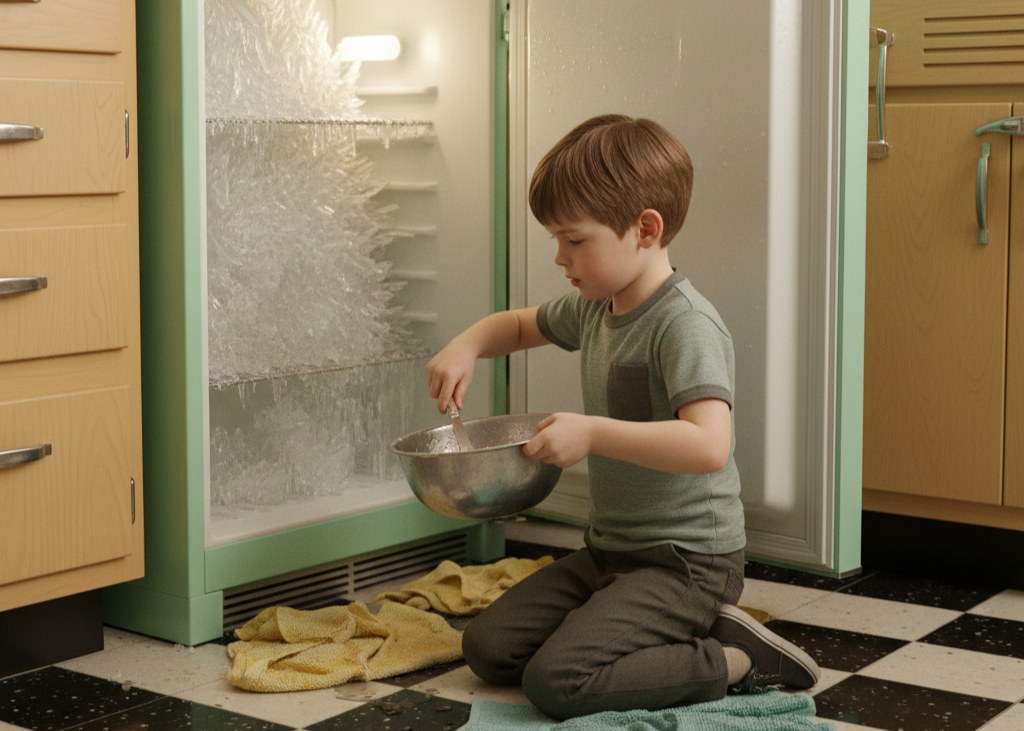
6. Manually Defrosting the Freezer

<p> Before frost-free freezers, thick ice would accumulate, and it became a kid’s responsibility to chip it away. Using butter knives or spatulas, they carefully removed ice, collected meltwater, and dried the freezer afterward. It was messy, sometimes frustrating work, but it taught practical problem-solving and attention to detail. Kids learned that maintenance and care are just as important as completing more visible chores, and that patience can turn a tedious task into a manageable one. </p> :: Gemini

Before frost-free freezers, thick ice would accumulate, and it became a kid’s responsibility to chip it away. Using butter knives or spatulas, they carefully removed ice, collected meltwater, and dried the freezer afterward.

It was messy, sometimes frustrating work, but it taught practical problem-solving and attention to detail. Kids learned that maintenance and care are just as important as completing more visible chores, and that patience can turn a tedious task into a manageable one.

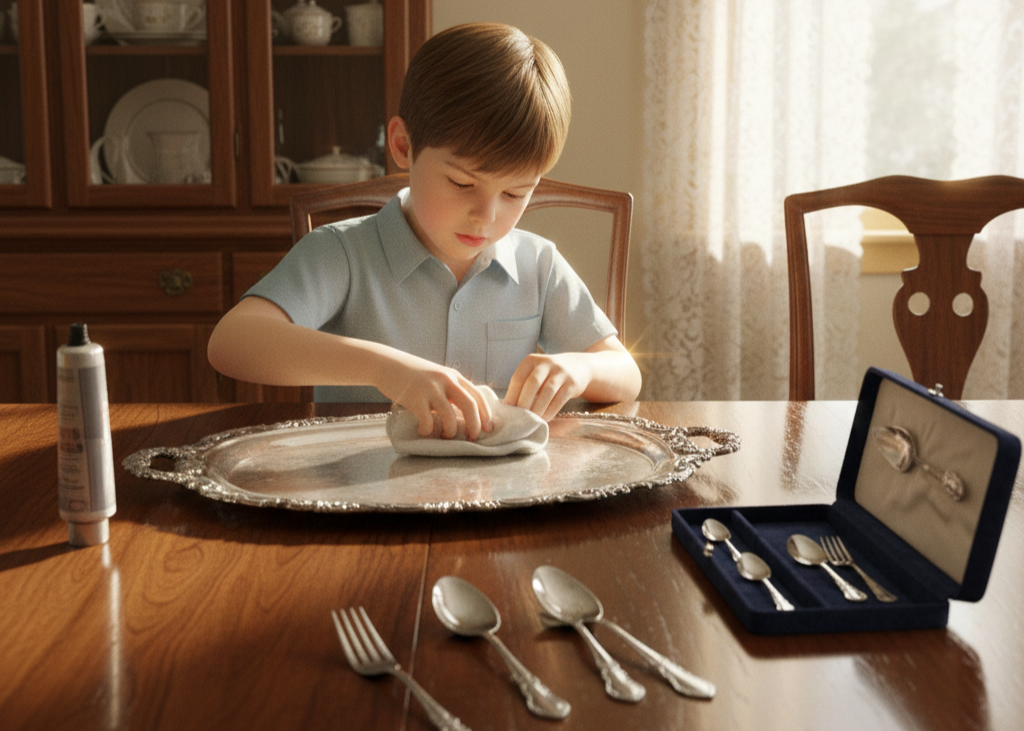
7. Polishing Silver and Special Dinnerware

<p> Special silverware and serving trays were a point of pride in many homes. Kids were often tasked with polishing tarnished silver, a chore requiring patience and finesse. They rubbed, buffed, and polished until each piece shone bright, ready for family dinners or holiday gatherings. Though repetitive, this chore instilled an appreciation for effort and the beauty of small details. It showed that care and attention to appearance mattered, and it encouraged pride in contributing to the household in a meaningful way. </p> :: Gemini

Special silverware and serving trays were a point of pride in many homes. Kids were often tasked with polishing tarnished silver, a chore requiring patience and finesse. They rubbed, buffed, and polished until each piece shone bright, ready for family dinners or holiday gatherings.

Though repetitive, this chore instilled an appreciation for effort and the beauty of small details. It showed that care and attention to appearance mattered, and it encouraged pride in contributing to the household in a meaningful way.

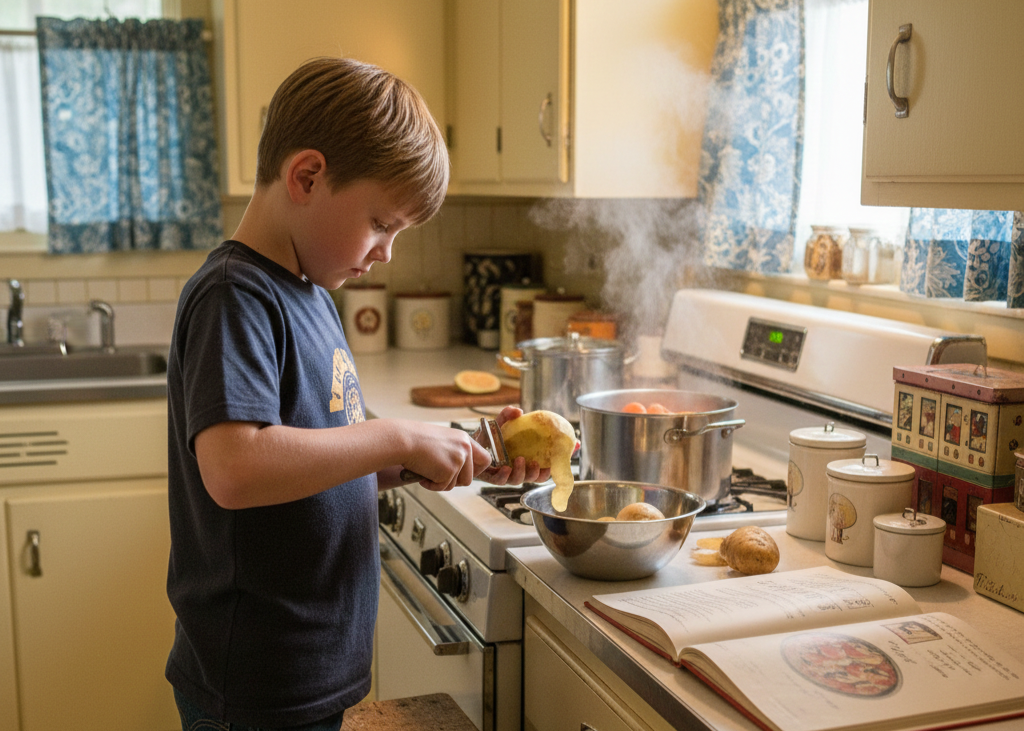
8. Cooking Meals from Scratch

<p> Frozen dinners and microwaves were rare, so families cooked meals from scratch. Kids frequently helped by peeling vegetables, chopping ingredients, stirring pots, or even helping with baking. This chore was more than just preparation; it was a way to learn practical life skills and understand the work involved in providing for a family. Cooking taught creativity, timing, and the importance of patience, and it also gave kids a sense of accomplishment when a meal came together beautifully. </p> :: Gemini

Frozen dinners and microwaves were rare, so families cooked meals from scratch. Kids frequently helped by peeling vegetables, chopping ingredients, stirring pots, or even helping with baking.

This chore was more than just preparation; it was a way to learn practical life skills and understand the work involved in providing for a family. Cooking taught creativity, timing, and the importance of patience, and it also gave kids a sense of accomplishment when a meal came together beautifully.

9. Collecting and Returning Soda or Milk Bottles

<p> Before disposable bottles became common, glass bottles were collected, cleaned, and returned for a small deposit. Kids often ran errands to bring the bottles back to the store, earning a few cents along the way. This chore might seem minor, but it taught responsibility, resourcefulness, and the value of small contributions. It also encouraged environmental awareness, as families reused bottles instead of tossing them away, showing that even small actions could make a difference. </p> :: Gemini

Before disposable bottles became common, glass bottles were collected, cleaned, and returned for a small deposit. Kids often ran errands to bring the bottles back to the store, earning a few cents along the way.

This chore might seem minor, but it taught responsibility, resourcefulness, and the value of small contributions. It also encouraged environmental awareness, as families reused bottles instead of tossing them away, showing that even small actions could make a difference.

10. Adjusting the TV Antenna

<p> Television reception depended on over-the-air signals, and kids often became the family’s designated antenna adjuster. Moving rooftop antennas or adjusting indoor “rabbit-ear” antennas required patience and skill to get a clear picture. Though it sometimes meant standing on chairs or climbing outside, it also gave kids a sense of accomplishment when the fuzzy static disappeared and their favorite shows came into focus. This chore combined problem-solving with a practical reward, teaching persistence in a fun, often interactive way. </p> :: Gemini

Television reception depended on over-the-air signals, and kids often became the family’s designated antenna adjuster. Moving rooftop antennas or adjusting indoor “rabbit-ear” antennas required patience and skill to get a clear picture.

Though it sometimes meant standing on chairs or climbing outside, it also gave kids a sense of accomplishment when the fuzzy static disappeared and their favorite shows came into focus. This chore combined problem-solving with a practical reward, teaching persistence in a fun, often interactive way.

11. Taking Out the Trash

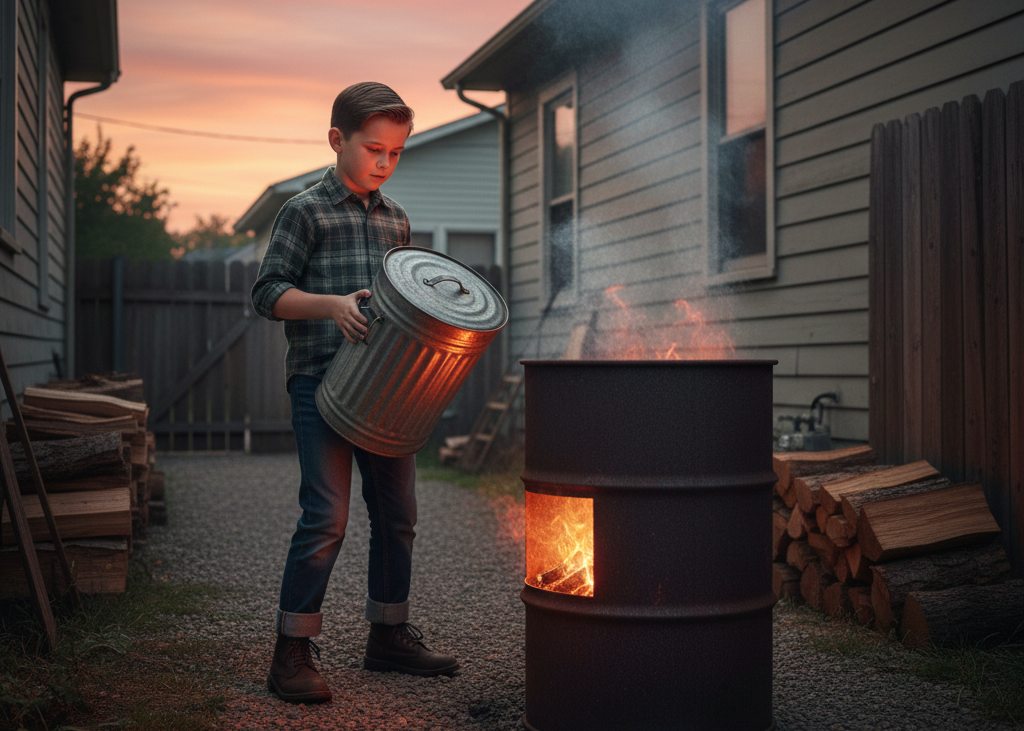
<p> Trash disposal in the 1960s was often done manually. Kids hauled garbage to backyard burn barrels or incinerators, sometimes tending the fires and cleaning up afterward. It was dirty and smoky work, but it gave kids a sense of responsibility for the household. They learned that maintaining a home involved sometimes unpleasant tasks and that helping the family often required effort beyond what was immediately enjoyable. </p> :: Gemini

Trash disposal in the 1960s was often done manually. Kids hauled garbage to backyard burn barrels or incinerators, sometimes tending the fires and cleaning up afterward.

It was dirty and smoky work, but it gave kids a sense of responsibility for the household. They learned that maintaining a home involved sometimes unpleasant tasks and that helping the family often required effort beyond what was immediately enjoyable.

Final Thoughts

<p> Looking back, the chores of the 1960s were more than just daily tasks; they were life lessons in disguise. Each task taught responsibility, self-reliance, and practical skills. From ironing and hanging laundry to cooking and polishing silver, kids learned patience, perseverance, and the value of hard work. Many of these chores were physically demanding, sometimes frustrating, but they offered a sense of accomplishment that modern conveniences often remove. They shaped a generation, helping kids grow into adults who understood that effort and care are essential parts of life. While today’s children may never experience all of these chores in the same way, there is value in revisiting some of them. Even a small task, done with intention, can teach responsibility, pride, and practical skills. Remembering these chores is not just nostalgia; it is a reminder of how everyday work can shape character and create a sense of purpose in daily life. The next time you fold laundry, cook a meal, or sweep the floor, you might catch a glimpse of what it meant to grow up in the 60s. It was hard work, yes, but it was also the foundation of responsibility, independence, and life skills that many of us still carry with us today. </p> :: Gemini

Looking back, the chores of the 1960s were more than just daily tasks; they were life lessons in disguise. Each task taught responsibility, self-reliance, and practical skills. From ironing and hanging laundry to cooking and polishing silver, kids learned patience, perseverance, and the value of hard work.

Many of these chores were physically demanding, sometimes frustrating, but they offered a sense of accomplishment that modern conveniences often remove. They shaped a generation, helping kids grow into adults who understood that effort and care are essential parts of life.

While today’s children may never experience all of these chores in the same way, there is value in revisiting some of them. Even a small task, done with intention, can teach responsibility, pride, and practical skills. Remembering these chores is not just nostalgia; it is a reminder of how everyday work can shape character and create a sense of purpose in daily life.

The next time you fold laundry, cook a meal, or sweep the floor, you might catch a glimpse of what it meant to grow up in the 60s. It was hard work, yes, but it was also the foundation of responsibility, independence, and life skills that many of us still carry with us today.

Filed Under: Lifestyle

Fall and Winter Gardening: 12 Vegetables You Can Plant for a Cold Season Harvest

December 8, 2025 | Leave a Comment

Fall and Winter Gardening: 12 Vegetables You Can Plant for a Cold Season Harvest

<p> As summer winds down and the first hints of fall chill the air, many gardeners think their planting days are over. The truth is, some of the tastiest vegetables actually thrive in cooler weather. Planting in fall and winter can be incredibly rewarding. Your garden can stay lively, your kitchen full of fresh greens, and your meals brighter even when the rest of the landscape has gone dormant.

Fall and winter vegetables often have a flavor advantage too. Cold temperatures can turn natural starches into sugars, giving root vegetables and leafy greens a naturally sweet, tender taste. Plus, growing during these seasons extends your harvest window, reduces pests, and allows you to enjoy homegrown produce when grocery store options are limited.

Here are 12 vegetables that you can plant in the fall and winter, with practical tips and insights for gardeners across the United States. </p> :: Gemini

As summer winds down and the first hints of fall chill the air, many gardeners think their planting days are over. The truth is, some of the tastiest vegetables actually thrive in cooler weather. Planting in fall and winter can be incredibly rewarding. Your garden can stay lively, your kitchen full of fresh greens, and your meals brighter even when the rest of the landscape has gone dormant.

Fall and winter vegetables often have a flavor advantage too. Cold temperatures can turn natural starches into sugars, giving root vegetables and leafy greens a naturally sweet, tender taste. Plus, growing during these seasons extends your harvest window, reduces pests, and allows you to enjoy homegrown produce when grocery store options are limited.

Here are 12 vegetables that you can plant in the fall and winter, with practical tips and insights for gardeners across the United States.

1. Spinach

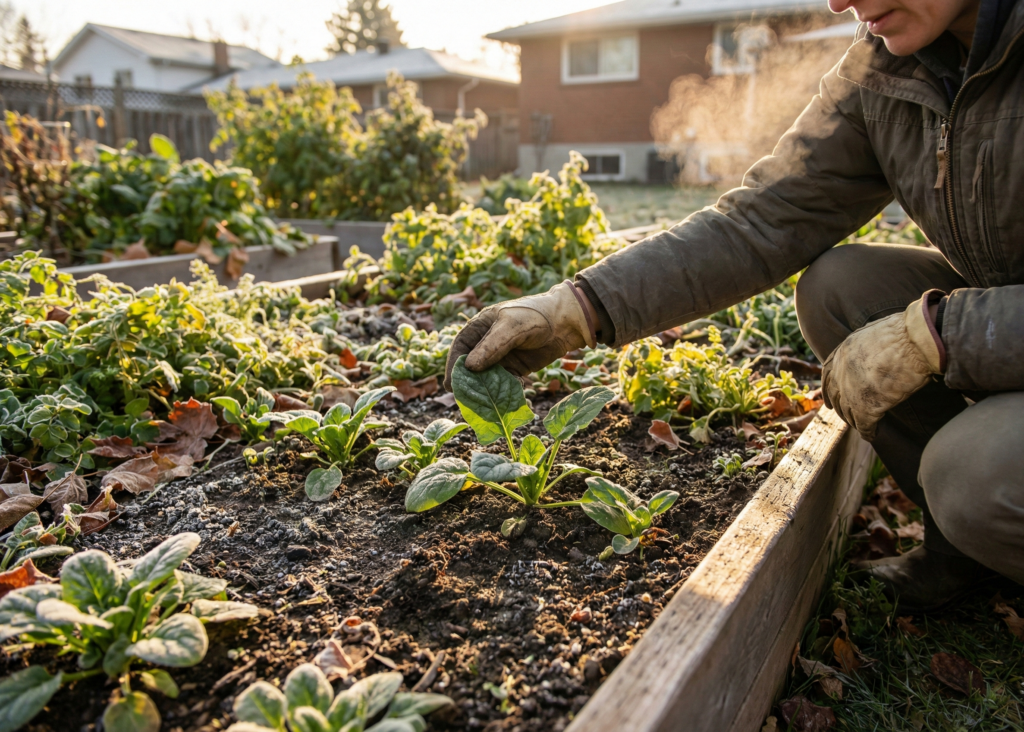
<p> Spinach is a superstar of cold-season gardening. It grows quickly, tolerates frost, and produces tender leaves that are perfect for salads, sautés, and smoothies. Plant seeds six to eight weeks before your first average frost. Spinach tends to bolt less often in cooler weather, which means more harvests over time. Its rich, earthy flavor actually improves when exposed to a light frost, making your late-season salads particularly delicious. </p> :: Gemini

Spinach is a superstar of cold-season gardening. It grows quickly, tolerates frost, and produces tender leaves that are perfect for salads, sautés, and smoothies. Plant seeds six to eight weeks before your first average frost. Spinach tends to bolt less often in cooler weather, which means more harvests over time. Its rich, earthy flavor actually improves when exposed to a light frost, making your late-season salads particularly delicious.

2. Kale

<p> Kale is one of the hardiest vegetables you can grow in fall or winter. Many gardeners notice that kale leaves taste sweeter after a frost, making it ideal for winter soups and sautés. It grows well in garden beds, containers, or raised beds, and if planted in late summer or early fall, it can continue producing leaves throughout the colder months. Kale is also packed with nutrients, so you get both flavor and a health boost. </p> :: Gemini

Kale is one of the hardiest vegetables you can grow in fall or winter. Many gardeners notice that kale leaves taste sweeter after a frost, making it ideal for winter soups and sautés. It grows well in garden beds, containers, or raised beds, and if planted in late summer or early fall, it can continue producing leaves throughout the colder months. Kale is also packed with nutrients, so you get both flavor and a health boost.

3. Carrots

<p> Cool temperatures are great for carrots. Plant them in late summer or early fall and they will sweeten as the weather turns chilly. Loose, well-drained soil allows roots to grow straight and tender. You can harvest small, baby carrots for snacking or let them grow to full size for roasting and soups. Carrots often survive light frost, making them a reliable choice for a winter garden. </p> :: Gemini

Cool temperatures are great for carrots. Plant them in late summer or early fall and they will sweeten as the weather turns chilly. Loose, well-drained soil allows roots to grow straight and tender. You can harvest small, baby carrots for snacking or let them grow to full size for roasting and soups. Carrots often survive light frost, making them a reliable choice for a winter garden.

4. Beets

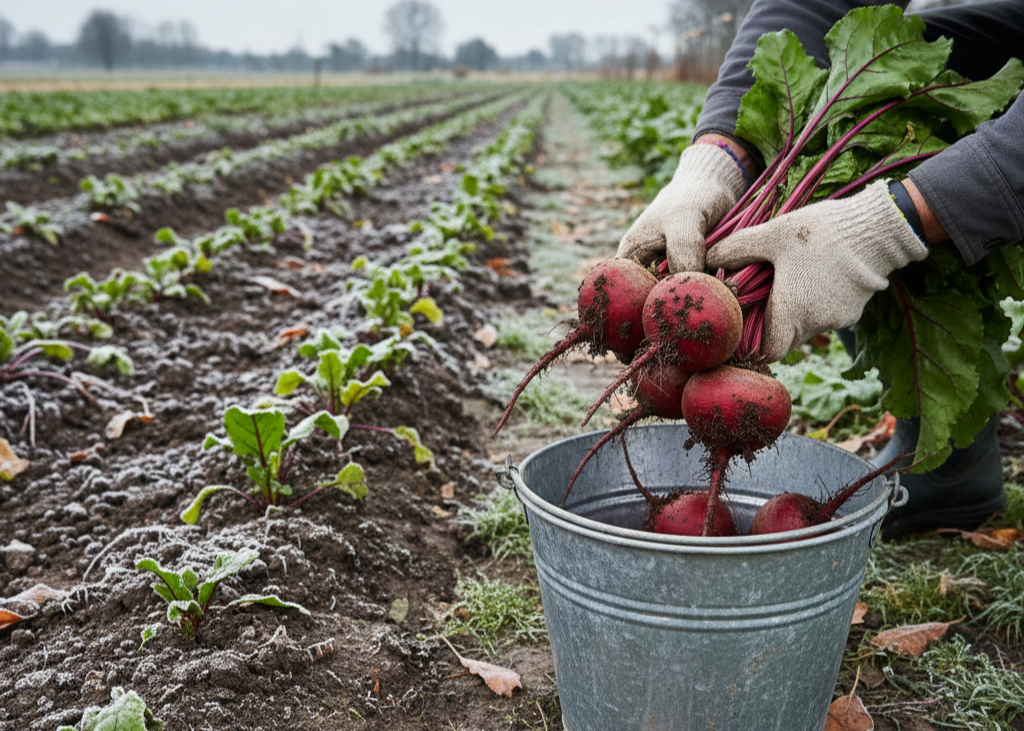
<p> Beets are versatile, nutritious, and surprisingly hardy. Both the roots and the greens are edible, so you get double value from a single planting. Sow seeds in late summer or early fall, and the plants will tolerate frost. Beets are excellent roasted, pickled, or added to salads, and their greens can be used like spinach or chard. Their sweet, earthy flavor develops even more in cool temperatures. </p> :: Gemini

Beets are versatile, nutritious, and surprisingly hardy. Both the roots and the greens are edible, so you get double value from a single planting. Sow seeds in late summer or early fall, and the plants will tolerate frost. Beets are excellent roasted, pickled, or added to salads, and their greens can be used like spinach or chard. Their sweet, earthy flavor develops even more in cool temperatures.

5. Turnips

<p> Turnips are fast-growing root vegetables that love cooler weather. Plant them in late summer or early fall, and they will mature quickly enough for a late fall harvest. Turnip greens are peppery and delicious in sautés or soups, while the roots can be roasted, mashed, or added to stews. They are ideal for smaller garden spaces because they do not require much room to grow. </p> :: Gemini

Turnips are fast-growing root vegetables that love cooler weather. Plant them in late summer or early fall, and they will mature quickly enough for a late fall harvest. Turnip greens are peppery and delicious in sautés or soups, while the roots can be roasted, mashed, or added to stews. They are ideal for smaller garden spaces because they do not require much room to grow.

6. Lettuce

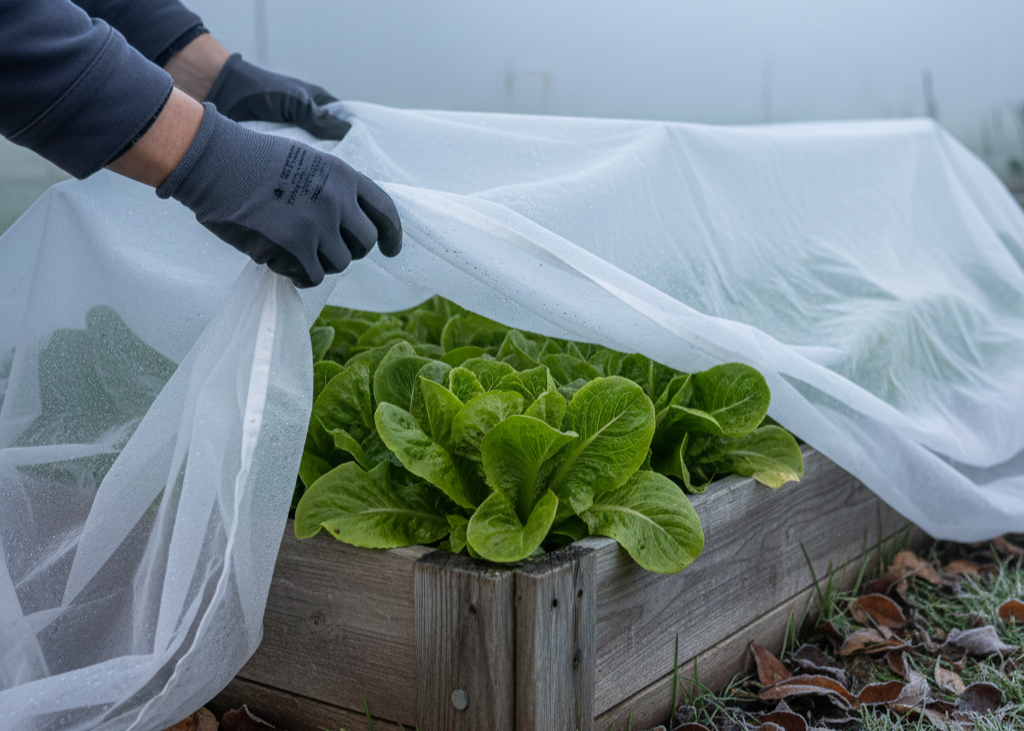
<p> Loose-leaf varieties of lettuce are perfect for fall and winter gardens. They grow faster than head lettuce and tolerate cooler temperatures well. Covering young plants with a frost blanket or cold frame can extend their growing season even further. Harvest leaves continuously for fresh salads or sandwich toppings, and enjoy the crisp, tender texture that only cold-grown lettuce can provide. </p> :: Gemini

Loose-leaf varieties of lettuce are perfect for fall and winter gardens. They grow faster than head lettuce and tolerate cooler temperatures well. Covering young plants with a frost blanket or cold frame can extend their growing season even further. Harvest leaves continuously for fresh salads or sandwich toppings, and enjoy the crisp, tender texture that only cold-grown lettuce can provide.

7. Swiss Chard and Other Cold-Tolerant Greens

<p> Swiss chard and similar leafy greens thrive when temperatures drop. They grow more slowly in cold weather, but they continue producing leaves well into winter. These greens are packed with vitamins and minerals, and they are delicious in soups, sautés, or as a base for salads. Their vibrant colors can also brighten up your winter garden when many other plants have faded. </p> :: Gemini

Swiss chard and similar leafy greens thrive when temperatures drop. They grow more slowly in cold weather, but they continue producing leaves well into winter. These greens are packed with vitamins and minerals, and they are delicious in soups, sautés, or as a base for salads. Their vibrant colors can also brighten up your winter garden when many other plants have faded.

8. Broccoli

<p> Broccoli is a cool-season vegetable that does best when grown in fall or mild winter conditions. Plant it early enough so that the main head develops before deep winter. Even after harvesting the primary head, broccoli often produces side shoots for additional harvests. It grows well in garden beds or containers with rich, well-drained soil, and a little protection from frost can keep it productive for months. </p> :: Gemini

Broccoli is a cool-season vegetable that does best when grown in fall or mild winter conditions. Plant it early enough so that the main head develops before deep winter. Even after harvesting the primary head, broccoli often produces side shoots for additional harvests. It grows well in garden beds or containers with rich, well-drained soil, and a little protection from frost can keep it productive for months.

9. Cauliflower

<p> Cauliflower prefers cool temperatures and is ideal for planting in late summer or early fall. While it is more sensitive than kale or spinach, the flavor is exceptional when harvested in cooler weather. Plant in fertile soil with consistent moisture, and consider using row covers or cold frames if temperatures drop significantly. Cauliflower is versatile in the kitchen and can be roasted, mashed, or used as a low-carb substitute for grains. </p> :: Gemini

Cauliflower prefers cool temperatures and is ideal for planting in late summer or early fall. While it is more sensitive than kale or spinach, the flavor is exceptional when harvested in cooler weather. Plant in fertile soil with consistent moisture, and consider using row covers or cold frames if temperatures drop significantly. Cauliflower is versatile in the kitchen and can be roasted, mashed, or used as a low-carb substitute for grains.

10. Cabbage and Collards

<p> Cabbage and collards are some of the most frost-tolerant vegetables you can grow. They thrive in cold conditions and are perfect for hearty winter meals such as stews, stir-fries, and fermented dishes like sauerkraut. Plant them in early to mid-fall so that heads or leaves are ready to harvest well into winter. Their durability makes them a reliable choice when other crops may struggle in the cold. </p> :: Gemini

Cabbage and collards are some of the most frost-tolerant vegetables you can grow. They thrive in cold conditions and are perfect for hearty winter meals such as stews, stir-fries, and fermented dishes like sauerkraut. Plant them in early to mid-fall so that heads or leaves are ready to harvest well into winter. Their durability makes them a reliable choice when other crops may struggle in the cold.

11. Peas

<p> Certain varieties of peas can be planted in early fall for a late fall or early winter harvest. They perform well in mild winter climates and benefit from protection like cold frames or row covers. Fresh peas harvested in cooler weather are sweeter and more tender than those grown in the heat of summer. They are also a fun and rewarding crop for gardeners who enjoy a quick-growing plant that can produce tasty results in just a few weeks. </p> :: Gemini

Certain varieties of peas can be planted in early fall for a late fall or early winter harvest. They perform well in mild winter climates and benefit from protection like cold frames or row covers. Fresh peas harvested in cooler weather are sweeter and more tender than those grown in the heat of summer. They are also a fun and rewarding crop for gardeners who enjoy a quick-growing plant that can produce tasty results in just a few weeks.

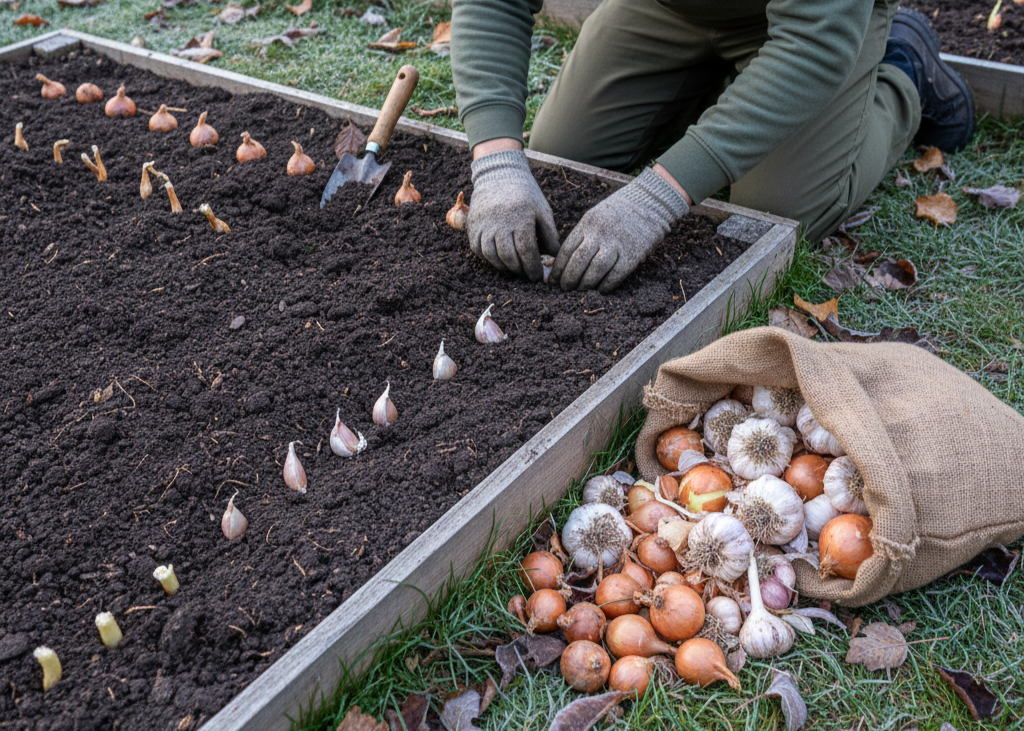
12. Garlic and Onions

<p> Planting garlic and bulb onions in the fall gives them a head start for next summer. These crops develop roots before going dormant in the cold, then resume growth in spring. Garlic and onions planted in fall produce stronger, fuller bulbs by harvest time. They require minimal care over winter, making them ideal for gardeners who want an early summer harvest without intensive attention. </p> :: Gemini

Planting garlic and bulb onions in the fall gives them a head start for next summer. These crops develop roots before going dormant in the cold, then resume growth in spring. Garlic and onions planted in fall produce stronger, fuller bulbs by harvest time. They require minimal care over winter, making them ideal for gardeners who want an early summer harvest without intensive attention.

Final Thoughts

<p> Fall and winter gardening opens a whole new world of possibilities. It allows you to enjoy fresh, homegrown vegetables when most gardens have gone quiet. These cool-season crops are often sweeter, more tender, and packed with nutrients thanks to the chill in the air.

Even if you are new to gardening, fall and winter planting is accessible. Start with hardy greens and root vegetables, use simple protection if needed, and watch as your garden continues to thrive while others rest. Experimenting with late-season crops can be both rewarding and educational, and it helps you make the most of your garden space year-round.

The satisfaction of harvesting your own fresh spinach, kale, carrots, or garlic while the world outside feels cold and gray is unmatched. With a little planning and care, your fall and winter garden can provide abundant produce, vibrant color, and the joy of knowing that fresh, homegrown food is just steps away.

Gardening does not stop when summer ends. It evolves. And embracing the colder months might just turn out to be the most rewarding part of the year. </p> :: Gemini

Fall and winter gardening opens a whole new world of possibilities. It allows you to enjoy fresh, homegrown vegetables when most gardens have gone quiet. These cool-season crops are often sweeter, more tender, and packed with nutrients thanks to the chill in the air.

Even if you are new to gardening, fall and winter planting is accessible. Start with hardy greens and root vegetables, use simple protection if needed, and watch as your garden continues to thrive while others rest. Experimenting with late-season crops can be both rewarding and educational, and it helps you make the most of your garden space year-round.

The satisfaction of harvesting your own fresh spinach, kale, carrots, or garlic while the world outside feels cold and gray is unmatched. With a little planning and care, your fall and winter garden can provide abundant produce, vibrant color, and the joy of knowing that fresh, homegrown food is just steps away.

Gardening does not stop when summer ends. It evolves. And embracing the colder months might just turn out to be the most rewarding part of the year.

Filed Under: Lifestyle

Everyday Items You Should Always Wash Your Hands After Touching: 10 Surprising Germ Hotspots

December 7, 2025 | Leave a Comment

Everyday Items You Should Always Wash Your Hands After Touching: 10 Surprising Germ Hotspots

<p> We all like to think of ourselves as careful and clean, but the truth is germs are everywhere. Some of the places you touch daily are hiding more bacteria and viruses than you might expect. You don’t need to live in a bubble to stay healthy, but being mindful about when to wash your hands can make a big difference. Handwashing is one of the simplest ways to prevent illness, yet most people underestimate just how many opportunities there are for germs to hop onto your hands. From the grocery store to your office and even your own home, germs travel in ways you might never notice.

To help you stay on top of your hygiene game, we have compiled a list of everyday items you should always wash your hands after touching. Some are obvious, while others may surprise you. Pay attention, because these small actions can make a big difference for your health. </p> :: Gemini

We all like to think of ourselves as careful and clean, but the truth is germs are everywhere. Some of the places you touch daily are hiding more bacteria and viruses than you might expect. You don’t need to live in a bubble to stay healthy, but being mindful about when to wash your hands can make a big difference. Handwashing is one of the simplest ways to prevent illness, yet most people underestimate just how many opportunities there are for germs to hop onto your hands. From the grocery store to your office and even your own home, germs travel in ways you might never notice.

To help you stay on top of your hygiene game, we have compiled a list of everyday items you should always wash your hands after touching. Some are obvious, while others may surprise you. Pay attention, because these small actions can make a big difference for your health.

1. Doorknobs and Door Handles

<p> Doorknobs are an everyday gateway for germs. Whether at work, at home, or in public spaces, these handles are constantly touched by countless hands. Even if the handle looks clean, bacteria and viruses can linger unnoticed. Washing your hands after using a doorknob is a simple habit that can prevent germs from moving from the handle to your face, phone, or food. Think of it as giving yourself a little shield against invisible invaders. </p> :: Gemini

Doorknobs are an everyday gateway for germs. Whether at work, at home, or in public spaces, these handles are constantly touched by countless hands. Even if the handle looks clean, bacteria and viruses can linger unnoticed. Washing your hands after using a doorknob is a simple habit that can prevent germs from moving from the handle to your face, phone, or food. Think of it as giving yourself a little shield against invisible invaders.

2. Grocery Carts and Shopping Baskets

<p> When you go shopping, your hands come into contact with handles, baskets, conveyor belts, and product packaging. All of these surfaces have been touched by many people before you, meaning germs can transfer easily. Washing your hands after grocery shopping, especially before handling food or putting items away, is a small step that can help reduce your exposure to harmful bacteria. It is also a good excuse to take a brief moment for yourself before tackling the groceries. </p> :: Gemini

When you go shopping, your hands come into contact with handles, baskets, conveyor belts, and product packaging. All of these surfaces have been touched by many people before you, meaning germs can transfer easily. Washing your hands after grocery shopping, especially before handling food or putting items away, is a small step that can help reduce your exposure to harmful bacteria. It is also a good excuse to take a brief moment for yourself before tackling the groceries.

3. Public Transportation Poles and Handrails

<p> Riding public transportation can feel routine, but those poles and handrails are high-traffic germ zones. Each person who holds onto a pole or rail can leave behind bacteria or viruses. Washing your hands after using public transit reduces the chance of transferring germs to your face, mouth, or personal belongings. Even if you are just running a quick errand, a little handwashing goes a long way in protecting yourself and others. </p> :: Gemini

Riding public transportation can feel routine, but those poles and handrails are high-traffic germ zones. Each person who holds onto a pole or rail can leave behind bacteria or viruses. Washing your hands after using public transit reduces the chance of transferring germs to your face, mouth, or personal belongings. Even if you are just running a quick errand, a little handwashing goes a long way in protecting yourself and others.

4. Elevator Buttons and ATM Keypads

<p> Buttons on elevators, ATMs, or even building entry systems are touched by dozens of people every hour. Germs can survive on these small surfaces and move quickly from person to person. After using them, washing your hands is essential. It only takes a few seconds, but it significantly reduces the risk of transferring germs to your face or onto your personal devices. Make it part of your routine, and you’ll notice the difference over time. </p> :: Gemini

Buttons on elevators, ATMs, or even building entry systems are touched by dozens of people every hour. Germs can survive on these small surfaces and move quickly from person to person. After using them, washing your hands is essential. It only takes a few seconds, but it significantly reduces the risk of transferring germs to your face or onto your personal devices. Make it part of your routine, and you’ll notice the difference over time.

5. Phones, Tablets, and Laptops

<p> Our devices are with us almost all day, and we touch them constantly. From phones to tablets to laptops, germs can accumulate quickly on these surfaces. Even if your hands were clean before using them, they pick up germs from desks, countertops, or shared surfaces. Washing your hands before and after using your devices is a simple way to keep germs at bay. For added protection, wipe down your devices with disinfectant regularly. </p> :: Gemini

Our devices are with us almost all day, and we touch them constantly. From phones to tablets to laptops, germs can accumulate quickly on these surfaces. Even if your hands were clean before using them, they pick up germs from desks, countertops, or shared surfaces. Washing your hands before and after using your devices is a simple way to keep germs at bay. For added protection, wipe down your devices with disinfectant regularly.

6. Car Steering Wheels and Gas Pump Handles

<p> Many people don’t realize that items like car steering wheels, gas pump handles, and shared vehicle surfaces can be major germ hotspots. Whether it is your own car or a rideshare, germs can easily transfer to your hands. Washing your hands after handling these surfaces is especially important before you eat, touch your face, or use your phone. If you do not have access to a sink immediately, using hand sanitizer is a practical alternative until you can wash properly. </p> :: Gemini

Many people don’t realize that items like car steering wheels, gas pump handles, and shared vehicle surfaces can be major germ hotspots. Whether it is your own car or a rideshare, germs can easily transfer to your hands. Washing your hands after handling these surfaces is especially important before you eat, touch your face, or use your phone. If you do not have access to a sink immediately, using hand sanitizer is a practical alternative until you can wash properly.

7. Reusable Grocery Bags and Product Packaging

<p> Reused bags, boxes, jars, and cans pass through multiple hands before reaching your kitchen. Reusable grocery bags in particular can carry bacteria if they are not washed regularly. Washing your hands after unpacking groceries ensures that any germs picked up along the supply chain do not end up on your food or surfaces at home. It is a small act that protects both you and your family. </p> :: Gemini

Reused bags, boxes, jars, and cans pass through multiple hands before reaching your kitchen. Reusable grocery bags in particular can carry bacteria if they are not washed regularly. Washing your hands after unpacking groceries ensures that any germs picked up along the supply chain do not end up on your food or surfaces at home. It is a small act that protects both you and your family.

8. Handrails in Public Spaces

<p> Handrails on stairs, escalators, and other public spaces are touched by hundreds of people every day. These surfaces are often overlooked when it comes to cleaning, making them prime locations for germs to linger. Taking a moment to wash your hands after using them can significantly reduce the risk of illness. It is a simple habit that becomes second nature once you start noticing how often you actually touch these surfaces. </p> :: Gemini

Handrails on stairs, escalators, and other public spaces are touched by hundreds of people every day. These surfaces are often overlooked when it comes to cleaning, making them prime locations for germs to linger. Taking a moment to wash your hands after using them can significantly reduce the risk of illness. It is a simple habit that becomes second nature once you start noticing how often you actually touch these surfaces.

9. Shared Keyboards and Office Equipment

<p> If you work in an office, library, or shared workspace, keyboards, computer mice, and office equipment are likely to be touched by multiple people each day. Germs can build up quickly on these items, making handwashing a must after using them. This is particularly important before eating or touching your face. Simple steps like washing your hands regularly and keeping a small bottle of hand sanitizer at your desk can help you stay healthy during the workday. </p> :: Gemini

If you work in an office, library, or shared workspace, keyboards, computer mice, and office equipment are likely to be touched by multiple people each day. Germs can build up quickly on these items, making handwashing a must after using them. This is particularly important before eating or touching your face. Simple steps like washing your hands regularly and keeping a small bottle of hand sanitizer at your desk can help you stay healthy during the workday.

10. Trash Cans and Recycling Bins

<p> Handling garbage or recycling might seem like a mundane task, but these containers can harbor a surprising amount of germs. Touching the lid, bag, or surface of a bin can transfer bacteria to your hands, which can then move to your face, phone, or food. Washing your hands after handling trash is essential to prevent illness. It only takes a moment, but the health benefits are long-lasting. </p> :: Gemini

Handling garbage or recycling might seem like a mundane task, but these containers can harbor a surprising amount of germs. Touching the lid, bag, or surface of a bin can transfer bacteria to your hands, which can then move to your face, phone, or food. Washing your hands after handling trash is essential to prevent illness. It only takes a moment, but the health benefits are long-lasting.

Final Thoughts

<p> We interact with dozens of surfaces every day, often without realizing it. Doorknobs, shopping carts, phones, and even trash cans are all potential carriers of germs. Handwashing may seem like a small act, but it is one of the most effective ways to protect yourself and your loved ones from illness.

Making handwashing a routine part of your day does not require extreme measures. It is about being mindful and consistent. Wash after touching public surfaces, before eating, and after handling potentially dirty items. Use hand sanitizer when a sink is not available, and clean frequently touched personal items regularly.

By taking these simple steps, you are giving yourself a powerful defense against everyday germs. Small habits like these create a ripple effect of health benefits, protecting you and everyone around you. So the next time you grab a doorknob, swipe an ATM, or unload groceries, take a moment to wash your hands. Your body will thank you, and your risk of illness will drop significantly. Staying healthy is not just about avoiding germs, but about being proactive in the little things that make a big difference in daily life. </p> :: Gemini

We interact with dozens of surfaces every day, often without realizing it. Doorknobs, shopping carts, phones, and even trash cans are all potential carriers of germs. Handwashing may seem like a small act, but it is one of the most effective ways to protect yourself and your loved ones from illness.

Making handwashing a routine part of your day does not require extreme measures. It is about being mindful and consistent. Wash after touching public surfaces, before eating, and after handling potentially dirty items. Use hand sanitizer when a sink is not available, and clean frequently touched personal items regularly.

By taking these simple steps, you are giving yourself a powerful defense against everyday germs. Small habits like these create a ripple effect of health benefits, protecting you and everyone around you. So the next time you grab a doorknob, swipe an ATM, or unload groceries, take a moment to wash your hands. Your body will thank you, and your risk of illness will drop significantly. Staying healthy is not just about avoiding germs, but about being proactive in the little things that make a big difference in daily life.

Filed Under: Lifestyle

Everyday Habits That Might Be a Sign of Low Intelligence: 8 Things to Pay Attention To

December 7, 2025 | Leave a Comment

Everyday Habits That Might Be a Sign of Low Intelligence: 8 Things to Pay Attention To

<p> Most of us like to believe we are fairly smart people. We make decisions, navigate relationships, and move through life assuming we have a good grasp of things. But every now and then, we run into behaviors in ourselves (or others) that make us pause. Maybe it is the way someone refuses to listen during a discussion, or how a friend always avoids anything that feels mentally challenging. Sometimes these habits are not just personality quirks. They can reflect gaps in thinking, emotional regulation, or mental flexibility.

Before we go any further, it is important to highlight something: intelligence is not a fixed score or a moral judgment. It is not a measure of your worth as a person. It is a blend of curiosity, problem solving, self awareness, adaptability, and the willingness to learn. And all of these things can be strengthened.

The goal of this list is not to shame anyone. Instead, it is designed to help you spot habits that may unintentionally hold you back. When you understand them, you can replace them with behaviors that help you think more clearly, grow more consistently, and communicate more effectively.

Below are eight everyday habits that experts in psychology and communication often associate with lower critical thinking or weaker mental adaptability. If any resonate with you, take it as a sign of awareness, not failure. Every habit on this list can be changed with intention and effort. </p> :: Gemini

Most of us like to believe we are fairly smart people. We make decisions, navigate relationships, and move through life assuming we have a good grasp of things. But every now and then, we run into behaviors in ourselves (or others) that make us pause. Maybe it is the way someone refuses to listen during a discussion, or how a friend always avoids anything that feels mentally challenging. Sometimes these habits are not just personality quirks. They can reflect gaps in thinking, emotional regulation, or mental flexibility.

Before we go any further, it is important to highlight something: intelligence is not a fixed score or a moral judgment. It is not a measure of your worth as a person. It is a blend of curiosity, problem solving, self awareness, adaptability, and the willingness to learn. And all of these things can be strengthened.

The goal of this list is not to shame anyone. Instead, it is designed to help you spot habits that may unintentionally hold you back. When you understand them, you can replace them with behaviors that help you think more clearly, grow more consistently, and communicate more effectively.

Below are eight everyday habits that experts in psychology and communication often associate with lower critical thinking or weaker mental adaptability. If any resonate with you, take it as a sign of awareness, not failure. Every habit on this list can be changed with intention and effort.

1. Avoiding Challenges and Staying Inside Your Comfort Zone

<p> A surprising number of people make choices based solely on what feels easy. If something requires effort, deep thinking, or the possibility of failure, they steer away from it. While it is normal to want comfort, always choosing the path of least resistance can limit your growth. People who consistently avoid challenges tend to miss opportunities to stretch their thinking, build new skills, and strengthen their problem solving abilities.

If you notice yourself sticking to routines simply because they are familiar, consider starting small. Try learning something new each week, ask questions when something confuses you, or take on a task that intimidates you just a bit. Growth rarely happens inside a safe bubble, and you may discover strengths you did not realize you had. </p> :: Gemini

A surprising number of people make choices based solely on what feels easy. If something requires effort, deep thinking, or the possibility of failure, they steer away from it. While it is normal to want comfort, always choosing the path of least resistance can limit your growth. People who consistently avoid challenges tend to miss opportunities to stretch their thinking, build new skills, and strengthen their problem solving abilities.

If you notice yourself sticking to routines simply because they are familiar, consider starting small. Try learning something new each week, ask questions when something confuses you, or take on a task that intimidates you just a bit. Growth rarely happens inside a safe bubble, and you may discover strengths you did not realize you had.

2. Being Closed Minded and Seeing Everything as Black or White

<p> Life is full of nuance, yet many people interpret things in extremes. Something is either good or bad, a person is either smart or foolish, and an idea is either absolutely right or completely wrong. This lack of nuance often signals rigid thinking and makes learning difficult. When your mind is closed to unfamiliar viewpoints or ideas that challenge your beliefs, your world becomes very small, very quickly.

Try noticing the next time you feel strongly about something. Ask yourself if you have all the facts or if you are reacting from instinct. Instead of saying, “That is just wrong,” consider saying, “I wonder why someone might see it differently.” This small shift can open the door to more thoughtful conversations and deeper understanding. </p> :: Gemini

Life is full of nuance, yet many people interpret things in extremes. Something is either good or bad, a person is either smart or foolish, and an idea is either absolutely right or completely wrong. This lack of nuance often signals rigid thinking and makes learning difficult. When your mind is closed to unfamiliar viewpoints or ideas that challenge your beliefs, your world becomes very small, very quickly.

Try noticing the next time you feel strongly about something. Ask yourself if you have all the facts or if you are reacting from instinct. Instead of saying, “That is just wrong,” consider saying, “I wonder why someone might see it differently.” This small shift can open the door to more thoughtful conversations and deeper understanding.

3. Making Decisions Based on Emotion Rather Than Clear Thinking

<p> Everyone experiences emotional reactions, but some individuals let those emotions completely guide their decisions. Acting purely out of anger, fear, frustration, or urgency can create long term consequences that could easily have been avoided. When someone responds impulsively, they skip that important moment of pause that allows the brain to evaluate options.

Practicing a short pause, even just a few seconds, can change everything. Before reacting, take a breath and ask, “What outcome do I want here?” or “Is this decision driven by emotion or by clarity?” Emotional intelligence is just as valuable as logical intelligence, and giving yourself space to think helps you strengthen both. </p> :: Gemini

Everyone experiences emotional reactions, but some individuals let those emotions completely guide their decisions. Acting purely out of anger, fear, frustration, or urgency can create long term consequences that could easily have been avoided. When someone responds impulsively, they skip that important moment of pause that allows the brain to evaluate options.

Practicing a short pause, even just a few seconds, can change everything. Before reacting, take a breath and ask, “What outcome do I want here?” or “Is this decision driven by emotion or by clarity?” Emotional intelligence is just as valuable as logical intelligence, and giving yourself space to think helps you strengthen both.

4. Not Listening and Constantly Talking Over Others

<p> Some people love the sound of their own voice a little too much. They interrupt, dismiss, or talk over others without realizing how much they miss in the process. This habit can reflect poor concentration, weak social awareness, or limited respect for differing perspectives. Listening is one of the strongest indicators of emotional maturity and intellectual openness.

Next time you are in a conversation, make it a point to listen fully before responding. Let the other person finish their thought. Ask a clarifying question instead of jumping in immediately with your own opinion. You may be surprised at how much more productive and meaningful your conversations become. </p> :: Gemini

Some people love the sound of their own voice a little too much. They interrupt, dismiss, or talk over others without realizing how much they miss in the process. This habit can reflect poor concentration, weak social awareness, or limited respect for differing perspectives. Listening is one of the strongest indicators of emotional maturity and intellectual openness.

Next time you are in a conversation, make it a point to listen fully before responding. Let the other person finish their thought. Ask a clarifying question instead of jumping in immediately with your own opinion. You may be surprised at how much more productive and meaningful your conversations become.

5. Lacking Curiosity and Avoiding New Knowledge

<p> Curiosity is one of the strongest indicators of a bright and active mind. People who are eager to learn tend to ask questions, explore new ideas, and stay mentally sharp. On the other hand, people who avoid reading, dismiss learning opportunities, or rely only on what they already know may find their thinking becomes stagnant over time.

If you realize you have fallen into a pattern of mental autopilot, challenge yourself to break it. Read a few pages of a book each day, watch a documentary, or simply look up something you do not understand. Feeding your curiosity is one of the easiest ways to boost your intelligence, and it keeps the mind energized. </p> :: Gemini

Curiosity is one of the strongest indicators of a bright and active mind. People who are eager to learn tend to ask questions, explore new ideas, and stay mentally sharp. On the other hand, people who avoid reading, dismiss learning opportunities, or rely only on what they already know may find their thinking becomes stagnant over time.

If you realize you have fallen into a pattern of mental autopilot, challenge yourself to break it. Read a few pages of a book each day, watch a documentary, or simply look up something you do not understand. Feeding your curiosity is one of the easiest ways to boost your intelligence, and it keeps the mind energized.

6. Living a Sedentary Lifestyle and Neglecting Basic Self Care

<p> Your body and mind are deeply connected, far more than many people realize. Poor diet, lack of movement, and inconsistent daily routines can lead to brain fog, slower decision making, and weaker focus. Research consistently shows that physical activity supports better cognitive function, and that healthy habits support clearer thinking at every age.

You do not need a gym membership or a complicated meal plan to improve this area. A simple daily walk, stretching throughout the day, choosing more whole foods, or drinking enough water can make a noticeable difference. When your body feels better, your brain usually follows. </p> :: Gemini

Your body and mind are deeply connected, far more than many people realize. Poor diet, lack of movement, and inconsistent daily routines can lead to brain fog, slower decision making, and weaker focus. Research consistently shows that physical activity supports better cognitive function, and that healthy habits support clearer thinking at every age.

You do not need a gym membership or a complicated meal plan to improve this area. A simple daily walk, stretching throughout the day, choosing more whole foods, or drinking enough water can make a noticeable difference. When your body feels better, your brain usually follows.

7. Assuming You Already Know Everything and Refusing to Question Yourself

<p> There is nothing more limiting than overconfidence. Some people assume that if they do not understand something immediately, it must not be worth their time. Others believe their perspective is automatically correct, so they never check their facts or consider that they might be misinformed. This mindset can close the door on growth and keep you stuck in outdated or inaccurate beliefs.

A healthier approach is to stay curious about your own blind spots. When something challenges your assumptions, instead of becoming defensive, try asking, “Is there something here I do not know yet?” Admitting gaps in your knowledge does not make you less intelligent. In fact, it is one of the clearest signs of true wisdom. </p> :: Gemini

There is nothing more limiting than overconfidence. Some people assume that if they do not understand something immediately, it must not be worth their time. Others believe their perspective is automatically correct, so they never check their facts or consider that they might be misinformed. This mindset can close the door on growth and keep you stuck in outdated or inaccurate beliefs.

A healthier approach is to stay curious about your own blind spots. When something challenges your assumptions, instead of becoming defensive, try asking, “Is there something here I do not know yet?” Admitting gaps in your knowledge does not make you less intelligent. In fact, it is one of the clearest signs of true wisdom.

8. Reacting Impulsively Instead of Thinking Things Through

<p> Some individuals respond to problems with immediate frustration, anger, or defensiveness. This impulsive behavior can make it difficult to engage in meaningful conversations, solve problems effectively, or maintain positive relationships. When emotions sit in the driver’s seat, reason has a hard time getting a word in.

To strengthen your response habits, try identifying your emotional triggers. Notice what kinds of comments, situations, or tones tend to provoke you. When you can name the trigger, you gain power over it. This awareness helps you react with clarity rather than impulse, which ultimately makes your thinking far more effective. </p> :: Gemini

Some individuals respond to problems with immediate frustration, anger, or defensiveness. This impulsive behavior can make it difficult to engage in meaningful conversations, solve problems effectively, or maintain positive relationships. When emotions sit in the driver’s seat, reason has a hard time getting a word in.

To strengthen your response habits, try identifying your emotional triggers. Notice what kinds of comments, situations, or tones tend to provoke you. When you can name the trigger, you gain power over it. This awareness helps you react with clarity rather than impulse, which ultimately makes your thinking far more effective.

Final Thoughts

<p> Intelligence is not a fixed trait that you either have or do not have. It is a combination of habits, self discipline, emotional awareness, and curiosity. The habits listed above are not permanent flaws. They are simply behaviors that creep into daily life and quietly shape how we interpret the world. The good news is that every single one can be changed with practice.

If you recognized yourself in one or two (or even several) of these habits, do not beat yourself up. Awareness is the first step toward improvement, and most people struggle with at least some of these from time to time. What matters is what you choose to do next. Small shifts can create meaningful changes.

Choosing to listen more, learn more, move more, and think more carefully can transform not only your intelligence but also your relationships, your confidence, and your overall quality of life. Smart thinking is not about perfection. It is about curiosity, growth, and the willingness to challenge yourself, even in the small moments.

If you are aiming to become a sharper, more thoughtful version of yourself, start with one change today. And remember, real intelligence is not about knowing everything. It is about being open enough to keep learning. </p> :: Gemini

Intelligence is not a fixed trait that you either have or do not have. It is a combination of habits, self discipline, emotional awareness, and curiosity. The habits listed above are not permanent flaws. They are simply behaviors that creep into daily life and quietly shape how we interpret the world. The good news is that every single one can be changed with practice.

If you recognized yourself in one or two (or even several) of these habits, do not beat yourself up. Awareness is the first step toward improvement, and most people struggle with at least some of these from time to time. What matters is what you choose to do next. Small shifts can create meaningful changes.

Choosing to listen more, learn more, move more, and think more carefully can transform not only your intelligence but also your relationships, your confidence, and your overall quality of life. Smart thinking is not about perfection. It is about curiosity, growth, and the willingness to challenge yourself, even in the small moments.

If you are aiming to become a sharper, more thoughtful version of yourself, start with one change today. And remember, real intelligence is not about knowing everything. It is about being open enough to keep learning.

Filed Under: Health & Fitness

Why Your Transmission Sometimes Defies Even the Best Mechanics

December 6, 2025 | Leave a Comment

Why Your Transmission Sometimes Defies Even the Best Mechanics

<p> Few experiences are more frustrating than dropping your car off at a trusted mechanic only to find that your transmission is still acting up after the repair. You might leave the shop feeling hopeful, only to discover that your car is still hesitant to shift smoothly, makes unusual noises, or even refuses to move at all. Transmissions are notoriously complex, and even the most skilled mechanics sometimes run into problems that are nearly impossible to fix completely. Understanding why this happens can save you money, frustration, and a lot of unnecessary stress.

In this article, we explore ten reasons why your transmission may resist repair. We will look at everything from mechanical damage to electronics, driving habits, and maintenance history. By the end, you’ll have a clearer picture of why some transmissions seem impossible to fix and how to take smarter steps for your vehicle’s health. </p> :: Gemini

Few experiences are more frustrating than dropping your car off at a trusted mechanic only to find that your transmission is still acting up after the repair. You might leave the shop feeling hopeful, only to discover that your car is still hesitant to shift smoothly, makes unusual noises, or even refuses to move at all. Transmissions are notoriously complex, and even the most skilled mechanics sometimes run into problems that are nearly impossible to fix completely. Understanding why this happens can save you money, frustration, and a lot of unnecessary stress.

In this article, we explore ten reasons why your transmission may resist repair. We will look at everything from mechanical damage to electronics, driving habits, and maintenance history. By the end, you’ll have a clearer picture of why some transmissions seem impossible to fix and how to take smarter steps for your vehicle’s health.

1. Internal Damage Has Advanced Too Far

<p> Transmissions are full of intricate components such as gears, bearings, clutch packs, seals, and valve bodies. These parts work together with extreme precision, and once they start to wear, they can trigger a cascade of issues. If a gear tooth is slightly worn, a bearing begins to fail, or a clutch pack starts slipping, repairing just one part may not restore the transmission’s full functionality.

For example, a worn clutch pack in an automatic transmission might cause the car to hesitate or jerk when shifting. Even after a mechanic replaces the clutch, other internal parts that have been weakened over time may fail soon after. In high-mileage vehicles, internal damage may be so advanced that the only long-term solution is a full transmission rebuild or replacement. Think of it like trying to patch a roof with multiple holes in different places; sometimes you need to replace the entire roof to truly fix the problem. </p> :: Gemini

Transmissions are full of intricate components such as gears, bearings, clutch packs, seals, and valve bodies. These parts work together with extreme precision, and once they start to wear, they can trigger a cascade of issues. If a gear tooth is slightly worn, a bearing begins to fail, or a clutch pack starts slipping, repairing just one part may not restore the transmission’s full functionality.

For example, a worn clutch pack in an automatic transmission might cause the car to hesitate or jerk when shifting. Even after a mechanic replaces the clutch, other internal parts that have been weakened over time may fail soon after. In high-mileage vehicles, internal damage may be so advanced that the only long-term solution is a full transmission rebuild or replacement. Think of it like trying to patch a roof with multiple holes in different places; sometimes you need to replace the entire roof to truly fix the problem.

2. Transmission Fluid Problems Are Often Underestimated

<p> Transmission fluid is more than just a lubricant. It cools internal components, maintains hydraulic pressure, and allows smooth power transfer from the engine to the wheels. Problems arise when the fluid becomes contaminated, breaks down due to heat, or is not maintained regularly. Old, burnt, or dirty fluid can cause serious damage that is difficult to reverse.

Even if a mechanic drains and replaces the fluid, the transmission may already have sustained damage to its internal components, such as worn bearings or burnt clutch material. Regular fluid maintenance is critical, and skipping it even once can set the stage for long-term problems. Imagine trying to cook a delicate recipe in a burnt pan; no matter how perfect the ingredients, the results will be affected. Similarly, neglected transmission fluid can leave a lasting impact that a simple repair cannot undo. </p> :: Gemini

Transmission fluid is more than just a lubricant. It cools internal components, maintains hydraulic pressure, and allows smooth power transfer from the engine to the wheels. Problems arise when the fluid becomes contaminated, breaks down due to heat, or is not maintained regularly. Old, burnt, or dirty fluid can cause serious damage that is difficult to reverse.

Even if a mechanic drains and replaces the fluid, the transmission may already have sustained damage to its internal components, such as worn bearings or burnt clutch material. Regular fluid maintenance is critical, and skipping it even once can set the stage for long-term problems. Imagine trying to cook a delicate recipe in a burnt pan; no matter how perfect the ingredients, the results will be affected. Similarly, neglected transmission fluid can leave a lasting impact that a simple repair cannot undo.

3. Torque Converter Issues Can Hide Deeper Problems

<p> For automatic vehicles, the torque converter is a crucial part of the transmission system. It transfers engine power to the transmission and allows the car to come to a stop without stalling. When the torque converter develops internal problems, it can create symptoms that mimic other transmission failures, such as slipping, shuddering, or overheating.

Even after a skilled mechanic repairs or replaces parts of the transmission, a faulty torque converter can cause recurring issues. Minor installation errors or alignment problems can have major consequences. Drivers often describe it as “the car feels fixed for a week, and then it’s jerking again.” This is why torque converter issues are often overlooked or misdiagnosed, even by experienced professionals. </p> :: Gemini

For automatic vehicles, the torque converter is a crucial part of the transmission system. It transfers engine power to the transmission and allows the car to come to a stop without stalling. When the torque converter develops internal problems, it can create symptoms that mimic other transmission failures, such as slipping, shuddering, or overheating.

Even after a skilled mechanic repairs or replaces parts of the transmission, a faulty torque converter can cause recurring issues. Minor installation errors or alignment problems can have major consequences. Drivers often describe it as “the car feels fixed for a week, and then it’s jerking again.” This is why torque converter issues are often overlooked or misdiagnosed, even by experienced professionals.

4. Modern Electronics Introduce New Challenges

<p> Today’s automatic transmissions rely heavily on sensors, solenoids, and control modules. These electronic components control when and how the transmission shifts, and a single malfunction can lead to erratic or unexpected behavior. Even a minor glitch in a sensor or module can cause delays in shifting, slipping, or irregular gear engagement.

Mechanics may inspect and replace mechanical components while overlooking electronic issues. Diagnosing electrical problems often requires specialized diagnostic tools, and intermittent faults can make it extremely challenging to identify the root cause. For car owners, this means that even after a “successful” repair, the transmission may continue to behave unpredictably until the electronic issue is resolved. </p> :: Gemini

Today’s automatic transmissions rely heavily on sensors, solenoids, and control modules. These electronic components control when and how the transmission shifts, and a single malfunction can lead to erratic or unexpected behavior. Even a minor glitch in a sensor or module can cause delays in shifting, slipping, or irregular gear engagement.

Mechanics may inspect and replace mechanical components while overlooking electronic issues. Diagnosing electrical problems often requires specialized diagnostic tools, and intermittent faults can make it extremely challenging to identify the root cause. For car owners, this means that even after a “successful” repair, the transmission may continue to behave unpredictably until the electronic issue is resolved.

5. Leaky Seals and Gaskets Can Reappear

<p> Seals and gaskets play a critical role in a transmission. They maintain hydraulic pressure, prevent contamination, and keep transmission fluid contained. Over time, heat cycles, vibrations, and wear can degrade these components, leading to fluid leaks.

Replacing seals or gaskets is a standard part of transmission repair, but leaks can recur if the underlying cause, such as warped housing or improper torque on bolts, is not addressed. Even a small leak can be dangerous because low fluid levels can quickly lead to slipping, overheating, and accelerated wear on internal parts. This is one of the most common reasons why a repaired transmission may fail again soon after leaving the shop. </p> :: Gemini

Seals and gaskets play a critical role in a transmission. They maintain hydraulic pressure, prevent contamination, and keep transmission fluid contained. Over time, heat cycles, vibrations, and wear can degrade these components, leading to fluid leaks.

Replacing seals or gaskets is a standard part of transmission repair, but leaks can recur if the underlying cause, such as warped housing or improper torque on bolts, is not addressed. Even a small leak can be dangerous because low fluid levels can quickly lead to slipping, overheating, and accelerated wear on internal parts. This is one of the most common reasons why a repaired transmission may fail again soon after leaving the shop.

6. Overheating Accelerates Wear

<p> Heat is a transmission’s worst enemy. Excessive heat can thin the fluid, warp metal components, damage seals, and accelerate internal wear. Heavy towing, stop-and-go traffic, or driving in hot climates can push a transmission beyond safe operating temperatures.

Even after repairs, if the vehicle continues to experience high heat conditions, the transmission may degrade again quickly. For example, a transmission rebuilt to perfect specifications can start slipping again if used to tow heavy trailers up steep hills without proper cooling. Preventive measures, such as installing an auxiliary cooler or using high-quality fluid, can make a difference, but excessive heat remains one of the most challenging factors to control. </p> :: Gemini

Heat is a transmission’s worst enemy. Excessive heat can thin the fluid, warp metal components, damage seals, and accelerate internal wear. Heavy towing, stop-and-go traffic, or driving in hot climates can push a transmission beyond safe operating temperatures.

Even after repairs, if the vehicle continues to experience high heat conditions, the transmission may degrade again quickly. For example, a transmission rebuilt to perfect specifications can start slipping again if used to tow heavy trailers up steep hills without proper cooling. Preventive measures, such as installing an auxiliary cooler or using high-quality fluid, can make a difference, but excessive heat remains one of the most challenging factors to control.

7. Past Repairs or Maintenance Mistakes Leave a Lasting Impact

<p> Even skilled mechanics can be challenged by previous errors or neglect. Using the wrong type of fluid, installing parts incorrectly, or skipping routine maintenance can all contribute to recurring transmission problems. Many drivers assume transmissions are “sealed for life,” but this is a misconception. Regular inspections and fluid changes are critical to preventing long-term issues.

Think of a transmission as a delicate clock. Even if one cog is replaced, if other parts are worn or were installed incorrectly in the past, the entire mechanism can malfunction. Mechanics often find themselves troubleshooting problems that began years ago, long before the current repair. </p> :: Gemini

Even skilled mechanics can be challenged by previous errors or neglect. Using the wrong type of fluid, installing parts incorrectly, or skipping routine maintenance can all contribute to recurring transmission problems. Many drivers assume transmissions are “sealed for life,” but this is a misconception. Regular inspections and fluid changes are critical to preventing long-term issues.

Think of a transmission as a delicate clock. Even if one cog is replaced, if other parts are worn or were installed incorrectly in the past, the entire mechanism can malfunction. Mechanics often find themselves troubleshooting problems that began years ago, long before the current repair.

8. Driving Habits Affect Transmission Health

<p> Your transmission’s longevity is closely tied to how you drive. Hard starts, aggressive shifting, towing beyond recommended limits, and riding the clutch place significant stress on the system. Even the most carefully repaired transmission can wear out prematurely if subjected to poor driving habits.

For example, drivers who frequently stop and start in traffic or tow heavy loads without adequate cooling can accelerate wear on clutch packs, bearings, and torque converters. Smooth and moderate driving is often overlooked as a factor in transmission health, but it is one of the most effective ways to prevent recurring problems. </p> :: Gemini

Your transmission’s longevity is closely tied to how you drive. Hard starts, aggressive shifting, towing beyond recommended limits, and riding the clutch place significant stress on the system. Even the most carefully repaired transmission can wear out prematurely if subjected to poor driving habits.

For example, drivers who frequently stop and start in traffic or tow heavy loads without adequate cooling can accelerate wear on clutch packs, bearings, and torque converters. Smooth and moderate driving is often overlooked as a factor in transmission health, but it is one of the most effective ways to prevent recurring problems.

9. Some Problems Are Subtle and Hard to Detect

<p> Modern transmissions are incredibly complex, and some issues are nearly invisible until they escalate. Early symptoms like a slight delay in shifting, faint whining, or occasional slipping are easy to miss during routine inspections. By the time a problem is obvious, internal damage may already be significant.

Mechanics diagnose problems based on what they can measure and observe. Intermittent issues or microscopic wear can escape detection, resulting in recurring problems after a repair. Patience, careful observation, and routine checks can help catch subtle issues before they turn into costly failures. </p> :: Gemini

Modern transmissions are incredibly complex, and some issues are nearly invisible until they escalate. Early symptoms like a slight delay in shifting, faint whining, or occasional slipping are easy to miss during routine inspections. By the time a problem is obvious, internal damage may already be significant.

Mechanics diagnose problems based on what they can measure and observe. Intermittent issues or microscopic wear can escape detection, resulting in recurring problems after a repair. Patience, careful observation, and routine checks can help catch subtle issues before they turn into costly failures.

10. Rebuilding or Replacing May Be the Only Option

<p> Sometimes, even the best repair cannot solve the problem because the damage is too widespread. Older vehicles with high mileage may have multiple components nearing the end of their useful life. A repaired transmission may only offer a temporary solution, and repeated failures are common.

At this point, a full rebuild or replacement is often the most practical choice. While expensive, this approach addresses systemic issues and gives the vehicle a fresh start. In some cases, replacing the transmission or even the entire vehicle is the smartest long-term decision, saving time, money, and frustration in the long run. </p> :: Gemini

Sometimes, even the best repair cannot solve the problem because the damage is too widespread. Older vehicles with high mileage may have multiple components nearing the end of their useful life. A repaired transmission may only offer a temporary solution, and repeated failures are common.

At this point, a full rebuild or replacement is often the most practical choice. While expensive, this approach addresses systemic issues and gives the vehicle a fresh start. In some cases, replacing the transmission or even the entire vehicle is the smartest long-term decision, saving time, money, and frustration in the long run.

Final Thoughts

<p> Transmissions are among the most intricate parts of a car, with thousands of moving components working in harmony under heat, friction, and pressure. When a transmission fails, it is rarely due to a single problem. Instead, issues often cascade from worn or damaged components, electronic faults, poor maintenance, or driving habits.

Even the best mechanics can only address what is visible and measurable. Some problems, like internal wear, microscopic damage, or intermittent electronic failures, may be beyond repair. Understanding why your transmission resists repair allows you to make smarter decisions about maintenance, driving, and long-term care.

If your transmission continues to give trouble after a repair, consider these questions: Is the problem isolated or systemic? How much wear does the vehicle have overall? Are your driving habits contributing to the problem? In some cases, repairs are worth it, but in others, a replacement or new vehicle may be the most practical solution.

A transmission is only as strong as its weakest component. Mechanics can do their best, but physics, wear, and time sometimes dictate the outcome. Knowledge, preventive care, and realistic expectations are your best tools for keeping your vehicle running smoothly and avoiding frustrating surprises. Remember, a well-maintained transmission can last hundreds of thousands of miles, but even the strongest system requires attention and respect. </p> :: Gemini

Transmissions are among the most intricate parts of a car, with thousands of moving components working in harmony under heat, friction, and pressure. When a transmission fails, it is rarely due to a single problem. Instead, issues often cascade from worn or damaged components, electronic faults, poor maintenance, or driving habits.

Even the best mechanics can only address what is visible and measurable. Some problems, like internal wear, microscopic damage, or intermittent electronic failures, may be beyond repair. Understanding why your transmission resists repair allows you to make smarter decisions about maintenance, driving, and long-term care.

If your transmission continues to give trouble after a repair, consider these questions: Is the problem isolated or systemic? How much wear does the vehicle have overall? Are your driving habits contributing to the problem? In some cases, repairs are worth it, but in others, a replacement or new vehicle may be the most practical solution.

A transmission is only as strong as its weakest component. Mechanics can do their best, but physics, wear, and time sometimes dictate the outcome. Knowledge, preventive care, and realistic expectations are your best tools for keeping your vehicle running smoothly and avoiding frustrating surprises. Remember, a well-maintained transmission can last hundreds of thousands of miles, but even the strongest system requires attention and respect.

Filed Under: Autos

Everyday Items from the 1950s You’d Be Surprised Are Now Illegal

December 6, 2025 | Leave a Comment

Everyday Items from the 1950s You’d Be Surprised Are Now Illegal

<p> Ah, the 1950s — the golden age of drive-in movies, milkshakes at the diner, and shiny chrome everything. It was a time when kids rode bikes without helmets, people smoked in hospital waiting rooms, and lead paint was practically a household staple. For many baby boomers, these memories bring a wave of nostalgia for simpler days. But those “simpler” times also came with a long list of products and habits that, thanks to modern laws and a better understanding of safety and health, are now completely off-limits.

If you ever find yourself rummaging through an old garage, basement, or family attic, you might be surprised to learn that some of those beloved relics from your childhood are actually illegal to own, sell, or use today. Let’s take a walk down memory lane and uncover 13 everyday items from the 1950s that wouldn’t pass the legal sniff test anymore. </p> :: Gemini

Ah, the 1950s — the golden age of drive-in movies, milkshakes at the diner, and shiny chrome everything. It was a time when kids rode bikes without helmets, people smoked in hospital waiting rooms, and lead paint was practically a household staple. For many baby boomers, these memories bring a wave of nostalgia for simpler days. But those “simpler” times also came with a long list of products and habits that, thanks to modern laws and a better understanding of safety and health, are now completely off-limits.

If you ever find yourself rummaging through an old garage, basement, or family attic, you might be surprised to learn that some of those beloved relics from your childhood are actually illegal to own, sell, or use today. Let’s take a walk down memory lane and uncover 13 everyday items from the 1950s that wouldn’t pass the legal sniff test anymore.

1. Switchblade Knives

<p> In the 1950s, owning a switchblade knife was a mark of cool rebellion, made famous by Hollywood’s bad-boy movies. But that “click and flick” sound quickly gained a reputation as dangerous, and by 1958, the federal Switchblade Knife Act made it illegal to manufacture, sell, or transport them across state lines. Some states still have strict bans in place today. If you stumble across an old one in a drawer somewhere, it might be better suited for display than your pocket. </p> :: Gemini

In the 1950s, owning a switchblade knife was a mark of cool rebellion, made famous by Hollywood’s bad-boy movies. But that “click and flick” sound quickly gained a reputation as dangerous, and by 1958, the federal Switchblade Knife Act made it illegal to manufacture, sell, or transport them across state lines. Some states still have strict bans in place today. If you stumble across an old one in a drawer somewhere, it might be better suited for display than your pocket.

2. Lead-Based Paint

<p> Remember those bright, durable paint colors that seemed to last forever? They owed their longevity to lead — a metal we now know is extremely toxic, especially for children. It wasn’t until 1978 that the U.S. government officially banned the use of lead-based paint in homes. If you still own a 1950s house, it’s worth testing older painted areas for lead before starting renovations. What once made your home shine could now pose serious health risks. </p> :: Gemini

Remember those bright, durable paint colors that seemed to last forever? They owed their longevity to lead — a metal we now know is extremely toxic, especially for children. It wasn’t until 1978 that the U.S. government officially banned the use of lead-based paint in homes. If you still own a 1950s house, it’s worth testing older painted areas for lead before starting renovations. What once made your home shine could now pose serious health risks.

3. DDT Pesticide

<p> Back then, DDT was considered a miracle chemical for killing bugs. People sprayed it on crops, in gardens, and even around playgrounds without a second thought. But by the early 1970s, the Environmental Protection Agency banned it after discovering its lasting damage to wildlife and its potential to cause health problems in humans. If you ever find an old container of DDT hiding in a shed or barn, don’t open it — it’s a relic of a bygone era that belongs in a hazardous waste facility, not under your sink. </p> :: Gemini

Back then, DDT was considered a miracle chemical for killing bugs. People sprayed it on crops, in gardens, and even around playgrounds without a second thought. But by the early 1970s, the Environmental Protection Agency banned it after discovering its lasting damage to wildlife and its potential to cause health problems in humans. If you ever find an old container of DDT hiding in a shed or barn, don’t open it — it’s a relic of a bygone era that belongs in a hazardous waste facility, not under your sink.

4. Asbestos Insulation

<p> During the 1950s, asbestos was hailed as a wonder material because it was heat-resistant, cheap, and easy to install. It was used in everything from home insulation to floor tiles and even some appliances. Unfortunately, it was later linked to serious lung diseases like mesothelioma. Today, asbestos use is heavily restricted or banned in many products. If your old home still has that original insulation, it’s smart to call in professionals for removal — this is not a DIY job you want to tackle yourself. </p> :: Gemini

During the 1950s, asbestos was hailed as a wonder material because it was heat-resistant, cheap, and easy to install. It was used in everything from home insulation to floor tiles and even some appliances. Unfortunately, it was later linked to serious lung diseases like mesothelioma. Today, asbestos use is heavily restricted or banned in many products. If your old home still has that original insulation, it’s smart to call in professionals for removal — this is not a DIY job you want to tackle yourself.

5. Leaded Gasoline

<p> Nothing says 1950s Americana like a shiny car and the smell of gasoline at the corner station. But for decades, that gas contained tetraethyl lead, a chemical that made engines run smoother while quietly poisoning the air. By 1996, leaded gasoline was fully phased out in the United States. While collectors can still own vintage cars, they must run them on unleaded fuel or use approved additives. It’s a good thing cleaner air won out — even if it means your classic Chevy needs a modern tune-up. </p> :: Gemini

Nothing says 1950s Americana like a shiny car and the smell of gasoline at the corner station. But for decades, that gas contained tetraethyl lead, a chemical that made engines run smoother while quietly poisoning the air. By 1996, leaded gasoline was fully phased out in the United States. While collectors can still own vintage cars, they must run them on unleaded fuel or use approved additives. It’s a good thing cleaner air won out — even if it means your classic Chevy needs a modern tune-up.

6. Smoking in Public Places

<p> Lighting up used to be as common as drinking coffee. People smoked in restaurants, airplanes, offices, and even hospitals. Today, it’s hard to imagine such scenes, but smoking bans didn’t become widespread until the late 1980s and 1990s. Now, nearly every U.S. state restricts smoking in public spaces. Those old “smoking sections” are a memory best left in the past — along with the smell that clung to everything. </p> :: Gemini

Lighting up used to be as common as drinking coffee. People smoked in restaurants, airplanes, offices, and even hospitals. Today, it’s hard to imagine such scenes, but smoking bans didn’t become widespread until the late 1980s and 1990s. Now, nearly every U.S. state restricts smoking in public spaces. Those old “smoking sections” are a memory best left in the past — along with the smell that clung to everything.

7. Unsafe Car Seats (or None at All)

<p> Back in the day, baby car seats were mostly designed to keep little ones sitting upright so Mom could keep an eye on them — not to protect them in an accident. In fact, many kids rode in laps or stood in the back seat while the car cruised down the highway. Modern safety laws have changed that for the better. Today, strict regulations ensure children are buckled in with the right car seats, and those old metal-framed seats from the 1950s would never pass safety standards now. </p> :: Gemini

Back in the day, baby car seats were mostly designed to keep little ones sitting upright so Mom could keep an eye on them — not to protect them in an accident. In fact, many kids rode in laps or stood in the back seat while the car cruised down the highway. Modern safety laws have changed that for the better. Today, strict regulations ensure children are buckled in with the right car seats, and those old metal-framed seats from the 1950s would never pass safety standards now.

8. Riding in the Back of Pickup Trucks

<p> If you grew up in a rural area, chances are you remember piling into the back of a pickup truck with your friends or cousins on a sunny day. While it felt like freedom, it’s now considered dangerous and is illegal in many states, especially for minors. Most states require passengers to ride inside the cab, safely buckled up. Those carefree rides might have been fun, but safety laws now have the last word. </p> :: Gemini

If you grew up in a rural area, chances are you remember piling into the back of a pickup truck with your friends or cousins on a sunny day. While it felt like freedom, it’s now considered dangerous and is illegal in many states, especially for minors. Most states require passengers to ride inside the cab, safely buckled up. Those carefree rides might have been fun, but safety laws now have the last word.

9. Unlabeled Cleaning Products and Chemicals

<p> In the 1950s, you could find powerful cleaning agents in nearly every home, often without clear labels or safety warnings. Some even came in plain bottles with handwritten notes. Today, strict labeling laws require that all household chemicals include detailed warnings and instructions. So if you happen to uncover a mysterious old bottle of cleaner from your parents’ house, don’t experiment with it — it could contain banned ingredients or pose serious health risks. </p> :: Gemini

In the 1950s, you could find powerful cleaning agents in nearly every home, often without clear labels or safety warnings. Some even came in plain bottles with handwritten notes. Today, strict labeling laws require that all household chemicals include detailed warnings and instructions. So if you happen to uncover a mysterious old bottle of cleaner from your parents’ house, don’t experiment with it — it could contain banned ingredients or pose serious health risks.

10. Cigarette Ads Featuring Doctors

<p> It sounds unbelievable now, but there was a time when cigarette ads proudly featured doctors recommending certain brands as “better for your throat.” These ads appeared in magazines, billboards, and TV commercials. It wasn’t until the mid-1960s that tobacco advertising laws began to crack down on false medical claims. By the 1970s, such ads were completely banned. They may be an amusing piece of nostalgia today, but they also remind us how far public health education has come. </p> :: Gemini

It sounds unbelievable now, but there was a time when cigarette ads proudly featured doctors recommending certain brands as “better for your throat.” These ads appeared in magazines, billboards, and TV commercials. It wasn’t until the mid-1960s that tobacco advertising laws began to crack down on false medical claims. By the 1970s, such ads were completely banned. They may be an amusing piece of nostalgia today, but they also remind us how far public health education has come.

11. Child Labor in Factories and Farms

<p> While formal child labor laws were already in place before the 1950s, they weren’t always strictly enforced — especially in rural areas or family businesses. It wasn’t uncommon for teenagers to work long hours on farms or in small factories after school. Modern laws have closed many of those loopholes, strictly limiting the types of work and hours minors can perform. It’s a reminder that while the work ethic of that generation was strong, safety and education matter just as much. </p> :: Gemini

While formal child labor laws were already in place before the 1950s, they weren’t always strictly enforced — especially in rural areas or family businesses. It wasn’t uncommon for teenagers to work long hours on farms or in small factories after school. Modern laws have closed many of those loopholes, strictly limiting the types of work and hours minors can perform. It’s a reminder that while the work ethic of that generation was strong, safety and education matter just as much.

12. Powerful Fireworks and Explosives

<p> Fireworks were a big part of summer fun in the 1950s, but back then, even kids could buy powerful explosives like M-80s and cherry bombs from roadside stands. Over time, those small but potent fireworks caused countless injuries and fires, prompting new federal restrictions. Today, most high-powered fireworks are illegal for consumer use without a special license. So if you find a dusty old box of fireworks from decades ago, don’t light them — they’re better off safely disposed of than setting your lawn ablaze. </p> :: Gemini

Fireworks were a big part of summer fun in the 1950s, but back then, even kids could buy powerful explosives like M-80s and cherry bombs from roadside stands. Over time, those small but potent fireworks caused countless injuries and fires, prompting new federal restrictions. Today, most high-powered fireworks are illegal for consumer use without a special license. So if you find a dusty old box of fireworks from decades ago, don’t light them — they’re better off safely disposed of than setting your lawn ablaze.

13. “Whites Only” Signs and Segregated Facilities

<p> While not a physical product in the same sense, one of the most striking relics of the 1950s are signs and documents enforcing racial segregation. Restaurants, schools, and public spaces once displayed “Whites Only” notices that reflected the deep injustices of the time. The Civil Rights Act of 1964 made such practices illegal, marking an essential step toward equality. Though collectors may still come across these artifacts, they now stand as reminders of a painful past we should never repeat. </p> :: Gemini

While not a physical product in the same sense, one of the most striking relics of the 1950s are signs and documents enforcing racial segregation. Restaurants, schools, and public spaces once displayed “Whites Only” notices that reflected the deep injustices of the time. The Civil Rights Act of 1964 made such practices illegal, marking an essential step toward equality. Though collectors may still come across these artifacts, they now stand as reminders of a painful past we should never repeat.

Final Thoughts

<p> The 1950s hold a special place in the hearts of baby boomers — a time of optimism, postwar prosperity, and simpler living. But as this list shows, “simple” didn’t always mean “safe.” From toxic paint to unsafe baby gear and outdated social norms, many everyday items from that decade highlight how much progress we’ve made in safety, science, and fairness.

Next time you find an old box of forgotten treasures from your childhood, take a closer look. Some may spark fond memories, but others might belong to history rather than your home. The best part? You can still celebrate the charm of the 1950s — the fashion, the music, the classic cars — without bringing back the dangerous or outdated parts. After all, nostalgia is best enjoyed when it’s safe, smart, and rooted in how far we’ve come. </p> :: Gemini

The 1950s hold a special place in the hearts of baby boomers — a time of optimism, postwar prosperity, and simpler living. But as this list shows, “simple” didn’t always mean “safe.” From toxic paint to unsafe baby gear and outdated social norms, many everyday items from that decade highlight how much progress we’ve made in safety, science, and fairness.

Next time you find an old box of forgotten treasures from your childhood, take a closer look. Some may spark fond memories, but others might belong to history rather than your home. The best part? You can still celebrate the charm of the 1950s — the fashion, the music, the classic cars — without bringing back the dangerous or outdated parts. After all, nostalgia is best enjoyed when it’s safe, smart, and rooted in how far we’ve come.

Filed Under: Lifestyle

Recession-Proof Careers: 10 Jobs You Can Land Without a College Degree

December 5, 2025 | Leave a Comment

Recession-Proof Careers: 10 Jobs You Can Land Without a College Degree

<p> When the economy gets shaky, many people worry about losing their jobs. Layoffs, pay cuts, and business closures dominate the news, making job security feel like a luxury. But here’s the thing: some careers are much more resilient than others. These are jobs people will always need, regardless of economic ups and downs. The best part? You do not need a college degree to enter these fields. With the right skills, certifications, or hands-on training, you can secure a stable career that provides both financial security and peace of mind. Whether you are entering the workforce, considering a career change, or simply looking to future-proof your employment, these jobs offer practical opportunities in the United States. Let’s explore 10 recession-proof careers that provide stability, growth potential, and the kind of work that keeps people and businesses running smoothly. </p> :: Gemini

When the economy gets shaky, many people worry about losing their jobs. Layoffs, pay cuts, and business closures dominate the news, making job security feel like a luxury. But here’s the thing: some careers are much more resilient than others. These are jobs people will always need, regardless of economic ups and downs. The best part? You do not need a college degree to enter these fields. With the right skills, certifications, or hands-on training, you can secure a stable career that provides both financial security and peace of mind.

Whether you are entering the workforce, considering a career change, or simply looking to future-proof your employment, these jobs offer practical opportunities in the United States. Let’s explore 10 recession-proof careers that provide stability, growth potential, and the kind of work that keeps people and businesses running smoothly.

1. HVAC Technician – Heating, Air Conditioning and Refrigeration

<p> Heating, cooling, and refrigeration systems are essential in homes, offices, and commercial spaces. Even during economic slowdowns, people need warm houses in winter, cool environments in summer, and functional refrigeration for food and medicine. HVAC technicians, who install, maintain, and repair these systems, are therefore always in demand. You can enter this field through trade schools, certificate programs, or apprenticeships, often taking less than two years to become job-ready. A strong grasp of mechanical systems, problem-solving skills, and attention to detail will take you far. Experienced technicians often command salaries well above the national average, and many have the opportunity to start their own businesses. For anyone who enjoys practical work and wants a career with consistent demand, HVAC offers a smart, hands-on choice. </p> :: Gemini

Heating, cooling, and refrigeration systems are essential in homes, offices, and commercial spaces. Even during economic slowdowns, people need warm houses in winter, cool environments in summer, and functional refrigeration for food and medicine. HVAC technicians, who install, maintain, and repair these systems, are therefore always in demand.

You can enter this field through trade schools, certificate programs, or apprenticeships, often taking less than two years to become job-ready. A strong grasp of mechanical systems, problem-solving skills, and attention to detail will take you far. Experienced technicians often command salaries well above the national average, and many have the opportunity to start their own businesses. For anyone who enjoys practical work and wants a career with consistent demand, HVAC offers a smart, hands-on choice.

2. Elevator and Escalator Installer and Repair Technician

<p> Elevator and escalator technicians might not be top of mind when you think about job security, but these positions are surprisingly lucrative and stable. Buildings, apartments, malls, and office complexes all need installation, maintenance, and repairs for lifts, keeping this role essential. Training typically involves an apprenticeship and certification, rather than a college degree. These jobs demand mechanical skill, patience, and precision. The work can be physically demanding, but salaries are very competitive, often exceeding six figures with experience. For people who enjoy hands-on, problem-solving work in a niche technical field, this is a career that offers both excitement and stability. </p> :: Gemini

Elevator and escalator technicians might not be top of mind when you think about job security, but these positions are surprisingly lucrative and stable. Buildings, apartments, malls, and office complexes all need installation, maintenance, and repairs for lifts, keeping this role essential.

Training typically involves an apprenticeship and certification, rather than a college degree. These jobs demand mechanical skill, patience, and precision. The work can be physically demanding, but salaries are very competitive, often exceeding six figures with experience. For people who enjoy hands-on, problem-solving work in a niche technical field, this is a career that offers both excitement and stability.

3. Skilled Trades – Plumbing, Electrical, and Construction Work

<p> Skilled trades are among the most reliable career paths, especially when the economy is uncertain. Plumbers, electricians, and construction workers are always needed. Homes still require repairs, new buildings go up, and existing infrastructure needs maintenance. Even during recessions, these roles rarely disappear because someone must keep essential systems functional. Most trades require vocational training, apprenticeships, or certifications rather than a four-year degree. The work is physically demanding, but the rewards include job security, the potential for self-employment, and steady income. Many tradespeople eventually start their own businesses, allowing for flexibility, higher earnings, and independence. If you like tangible results and seeing the fruits of your labor every day, skilled trades offer a career path that is both practical and fulfilling. </p> :: Gemini

Skilled trades are among the most reliable career paths, especially when the economy is uncertain. Plumbers, electricians, and construction workers are always needed. Homes still require repairs, new buildings go up, and existing infrastructure needs maintenance. Even during recessions, these roles rarely disappear because someone must keep essential systems functional.

Most trades require vocational training, apprenticeships, or certifications rather than a four-year degree. The work is physically demanding, but the rewards include job security, the potential for self-employment, and steady income. Many tradespeople eventually start their own businesses, allowing for flexibility, higher earnings, and independence. If you like tangible results and seeing the fruits of your labor every day, skilled trades offer a career path that is both practical and fulfilling.

4. Truck Driver and Transportation Worker

<p> Transportation keeps the economy moving, literally. Goods must reach stores, warehouses, and homes, which makes truck drivers and transportation workers essential. Even when the economy slows, people still need deliveries of groceries, medical supplies, and other essentials. A commercial driver’s license (CDL) and training are typically all that’s required to get started. The job can involve long hours and time away from home, but the demand remains high. Drivers often enjoy competitive pay, opportunities for overtime, and the potential to specialize in long-haul or regional routes. For those who enjoy independence, traveling, and a straightforward path to employment, the transportation industry offers stability and room to grow. </p> :: Gemini

Transportation keeps the economy moving, literally. Goods must reach stores, warehouses, and homes, which makes truck drivers and transportation workers essential. Even when the economy slows, people still need deliveries of groceries, medical supplies, and other essentials.

A commercial driver’s license (CDL) and training are typically all that’s required to get started. The job can involve long hours and time away from home, but the demand remains high. Drivers often enjoy competitive pay, opportunities for overtime, and the potential to specialize in long-haul or regional routes. For those who enjoy independence, traveling, and a straightforward path to employment, the transportation industry offers stability and room to grow.

5. Licensed Practical or Vocational Nurse and Medical Support Roles

<p> Healthcare careers are famously recession-resistant because people will always need medical care. Licensed practical nurses (LPNs), licensed vocational nurses (LVNs), and other medical support staff provide critical services in hospitals, clinics, nursing homes, and private practices. Most of these positions require a postsecondary certificate or associate degree rather than a four-year degree. These roles often involve direct patient care, administrative support, or specialized tasks that ensure smooth operation in healthcare settings. The job can be physically and emotionally demanding, but it is deeply rewarding. For compassionate individuals who want meaningful work with long-term stability, healthcare support roles are a natural fit. </p> :: Gemini

Healthcare careers are famously recession-resistant because people will always need medical care. Licensed practical nurses (LPNs), licensed vocational nurses (LVNs), and other medical support staff provide critical services in hospitals, clinics, nursing homes, and private practices.

Most of these positions require a postsecondary certificate or associate degree rather than a four-year degree. These roles often involve direct patient care, administrative support, or specialized tasks that ensure smooth operation in healthcare settings. The job can be physically and emotionally demanding, but it is deeply rewarding. For compassionate individuals who want meaningful work with long-term stability, healthcare support roles are a natural fit.

6. Computer Network Support Specialist and IT Support Roles

<p> In our increasingly digital world, businesses rely on technology to operate, communicate, and compete. Computer network support specialists ensure that networks, servers, and systems function properly. IT support roles remain in demand, even during economic slowdowns, because downtime costs money and can cripple operations. Entering the field usually requires certifications, vocational training, or relevant experience instead of a four-year degree. You need problem-solving skills, patience, and a willingness to keep up with rapidly changing technology. For those who enjoy troubleshooting, learning, and helping others, IT support offers a stable, growing career path that provides valuable skills and solid earning potential. </p> :: Gemini

In our increasingly digital world, businesses rely on technology to operate, communicate, and compete. Computer network support specialists ensure that networks, servers, and systems function properly. IT support roles remain in demand, even during economic slowdowns, because downtime costs money and can cripple operations.

Entering the field usually requires certifications, vocational training, or relevant experience instead of a four-year degree. You need problem-solving skills, patience, and a willingness to keep up with rapidly changing technology. For those who enjoy troubleshooting, learning, and helping others, IT support offers a stable, growing career path that provides valuable skills and solid earning potential.

7. Emergency Responders and Public Safety Workers

<p> Emergency responders, including firefighters, emergency medical technicians (EMTs), and other public safety workers, play critical roles in every community. Their work does not stop during recessions. In fact, the demand for emergency services often increases in challenging economic times. Certification, training, and physical fitness are the main requirements, rather than a college degree. The job can be high-pressure and physically demanding, but it is also rewarding, meaningful, and secure. For those who thrive under stress and want to make a tangible difference, careers in public safety offer both stability and purpose. </p> :: Gemini

Emergency responders, including firefighters, emergency medical technicians (EMTs), and other public safety workers, play critical roles in every community. Their work does not stop during recessions. In fact, the demand for emergency services often increases in challenging economic times.

Certification, training, and physical fitness are the main requirements, rather than a college degree. The job can be high-pressure and physically demanding, but it is also rewarding, meaningful, and secure. For those who thrive under stress and want to make a tangible difference, careers in public safety offer both stability and purpose.

8. Building Maintenance and Property Services

<p> Buildings and properties always require upkeep, whether residential or commercial. Maintenance workers, janitors, and property managers ensure spaces remain safe, functional, and clean. These roles are essential and stable because property cannot simply be ignored during a recession. On-the-job training or short-term certification programs are often sufficient to get started. While the work may not seem glamorous, it offers consistency, a reliable income, and opportunities to advance into supervisory or management positions. If you appreciate visible results, structured work, and job stability, property services offer a practical career path. </p> :: Gemini

Buildings and properties always require upkeep, whether residential or commercial. Maintenance workers, janitors, and property managers ensure spaces remain safe, functional, and clean. These roles are essential and stable because property cannot simply be ignored during a recession.

On-the-job training or short-term certification programs are often sufficient to get started. While the work may not seem glamorous, it offers consistency, a reliable income, and opportunities to advance into supervisory or management positions. If you appreciate visible results, structured work, and job stability, property services offer a practical career path.

9. Diagnostic Medical Technicians – Sonographers and Radiologic Technicians

<p> Technical healthcare roles, such as diagnostic medical sonographers and radiologic technicians, provide specialized support in patient care. They perform imaging tests that assist doctors in diagnosing conditions accurately. These positions are in high demand and generally only require an associate degree or certification rather than a four-year degree. This is an ideal field for individuals who enjoy working in healthcare but want to focus on technical and specialized tasks rather than long-term patient care. With healthcare demand remaining strong, these roles offer stability, competitive pay, and the potential for professional growth. </p> :: Gemini

Technical healthcare roles, such as diagnostic medical sonographers and radiologic technicians, provide specialized support in patient care. They perform imaging tests that assist doctors in diagnosing conditions accurately. These positions are in high demand and generally only require an associate degree or certification rather than a four-year degree.

This is an ideal field for individuals who enjoy working in healthcare but want to focus on technical and specialized tasks rather than long-term patient care. With healthcare demand remaining strong, these roles offer stability, competitive pay, and the potential for professional growth.

10. Industrial and Equipment Maintenance Technicians

<p> From factory machinery to building systems, industrial and equipment maintenance technicians keep essential infrastructure running smoothly. Factories, plants, and commercial facilities depend on these workers to prevent costly breakdowns and downtime. These roles typically require vocational training, apprenticeships, or on-the-job experience rather than a college degree. For mechanically inclined individuals who enjoy problem-solving and hands-on work, this is a career path that offers long-term stability, consistent demand, and opportunities to advance into supervisory positions or specialized technical roles. </p> :: Gemini

From factory machinery to building systems, industrial and equipment maintenance technicians keep essential infrastructure running smoothly. Factories, plants, and commercial facilities depend on these workers to prevent costly breakdowns and downtime.

These roles typically require vocational training, apprenticeships, or on-the-job experience rather than a college degree. For mechanically inclined individuals who enjoy problem-solving and hands-on work, this is a career path that offers long-term stability, consistent demand, and opportunities to advance into supervisory positions or specialized technical roles.

Final Thoughts

<p> Not having a college degree does not mean you are destined for unstable employment. The careers listed above demonstrate that practical skills, essential services, and hands-on work can provide financial stability and long-term opportunities. Recession-resistant jobs exist in healthcare, skilled trades, technology, transportation, and public safety. Choosing a career that meets essential needs gives you resilience during economic uncertainty. Training, certification, and hands-on experience can get you started without years of student debt. The key is to align your skills, interests, and work preferences with a career that is both stable and personally rewarding. Whether you enjoy working with your hands, supporting others in healthcare, or troubleshooting technology, these jobs provide meaningful work with steady income and growth potential. Investing in practical skills and entering one of these careers today can help protect your future and provide confidence even when the economy shifts. </p> :: Gemini

Not having a college degree does not mean you are destined for unstable employment. The careers listed above demonstrate that practical skills, essential services, and hands-on work can provide financial stability and long-term opportunities. Recession-resistant jobs exist in healthcare, skilled trades, technology, transportation, and public safety.

Choosing a career that meets essential needs gives you resilience during economic uncertainty. Training, certification, and hands-on experience can get you started without years of student debt. The key is to align your skills, interests, and work preferences with a career that is both stable and personally rewarding.

Whether you enjoy working with your hands, supporting others in healthcare, or troubleshooting technology, these jobs provide meaningful work with steady income and growth potential. Investing in practical skills and entering one of these careers today can help protect your future and provide confidence even when the economy shifts.

Filed Under: Money

Why Your Garage Is Not the Storage Space You Think It Is: 9 Things You Should Never Keep There and the Real Reasons Why

December 5, 2025 | Leave a Comment

Why Your Garage Is Not the Storage Space You Think It Is: 9 Things You Should Never Keep There and the Real Reasons Why

<p> If you are like most homeowners, your garage has probably become a catch-all for the things you do not know where else to put. A box of old tax documents? In the garage. That half-used can of paint from the living room makeover you did three summers ago? Garage. Extra pet food? Also garage. Before you know it, the place meant to protect your car has slowly turned into a climate-swinging, pest-friendly, hazard-prone storage unit that does your belongings absolutely no favors. The truth is, garages seem convenient, but many everyday items simply cannot handle the heat, humidity, cold, or lack of ventilation that comes with typical garage conditions. Some items can even become unsafe when stored there. If you have ever wondered why things get ruined “out of nowhere” or why pests mysteriously show up, your garage may be quietly sabotaging you. This guide breaks down the nine things you should never store in your garage and explains in clear, practical, human terms why they just do not belong there. The goal is to help you avoid damage, save money, reduce hazards, and make smarter use of your home’s storage spaces. </p> :: Gemini

If you are like most homeowners, your garage has probably become a catch-all for the things you do not know where else to put. A box of old tax documents? In the garage. That half-used can of paint from the living room makeover you did three summers ago? Garage. Extra pet food? Also garage. Before you know it, the place meant to protect your car has slowly turned into a climate-swinging, pest-friendly, hazard-prone storage unit that does your belongings absolutely no favors.

The truth is, garages seem convenient, but many everyday items simply cannot handle the heat, humidity, cold, or lack of ventilation that comes with typical garage conditions. Some items can even become unsafe when stored there. If you have ever wondered why things get ruined “out of nowhere” or why pests mysteriously show up, your garage may be quietly sabotaging you.

This guide breaks down the nine things you should never store in your garage and explains in clear, practical, human terms why they just do not belong there. The goal is to help you avoid damage, save money, reduce hazards, and make smarter use of your home’s storage spaces.

1. Paint, Solvents, and Other Household Chemicals

<p> It is incredibly tempting to toss leftover paint, varnish, stain, or cleaning chemicals into the garage. They feel like “garage items,” but they definitely are not. Paint and chemicals do not react well to heat or cold, especially in places where temperatures swing dramatically throughout the year. Paint separates or thickens, while solvents and cleaners can become unstable or release fumes you really do not want lingering anywhere near your home. When stored in hot conditions, pressure can build up inside containers, causing leaks or, in rare cases, even combustion. Even if nothing dramatic happens, the products will simply not perform the way they are supposed to when you eventually try to use them. It is much safer to keep these items in a cool indoor closet, a utility cabinet, or a temperature-controlled shed if you have one. </p> :: Gemini

It is incredibly tempting to toss leftover paint, varnish, stain, or cleaning chemicals into the garage. They feel like “garage items,” but they definitely are not. Paint and chemicals do not react well to heat or cold, especially in places where temperatures swing dramatically throughout the year. Paint separates or thickens, while solvents and cleaners can become unstable or release fumes you really do not want lingering anywhere near your home.

When stored in hot conditions, pressure can build up inside containers, causing leaks or, in rare cases, even combustion. Even if nothing dramatic happens, the products will simply not perform the way they are supposed to when you eventually try to use them. It is much safer to keep these items in a cool indoor closet, a utility cabinet, or a temperature-controlled shed if you have one.

2. Propane Tanks, Gasoline, and Fuel Containers

<p> Propane tanks and gasoline are some of the most dangerous things to leave in a garage. Even a tiny leak from a propane tank can allow gas to collect in an enclosed space. Since propane is heavier than air, it does not just float away; it settles low to the ground, waiting for an ignition source. One spark from a car engine, an appliance, or even static electricity can turn a harmless-looking tank into a disaster. Gasoline and other fuels are just as problematic. The fumes they release are not only highly flammable but also unhealthy to inhale. These containers belong outside in a ventilated storage area that is protected from direct sunlight but not sealed up tight. The goal is to allow fumes to disperse safely rather than accumulate. </p> :: Gemini

Propane tanks and gasoline are some of the most dangerous things to leave in a garage. Even a tiny leak from a propane tank can allow gas to collect in an enclosed space. Since propane is heavier than air, it does not just float away; it settles low to the ground, waiting for an ignition source. One spark from a car engine, an appliance, or even static electricity can turn a harmless-looking tank into a disaster.

Gasoline and other fuels are just as problematic. The fumes they release are not only highly flammable but also unhealthy to inhale. These containers belong outside in a ventilated storage area that is protected from direct sunlight but not sealed up tight. The goal is to allow fumes to disperse safely rather than accumulate.

3. Food and Pet Food

<p> Storing food in the garage might seem like a great way to free up pantry space, especially if you shop in bulk. But whether it is human food, canned goods, or a giant sack of dog kibble, your garage is simply not the right place for it. The fluctuating temperatures are not good for food quality, and humidity can lead to spoilage far sooner than you might expect. Plus, if there is one thing pests love, it is food that is easy to get to. Rodents, ants, and insects will happily chew through bags, boxes, or containers to reach a meal. Once they have found a food source, you can bet they will keep coming back. Food should stay inside your home where temperatures remain stable and pests are not waiting for an invitation. </p> :: Gemini

Storing food in the garage might seem like a great way to free up pantry space, especially if you shop in bulk. But whether it is human food, canned goods, or a giant sack of dog kibble, your garage is simply not the right place for it. The fluctuating temperatures are not good for food quality, and humidity can lead to spoilage far sooner than you might expect.

Plus, if there is one thing pests love, it is food that is easy to get to. Rodents, ants, and insects will happily chew through bags, boxes, or containers to reach a meal. Once they have found a food source, you can bet they will keep coming back. Food should stay inside your home where temperatures remain stable and pests are not waiting for an invitation.

4. Electronics and Tech Equipment

<p> Old laptops, gaming systems, speakers, printers, and cords often get tossed into the garage “just until I figure out what to do with them.” Unfortunately, electronic devices do not tolerate moisture or heat very well. Humidity can cause corrosion inside components, while extreme temperatures can warp or crack delicate parts. Even dust buildup becomes a problem over time and causes internal damage or blockages. If you have electronics you do not currently use but want to keep, store them inside the house where the environment is controlled. Even a closet shelf is a better option than the garage. </p> :: Gemini

Old laptops, gaming systems, speakers, printers, and cords often get tossed into the garage “just until I figure out what to do with them.” Unfortunately, electronic devices do not tolerate moisture or heat very well. Humidity can cause corrosion inside components, while extreme temperatures can warp or crack delicate parts.

Even dust buildup becomes a problem over time and causes internal damage or blockages. If you have electronics you do not currently use but want to keep, store them inside the house where the environment is controlled. Even a closet shelf is a better option than the garage.

5. Rugs, Clothing, and Any Kind of Fabric

<p> Garages might look like a decent spot to stash old blankets, extra linens, seasonal clothing, or area rugs that you are “not using right now.” The problem is that fabric absorbs moisture. A garage’s humidity can slowly lead to mildew, musty odors, and even mold. Fabrics also attract pests like moths and rodents that love nothing more than turning your belongings into nesting material. Once they get in, the damage is often impossible to fix. Instead, pack fabrics in airtight plastic storage bins and keep them somewhere cool and dry indoors. </p> :: Gemini

Garages might look like a decent spot to stash old blankets, extra linens, seasonal clothing, or area rugs that you are “not using right now.” The problem is that fabric absorbs moisture. A garage’s humidity can slowly lead to mildew, musty odors, and even mold.

Fabrics also attract pests like moths and rodents that love nothing more than turning your belongings into nesting material. Once they get in, the damage is often impossible to fix. Instead, pack fabrics in airtight plastic storage bins and keep them somewhere cool and dry indoors.

6. Important Documents, Photos, and Sentimental Items

<p> Garages are one of the worst places to store anything irreplaceable. Paper absorbs moisture, which leads to warping, sticking, mold, and fading. Photographs can be damaged beyond recognition with just a little humidity or heat. And pests will happily chew through cardboard boxes and paper if given the chance. If you want your documents, family photos, kids’ artwork, or keepsakes to survive long term, store them indoors in airtight containers. Even better, use a fireproof and water-resistant box. Garages are great for many things, but preserving memories is not one of them. </p> :: Gemini

Garages are one of the worst places to store anything irreplaceable. Paper absorbs moisture, which leads to warping, sticking, mold, and fading. Photographs can be damaged beyond recognition with just a little humidity or heat. And pests will happily chew through cardboard boxes and paper if given the chance.

If you want your documents, family photos, kids’ artwork, or keepsakes to survive long term, store them indoors in airtight containers. Even better, use a fireproof and water-resistant box. Garages are great for many things, but preserving memories is not one of them.

7. Firewood

<p> It feels logical to keep firewood close to the house. After all, who wants to trek across the yard on a freezing evening? But storing wood in the garage brings in insects and pests that are hiding in the bark or the crevices of the logs. Once those pests are comfortable, they often migrate into your home. Firewood also needs airflow to dry properly. A garage typically does not provide enough ventilation, which can lead to mold growth and musty smells. The best place for firewood is outdoors, raised off the ground and covered with something that protects it from rain but still allows air to circulate. </p> :: Gemini

It feels logical to keep firewood close to the house. After all, who wants to trek across the yard on a freezing evening? But storing wood in the garage brings in insects and pests that are hiding in the bark or the crevices of the logs. Once those pests are comfortable, they often migrate into your home.

Firewood also needs airflow to dry properly. A garage typically does not provide enough ventilation, which can lead to mold growth and musty smells. The best place for firewood is outdoors, raised off the ground and covered with something that protects it from rain but still allows air to circulate.

8. Oily Rags and Solvent-Soaked Materials

<p> Many people do not realize that oily rags can spontaneously combust under the right conditions. If the heat from the oil binding with oxygen builds up faster than it can dissipate, the rag can begin smoldering on its own. Combine that with a closed garage and potential ignition sources, and you have a genuine fire hazard. If you must store oily rags temporarily, let them dry fully outdoors first, then place them in a sealed metal container until you can dispose of them properly. Never toss them into a pile in the garage and assume nothing will happen. </p> :: Gemini

Many people do not realize that oily rags can spontaneously combust under the right conditions. If the heat from the oil binding with oxygen builds up faster than it can dissipate, the rag can begin smoldering on its own. Combine that with a closed garage and potential ignition sources, and you have a genuine fire hazard.

If you must store oily rags temporarily, let them dry fully outdoors first, then place them in a sealed metal container until you can dispose of them properly. Never toss them into a pile in the garage and assume nothing will happen.

9. Aerosol Cans and Flammable Sprays

<p> Aerosol cans are pressurized, which means they react to temperature changes. Inside a hot garage, pressure builds, increasing the risk of leaks or even bursting. Products such as spray paint, cleaning sprays, insecticides, and automotive aerosols become especially dangerous in uncontrolled conditions. Not only can the cans themselves become unstable, but the product inside can break down or become unusable. These items do best in indoor storage spaces away from heat sources, pilot lights, or extreme cold. </p> :: Gemini

Aerosol cans are pressurized, which means they react to temperature changes. Inside a hot garage, pressure builds, increasing the risk of leaks or even bursting. Products such as spray paint, cleaning sprays, insecticides, and automotive aerosols become especially dangerous in uncontrolled conditions.

Not only can the cans themselves become unstable, but the product inside can break down or become unusable. These items do best in indoor storage spaces away from heat sources, pilot lights, or extreme cold.

Final Thoughts

<p> Your garage can be incredibly useful, but only when you treat it for what it is: a space with constantly changing temperatures, inconsistent ventilation, and plenty of opportunities for pests to sneak in. Once you understand that, it becomes clearer why some items thrive there and others absolutely do not. By choosing the right storage locations for paint, food, electronics, documents, and other sensitive items, you protect your belongings, reduce safety risks, and avoid the unpleasant surprise of discovering something has been ruined. A little intentional storage planning can save you money, frustration, and in some cases, prevent serious hazards. The next time you are tempted to stash something in the garage “just for now,” pause for a moment. If it cannot handle heat, cold, moisture, or pests, your garage is not the place for it. Your future self will be glad you made the smarter choice. </p> :: Gemini

Your garage can be incredibly useful, but only when you treat it for what it is: a space with constantly changing temperatures, inconsistent ventilation, and plenty of opportunities for pests to sneak in. Once you understand that, it becomes clearer why some items thrive there and others absolutely do not.

By choosing the right storage locations for paint, food, electronics, documents, and other sensitive items, you protect your belongings, reduce safety risks, and avoid the unpleasant surprise of discovering something has been ruined. A little intentional storage planning can save you money, frustration, and in some cases, prevent serious hazards.

The next time you are tempted to stash something in the garage “just for now,” pause for a moment. If it cannot handle heat, cold, moisture, or pests, your garage is not the place for it. Your future self will be glad you made the smarter choice.

Filed Under: Lifestyle

  • « Previous Page
  • 1
  • …
  • 77
  • 78
  • 79
  • 80
  • 81
  • …
  • 192
  • Next Page »
  • Email
  • Facebook
  • Pinterest
  • Twitter

Our Most Popular Articles

ClickCashGo Review: Should You Avoid At All Costs?

Ultimate Guide to Mastering Your Credit Score

The 'YOLO' Mindset is a Dangerous Thing

Dave Ramsey's Financial Peace University Review: Is it Worth the Money?

Cash App Glitch 2025: Is the Free Money Glitch Real?

Five Steps To Debt Freedom

Here are five simple guidlines that will help you pay off debt.  

1) Get an emergency fund so you don’t take on debt when something comes up.

2) List your debts. This way you know where you stand.

3) Use the debt snowball. Pay your debts from smallest to largest, or most expensive to least expensive.

4) Avoid new debt. No new credit cards or loans. Period.

5) Go all cash. After everything is paid off, switch to all cash.

Helpful Resources

U of Tennesse Debt Repayment Plan Basics

Vertex 42's Debt Payoff Calculator

Savingadvice's Helpful Debt Forums

Jackie Becks Debt Blog