Our Debt Free Family

Commit. Plan. Take action.

  • BUDGETING
  • DEBT REDUCTION
  • INVESTING
  • LIFESTYLE
  • TOOLS
  • ABOUT
  • Privacy Policy
  • CONTACT

How You Might Be Destroying Your Car’s Engine Without Realizing It: 10 Habits to Break Today

November 27, 2025 | Leave a Comment

How You Might Be Destroying Your Car’s Engine Without Realizing It: 10 Habits to Break Today

<p> If you have ever owned a car long enough, you know the engine is basically the superstar of the entire operation. It is the part you rely on to start every morning, to get you to work on time, and to pull you through those long weekend drives. But here is the twist most people do not think about: engines are surprisingly sensitive. Even small habits that seem harmless can slowly chip away at their health until one day you are staring at a repair bill that looks like it belongs on a hospital chart.

Nobody wakes up hoping to ruin their engine, yet many drivers unintentionally do things that shorten its lifespan. The good news? Most of these habits are easy to fix once you know what they are. Whether you are a daily commuter, a long-distance traveler, or someone who only drives for grocery runs, this list will help you keep your engine happier, healthier, and running far longer.

Let us break down the ten things to stop doing right now if you want your engine to last. </p> :: Gemini

If you have ever owned a car long enough, you know the engine is basically the superstar of the entire operation. It is the part you rely on to start every morning, to get you to work on time, and to pull you through those long weekend drives. But here is the twist most people do not think about: engines are surprisingly sensitive. Even small habits that seem harmless can slowly chip away at their health until one day you are staring at a repair bill that looks like it belongs on a hospital chart.

Nobody wakes up hoping to ruin their engine, yet many drivers unintentionally do things that shorten its lifespan. The good news? Most of these habits are easy to fix once you know what they are. Whether you are a daily commuter, a long-distance traveler, or someone who only drives for grocery runs, this list will help you keep your engine happier, healthier, and running far longer.

Let us break down the ten things to stop doing right now if you want your engine to last.

1. Skipping or Delaying Regular Oil and Fluid Changes

<p> One of the fastest ways to ruin an engine is by letting your oil go too long without being changed. Oil is the lifeline that keeps everything moving smoothly inside your engine. When it gets old or dirty, it becomes thick and sludgy, and that sludge can choke the life out of your engine parts.

Fresh oil keeps friction down, helps manage heat, and carries away debris. Neglecting oil changes leads to overheating, metal-on-metal grinding, and internal damage that can be irreversible. The same rule applies to other important fluids such as coolant, brake fluid, and transmission fluid. When they run low or get contaminated, your car’s systems have to work harder than they were designed to.

If you want to avoid engine trouble and keep your repair bills low, stick to the maintenance schedule in your owner’s manual. It is one of the simplest ways to protect your car. </p> :: Gemini

One of the fastest ways to ruin an engine is by letting your oil go too long without being changed. Oil is the lifeline that keeps everything moving smoothly inside your engine. When it gets old or dirty, it becomes thick and sludgy, and that sludge can choke the life out of your engine parts.

Fresh oil keeps friction down, helps manage heat, and carries away debris. Neglecting oil changes leads to overheating, metal-on-metal grinding, and internal damage that can be irreversible. The same rule applies to other important fluids such as coolant, brake fluid, and transmission fluid. When they run low or get contaminated, your car’s systems have to work harder than they were designed to.

If you want to avoid engine trouble and keep your repair bills low, stick to the maintenance schedule in your owner’s manual. It is one of the simplest ways to protect your car.

2. Revving the Engine When It Is Cold or Letting It Idle Too Long

<p> Many people grew up with the idea that “warming up the car” by revving the engine was a smart move. In reality, modern engines are not designed for that. When the engine is cold, the oil has not had time to circulate properly, so revving it puts stress on its internal parts before they are ready.

Excessive idling is no better. Letting your car sit for long periods without moving causes unnecessary buildup inside the engine. It can also dilute your oil with unburned fuel, making it far less effective.

A better approach is simple: start the car, give it about thirty seconds, and then drive gently. Movement warms the engine faster and safer than revving or idling ever could. </p> :: Gemini

Many people grew up with the idea that “warming up the car” by revving the engine was a smart move. In reality, modern engines are not designed for that. When the engine is cold, the oil has not had time to circulate properly, so revving it puts stress on its internal parts before they are ready.

Excessive idling is no better. Letting your car sit for long periods without moving causes unnecessary buildup inside the engine. It can also dilute your oil with unburned fuel, making it far less effective.

A better approach is simple: start the car, give it about thirty seconds, and then drive gently. Movement warms the engine faster and safer than revving or idling ever could.

3. Ignoring Your Cooling System

<p> Your engine creates a tremendous amount of heat every time it runs. Without a reliable cooling system, all of that heat has nowhere to go. That is why coolant, the radiator, the water pump, and the thermostat are crucial.

When coolant levels drop or the system has leaks, your engine can overheat in minutes. Overheating is deeply destructive, often leading to warped metal, cracked heads, and blown gaskets. These are not small, inexpensive repairs. They can take your vehicle off the road for good.

If you notice your temperature gauge rising or steam coming from your hood, do not try to “push through.” Pull over safely and address the issue before things get worse. </p> :: Gemini

Your engine creates a tremendous amount of heat every time it runs. Without a reliable cooling system, all of that heat has nowhere to go. That is why coolant, the radiator, the water pump, and the thermostat are crucial.

When coolant levels drop or the system has leaks, your engine can overheat in minutes. Overheating is deeply destructive, often leading to warped metal, cracked heads, and blown gaskets. These are not small, inexpensive repairs. They can take your vehicle off the road for good.

If you notice your temperature gauge rising or steam coming from your hood, do not try to “push through.” Pull over safely and address the issue before things get worse.

4. Using the Wrong Fuel or Incorrect Octane Level

<p> Engines are designed to run on a specific type of fuel. Using a lower octane level than recommended can cause knocking, hesitation, and long-term internal damage.

Knocking happens when fuel combusts unevenly inside the cylinders. Over time, it can wear down pistons and valves. Some drivers assume that using a higher octane fuel “just to be safe” is harmless, but even that is unnecessary unless your car specifically calls for it.

Using the wrong fuel altogether, like accidentally putting diesel in a gas engine or the other way around, can cause immediate and serious damage. If there is ever a moment to slow down and double check, it is at the pump. </p> :: Gemini

Engines are designed to run on a specific type of fuel. Using a lower octane level than recommended can cause knocking, hesitation, and long-term internal damage.

Knocking happens when fuel combusts unevenly inside the cylinders. Over time, it can wear down pistons and valves. Some drivers assume that using a higher octane fuel “just to be safe” is harmless, but even that is unnecessary unless your car specifically calls for it.

Using the wrong fuel altogether, like accidentally putting diesel in a gas engine or the other way around, can cause immediate and serious damage. If there is ever a moment to slow down and double check, it is at the pump.

5. Driving With Low Oil Levels or Low Coolant

<p> You may be surprised how quickly damage can occur when your car is low on oil or coolant. Even a short trip with insufficient oil can create heat and friction that wears down the engine from the inside. Low coolant, on the other hand, means your engine cannot control its temperature, which leads to overheating.

Both situations are completely preventable with quick checks. Make it a habit to look under the hood now and then, especially if your car is older or you drive long distances regularly. A five minute check can save you thousands of dollars. </p> :: Gemini

You may be surprised how quickly damage can occur when your car is low on oil or coolant. Even a short trip with insufficient oil can create heat and friction that wears down the engine from the inside. Low coolant, on the other hand, means your engine cannot control its temperature, which leads to overheating.

Both situations are completely preventable with quick checks. Make it a habit to look under the hood now and then, especially if your car is older or you drive long distances regularly. A five minute check can save you thousands of dollars.

6. Allowing Your Air Filter to Stay Dirty or Clogged

<p> Your engine needs clean air to function properly. A dirty air filter restricts airflow, forcing the engine to work harder. That means more strain, more fuel consumption, and more heat. Over time, this extra workload can lead to internal wear and tear.

Replacing an air filter is inexpensive and takes almost no time at all, but the benefits are enormous. Your engine will breathe easier, run more efficiently, and stay in better shape for longer. </p> :: Gemini

Your engine needs clean air to function properly. A dirty air filter restricts airflow, forcing the engine to work harder. That means more strain, more fuel consumption, and more heat. Over time, this extra workload can lead to internal wear and tear.

Replacing an air filter is inexpensive and takes almost no time at all, but the benefits are enormous. Your engine will breathe easier, run more efficiently, and stay in better shape for longer.

7. Keeping a Heavy Keychain Attached While Driving

<p> Most people never consider this one, but carrying a giant, heavy keychain while driving can damage your ignition system. A heavy set of keys pulls down on the ignition switch every time you hit a bump or make a turn. Over months and years, that constant pressure can wear down the internal components.

This can lead to stalling, electrical issues, or even a situation where your car refuses to start at all. A lightweight keychain is much safer and keeps your ignition cylinder from wearing out early. </p> :: Gemini

Most people never consider this one, but carrying a giant, heavy keychain while driving can damage your ignition system. A heavy set of keys pulls down on the ignition switch every time you hit a bump or make a turn. Over months and years, that constant pressure can wear down the internal components.

This can lead to stalling, electrical issues, or even a situation where your car refuses to start at all. A lightweight keychain is much safer and keeps your ignition cylinder from wearing out early.

8. Ignoring Warning Lights and Skipping Diagnostic Checks

<p> The “Check Engine” light is not there for decoration. It is your car’s way of saying something is wrong, whether minor or serious. Ignoring it because your car “seems fine” is a risky game.

Sometimes the issue is small, like a loose gas cap. Other times it is a misfire, emissions problem, or failing sensor that needs attention. Regular diagnostics can catch problems early and prevent them from becoming disasters.

Think of it as going to the doctor. Catching things early is always cheaper and less stressful. </p> :: Gemini

The “Check Engine” light is not there for decoration. It is your car’s way of saying something is wrong, whether minor or serious. Ignoring it because your car “seems fine” is a risky game.

Sometimes the issue is small, like a loose gas cap. Other times it is a misfire, emissions problem, or failing sensor that needs attention. Regular diagnostics can catch problems early and prevent them from becoming disasters.

Think of it as going to the doctor. Catching things early is always cheaper and less stressful.

9. Overloading Your Car With Extra Weight

<p> Your car has a maximum weight limit for a reason. When you overload it with tools, equipment, luggage, or anything else that is heavy, the engine has to work harder to get the car moving. That increased effort strains the engine, transmission, suspension, and even the brakes.

While throwing a few bags in the trunk is fine, regularly hauling around unnecessary weight can shorten the life of your car. Lighten the load when you can and be mindful of what you keep in your vehicle. </p> :: Gemini

Your car has a maximum weight limit for a reason. When you overload it with tools, equipment, luggage, or anything else that is heavy, the engine has to work harder to get the car moving. That increased effort strains the engine, transmission, suspension, and even the brakes.

While throwing a few bags in the trunk is fine, regularly hauling around unnecessary weight can shorten the life of your car. Lighten the load when you can and be mindful of what you keep in your vehicle.

10. Pushing the Car Too Hard When It Is Hot or Overheating

<p> If your engine is already struggling with heat, adding more pressure is the worst thing you can do. Hard acceleration, towing heavy items, or driving uphill when your engine is already too hot can push it past its limit.

Temperature warnings are not optional. If the gauge starts rising or if you notice any signs of overheating such as steam or unusual smells, slow down and safely pull over. Letting the engine cool can prevent permanent damage. </p> ::  Gemini

If your engine is already struggling with heat, adding more pressure is the worst thing you can do. Hard acceleration, towing heavy items, or driving uphill when your engine is already too hot can push it past its limit.

Temperature warnings are not optional. If the gauge starts rising or if you notice any signs of overheating such as steam or unusual smells, slow down and safely pull over. Letting the engine cool can prevent permanent damage.

Final Thoughts

<p> Your car’s engine might be a powerful machine, but it is also surprisingly easy to damage through everyday habits. The choices you make behind the wheel and under the hood have a huge impact on how long your engine will last. The good news is that most of the issues on this list are fully preventable with a bit of awareness and a few quick routine checks.

Caring for your engine is not about being a mechanic or knowing every technical detail. It is about paying attention, treating your vehicle with respect, and not ignoring the warning signs when something feels off. When you protect your engine, you protect your wallet, your daily routine, and your peace of mind.

Your car takes care of you every day. These simple changes are how you return the favor. If you break these habits now, your engine will thank you later in the form of smoother drives, fewer surprise repairs, and a vehicle that lasts for years to come. </p> :: Gemini

Your car’s engine might be a powerful machine, but it is also surprisingly easy to damage through everyday habits. The choices you make behind the wheel and under the hood have a huge impact on how long your engine will last. The good news is that most of the issues on this list are fully preventable with a bit of awareness and a few quick routine checks.

Caring for your engine is not about being a mechanic or knowing every technical detail. It is about paying attention, treating your vehicle with respect, and not ignoring the warning signs when something feels off. When you protect your engine, you protect your wallet, your daily routine, and your peace of mind.

Your car takes care of you every day. These simple changes are how you return the favor. If you break these habits now, your engine will thank you later in the form of smoother drives, fewer surprise repairs, and a vehicle that lasts for years to come.
Filed Under: Autos

Why You Should Think Twice Before Adding Gravel to Your Plant Pots

November 27, 2025 | Leave a Comment

Why You Should Think Twice Before Adding Gravel to Your Plant Pots

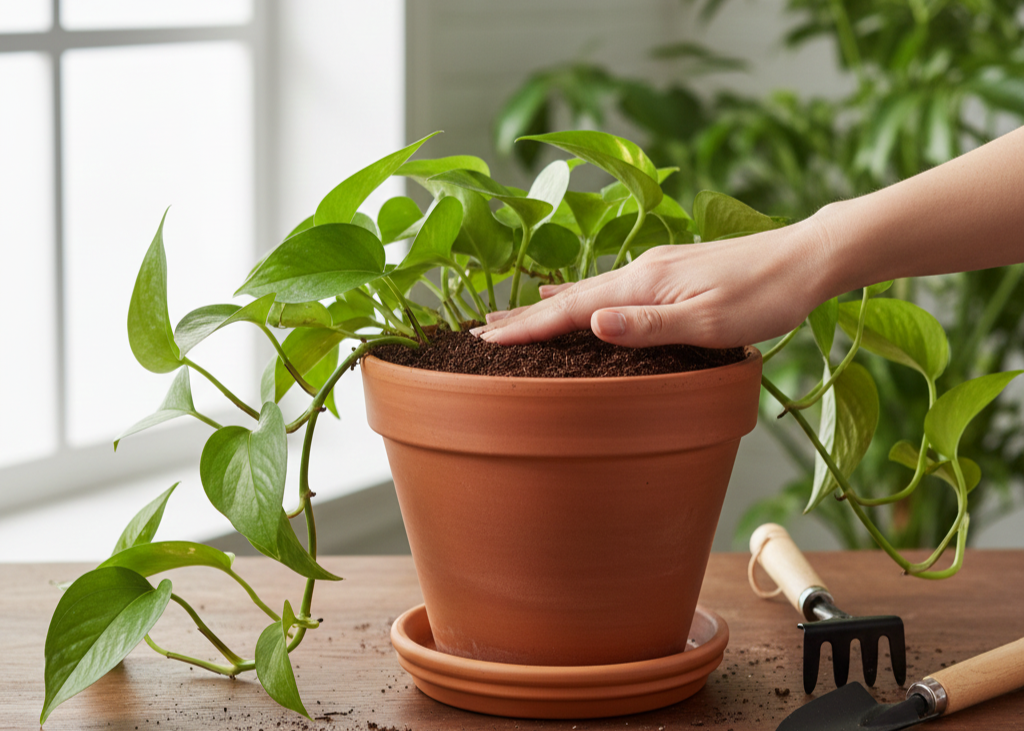
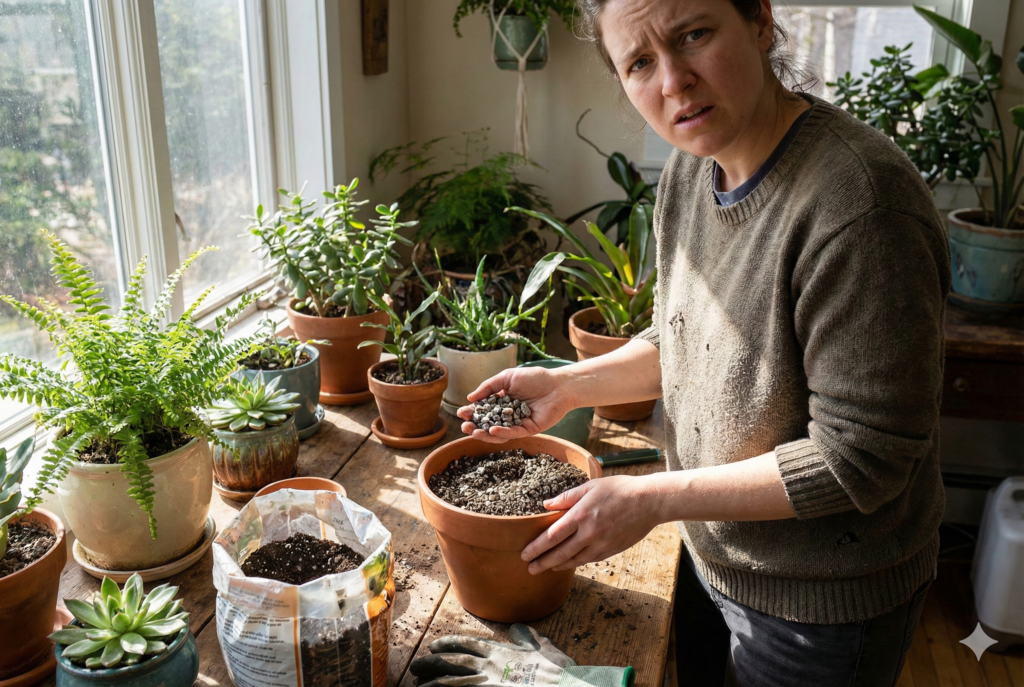
<p> If you have ever stood over a plant pot with a handful of gravel and felt confident that you were about to do something smart and “garden-expert approved,” you are definitely not alone. For decades, gardeners across the United States have believed that adding a layer of rocks to the bottom of a pot helps improve drainage, prevents soggy soil, and keeps plants healthier. It sounds logical. After all, water flows more easily through rocks than through soil, right?

Well, not exactly.

In recent years, horticulturists and plant scientists have been debunking this old gardening habit, showing that gravel at the bottom of pots often causes more harm than good. It can trap water closer to your plant’s roots, reduce the soil space your plant needs to thrive, and even increase the chances of root rot.

If you have been using gravel with good intentions, do not worry. Many of us learned this method from parents, grandparents, or friendly fellow plant lovers. Today, let’s walk through the real reasons gravel might be working against your plants and explore better ways to help them grow strong and healthy.

Below are the key problems gravel can create inside plant pots and what you should understand before sprinkling stones into your next container garden. </p> :: Gemini

If you have ever stood over a plant pot with a handful of gravel and felt confident that you were about to do something smart and “garden-expert approved,” you are definitely not alone. For decades, gardeners across the United States have believed that adding a layer of rocks to the bottom of a pot helps improve drainage, prevents soggy soil, and keeps plants healthier. It sounds logical. After all, water flows more easily through rocks than through soil, right?

Well, not exactly.

In recent years, horticulturists and plant scientists have been debunking this old gardening habit, showing that gravel at the bottom of pots often causes more harm than good. It can trap water closer to your plant’s roots, reduce the soil space your plant needs to thrive, and even increase the chances of root rot.

If you have been using gravel with good intentions, do not worry. Many of us learned this method from parents, grandparents, or friendly fellow plant lovers. Today, let’s walk through the real reasons gravel might be working against your plants and explore better ways to help them grow strong and healthy.

Below are the key problems gravel can create inside plant pots and what you should understand before sprinkling stones into your next container garden.

1. Gravel Does Not Actually Improve Drainage

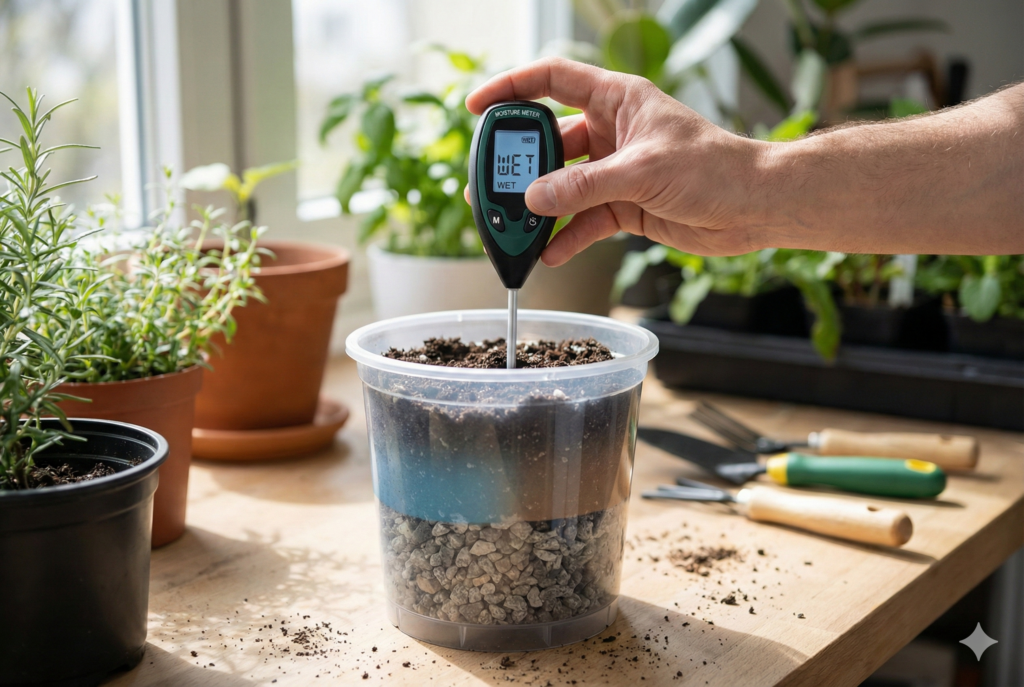
<p> One of the biggest misunderstandings in the plant world is the idea that gravel speeds up drainage inside a pot. In theory, it sounds perfect. Water should flow through the soil and then pass easily into the rock layer. But in reality, soil does not behave that way.

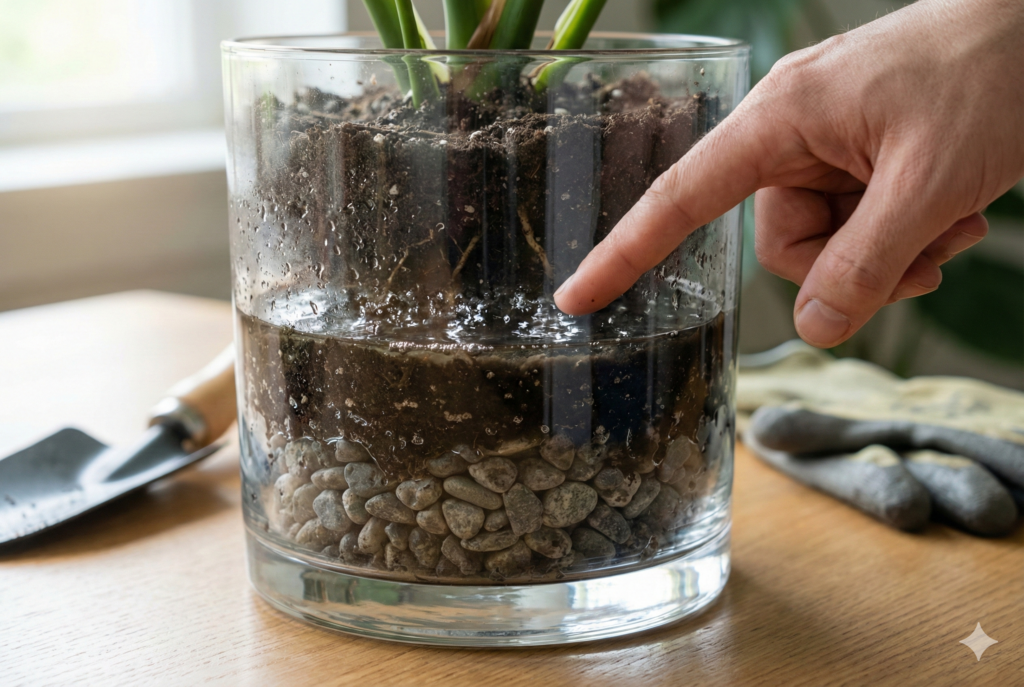
Water naturally clings to soil particles until the soil becomes saturated. Only then will excess water move downward. This means water pools above the gravel layer rather than flowing quickly into it. What you end up with is a soggy layer of soil sitting right where your plant’s roots live.

Instead of helping with drainage, the gravel often creates a barrier that keeps roots in wetter conditions for longer than intended. </p> :: Gemini

One of the biggest misunderstandings in the plant world is the idea that gravel speeds up drainage inside a pot. In theory, it sounds perfect. Water should flow through the soil and then pass easily into the rock layer. But in reality, soil does not behave that way.

Water naturally clings to soil particles until the soil becomes saturated. Only then will excess water move downward. This means water pools above the gravel layer rather than flowing quickly into it. What you end up with is a soggy layer of soil sitting right where your plant’s roots live.

Instead of helping with drainage, the gravel often creates a barrier that keeps roots in wetter conditions for longer than intended.

2. It Raises the Internal Water Table of the Pot

<p> When you add gravel to the bottom of a plant pot, you reduce the amount of soil inside the container. Because of this, the point where water settles after watering ends up higher than it would be in a pot filled entirely with soil.

This is a sneaky problem that most people do not see happening. You cannot see the water table inside the pot, but your plant definitely can feel it. When that water level rises closer to the roots, the roots spend more time sitting in overly wet soil.

Roots need both water and air to function well. When they stay wet too long, they struggle to breathe, which puts them at risk for rot, stunted growth, and fungal infections. A raised water table is one of the biggest hidden reasons that adding gravel can lead to sick or stressed plants. </p> :: Gemini

When you add gravel to the bottom of a plant pot, you reduce the amount of soil inside the container. Because of this, the point where water settles after watering ends up higher than it would be in a pot filled entirely with soil.

This is a sneaky problem that most people do not see happening. You cannot see the water table inside the pot, but your plant definitely can feel it. When that water level rises closer to the roots, the roots spend more time sitting in overly wet soil.

Roots need both water and air to function well. When they stay wet too long, they struggle to breathe, which puts them at risk for rot, stunted growth, and fungal infections. A raised water table is one of the biggest hidden reasons that adding gravel can lead to sick or stressed plants.

3. It Reduces the Space Roots Need for Growth

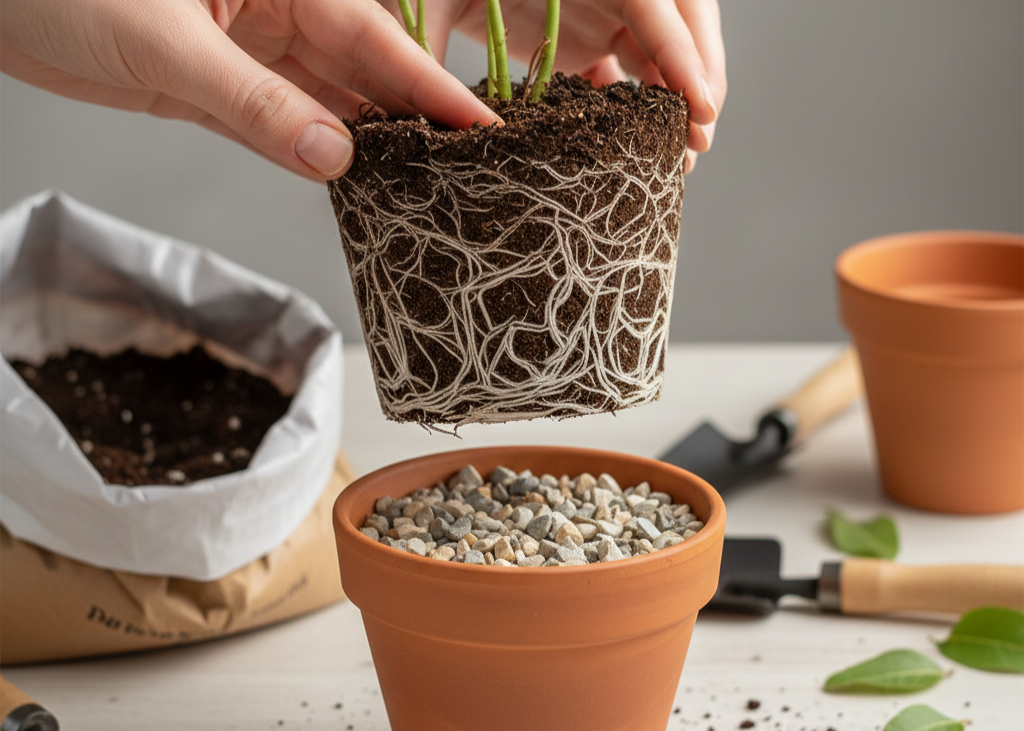
<p> Plants rely on soil not just for water, but also for nutrients, stability, and physical space to develop strong root systems. When you fill the bottom of a pot with gravel, you limit the soil volume available.

Less soil means fewer nutrients, less room for roots to expand, and a more confined growing environment overall. This can stunt a plant’s development over time.

Even if a pot looks large from the outside, gravel can make it function like a much smaller pot. The plant eventually becomes root bound faster or simply grows less vigorously than it could have with full access to the container’s space. </p> :: Gemini

Plants rely on soil not just for water, but also for nutrients, stability, and physical space to develop strong root systems. When you fill the bottom of a pot with gravel, you limit the soil volume available.

Less soil means fewer nutrients, less room for roots to expand, and a more confined growing environment overall. This can stunt a plant’s development over time.

Even if a pot looks large from the outside, gravel can make it function like a much smaller pot. The plant eventually becomes root bound faster or simply grows less vigorously than it could have with full access to the container’s space.

4. It Can Limit Aeration Inside the Soil

<p> Healthy soil is full of tiny pockets of air that allow plant roots to breathe. When water consistently sits above a gravel layer, those air pockets collapse, leaving less oxygen in the soil.

Oxygen-poor soil is one of the biggest enemies of root health. Roots that cannot access enough oxygen weaken, decline, and become vulnerable to rotting. While gravel is supposed to create better airflow, it often does the opposite by forcing more water to hover near the roots and reducing the soil’s natural ability to breathe. </p> :: Gemini

Healthy soil is full of tiny pockets of air that allow plant roots to breathe. When water consistently sits above a gravel layer, those air pockets collapse, leaving less oxygen in the soil.

Oxygen-poor soil is one of the biggest enemies of root health. Roots that cannot access enough oxygen weaken, decline, and become vulnerable to rotting. While gravel is supposed to create better airflow, it often does the opposite by forcing more water to hover near the roots and reducing the soil’s natural ability to breathe.

5. Gravel Can Interfere with Drainage Holes

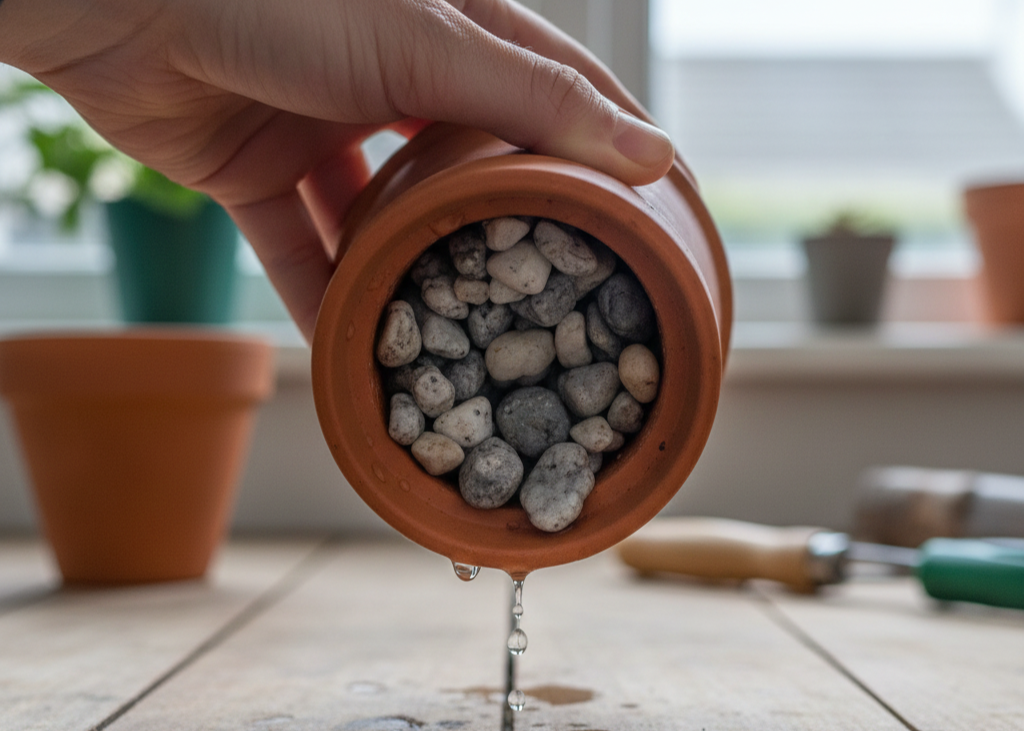
<p> This one often surprises people, but gravel can block or partially clog drainage holes. When rocks shift or settle in the bottom of a pot, they can cover the openings and slow down the release of extra water.

This results in pooling water, which leads straight back to the root rot problem most gardeners are trying to avoid in the first place. Good drainage is absolutely important, but gravel is not the best way to achieve it. </p> :: Gemini

This one often surprises people, but gravel can block or partially clog drainage holes. When rocks shift or settle in the bottom of a pot, they can cover the openings and slow down the release of extra water.

This results in pooling water, which leads straight back to the root rot problem most gardeners are trying to avoid in the first place. Good drainage is absolutely important, but gravel is not the best way to achieve it.

6. It Makes Pots Heavier and Harder to Manage

<p> From a practical standpoint, adding a layer of gravel makes pots noticeably heavier. If you enjoy rearranging your porch or indoor plant displays, heavier pots can quickly turn from charming decor to accidental workout equipment.

Heavier pots also put more pressure on shelves, rails, balconies, or plant stands. Over time, this can create unnecessary strain or increase the risk of damage or accidents.

Since gravel does not actually help your plants thrive, that extra weight does not provide any real benefit. </p> :: Gemini

From a practical standpoint, adding a layer of gravel makes pots noticeably heavier. If you enjoy rearranging your porch or indoor plant displays, heavier pots can quickly turn from charming decor to accidental workout equipment.

Heavier pots also put more pressure on shelves, rails, balconies, or plant stands. Over time, this can create unnecessary strain or increase the risk of damage or accidents.

Since gravel does not actually help your plants thrive, that extra weight does not provide any real benefit.

7. It Keeps an Old Gardening Myth Alive When Better Methods Exist

<p> One reason gravel continues to be used is simply tradition. It is a piece of gardening advice passed down for generations, and many people follow it without question because it sounds so sensible.

But gardening science has evolved. We now understand soil structure, moisture movement, and root needs much more clearly. There are better tools, better potting mixes, and better methods available that keep plants healthier without the risks gravel introduces.

Using gravel at the bottom of pots is unnecessary, outdated, and often harmful. Thankfully, you have far more effective options for promoting drainage and creating an ideal environment for your plants. </p> :: Gemini

One reason gravel continues to be used is simply tradition. It is a piece of gardening advice passed down for generations, and many people follow it without question because it sounds so sensible.

But gardening science has evolved. We now understand soil structure, moisture movement, and root needs much more clearly. There are better tools, better potting mixes, and better methods available that keep plants healthier without the risks gravel introduces.

Using gravel at the bottom of pots is unnecessary, outdated, and often harmful. Thankfully, you have far more effective options for promoting drainage and creating an ideal environment for your plants.

Final Thoughts

<p> If you have been using gravel in your plant pots for years, you are definitely not alone, and you are certainly not a bad gardener. You were following common advice that seemed logical and well-intentioned. But now that you understand how water really moves through soil and how gravel affects the internal environment of a pot, you can make choices that support healthier plants.

Removing gravel from your potting routine can make a noticeable difference. Your plants will have access to more soil space, more oxygen, and more consistent moisture levels, and they will be far less likely to suffer from preventable problems like root rot.

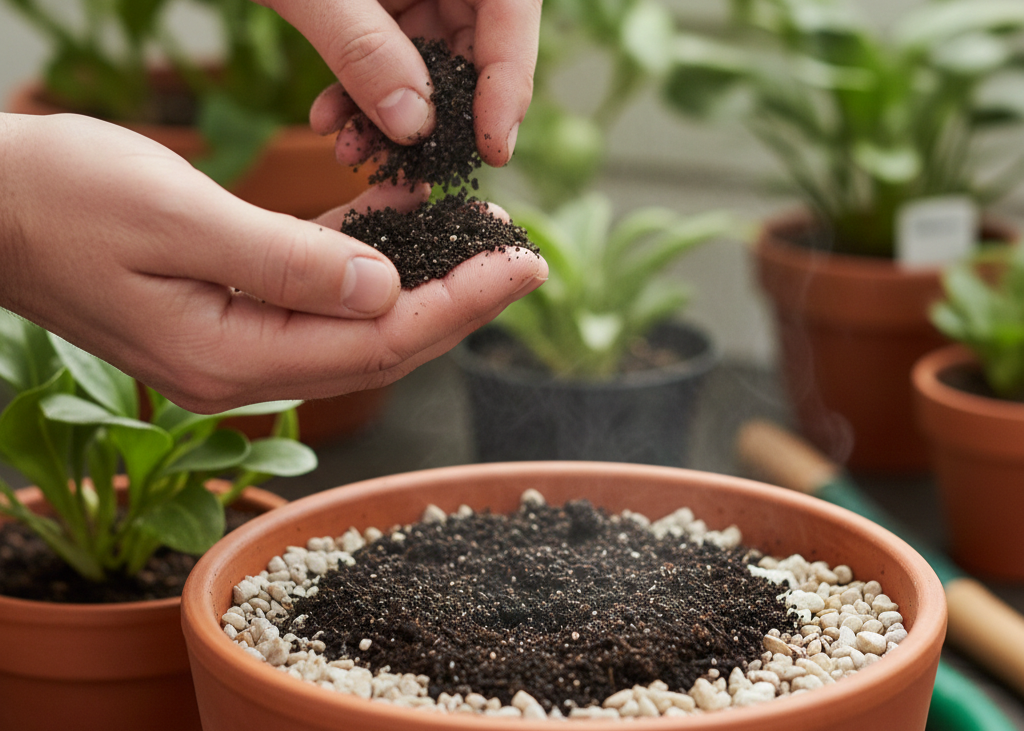
The most effective way to support proper drainage is not through gravel, but through using high quality potting mix and containers that have drainage holes. If you need to keep soil from slipping out of those holes, a simple coffee filter, mesh piece, or small bit of pottery works beautifully without disturbing the water table.

Your plants depend on you to create the conditions they cannot create for themselves. With the right soil and the right pot, they will reward you with better growth, brighter foliage, and far fewer frustrations. It is amazing how much healthier your plants can become when you skip the gravel and let the soil do its job. </p> :: Gemini

If you have been using gravel in your plant pots for years, you are definitely not alone, and you are certainly not a bad gardener. You were following common advice that seemed logical and well-intentioned. But now that you understand how water really moves through soil and how gravel affects the internal environment of a pot, you can make choices that support healthier plants.

Removing gravel from your potting routine can make a noticeable difference. Your plants will have access to more soil space, more oxygen, and more consistent moisture levels, and they will be far less likely to suffer from preventable problems like root rot.

The most effective way to support proper drainage is not through gravel, but through using high quality potting mix and containers that have drainage holes. If you need to keep soil from slipping out of those holes, a simple coffee filter, mesh piece, or small bit of pottery works beautifully without disturbing the water table.

Your plants depend on you to create the conditions they cannot create for themselves. With the right soil and the right pot, they will reward you with better growth, brighter foliage, and far fewer frustrations. It is amazing how much healthier your plants can become when you skip the gravel and let the soil do its job.

Filed Under: Lifestyle

10 Mindfulness Practices to Enhance Mental Well-being

November 26, 2025 | Leave a Comment

10 Mindfulness Practices to Enhance Mental Well-being

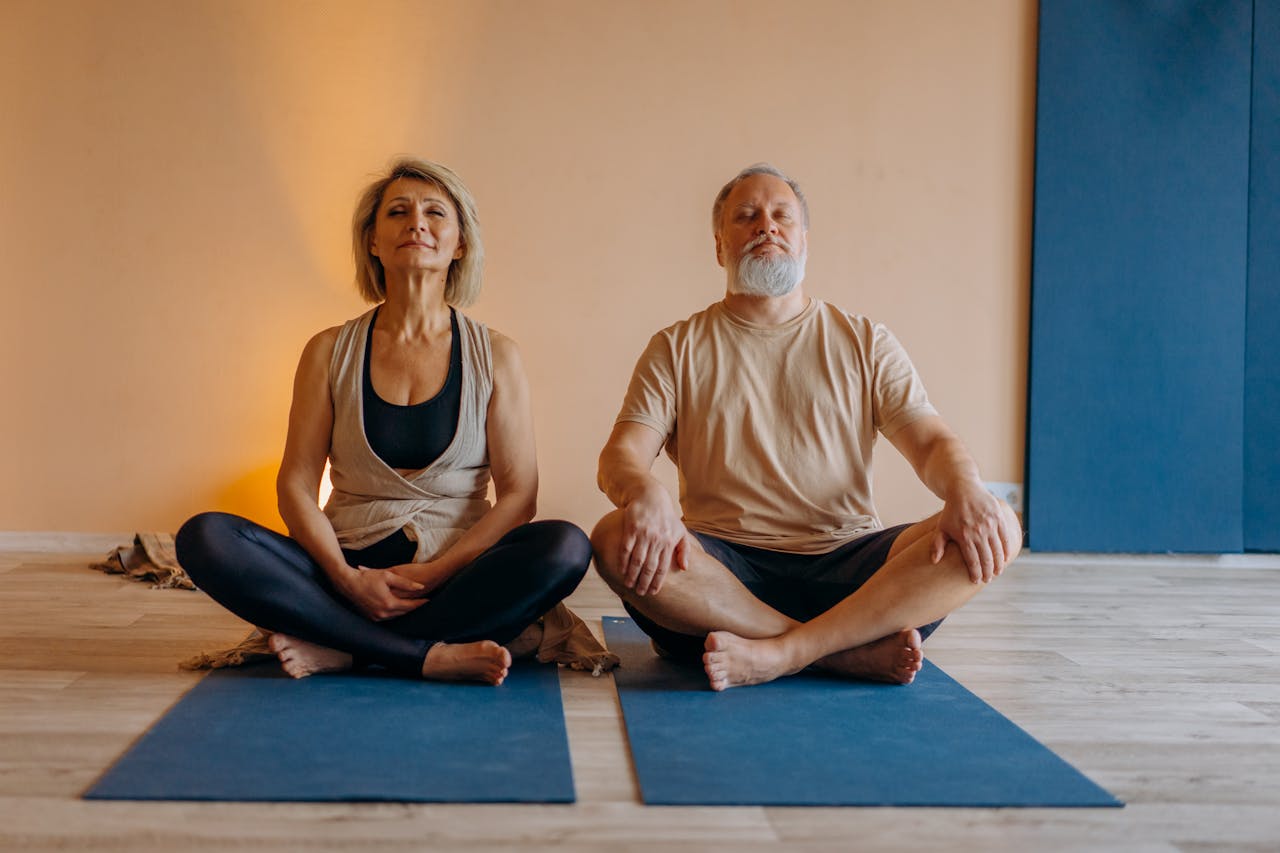
<p>Mindfulness doesn’t mean sitting in silence for hours. It’s about being present, aware, and kind to yourself. When you learn to slow down just a little, even in small ways, your mind can rest. That rest adds up. It can help with stress, sleep, and how you handle the hard stuff. The best part? You don’t need special gear or a guru. Just a few minutes, a little space, and some practice. These ten simple habits can shift how your brain feels—without needing to change your whole life.</p> ::Pexels

Mindfulness doesn’t mean sitting in silence for hours. It’s about being present, aware, and kind to yourself. When you learn to slow down just a little, even in small ways, your mind can rest. That rest adds up. It can help with stress, sleep, and how you handle the hard stuff. The best part? You don’t need special gear or a guru. Just a few minutes, a little space, and some practice. These ten simple habits can shift how your brain feels—without needing to change your whole life.

Take Three Deep Breaths

<p>Breathing sounds too easy to matter. But deep, slow breaths send a message to your brain that says, “You’re safe.” Just three full breaths can lower your heart rate and shift your mood. It’s the fastest reset button you have. Try it before a meeting, after an argument, or when you feel scattered. Bonus: Your lungs will love the extra oxygen. And fun fact—many meditation schools start with the breath because it’s always with you, wherever you go.</p> ::Pexels

Breathing sounds too easy to matter. But deep, slow breaths send a message to your brain that says, “You’re safe.” Just three full breaths can lower your heart rate and shift your mood. It’s the fastest reset button you have. Try it before a meeting, after an argument, or when you feel scattered. Bonus: Your lungs will love the extra oxygen. And fun fact—many meditation schools start with the breath because it’s always with you, wherever you go.

Do a One-Minute Body Scan

<p>You don’t need a full yoga class to check in with your body. Just sit or lie down, close your eyes, and scan from head to toe. Notice how each part feels without trying to fix anything. Are your shoulders tight? Is your jaw clenched? You might be surprised by how much you’re holding in. This tiny act builds awareness and brings your focus out of your head. It also helps you notice pain or stress before it gets worse.</p> ::Pexels

You don’t need a full yoga class to check in with your body. Just sit or lie down, close your eyes, and scan from head to toe. Notice how each part feels without trying to fix anything. Are your shoulders tight? Is your jaw clenched? You might be surprised by how much you’re holding in. This tiny act builds awareness and brings your focus out of your head. It also helps you notice pain or stress before it gets worse.

Eat Without Screens

<p>Ever finish a whole meal and not remember tasting it? That’s what happens when we eat while watching or scrolling. Once a day, try eating without your phone, TV, or laptop nearby. Notice the colors, smells, and textures of your food. Take slower bites. You’ll likely feel more full and satisfied. Mindful eating can also help people with emotional eating or digestion issues. Plus, food just tastes better when you actually pay attention.</p> ::Pexels

Ever finish a whole meal and not remember tasting it? That’s what happens when we eat while watching or scrolling. Once a day, try eating without your phone, TV, or laptop nearby. Notice the colors, smells, and textures of your food. Take slower bites. You’ll likely feel more full and satisfied. Mindful eating can also help people with emotional eating or digestion issues. Plus, food just tastes better when you actually pay attention.

Walk Slowly on Purpose

<p>You don’t need a long hike to find peace. A short, slow walk—without earbuds—can ground you fast. Focus on the feel of your feet on the ground, the wind on your skin, and the sounds around you. Even five minutes outside can lift your mood. Trees, birds, and blue sky help more than you think. Studies show that walking in nature drops cortisol, the stress hormone. But even a stroll around your block works if you stay present.</p> ::Pexels

You don’t need a long hike to find peace. A short, slow walk—without earbuds—can ground you fast. Focus on the feel of your feet on the ground, the wind on your skin, and the sounds around you. Even five minutes outside can lift your mood. Trees, birds, and blue sky help more than you think. Studies show that walking in nature drops cortisol, the stress hormone. But even a stroll around your block works if you stay present.

Listen to Sounds Around You

<p>Sound is one of the most powerful ways to pull your mind back to the now. Try this: sit still and close your eyes for a minute. Then listen—really listen. What do you hear? A clock ticking, a bird, a car horn? Naming each sound gently brings you into the moment. It works even if your world is noisy. This habit trains your brain to focus on what’s real, not what you’re worrying about.</p> ::Pexels

Sound is one of the most powerful ways to pull your mind back to the now. Try this: sit still and close your eyes for a minute. Then listen—really listen. What do you hear? A clock ticking, a bird, a car horn? Naming each sound gently brings you into the moment. It works even if your world is noisy. This habit trains your brain to focus on what’s real, not what you’re worrying about.

Try a Gratitude Check-In

<p>Gratitude isn’t just nice—it rewires your brain. Each night or morning, list three things that made you feel glad, safe, or loved. They can be tiny: warm socks, a kind word, a sunset. You don’t need to write long lists. Just take a moment to feel the goodness. Over time, this practice can help you spot good things more often, even on tough days. And here’s a fact: People who do this daily report better sleep and less stress.</p> ::Pexels

Gratitude isn’t just nice—it rewires your brain. Each night or morning, list three things that made you feel glad, safe, or loved. They can be tiny: warm socks, a kind word, a sunset. You don’t need to write long lists. Just take a moment to feel the goodness. Over time, this practice can help you spot good things more often, even on tough days. And here’s a fact: People who do this daily report better sleep and less stress.

Focus on One Task at a Time

<p>Multitasking sounds smart, but it wears your brain out. Doing one thing with full focus, even for ten minutes, can feel like a break. Wash dishes without music. Fold clothes while watching your hands move. Type an email with all your attention. You’ll do better work and feel less fried. Mindfulness isn’t about slowing everything down forever. It’s about doing things with care and attention, one by one.</p> ::Pexels

Multitasking sounds smart, but it wears your brain out. Doing one thing with full focus, even for ten minutes, can feel like a break. Wash dishes without music. Fold clothes while watching your hands move. Type an email with all your attention. You’ll do better work and feel less fried. Mindfulness isn’t about slowing everything down forever. It’s about doing things with care and attention, one by one.

Sit Quietly for Five Minutes

<p>Don’t think of this as “meditating.” Just sit. That’s it. You don’t need to sit cross-legged or chant anything. Let your thoughts come and go, like clouds. When your mind drifts, bring it back to your breath or the sounds around you. At first, five minutes might feel long. But stick with it. You’re not trying to stop your thoughts—you’re trying to stop chasing them. Even short sits can build mental strength over time.</p> ::Pexels

Don’t think of this as “meditating.” Just sit. That’s it. You don’t need to sit cross-legged or chant anything. Let your thoughts come and go, like clouds. When your mind drifts, bring it back to your breath or the sounds around you. At first, five minutes might feel long. But stick with it. You’re not trying to stop your thoughts—you’re trying to stop chasing them. Even short sits can build mental strength over time.

Write Down Your Thoughts

<p>Journaling helps move stress out of your head and onto the page. Set a timer for ten minutes and write whatever comes to mind. Don’t worry about grammar or making sense. The goal is to release, not to impress. This practice can help you notice patterns in your thoughts or feelings. It also helps with problem-solving and sleep. Some people like to end with one thing they’re proud of that day—even something small, like getting out of bed.</p> ::Pexels

Journaling helps move stress out of your head and onto the page. Set a timer for ten minutes and write whatever comes to mind. Don’t worry about grammar or making sense. The goal is to release, not to impress. This practice can help you notice patterns in your thoughts or feelings. It also helps with problem-solving and sleep. Some people like to end with one thing they’re proud of that day—even something small, like getting out of bed.

Practice Saying “I Noticed…”

<p>When you feel upset, try this phrase: “I noticed I’m feeling…” It sounds simple, but it works. Naming a feeling gives you space from it. It helps you respond instead of react. You can say it out loud, write it down, or just think it. This habit builds emotional awareness and makes it easier to talk to others about how you feel. It’s a tool many therapists teach because it’s both kind and clear.</p> ::Pexels

When you feel upset, try this phrase: “I noticed I’m feeling…” It sounds simple, but it works. Naming a feeling gives you space from it. It helps you respond instead of react. You can say it out loud, write it down, or just think it. This habit builds emotional awareness and makes it easier to talk to others about how you feel. It’s a tool many therapists teach because it’s both kind and clear.

Conclusion

<p>You don’t need a perfect life to feel more peace. You just need small, steady shifts. These mindfulness habits are tools, not tasks. They help you pause, notice, and care for your mind like you would a garden—gently and often. No gear, no pressure, just presence. The more you use them, the more they become part of your life. And that’s when things really start to change. A calmer brain is a stronger one.</p> ::Pexels

You don’t need a perfect life to feel more peace. You just need small, steady shifts. These mindfulness habits are tools, not tasks. They help you pause, notice, and care for your mind like you would a garden—gently and often. No gear, no pressure, just presence. The more you use them, the more they become part of your life. And that’s when things really start to change. A calmer brain is a stronger one.

Filed Under: Health & Fitness

7 Cultural Experiences to Enrich Your Retirement Years

November 26, 2025 | Leave a Comment

7 Cultural Experiences to Enrich Your Retirement Years

<p>Retirement gives you something rare: time to explore without rushing. And while travel is one way to do that, culture isn’t limited to far-off places. You can fill your days with rich, soul-stirring experiences no matter where you are. Art, music, history, food—they all tell stories that help you see the world in new ways. The best part? These cultural gems aren’t just for tourists or scholars. They’re for anyone curious enough to try something new. If you want to add more meaning to your days, these seven ideas are a good place to start.</p> ::Pexels

Retirement gives you something rare: time to explore without rushing. And while travel is one way to do that, culture isn’t limited to far-off places. You can fill your days with rich, soul-stirring experiences no matter where you are. Art, music, history, food—they all tell stories that help you see the world in new ways. The best part? These cultural gems aren’t just for tourists or scholars. They’re for anyone curious enough to try something new. If you want to add more meaning to your days, these seven ideas are a good place to start.

Visit Local Museums and Exhibits

<p>Every town has a museum, even if it’s just one room above a library. Whether it’s art, science, or history, a museum gives you a peek into someone else’s world. You don’t need to travel far to feel inspired. Many small museums are run by locals who love to share little-known facts. Did you know the first public museum in the U.S. opened in Charleston in 1773? Some even offer free entry days or senior discounts. A quiet afternoon in a museum can wake up your brain like a good book.</p> ::Pexels

Every town has a museum, even if it’s just one room above a library. Whether it’s art, science, or history, a museum gives you a peek into someone else’s world. You don’t need to travel far to feel inspired. Many small museums are run by locals who love to share little-known facts. Did you know the first public museum in the U.S. opened in Charleston in 1773? Some even offer free entry days or senior discounts. A quiet afternoon in a museum can wake up your brain like a good book.

Attend Live Theater or Performances

<p>There’s something special about watching real people perform just feet away from you. Live theater, dance shows, or local concerts can shake up your week and make you feel more alive. Community plays, jazz nights, or even improv comedy bring you into the moment. No two shows are ever the same. Many towns host outdoor summer shows or senior matinees. Some theaters even offer “pay what you can” nights. Shakespeare in the park? Sounds fancy, but it’s often free and packed with fun.</p> ::Pexels

There’s something special about watching real people perform just feet away from you. Live theater, dance shows, or local concerts can shake up your week and make you feel more alive. Community plays, jazz nights, or even improv comedy bring you into the moment. No two shows are ever the same. Many towns host outdoor summer shows or senior matinees. Some theaters even offer “pay what you can” nights. Shakespeare in the park? Sounds fancy, but it’s often free and packed with fun.

Join a Cultural Festival

<p>Festivals are like a vacation without the plane ticket. They offer food, music, crafts, and traditions from all over the world. Think Greek food fests, Chinese New Year parades, or Latin dance nights. You don’t need to know the culture to enjoy the vibe. Just show up, try something new, and talk to people. You’ll likely hear a new language or taste a dish you’ve never had before. Fun fact: The Albuquerque International Balloon Fiesta started with just 13 balloons in 1972. Now it draws hundreds of thousands every year. Festivals grow—and so can you.</p> ::Pexels

Festivals are like a vacation without the plane ticket. They offer food, music, crafts, and traditions from all over the world. Think Greek food fests, Chinese New Year parades, or Latin dance nights. You don’t need to know the culture to enjoy the vibe. Just show up, try something new, and talk to people. You’ll likely hear a new language or taste a dish you’ve never had before. Fun fact: The Albuquerque International Balloon Fiesta started with just 13 balloons in 1972. Now it draws hundreds of thousands every year. Festivals grow—and so can you.

Take an Art or Craft Class

<p>Making something with your hands feeds your mind in ways screens can’t. Pottery, painting, sewing, or even stained glass classes help you focus, learn, and relax. Many community centers and libraries offer low-cost or free classes for adults. Don’t worry if you’ve never held a brush or needle before. You’re not trying to make a masterpiece—you’re trying to feel something new. Bonus: You get to take home something you made with pride. Creating is part of every culture. When you join in, you connect with that long human story.</p> ::Pexels

Making something with your hands feeds your mind in ways screens can’t. Pottery, painting, sewing, or even stained glass classes help you focus, learn, and relax. Many community centers and libraries offer low-cost or free classes for adults. Don’t worry if you’ve never held a brush or needle before. You’re not trying to make a masterpiece—you’re trying to feel something new. Bonus: You get to take home something you made with pride. Creating is part of every culture. When you join in, you connect with that long human story.

Explore Local Heritage Sites

<p>There’s a reason people visit old towns, lighthouses, battlefields, or missions. These places hold the bones of a story that shaped the place you live. You can learn a lot by walking through a site, reading a plaque, or talking to a guide in period costume. Some sites even have live demos—blacksmithing, weaving, or cooking over fire. It’s history with sounds and smells, not just dates. Many seniors volunteer at these places too, which adds a social perk. A stroll through the past can help you feel more grounded in the now.</p> ::Pexels

There’s a reason people visit old towns, lighthouses, battlefields, or missions. These places hold the bones of a story that shaped the place you live. You can learn a lot by walking through a site, reading a plaque, or talking to a guide in period costume. Some sites even have live demos—blacksmithing, weaving, or cooking over fire. It’s history with sounds and smells, not just dates. Many seniors volunteer at these places too, which adds a social perk. A stroll through the past can help you feel more grounded in the now.

Join a Book or Film Club with Global Themes

<p>Books and films are a simple way to explore cultures without leaving your chair. A club gives you the bonus of sharing the experience with others. You can pick stories from different places—African novels, Korean dramas, Italian films—and talk about them with curious minds. Libraries often host these clubs, or you can start one with friends. You’ll likely hear new views and feel emotions you didn’t expect. It’s less about being an expert and more about being open. Culture isn’t just in the story—it’s in the talk after the credits roll.</p> ::Pexels

Books and films are a simple way to explore cultures without leaving your chair. A club gives you the bonus of sharing the experience with others. You can pick stories from different places—African novels, Korean dramas, Italian films—and talk about them with curious minds. Libraries often host these clubs, or you can start one with friends. You’ll likely hear new views and feel emotions you didn’t expect. It’s less about being an expert and more about being open. Culture isn’t just in the story—it’s in the talk after the credits roll.

Try Cooking from a Different Culture

<p>Food is one of the most fun ways to dip into a culture. Pick a country, find a few recipes, and spend an afternoon cooking something new. You don’t need a big kitchen or rare spices—just a sense of play. Try Thai curry, French crepes, or Moroccan tagine. Watch a video or follow a step-by-step recipe online. Even better, invite someone to eat with you and share the experience. A fun fact: Pizza, now a staple in the U.S., came from poor folks in Naples using scraps to feed their families. Culture is often born from simple, clever meals.</p> ::Pexels

Food is one of the most fun ways to dip into a culture. Pick a country, find a few recipes, and spend an afternoon cooking something new. You don’t need a big kitchen or rare spices—just a sense of play. Try Thai curry, French crepes, or Moroccan tagine. Watch a video or follow a step-by-step recipe online. Even better, invite someone to eat with you and share the experience. A fun fact: Pizza, now a staple in the U.S., came from poor folks in Naples using scraps to feed their families. Culture is often born from simple, clever meals.

Conclusion

<p>Cultural joy doesn’t need a plane ride, a passport, or a packed bag. It can live in a paintbrush, a playbill, a good meal, or a walk through the past. These seven ways offer both comfort and stretch—a way to feel more alive and connected. In your retirement years, time is no longer rushed. That means you can soak in the beauty of someone else’s story, one slow and lovely step at a time. Try one, try all—you might just find a new passion waiting where you least expect it.</p> ::Pexels

Cultural joy doesn’t need a plane ride, a passport, or a packed bag. It can live in a paintbrush, a playbill, a good meal, or a walk through the past. These seven ways offer both comfort and stretch—a way to feel more alive and connected. In your retirement years, time is no longer rushed. That means you can soak in the beauty of someone else’s story, one slow and lovely step at a time. Try one, try all—you might just find a new passion waiting where you least expect it.

Filed Under: Lifestyle

8 Things That Instantly Boosted My Mood in My 40s and 50s

November 26, 2025 | Leave a Comment

8 Things That Instantly Boosted My Mood in My 40s and 50s

<p>Getting older can sneak up on you. One day you’re in your thirties, then boom—your knees make noise and your inbox is full of doctor appointment reminders. But midlife doesn’t have to feel heavy. In fact, I’ve found a few things that lit me up again—small shifts, big lift. These aren’t fancy or hard to find. They’re simple habits and moments that flipped a switch in my brain. If you’ve been feeling blah or just want more good days, these might help you too.</p> ::Pexels

Getting older can sneak up on you. One day you’re in your thirties, then boom—your knees make noise and your inbox is full of doctor appointment reminders. But midlife doesn’t have to feel heavy. In fact, I’ve found a few things that lit me up again—small shifts, big lift. These aren’t fancy or hard to find. They’re simple habits and moments that flipped a switch in my brain. If you’ve been feeling blah or just want more good days, these might help you too.

Morning Light Walks

<p>Starting my day with a 10-minute walk in the morning sun changed everything. It doesn’t sound big, but it gave me more energy, better sleep, and a clearer head. Getting outside early helps your body know when it’s time to wake up and when it’s time to rest. I skip the sunglasses so the natural light hits my eyes—it helps reset my body clock. Birds chirping, cool air, and that quiet feeling before the day starts? Instant peace. Plus, the Vitamin D boost doesn’t hurt.</p> ::Pexels

Starting my day with a 10-minute walk in the morning sun changed everything. It doesn’t sound big, but it gave me more energy, better sleep, and a clearer head. Getting outside early helps your body know when it’s time to wake up and when it’s time to rest. I skip the sunglasses so the natural light hits my eyes—it helps reset my body clock. Birds chirping, cool air, and that quiet feeling before the day starts? Instant peace. Plus, the Vitamin D boost doesn’t hurt.

Cutting Out News Doomscrolling

<p>I didn’t even realize how much stress came from reading the news all day. Breaking stories, bad headlines, and comment fights kept me tense. So, I made a rule: 15 minutes max, once a day, on one site I trust. No late-night doomscrolling. My brain felt lighter after just a few days. I had more room to think about real life, not just fear. A fun fact: the term “doomscrolling” only popped up in 2020—but the habit crept in way before that.</p> ::Pexels

I didn’t even realize how much stress came from reading the news all day. Breaking stories, bad headlines, and comment fights kept me tense. So, I made a rule: 15 minutes max, once a day, on one site I trust. No late-night doomscrolling. My brain felt lighter after just a few days. I had more room to think about real life, not just fear. A fun fact: the term “doomscrolling” only popped up in 2020—but the habit crept in way before that.

Listening to Music from My Teens

<p>Nothing lifts a mood like music that brings back good times. I dug out my old playlists—songs from high school, college, first road trips. They didn’t just sound good. They pulled back memories I forgot I had. Music lights up more areas of the brain than almost anything else. It’s linked to memory, joy, and even movement. So now, when I cook or clean, I put on something from the 90s or early 2000s. Even 3 minutes of a good chorus can reset my day.</p> ::Pexels

Nothing lifts a mood like music that brings back good times. I dug out my old playlists—songs from high school, college, first road trips. They didn’t just sound good. They pulled back memories I forgot I had. Music lights up more areas of the brain than almost anything else. It’s linked to memory, joy, and even movement. So now, when I cook or clean, I put on something from the 90s or early 2000s. Even 3 minutes of a good chorus can reset my day.

Decluttering One Drawer at a Time

<p>I used to think I had to clean a whole room to feel better. Then I tried just one drawer. One tiny space. I’d dump it out, toss what I didn’t need, and put it back tidy. The mood shift was wild. It gave me a small win, fast. It also made me feel in control—like I could handle bigger stuff, too. Studies show clutter can raise stress, so even a little cleanup helps. Now I pick one drawer, shelf, or surface a week. That’s it.</p> ::Pexels

I used to think I had to clean a whole room to feel better. Then I tried just one drawer. One tiny space. I’d dump it out, toss what I didn’t need, and put it back tidy. The mood shift was wild. It gave me a small win, fast. It also made me feel in control—like I could handle bigger stuff, too. Studies show clutter can raise stress, so even a little cleanup helps. Now I pick one drawer, shelf, or surface a week. That’s it.

Trying a New Recipe—Alone

<p>Cooking for others is nice, but cooking for just me? That was a new joy. I started picking simple recipes I’d never tried—like a Thai curry or banana pancakes. I’d put on music, pour a drink, and treat it like playtime. If it flopped, no big deal. If it worked, I felt like a champ. Making something with my hands always lifts me up, but food makes it extra sweet. Plus, I get to eat the prize. Win-win.</p> ::Pexels

Cooking for others is nice, but cooking for just me? That was a new joy. I started picking simple recipes I’d never tried—like a Thai curry or banana pancakes. I’d put on music, pour a drink, and treat it like playtime. If it flopped, no big deal. If it worked, I felt like a champ. Making something with my hands always lifts me up, but food makes it extra sweet. Plus, I get to eat the prize. Win-win.

Laughing on Purpose

<p>I didn’t wait to feel happy—I started chasing laughter. I watched stand-up specials, goofy pet videos, or reruns of old comedies I loved. I even tried laughter yoga once (felt silly, worked great). Turns out, fake laughing often leads to real laughing. The body doesn’t always know the difference. Laughter lowers stress and boosts feel-good chemicals like dopamine. And you don’t need a crowd—just a good clip and a few spare minutes. It’s free therapy.</p> ::Pexels

I didn’t wait to feel happy—I started chasing laughter. I watched stand-up specials, goofy pet videos, or reruns of old comedies I loved. I even tried laughter yoga once (felt silly, worked great). Turns out, fake laughing often leads to real laughing. The body doesn’t always know the difference. Laughter lowers stress and boosts feel-good chemicals like dopamine. And you don’t need a crowd—just a good clip and a few spare minutes. It’s free therapy.

Talking to Someone I Like (Not Just Texting)

<p>I made a rule for myself: one real voice or face-to-face chat every day. No texts, no DMs. Just hearing someone laugh or sigh or say “me too” made me feel grounded. In your 40s and 50s, friends can slip away if you don’t try. These talks didn’t have to be deep—just real. Sometimes it was a 5-minute phone call. Other times, a walk with a neighbor. Either way, it reminded me I’m not in this life alone.</p> ::Pexels

I made a rule for myself: one real voice or face-to-face chat every day. No texts, no DMs. Just hearing someone laugh or sigh or say “me too” made me feel grounded. In your 40s and 50s, friends can slip away if you don’t try. These talks didn’t have to be deep—just real. Sometimes it was a 5-minute phone call. Other times, a walk with a neighbor. Either way, it reminded me I’m not in this life alone.

Dressing Up Just Because

<p>I used to save my nice clothes for special days. Then I realized—today can be one. So I started wearing my “good” shirt on a Monday or my favorite necklace to the store. It changed how I stood. How I walked. Even how people looked at me. Clothes aren’t just fabric—they can flip a switch in how you feel. A fun fact? Psychologists call this “enclothed cognition.” What you wear changes your mood and your mind. Who knew a scarf could be self-care?</p> ::Pexels

I used to save my nice clothes for special days. Then I realized—today can be one. So I started wearing my “good” shirt on a Monday or my favorite necklace to the store. It changed how I stood. How I walked. Even how people looked at me. Clothes aren’t just fabric—they can flip a switch in how you feel. A fun fact? Psychologists call this “enclothed cognition.” What you wear changes your mood and your mind. Who knew a scarf could be self-care?

Conclusion

<p>Mood boosts don’t always come from big life changes. Often, they’re in tiny moments we can reach for each day. Whether it’s light on your face, a good song, or a clean drawer, the goal is to feel a little better, not perfect. These eight habits gave me tools I didn’t know I needed in my 40s and 50s. If you try even one, you might feel that quiet spark come back too. Small joy still counts. In fact, it might count the most.</p> ::Pexels

Mood boosts don’t always come from big life changes. Often, they’re in tiny moments we can reach for each day. Whether it’s light on your face, a good song, or a clean drawer, the goal is to feel a little better, not perfect. These eight habits gave me tools I didn’t know I needed in my 40s and 50s. If you try even one, you might feel that quiet spark come back too. Small joy still counts. In fact, it might count the most.

Filed Under: Health & Fitness

12 Powerful Benefits of Yoga for Seniors: Relieve Stress and Boost Flexibility

November 26, 2025 | Leave a Comment

12 Powerful Benefits of Yoga for Seniors: Relieve Stress and Boost Flexibility

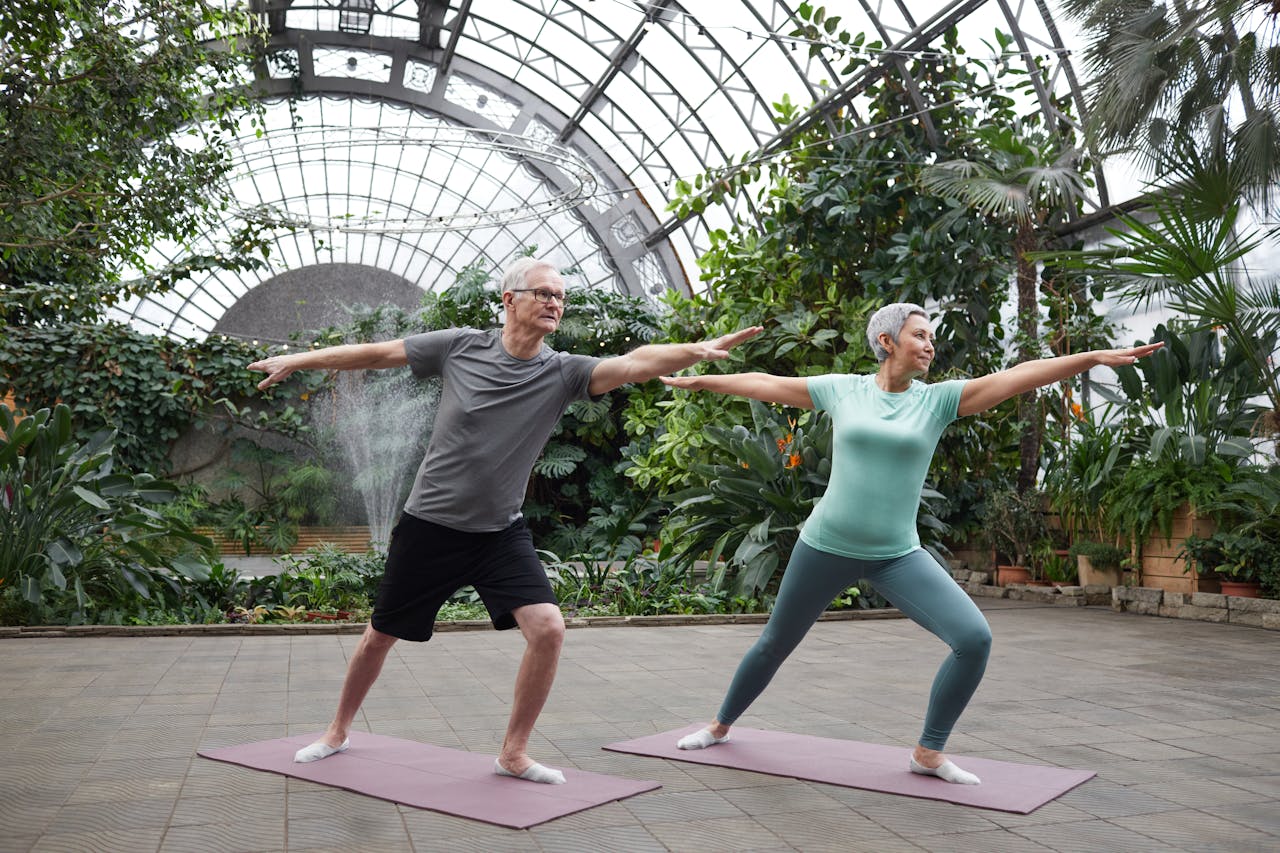
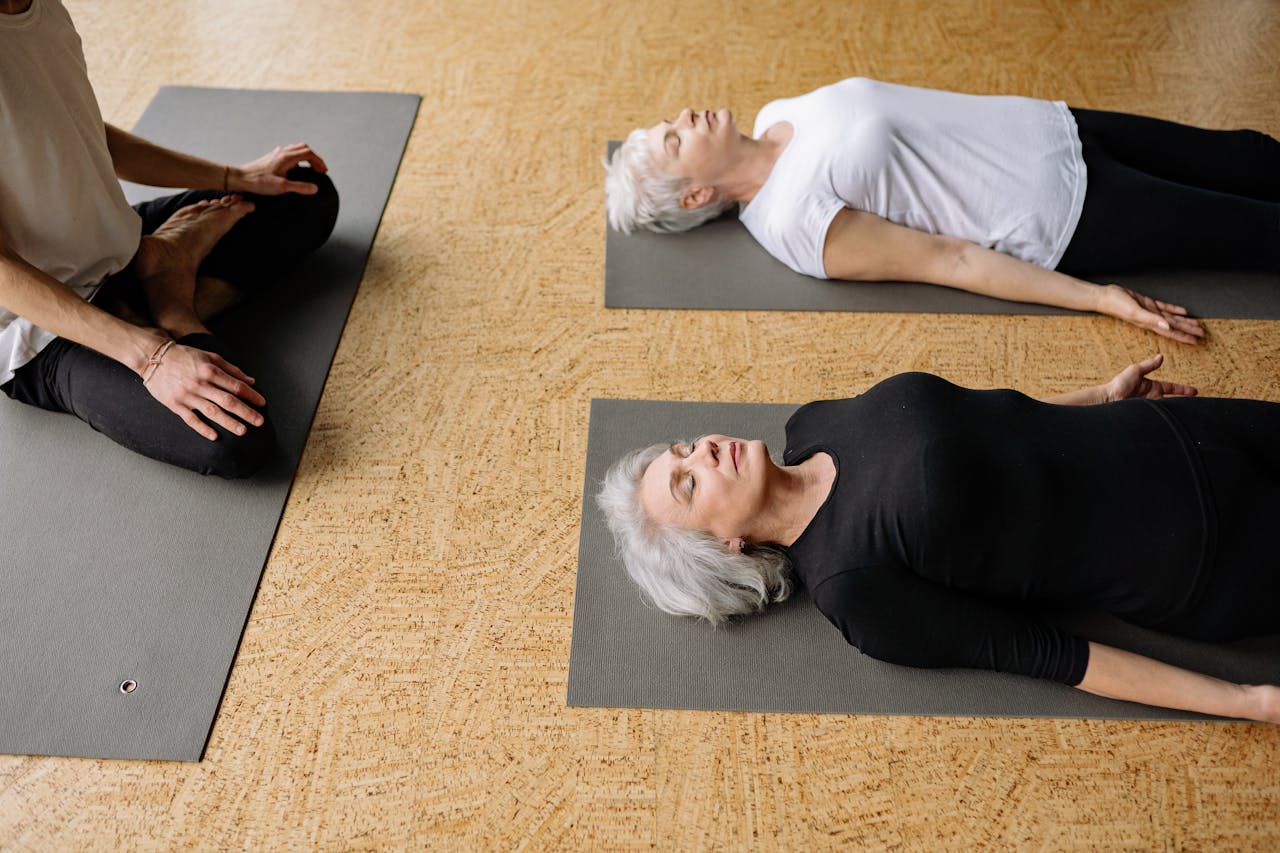
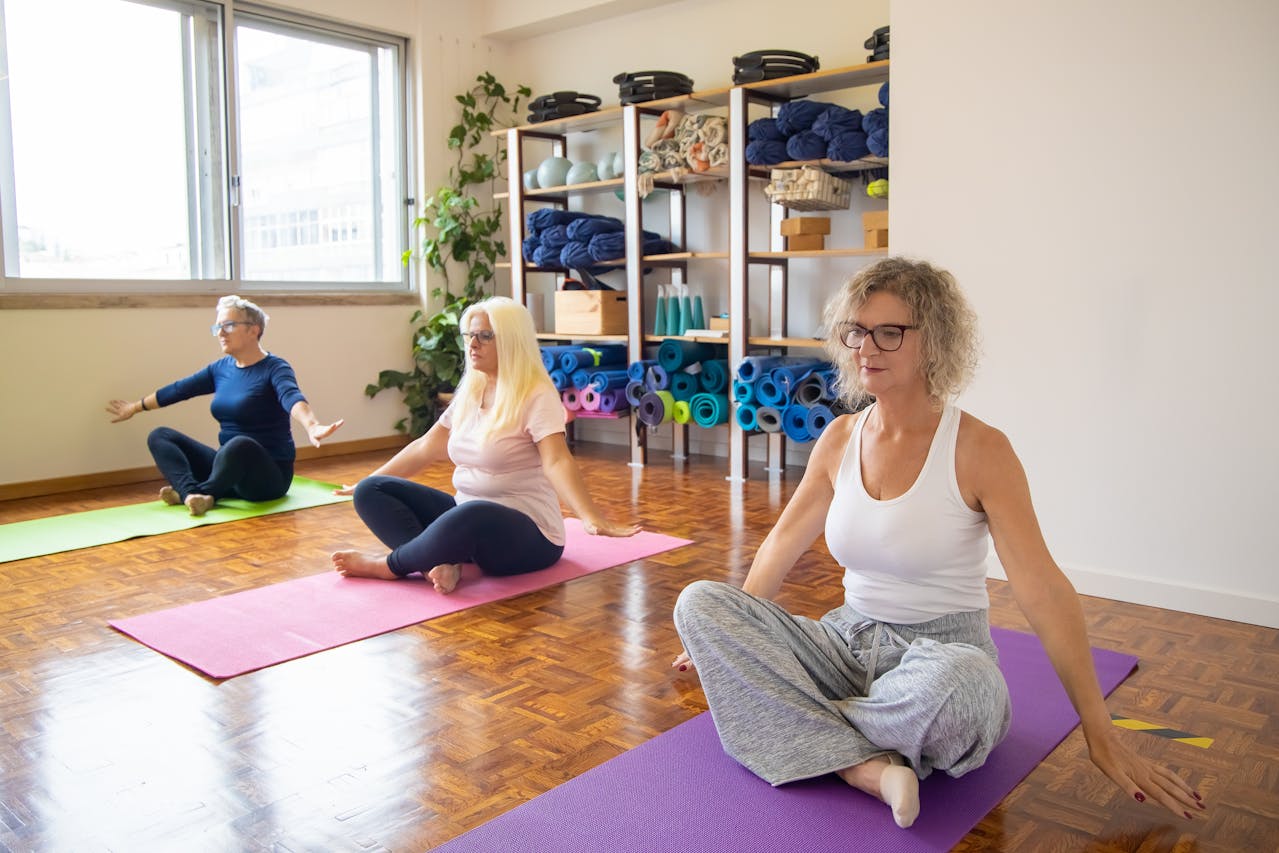
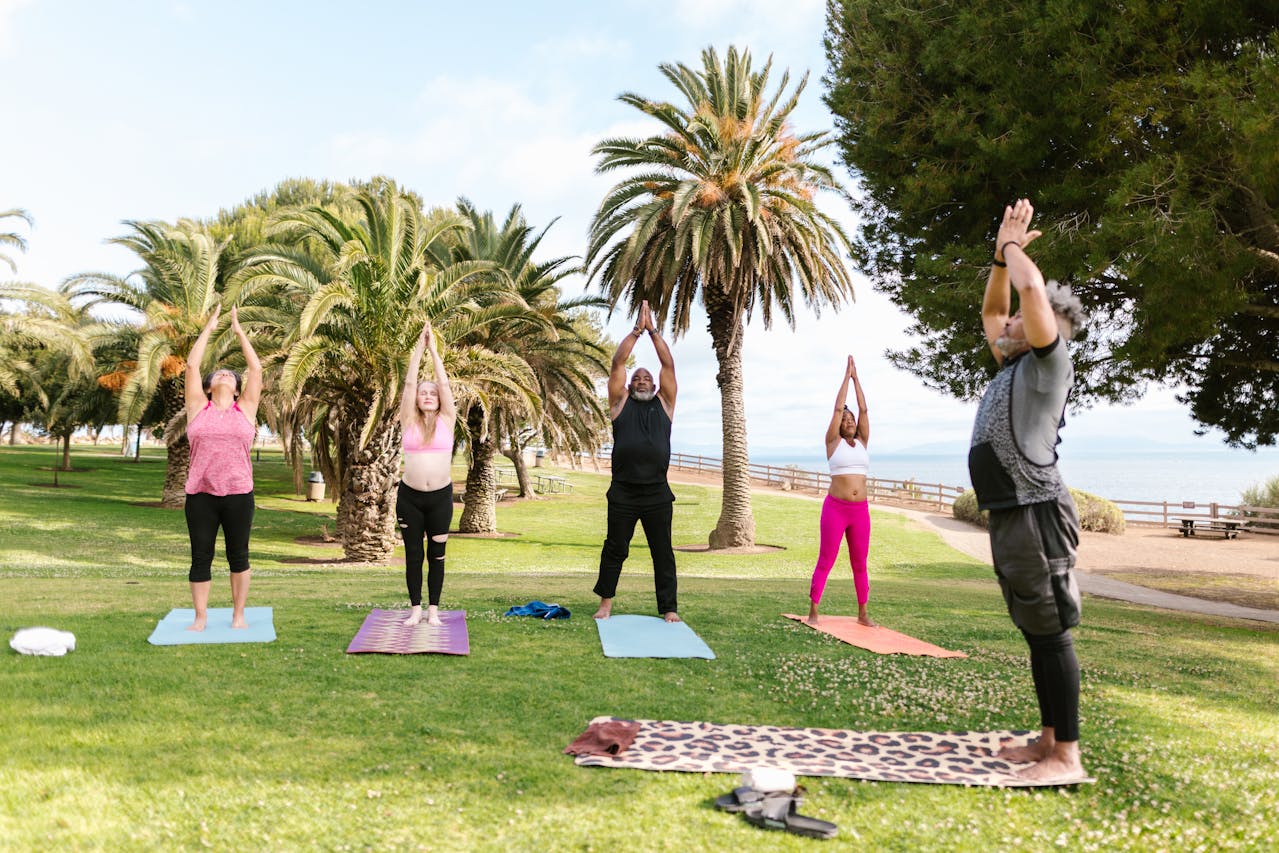
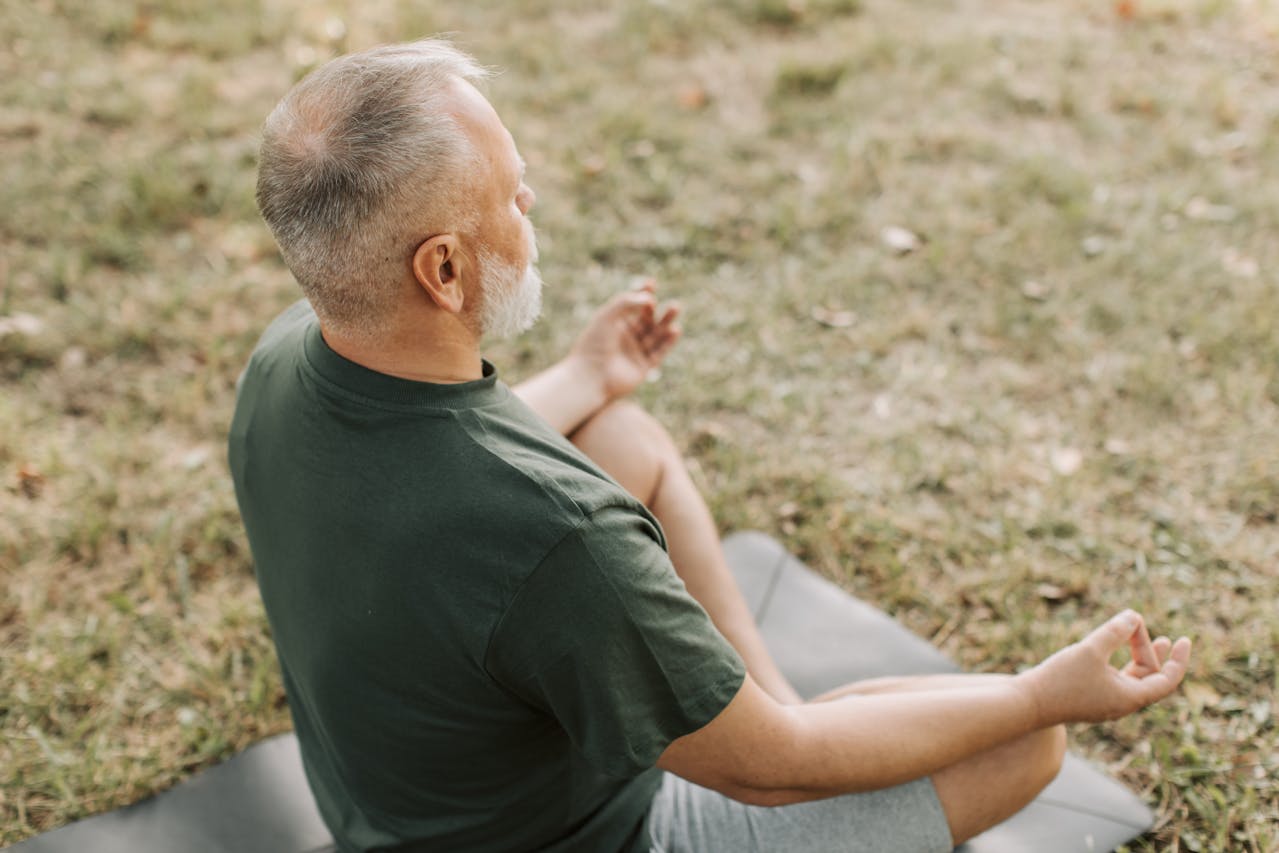
<p> As we age, maintaining physical and mental well-being becomes increasingly important. Yoga, a practice that combines physical postures, breathing exercises, and meditation, offers numerous benefits that can enhance the quality of life for seniors. From relieving stress to boosting flexibility, yoga can be a transformative practice for older adults. Here are 12 powerful benefits of yoga for seniors that demonstrate why it is worth considering as part of a healthy lifestyle. </p> :: Pexels

As we age, maintaining physical and mental well-being becomes increasingly important. Yoga, a practice that combines physical postures, breathing exercises, and meditation, offers numerous benefits that can enhance the quality of life for seniors. From relieving stress to boosting flexibility, yoga can be a transformative practice for older adults. Here are 12 powerful benefits of yoga for seniors that demonstrate why it is worth considering as part of a healthy lifestyle.

1. Enhances Flexibility

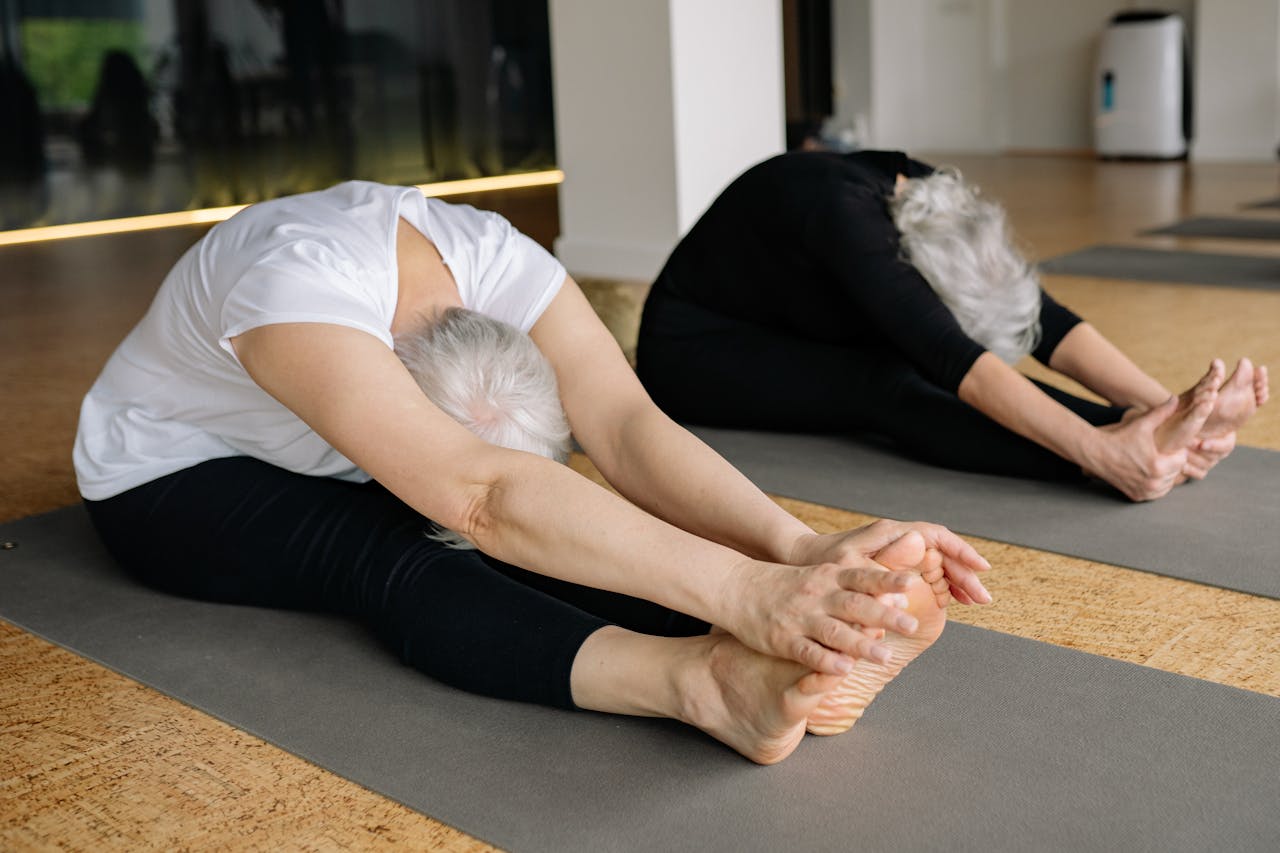
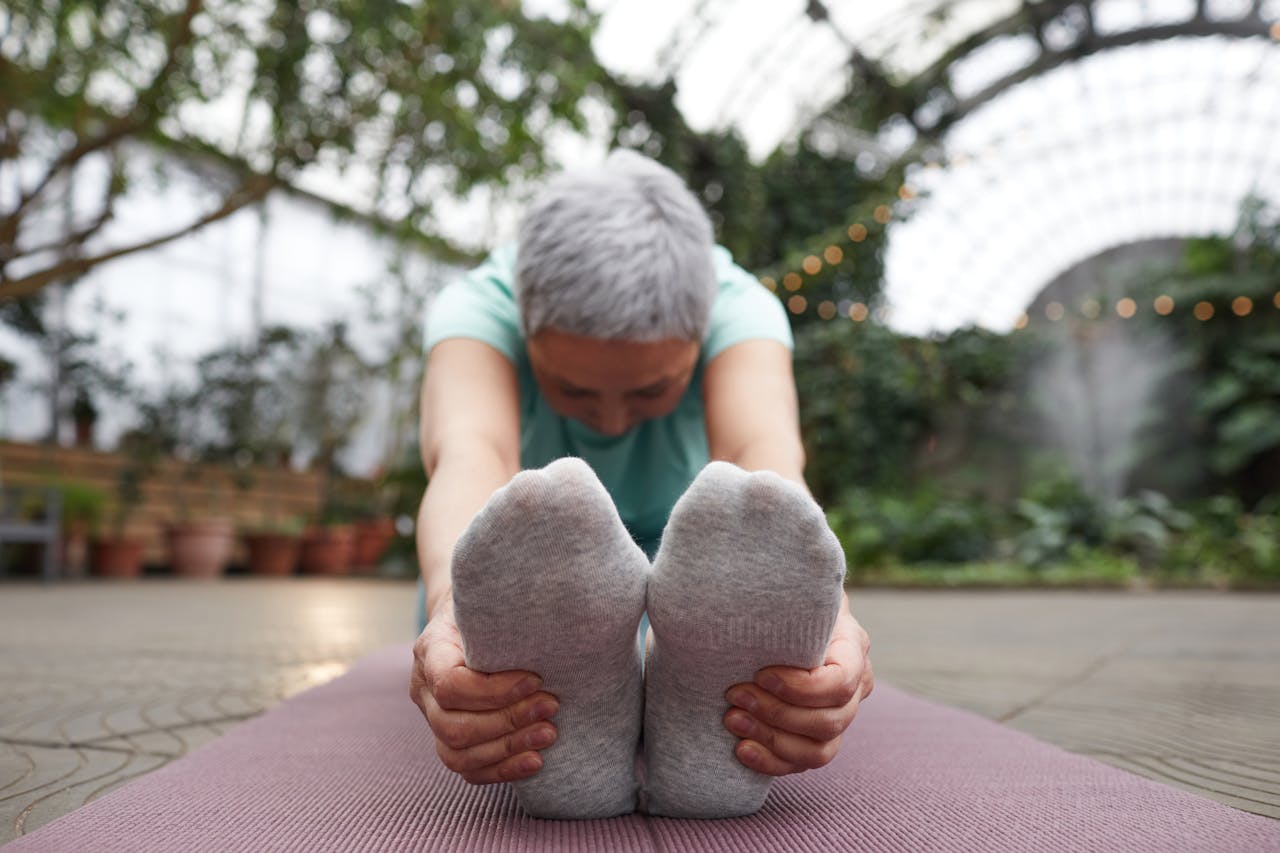
<p> One of the most significant benefits of yoga for seniors is the improvement in flexibility. As we age, our muscles and joints tend to stiffen, which can lead to discomfort and reduced mobility. Regular yoga practice involves a series of gentle stretches that gradually increase flexibility. This enhanced range of motion not only makes daily activities easier but also reduces the risk of injuries. Seniors who practice yoga often report feeling more limber and agile, allowing them to enjoy a wider variety of physical activities. Improved flexibility can significantly enhance the quality of life, enabling seniors to engage in hobbies and routines they love without restrictions. </p> :: Pexels

One of the most significant benefits of yoga for seniors is the improvement in flexibility. As we age, our muscles and joints tend to stiffen, which can lead to discomfort and reduced mobility. Regular yoga practice involves a series of gentle stretches that gradually increase flexibility. This enhanced range of motion not only makes daily activities easier but also reduces the risk of injuries. Seniors who practice yoga often report feeling more limber and agile, allowing them to enjoy a wider variety of physical activities. Improved flexibility can significantly enhance the quality of life, enabling seniors to engage in hobbies and routines they love without restrictions.

2. Reduces Stress and Anxiety

<p> In our fast-paced world, stress can take a toll on our mental and physical health. Yoga provides an effective way to combat stress through its focus on breath control and mindfulness. By encouraging relaxation and promoting a sense of calm, yoga helps seniors manage anxiety and reduce feelings of overwhelm. The meditative aspects of yoga allow participants to connect with their inner selves, fostering a sense of peace and tranquility. As a result, many seniors find that regular yoga practice enhances their emotional well-being and improves their overall outlook on life. This reduction in stress can lead to a healthier mind and body, making yoga a valuable tool for emotional resilience. </p> :: Pexels

In our fast-paced world, stress can take a toll on our mental and physical health. Yoga provides an effective way to combat stress through its focus on breath control and mindfulness. By encouraging relaxation and promoting a sense of calm, yoga helps seniors manage anxiety and reduce feelings of overwhelm. The meditative aspects of yoga allow participants to connect with their inner selves, fostering a sense of peace and tranquility. As a result, many seniors find that regular yoga practice enhances their emotional well-being and improves their overall outlook on life. This reduction in stress can lead to a healthier mind and body, making yoga a valuable tool for emotional resilience.

3. Improves Balance and Coordination

<p> Falls are a significant concern for seniors, often leading to serious injuries. Yoga can help improve balance and coordination through its emphasis on controlled movements and body awareness. Poses that require balance challenge the body to stabilize itself, strengthening the muscles involved in maintaining equilibrium. By practicing yoga regularly, seniors can enhance their proprioception, which is the body’s ability to sense its position in space, leading to improved balance and a reduced risk of falls. This enhancement in stability not only promotes safety but also encourages seniors to engage more fully in their daily activities, fostering independence. </p> :: Pexels

Falls are a significant concern for seniors, often leading to serious injuries. Yoga can help improve balance and coordination through its emphasis on controlled movements and body awareness. Poses that require balance challenge the body to stabilize itself, strengthening the muscles involved in maintaining equilibrium. By practicing yoga regularly, seniors can enhance their proprioception, which is the body’s ability to sense its position in space, leading to improved balance and a reduced risk of falls. This enhancement in stability not only promotes safety but also encourages seniors to engage more fully in their daily activities, fostering independence.

4. Increases Strength

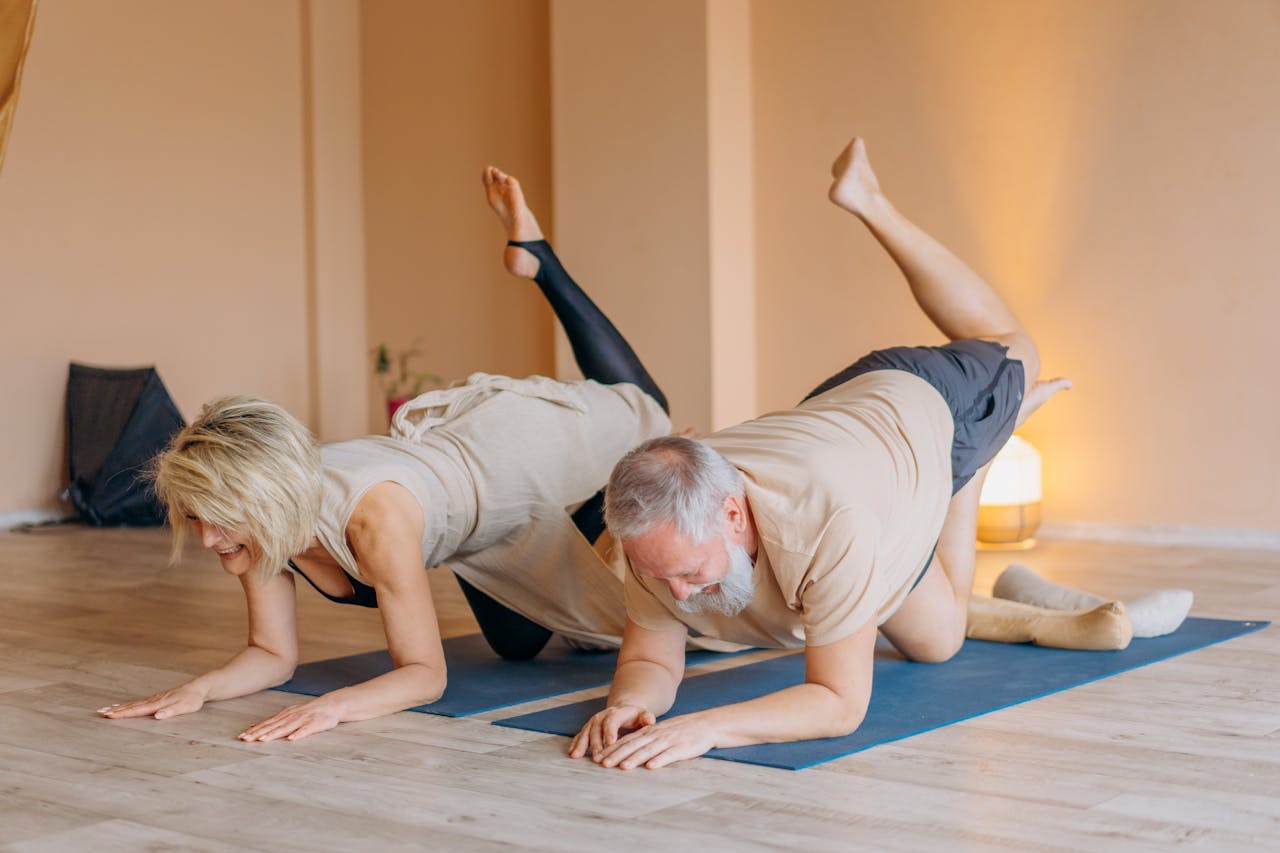
<p> Many people associate yoga primarily with stretching and flexibility, but it also builds strength. Yoga poses engage various muscle groups, helping to tone and strengthen the body. For seniors, increased muscle strength is crucial for performing daily activities, such as climbing stairs or carrying groceries. A stronger body can lead to greater independence and confidence in physical abilities, allowing seniors to maintain an active lifestyle. This increased strength can also contribute to better posture and reduced strain on joints, further enhancing overall physical well-being. </p> :: Pexels

Many people associate yoga primarily with stretching and flexibility, but it also builds strength. Yoga poses engage various muscle groups, helping to tone and strengthen the body. For seniors, increased muscle strength is crucial for performing daily activities, such as climbing stairs or carrying groceries. A stronger body can lead to greater independence and confidence in physical abilities, allowing seniors to maintain an active lifestyle. This increased strength can also contribute to better posture and reduced strain on joints, further enhancing overall physical well-being.

5. Enhances Respiratory Function

<p> Breath is central to yoga practice, and this focus on breathing has profound benefits for seniors. Deep, controlled breathing exercises improve lung capacity and oxygen intake, which can be particularly beneficial for those with respiratory issues. Improved respiratory function enhances overall vitality and can lead to better energy levels. Additionally, the breathing techniques learned in yoga can help reduce feelings of stress and anxiety, contributing to a greater sense of well-being. As seniors become more aware of their breath, they may also find it easier to manage symptoms related to chronic conditions, further supporting their health. </p> :: Pexels

Breath is central to yoga practice, and this focus on breathing has profound benefits for seniors. Deep, controlled breathing exercises improve lung capacity and oxygen intake, which can be particularly beneficial for those with respiratory issues. Improved respiratory function enhances overall vitality and can lead to better energy levels. Additionally, the breathing techniques learned in yoga can help reduce feelings of stress and anxiety, contributing to a greater sense of well-being. As seniors become more aware of their breath, they may also find it easier to manage symptoms related to chronic conditions, further supporting their health.

6. Promotes Better Sleep

<p> Sleep patterns often change as we age, with many seniors struggling to achieve restful sleep. Yoga can be a natural remedy for sleep disturbances. The calming effects of yoga help relax the mind and body, making it easier to fall asleep and stay asleep. Gentle yoga practices, particularly those focused on relaxation and mindfulness, can help prepare the body for sleep by reducing tension and promoting a sense of calm. As a result, seniors who incorporate yoga into their routine often find that they sleep more soundly and wake up feeling refreshed. Improved sleep can have a cascading effect on overall health, boosting mood, energy levels, and cognitive function. </p> :: Pexels

Sleep patterns often change as we age, with many seniors struggling to achieve restful sleep. Yoga can be a natural remedy for sleep disturbances. The calming effects of yoga help relax the mind and body, making it easier to fall asleep and stay asleep. Gentle yoga practices, particularly those focused on relaxation and mindfulness, can help prepare the body for sleep by reducing tension and promoting a sense of calm. As a result, seniors who incorporate yoga into their routine often find that they sleep more soundly and wake up feeling refreshed. Improved sleep can have a cascading effect on overall health, boosting mood, energy levels, and cognitive function.

7. Boosts Mental Clarity and Focus

<p> As we age, cognitive function can decline, leading to forgetfulness and difficulty concentrating. Yoga supports mental clarity and focus through its emphasis on mindfulness and meditation. By cultivating a greater awareness of the present moment, seniors can improve their cognitive abilities and enhance their memory. The mental discipline developed through yoga can help seniors stay engaged and focused, contributing to a sharper mind and better decision-making skills. This enhanced cognitive function can lead to greater confidence in social interactions and daily tasks, empowering seniors to remain active participants in their communities. </p> :: Pexels

As we age, cognitive function can decline, leading to forgetfulness and difficulty concentrating. Yoga supports mental clarity and focus through its emphasis on mindfulness and meditation. By cultivating a greater awareness of the present moment, seniors can improve their cognitive abilities and enhance their memory. The mental discipline developed through yoga can help seniors stay engaged and focused, contributing to a sharper mind and better decision-making skills. This enhanced cognitive function can lead to greater confidence in social interactions and daily tasks, empowering seniors to remain active participants in their communities.

8. Supports Heart Health

<p> Heart health is a critical concern for seniors, as cardiovascular diseases are prevalent in older populations. Yoga can be a valuable addition to a heart-healthy lifestyle. Research has shown that regular yoga practice can help lower blood pressure, reduce cholesterol levels, and improve circulation. The relaxation response triggered by yoga also decreases stress hormones, which can negatively impact heart health. By supporting overall cardiovascular wellness, yoga can help seniors maintain a healthier heart and reduce their risk of heart disease. This preventive approach to heart health is essential for seniors aiming to enjoy a long and active life. </p> :: Pexels

Heart health is a critical concern for seniors, as cardiovascular diseases are prevalent in older populations. Yoga can be a valuable addition to a heart-healthy lifestyle. Research has shown that regular yoga practice can help lower blood pressure, reduce cholesterol levels, and improve circulation. The relaxation response triggered by yoga also decreases stress hormones, which can negatively impact heart health. By supporting overall cardiovascular wellness, yoga can help seniors maintain a healthier heart and reduce their risk of heart disease. This preventive approach to heart health is essential for seniors aiming to enjoy a long and active life.

9. Fosters a Sense of Community

<p> Participating in yoga classes can provide seniors with a sense of belonging and community. Many seniors face isolation and loneliness, particularly if they have lost loved ones or are living alone. Joining a yoga class allows seniors to connect with others who share similar interests and goals. This social aspect of yoga can enhance emotional well-being, combat feelings of loneliness, and create lasting friendships. A supportive community can also encourage seniors to stay committed to their yoga practice, further enhancing its benefits. Building connections in a yoga class can help seniors feel more engaged in their lives, fostering a positive social environment. </p> :: Pexels

Participating in yoga classes can provide seniors with a sense of belonging and community. Many seniors face isolation and loneliness, particularly if they have lost loved ones or are living alone. Joining a yoga class allows seniors to connect with others who share similar interests and goals. This social aspect of yoga can enhance emotional well-being, combat feelings of loneliness, and create lasting friendships. A supportive community can also encourage seniors to stay committed to their yoga practice, further enhancing its benefits. Building connections in a yoga class can help seniors feel more engaged in their lives, fostering a positive social environment.

10. Enhances Emotional Well-Being

<p> Yoga is known to improve emotional health by promoting a sense of inner peace and self-acceptance. The practice encourages mindfulness, which helps individuals become more aware of their thoughts and feelings without judgment. For seniors, this can be particularly beneficial as they navigate the challenges that come with aging. Yoga fosters a positive outlook on life, helping seniors develop resilience in the face of adversity. By improving emotional well-being, yoga can contribute to a higher quality of life and greater satisfaction in everyday living. This enhanced emotional resilience can empower seniors to approach life's challenges with greater confidence and grace. </p> :: Pexels

Yoga is known to improve emotional health by promoting a sense of inner peace and self-acceptance. The practice encourages mindfulness, which helps individuals become more aware of their thoughts and feelings without judgment. For seniors, this can be particularly beneficial as they navigate the challenges that come with aging. Yoga fosters a positive outlook on life, helping seniors develop resilience in the face of adversity. By improving emotional well-being, yoga can contribute to a higher quality of life and greater satisfaction in everyday living. This enhanced emotional resilience can empower seniors to approach life’s challenges with greater confidence and grace.

11. Reduces Pain and Discomfort

<p> Chronic pain is a common issue among seniors, impacting their daily lives and overall quality of life. Yoga can be an effective way to manage pain through its gentle movements and stretches. The practice promotes increased blood flow, which can alleviate tension and reduce discomfort. Additionally, yoga encourages awareness of the body, helping seniors learn to recognize and respond to their pain in healthier ways. Many seniors find that regular yoga practice can significantly reduce their reliance on pain medications and improve their overall comfort. By managing pain through yoga, seniors can regain control over their lives and engage in activities they enjoy. </p> :: Pexels

Chronic pain is a common issue among seniors, impacting their daily lives and overall quality of life. Yoga can be an effective way to manage pain through its gentle movements and stretches. The practice promotes increased blood flow, which can alleviate tension and reduce discomfort. Additionally, yoga encourages awareness of the body, helping seniors learn to recognize and respond to their pain in healthier ways. Many seniors find that regular yoga practice can significantly reduce their reliance on pain medications and improve their overall comfort. By managing pain through yoga, seniors can regain control over their lives and engage in activities they enjoy.

12. Encourages Mind-Body Connection

<p> Finally, yoga encourages a deeper connection between the mind and body, which can be particularly beneficial for seniors. This holistic approach to health allows individuals to become more in tune with their physical sensations, emotions, and thoughts. By fostering this mind-body connection, yoga can help seniors develop a greater understanding of their bodies and their needs. This awareness can lead to healthier lifestyle choices and a more positive relationship with oneself, contributing to overall well-being. As seniors cultivate this connection, they may discover new ways to nurture their health, enhancing their quality of life in meaningful ways. </p> :: Pexels

Finally, yoga encourages a deeper connection between the mind and body, which can be particularly beneficial for seniors. This holistic approach to health allows individuals to become more in tune with their physical sensations, emotions, and thoughts. By fostering this mind-body connection, yoga can help seniors develop a greater understanding of their bodies and their needs. This awareness can lead to healthier lifestyle choices and a more positive relationship with oneself, contributing to overall well-being. As seniors cultivate this connection, they may discover new ways to nurture their health, enhancing their quality of life in meaningful ways.

Final Thoughts

<p> Incorporating yoga into a senior's routine can lead to transformative benefits that enhance both physical and mental health. From improved flexibility and strength to reduced stress and better sleep, the advantages of yoga are far-reaching. As seniors seek ways to maintain their independence and improve their quality of life, yoga emerges as a powerful tool for promoting health and well-being. Whether practiced in a class or at home, yoga can provide seniors with the support they need to thrive in their golden years. If you or a loved one are considering yoga, consult with a healthcare professional to find a program that suits your individual needs and abilities. Embracing yoga not only offers numerous health benefits but also provides a fulfilling path to a happier and healthier life. </p> :: Pexels

Incorporating yoga into a senior’s routine can lead to transformative benefits that enhance both physical and mental health. From improved flexibility and strength to reduced stress and better sleep, the advantages of yoga are far-reaching. As seniors seek ways to maintain their independence and improve their quality of life, yoga emerges as a powerful tool for promoting health and well-being. Whether practiced in a class or at home, yoga can provide seniors with the support they need to thrive in their golden years. If you or a loved one are considering yoga, consult with a healthcare professional to find a program that suits your individual needs and abilities. Embracing yoga not only offers numerous health benefits but also provides a fulfilling path to a happier and healthier life.

Filed Under: Health & Fitness

If You Have High Cholesterol, Here Are 7 Foods You Should Think Twice About Avoiding

November 26, 2025 | Leave a Comment

If You Have High Cholesterol, Here Are 7 Foods You Should Think Twice About Avoiding

<p> If you have ever had a doctor look at your lab results and say, “Your cholesterol is a little higher than we would like,” you know the mix of confusion, worry, and instant self-reflection that follows. Suddenly, every cheeseburger you have ever eaten flashes before your eyes like a fast-food highlight reel. The good news is that managing high cholesterol does not have to feel like punishment. It is really about knowing which foods make the biggest impact on your heart health and making smarter choices that still leave room for enjoyment.

Below are seven foods that tend to be the biggest troublemakers when it comes to raising your LDL cholesterol. Think of this list not as a collection of forbidden pleasures, but as a friendly guide to help you protect your heart while still loving what you eat. </p> :: Gemini

If you have ever had a doctor look at your lab results and say, “Your cholesterol is a little higher than we would like,” you know the mix of confusion, worry, and instant self-reflection that follows. Suddenly, every cheeseburger you have ever eaten flashes before your eyes like a fast-food highlight reel. The good news is that managing high cholesterol does not have to feel like punishment. It is really about knowing which foods make the biggest impact on your heart health and making smarter choices that still leave room for enjoyment.

Below are seven foods that tend to be the biggest troublemakers when it comes to raising your LDL cholesterol. Think of this list not as a collection of forbidden pleasures, but as a friendly guide to help you protect your heart while still loving what you eat.

1. Full Fat Dairy Products

<p> Creamy, rich, and comforting, dairy often feels like the heart and soul of American meals. But if your cholesterol is creeping upward, full fat milk, butter, cheese, and richer yogurts may be part of the problem. These foods contain saturated fat that can raise LDL cholesterol more than you might expect from something as innocent as a glass of whole milk. The goal is not to eliminate dairy completely but to choose versions that offer the same flavor experience without the cholesterol spike. Low fat and nonfat dairy options can still make your morning coffee delicious, your pasta creamy, and your toast satisfying, all while being much kinder to your cardiovascular health. </p> :: Gemini

Creamy, rich, and comforting, dairy often feels like the heart and soul of American meals. But if your cholesterol is creeping upward, full fat milk, butter, cheese, and richer yogurts may be part of the problem. These foods contain saturated fat that can raise LDL cholesterol more than you might expect from something as innocent as a glass of whole milk. The goal is not to eliminate dairy completely but to choose versions that offer the same flavor experience without the cholesterol spike. Low fat and nonfat dairy options can still make your morning coffee delicious, your pasta creamy, and your toast satisfying, all while being much kinder to your cardiovascular health.

2. Fatty Cuts of Red Meat

<p> A perfectly grilled steak is an American classic, but some cuts of beef and pork pack more saturated fat than your heart would ever request. Fatty steaks, high fat ground beef, ribs, and pork chops are popular favorites, yet they can raise LDL cholesterol levels more easily than many people realize. You do not have to say goodbye to red meat forever, but choosing leaner cuts or enjoying red meat less often can make a noticeable difference. For many people, swapping two or three red meat meals each week with chicken, turkey, or plant based proteins can result in improved cholesterol numbers without sacrificing flavor or fullness. </p> :: Gemini

A perfectly grilled steak is an American classic, but some cuts of beef and pork pack more saturated fat than your heart would ever request. Fatty steaks, high fat ground beef, ribs, and pork chops are popular favorites, yet they can raise LDL cholesterol levels more easily than many people realize. You do not have to say goodbye to red meat forever, but choosing leaner cuts or enjoying red meat less often can make a noticeable difference. For many people, swapping two or three red meat meals each week with chicken, turkey, or plant based proteins can result in improved cholesterol numbers without sacrificing flavor or fullness.

3. Processed Meats

<p> Bacon, sausage, hot dogs, salami, and packaged deli meats might be convenient and undeniably tasty, but they are some of the toughest foods on your cholesterol levels. These meats not only contain saturated fat, they also tend to be loaded with sodium and preservatives that work against heart health. The combination can raise LDL cholesterol and place added strain on your circulatory system. If breakfast does not feel complete without something savory, try options like turkey bacon, lean chicken sausage, or even a hearty plant based breakfast patty. For sandwiches, choose unprocessed turkey or chicken, or fill your bread with veggies and hummus for a surprisingly satisfying alternative. </p> :: Gemini

Bacon, sausage, hot dogs, salami, and packaged deli meats might be convenient and undeniably tasty, but they are some of the toughest foods on your cholesterol levels. These meats not only contain saturated fat, they also tend to be loaded with sodium and preservatives that work against heart health. The combination can raise LDL cholesterol and place added strain on your circulatory system. If breakfast does not feel complete without something savory, try options like turkey bacon, lean chicken sausage, or even a hearty plant based breakfast patty. For sandwiches, choose unprocessed turkey or chicken, or fill your bread with veggies and hummus for a surprisingly satisfying alternative.

4. Fried Foods

<p> Whether it is crispy fried chicken, a plate of golden French fries, or even a deep fried appetizer at your favorite bar, fried foods have a way of calling our name. Unfortunately, they often work against cholesterol management. When foods are cooked in hot oil, they absorb large amounts of fat, which boosts your intake of saturated and sometimes even trans fats. These fats can drive up your LDL cholesterol and reduce your HDL cholesterol, the kind that helps keep your arteries clear. The good news is that you can still enjoy crunch and flavor without drowning your food in oil. Air fryers, baking, and grilling give you that crisp texture with a fraction of the fat. </p> :: Gemini

Whether it is crispy fried chicken, a plate of golden French fries, or even a deep fried appetizer at your favorite bar, fried foods have a way of calling our name. Unfortunately, they often work against cholesterol management. When foods are cooked in hot oil, they absorb large amounts of fat, which boosts your intake of saturated and sometimes even trans fats. These fats can drive up your LDL cholesterol and reduce your HDL cholesterol, the kind that helps keep your arteries clear. The good news is that you can still enjoy crunch and flavor without drowning your food in oil. Air fryers, baking, and grilling give you that crisp texture with a fraction of the fat.

5. Commercial Baked Goods and Sweets

<p> There is something irresistible about a fresh doughnut or a tray of store bought cookies, but many packaged sweets have a sneaky habit of raising cholesterol. This is because they often contain butter, shortening, or hydrogenated oils, not to mention high levels of sugar that increase triglycerides. While you do not have to swear off dessert forever, it helps to be more selective. Baking at home gives you total control over ingredients and lets you cut back on saturated fat. You can even explore lighter desserts like fruit, low fat yogurt with honey, or homemade oatmeal cookies. The key is not giving up sweets, but enjoying them in ways that do not make your heart work overtime. </p> :: Gemini

There is something irresistible about a fresh doughnut or a tray of store bought cookies, but many packaged sweets have a sneaky habit of raising cholesterol. This is because they often contain butter, shortening, or hydrogenated oils, not to mention high levels of sugar that increase triglycerides. While you do not have to swear off dessert forever, it helps to be more selective. Baking at home gives you total control over ingredients and lets you cut back on saturated fat. You can even explore lighter desserts like fruit, low fat yogurt with honey, or homemade oatmeal cookies. The key is not giving up sweets, but enjoying them in ways that do not make your heart work overtime.

6. Foods Containing Artificial Trans Fats

<p> Trans fats are one of the most damaging ingredients for heart health. They raise bad cholesterol, lower good cholesterol, and contribute to artery-clogging plaque. Although many companies have removed trans fats from their products, they can still appear in certain snacks, packaged pastries, microwave popcorn, imitation butter spreads, and older fast food recipes. Reading ingredient labels is one of the best habits you can build if you have high cholesterol. If you ever spot the phrase “partially hydrogenated oils,” it is best to put that item back on the shelf. Even a small amount of trans fat can make a large impact on cholesterol levels. </p> :: Gemini

Trans fats are one of the most damaging ingredients for heart health. They raise bad cholesterol, lower good cholesterol, and contribute to artery-clogging plaque. Although many companies have removed trans fats from their products, they can still appear in certain snacks, packaged pastries, microwave popcorn, imitation butter spreads, and older fast food recipes. Reading ingredient labels is one of the best habits you can build if you have high cholesterol. If you ever spot the phrase “partially hydrogenated oils,” it is best to put that item back on the shelf. Even a small amount of trans fat can make a large impact on cholesterol levels.

7. Shellfish and Organ Meats (When Eaten in Excess)

<p> This one surprises many people, especially seafood lovers. Shrimp, crab, and lobster are delicious and high in protein, but they also contain dietary cholesterol that can add up quickly if you eat them often. Organ meats like liver and kidneys are even higher. While dietary cholesterol does not affect everyone equally, people who already have high LDL may notice a difference when they reduce how often they eat these foods. Enjoying these foods occasionally is perfectly fine, but balancing them with leaner proteins such as chicken, fish like salmon, or plant based options can help keep your cholesterol levels more stable. </p> :: Gemini

This one surprises many people, especially seafood lovers. Shrimp, crab, and lobster are delicious and high in protein, but they also contain dietary cholesterol that can add up quickly if you eat them often. Organ meats like liver and kidneys are even higher. While dietary cholesterol does not affect everyone equally, people who already have high LDL may notice a difference when they reduce how often they eat these foods. Enjoying these foods occasionally is perfectly fine, but balancing them with leaner proteins such as chicken, fish like salmon, or plant based options can help keep your cholesterol levels more stable.

Final Thoughts

<p> Improving your cholesterol does not mean you need to give up everything you enjoy or live on nothing but salads. It is about becoming more aware of the foods that tend to push your cholesterol in the wrong direction and making small, meaningful adjustments to your weekly meals. Even simple swaps such as choosing low fat dairy, picking leaner cuts of meat, cooking foods in healthier ways, or reading ingredient labels can have a real impact on your long term heart health.

Remember, heart friendly eating is not supposed to feel like punishment. It is a long game, and every smart choice helps. You can still savor your meals, enjoy comfort foods, and treat yourself, all while taking care of your body in a way your future self will appreciate. If you ever want help creating a list of heart healthy foods to add to your diet, I can put that together for you too. </p> :: Gemini

Improving your cholesterol does not mean you need to give up everything you enjoy or live on nothing but salads. It is about becoming more aware of the foods that tend to push your cholesterol in the wrong direction and making small, meaningful adjustments to your weekly meals. Even simple swaps such as choosing low fat dairy, picking leaner cuts of meat, cooking foods in healthier ways, or reading ingredient labels can have a real impact on your long term heart health.

Remember, heart friendly eating is not supposed to feel like punishment. It is a long game, and every smart choice helps. You can still savor your meals, enjoy comfort foods, and treat yourself, all while taking care of your body in a way your future self will appreciate. If you ever want help creating a list of heart healthy foods to add to your diet, I can put that together for you too.

Filed Under: Health & Fitness

What Millennials Can Learn From Baby Boomers About Saving Money: 10 Time-Tested Tips That Still Work Today

November 26, 2025 | Leave a Comment

What Millennials Can Learn From Baby Boomers About Saving Money: 10 Time-Tested Tips That Still Work Today

<p> Millennials have grown up in a world of rapid technological change, economic uncertainty, and rising costs of living. While these challenges are unique to their generation, there is still a lot to be learned from the financial wisdom of Baby Boomers. The generation that weathered recessions, inflation, and job instability without the internet or budgeting apps has valuable, timeless lessons about managing money. Here are ten practical, no-nonsense money-saving strategies Millennials can borrow from the Baby Boomer playbook—and why they still matter today. </p> :: Pexels

Millennials have grown up in a world of rapid technological change, economic uncertainty, and rising costs of living. While these challenges are unique to their generation, there is still a lot to be learned from the financial wisdom of Baby Boomers. The generation that weathered recessions, inflation, and job instability without the internet or budgeting apps has valuable, timeless lessons about managing money. Here are ten practical, no-nonsense money-saving strategies Millennials can borrow from the Baby Boomer playbook—and why they still matter today.

1. Live Below Your Means

<p> Baby Boomers understood the power of spending less than you earn. While Millennials face higher costs of living, the principle of frugality still holds true. Boomers often resisted the temptation of lifestyle inflation and focused on needs over wants. They did not chase the latest gadgets or splurge on trendy experiences just to keep up. Instead, they prioritized financial stability. For Millennials, embracing a minimalist mindset and being intentional about purchases—cutting out unnecessary subscriptions, avoiding fast fashion, and cooking at home—can make a significant difference in long-term savings and peace of mind. </p> :: Freepik

Baby Boomers understood the power of spending less than you earn. While Millennials face higher costs of living, the principle of frugality still holds true. Boomers often resisted the temptation of lifestyle inflation and focused on needs over wants. They did not chase the latest gadgets or splurge on trendy experiences just to keep up. Instead, they prioritized financial stability. For Millennials, embracing a minimalist mindset and being intentional about purchases—cutting out unnecessary subscriptions, avoiding fast fashion, and cooking at home—can make a significant difference in long-term savings and peace of mind.

2. Use Cash to Stay Accountable

<p> Before debit and credit cards became widespread, Boomers used physical cash for nearly all transactions. This created a tangible connection to spending that helped them stay accountable and conscious of their financial choices. For Millennials raised in a digital world, it is easy to lose track of money with a tap or swipe. Implementing a “cash envelope” system or withdrawing a set budget for groceries, entertainment, or dining out can bring back that physical awareness and help avoid overspending. Even using prepaid cards or budgeting apps with strict limits can mimic this analog discipline and instill smarter habits. </p> :: Pexels

Before debit and credit cards became widespread, Boomers used physical cash for nearly all transactions. This created a tangible connection to spending that helped them stay accountable and conscious of their financial choices. For Millennials raised in a digital world, it is easy to lose track of money with a tap or swipe. Implementing a “cash envelope” system or withdrawing a set budget for groceries, entertainment, or dining out can bring back that physical awareness and help avoid overspending. Even using prepaid cards or budgeting apps with strict limits can mimic this analog discipline and instill smarter habits.

3. Avoid Debt Like the Plague

<p> Boomers generally viewed debt—especially credit card debt—as something to be avoided at all costs. They were more likely to save up for large purchases than to finance them with loans or credit. While student loans and housing costs make this harder for Millennials, the principle of minimizing consumer debt still applies. Paying off high-interest balances quickly, building an emergency fund, and living within a budget can help reduce dependence on credit and the stress that comes with it. Millennials can also learn to delay gratification, something Boomers practiced regularly, instead of going into debt for immediate wants. </p> :: Pexels

Boomers generally viewed debt—especially credit card debt—as something to be avoided at all costs. They were more likely to save up for large purchases than to finance them with loans or credit. While student loans and housing costs make this harder for Millennials, the principle of minimizing consumer debt still applies. Paying off high-interest balances quickly, building an emergency fund, and living within a budget can help reduce dependence on credit and the stress that comes with it. Millennials can also learn to delay gratification, something Boomers practiced regularly, instead of going into debt for immediate wants.

4. Fix and Reuse Instead of Replace

<p> In the Boomer era, when something broke, the first instinct was not to toss it—it was to fix it. Whether it was sewing a torn shirt, repairing a toaster, or changing the oil themselves, Boomers embraced a do-it-yourself attitude that saved money and reduced waste. Millennials, influenced by fast consumerism, often replace items instead of repairing them. By learning some basic skills—like sewing, home repairs, or car maintenance—Millennials can save hundreds or even thousands each year. It is not only cost-effective but also better for the environment and encourages a deeper appreciation for the value of items. </p> :: Pexels

In the Boomer era, when something broke, the first instinct was not to toss it—it was to fix it. Whether it was sewing a torn shirt, repairing a toaster, or changing the oil themselves, Boomers embraced a do-it-yourself attitude that saved money and reduced waste. Millennials, influenced by fast consumerism, often replace items instead of repairing them. By learning some basic skills—like sewing, home repairs, or car maintenance—Millennials can save hundreds or even thousands each year. It is not only cost-effective but also better for the environment and encourages a deeper appreciation for the value of items.

5. Cook at Home and Pack Your Lunch

<p> Dining out regularly was not the norm for Baby Boomers. They cooked meals from scratch and packed lunches for work, which drastically reduced food expenses. Millennials, who often opt for convenience foods or delivery apps, may be shocked by how much they could save with some meal planning. Preparing meals at home does not have to be boring or time-consuming—batch cooking, slow cookers, and meal-prep Sundays can help cut costs without sacrificing flavor. Making this one change can free up funds for savings, travel, or debt repayment while also fostering healthier eating habits. </p> :: Pexels

Dining out regularly was not the norm for Baby Boomers. They cooked meals from scratch and packed lunches for work, which drastically reduced food expenses. Millennials, who often opt for convenience foods or delivery apps, may be shocked by how much they could save with some meal planning. Preparing meals at home does not have to be boring or time-consuming—batch cooking, slow cookers, and meal-prep Sundays can help cut costs without sacrificing flavor. Making this one change can free up funds for savings, travel, or debt repayment while also fostering healthier eating habits.

6. Buy Used Instead of New

<p> Boomers knew the value of a good deal and were not shy about shopping at thrift stores, garage sales, or classifieds. From cars to furniture to appliances, buying second-hand was a smart, budget-friendly choice. Millennials, thanks to platforms like Facebook Marketplace, OfferUp, and thrift-focused apps, have even more access to gently used goods at a fraction of the cost. Embracing the Boomer habit of “pre-loved” shopping can help Millennials furnish their homes, dress stylishly, and find electronics or tools without breaking the bank. It also promotes sustainability and reduces unnecessary manufacturing and waste. </p> :: Pexels

Boomers knew the value of a good deal and were not shy about shopping at thrift stores, garage sales, or classifieds. From cars to furniture to appliances, buying second-hand was a smart, budget-friendly choice. Millennials, thanks to platforms like Facebook Marketplace, OfferUp, and thrift-focused apps, have even more access to gently used goods at a fraction of the cost. Embracing the Boomer habit of “pre-loved” shopping can help Millennials furnish their homes, dress stylishly, and find electronics or tools without breaking the bank. It also promotes sustainability and reduces unnecessary manufacturing and waste.

7. Have a Rainy Day Fund Always

<p> Baby Boomers were often raised by Depression-era parents who instilled in them the importance of saving for emergencies. That meant always keeping a rainy day fund for unexpected expenses—car trouble, medical bills, or job loss. Millennials, despite having more financial pressure, can benefit greatly from this safety net. Even starting small, like saving twenty dollars per paycheck, can build a buffer that prevents future debt. Automating savings, using round-up apps, or setting aside tax refunds are great ways to establish and grow an emergency fund, following a principle that has stood the test of time. </p> :: Pexels

Baby Boomers were often raised by Depression-era parents who instilled in them the importance of saving for emergencies. That meant always keeping a rainy day fund for unexpected expenses—car trouble, medical bills, or job loss. Millennials, despite having more financial pressure, can benefit greatly from this safety net. Even starting small, like saving twenty dollars per paycheck, can build a buffer that prevents future debt. Automating savings, using round-up apps, or setting aside tax refunds are great ways to establish and grow an emergency fund, following a principle that has stood the test of time.

8. Learn to Budget and Actually Stick to It

<p> Boomers did not have budgeting apps or spreadsheets, but they still managed their money carefully. Many used simple methods like writing expenses in a notebook, using envelopes for bills, or having strict family meetings about finances. While Millennials have tools like Mint, YNAB (You Need a Budget), or budgeting features in banking apps, the challenge often lies in consistent execution. Boomers stayed disciplined by necessity, and that same level of intentionality can help Millennials too. Treating budgeting like a lifestyle rather than a restriction can lead to long-term financial freedom and reduced financial stress. </p> :: Pexels

Boomers did not have budgeting apps or spreadsheets, but they still managed their money carefully. Many used simple methods like writing expenses in a notebook, using envelopes for bills, or having strict family meetings about finances. While Millennials have tools like Mint, YNAB (You Need a Budget), or budgeting features in banking apps, the challenge often lies in consistent execution. Boomers stayed disciplined by necessity, and that same level of intentionality can help Millennials too. Treating budgeting like a lifestyle rather than a restriction can lead to long-term financial freedom and reduced financial stress.

9. Prioritize Long-Term Financial Goals

<p> Many Boomers focused on buying a home, saving for retirement, or building generational wealth. They understood that long-term goals required patience and planning. While homeownership may seem out of reach for some Millennials, the underlying message is to think beyond short-term gratification. Whether it is investing in index funds, contributing to a 401(k), or saving for a future business, Millennials can adopt the Boomer mindset of setting financial goals and working steadily toward them. Consistency, not speed, is the key—and small steps today can mean big rewards tomorrow for both individuals and their families. </p> :: Pexels

Many Boomers focused on buying a home, saving for retirement, or building generational wealth. They understood that long-term goals required patience and planning. While homeownership may seem out of reach for some Millennials, the underlying message is to think beyond short-term gratification. Whether it is investing in index funds, contributing to a 401(k), or saving for a future business, Millennials can adopt the Boomer mindset of setting financial goals and working steadily toward them. Consistency, not speed, is the key—and small steps today can mean big rewards tomorrow for both individuals and their families.

10. Be Resourceful and Avoid Waste

<p> Waste-not, want-not was more than a saying for Baby Boomers—it was a way of life. They reused wrapping paper, kept glass jars, saved leftovers, and mended clothes. Millennials, with rising living costs and environmental concerns, can benefit by reintroducing this habit of resourcefulness. Simple shifts like repurposing containers, composting food scraps, or cutting back on disposable items not only save money but reduce environmental impact. It is about being mindful, efficient, and intentional—values that Millennials can carry forward while modernizing them for today’s world of reusable products and eco-conscious living. </p> :: Pexels

Waste-not, want-not was more than a saying for Baby Boomers—it was a way of life. They reused wrapping paper, kept glass jars, saved leftovers, and mended clothes. Millennials, with rising living costs and environmental concerns, can benefit by reintroducing this habit of resourcefulness. Simple shifts like repurposing containers, composting food scraps, or cutting back on disposable items not only save money but reduce environmental impact. It is about being mindful, efficient, and intentional—values that Millennials can carry forward while modernizing them for today’s world of reusable products and eco-conscious living.

Final Thoughts

<p> Baby Boomers did not have it easy—they faced their share of economic struggles—but they developed habits that helped them build financial stability and resilience. While the world has changed dramatically since then, many of their money-saving strategies remain incredibly relevant. By embracing frugality, avoiding unnecessary debt, and thinking long-term, Millennials can build a healthier financial future. It is not about turning back the clock—it is about blending old-school wisdom with modern tools to create a money-smart lifestyle that works in any generation. In an age of financial noise, sometimes the quiet advice from the past is what speaks loudest. </p> :: Pexels

Baby Boomers did not have it easy—they faced their share of economic struggles—but they developed habits that helped them build financial stability and resilience. While the world has changed dramatically since then, many of their money-saving strategies remain incredibly relevant. By embracing frugality, avoiding unnecessary debt, and thinking long-term, Millennials can build a healthier financial future. It is not about turning back the clock—it is about blending old-school wisdom with modern tools to create a money-smart lifestyle that works in any generation. In an age of financial noise, sometimes the quiet advice from the past is what speaks loudest.

Filed Under: Lifestyle

Retiring Soon? Avoid These 7 Financial Mistakes People Regret Too Late

November 26, 2025 | Leave a Comment

Retiring Soon? Avoid These 7 Financial Mistakes People Regret Too Late

<p> Retirement should be the reward for decades of hard work, but many people step into their golden years only to realize they’ve made costly financial mistakes. These errors can turn what should be a relaxing and secure time of life into one filled with stress, money shortages, and regret. The good news? With some planning and awareness, you can avoid falling into the same traps. Whether retirement is a few years away or just around the corner, now is the time to fine-tune your strategy. Here are the seven most common financial mistakes retirees regret too late—and how you can steer clear of them for a more comfortable and confident retirement. </p> :: Pexels

Retirement should be the reward for decades of hard work, but many people step into their golden years only to realize they’ve made costly financial mistakes. These errors can turn what should be a relaxing and secure time of life into one filled with stress, money shortages, and regret. The good news? With some planning and awareness, you can avoid falling into the same traps. Whether retirement is a few years away or just around the corner, now is the time to fine-tune your strategy. Here are the seven most common financial mistakes retirees regret too late—and how you can steer clear of them for a more comfortable and confident retirement.

1. Underestimating Healthcare Costs

<p> One of the most expensive surprises in retirement is the cost of healthcare. Many retirees wrongly assume that Medicare covers everything, but in reality, it often leaves large gaps. Premiums, deductibles, co-pays, and expenses for things like dental, vision, and hearing care can add up fast. Long-term care is another huge cost not covered by Medicare, and private insurance for it becomes more expensive the older you get. Ignoring these potential expenses can quickly drain your savings. It is wise to plan for healthcare costs as a major line item in your retirement budget. Consider supplemental insurance, long-term care policies, and savings tools like Health Savings Accounts if you are still eligible. The earlier you plan, the more you’ll be able to protect your nest egg from being wiped out by medical bills. </p> :: Pexels

One of the most expensive surprises in retirement is the cost of healthcare. Many retirees wrongly assume that Medicare covers everything, but in reality, it often leaves large gaps. Premiums, deductibles, co-pays, and expenses for things like dental, vision, and hearing care can add up fast. Long-term care is another huge cost not covered by Medicare, and private insurance for it becomes more expensive the older you get. Ignoring these potential expenses can quickly drain your savings. It is wise to plan for healthcare costs as a major line item in your retirement budget. Consider supplemental insurance, long-term care policies, and savings tools like Health Savings Accounts if you are still eligible. The earlier you plan, the more you’ll be able to protect your nest egg from being wiped out by medical bills.

2. Claiming Social Security Too Early

<p> Social Security benefits are available as early as age 62, but claiming them that soon comes at a cost. For every year you delay collecting benefits up to age 70, your monthly payout increases significantly. People often regret claiming early once they realize how much more they could have received by waiting—especially when they live well into their 80s or 90s. By starting early, you lock in a reduced benefit for life, which can really hurt as the cost of living rises. If you can afford to wait and have other income sources to bridge the gap, holding off on claiming Social Security can pay off in the long run. Think of it as an investment in your future financial security that continues to reward you as you age. </p> :: Pexels

Social Security benefits are available as early as age 62, but claiming them that soon comes at a cost. For every year you delay collecting benefits up to age 70, your monthly payout increases significantly. People often regret claiming early once they realize how much more they could have received by waiting—especially when they live well into their 80s or 90s. By starting early, you lock in a reduced benefit for life, which can really hurt as the cost of living rises. If you can afford to wait and have other income sources to bridge the gap, holding off on claiming Social Security can pay off in the long run. Think of it as an investment in your future financial security that continues to reward you as you age.

3. Not Creating a Detailed Retirement Budget

<p> Failing to create a realistic and detailed retirement budget is a major misstep that leaves many retirees in financial trouble. It is easy to assume your spending will drop once you stop working, but that is often not the case. Travel, hobbies, healthcare, home maintenance, and inflation can quickly fill the financial void left by commuting and work-related expenses. Without a clear budget, it is common to overspend in the early years of retirement, leading to shortages later. A thorough retirement budget should include both fixed and variable expenses, contingency funds for emergencies, and room for rising costs over time. It is your financial roadmap, and having one in place gives you peace of mind and control over your spending. </p> :: Pexels

Failing to create a realistic and detailed retirement budget is a major misstep that leaves many retirees in financial trouble. It is easy to assume your spending will drop once you stop working, but that is often not the case. Travel, hobbies, healthcare, home maintenance, and inflation can quickly fill the financial void left by commuting and work-related expenses. Without a clear budget, it is common to overspend in the early years of retirement, leading to shortages later. A thorough retirement budget should include both fixed and variable expenses, contingency funds for emergencies, and room for rising costs over time. It is your financial roadmap, and having one in place gives you peace of mind and control over your spending.

4. Ignoring the Impact of Inflation

<p> Inflation quietly erodes your purchasing power over time, and retirees who live on fixed incomes often feel this squeeze the most. Prices for everything from groceries to utilities to healthcare steadily climb, sometimes faster than expected. Unfortunately, many retirement plans are based on today’s prices and do not factor in how much more things will cost five, ten, or twenty years from now. This oversight can make even a large retirement fund feel smaller as time goes on. To avoid this, build inflation protection into your plan. That might mean investing in assets that typically outpace inflation, choosing annuities with inflation adjustments, or simply ensuring that your budget has enough cushion to accommodate rising costs. Do not let inflation sneak up on you—plan for it now. </p> :: Pexels

Inflation quietly erodes your purchasing power over time, and retirees who live on fixed incomes often feel this squeeze the most. Prices for everything from groceries to utilities to healthcare steadily climb, sometimes faster than expected. Unfortunately, many retirement plans are based on today’s prices and do not factor in how much more things will cost five, ten, or twenty years from now. This oversight can make even a large retirement fund feel smaller as time goes on. To avoid this, build inflation protection into your plan. That might mean investing in assets that typically outpace inflation, choosing annuities with inflation adjustments, or simply ensuring that your budget has enough cushion to accommodate rising costs. Do not let inflation sneak up on you—plan for it now.

5. Over-Relying on a Single Source of Income

<p> Putting all your retirement eggs in one basket—such as depending solely on Social Security or a pension—is a risky move. If that income source is reduced or disrupted, your entire financial picture can change overnight. Diversification is just as important in retirement income as it is in investing. A more resilient strategy includes income from multiple sources, such as Social Security, retirement accounts like 401(k)s or IRAs, rental income, annuities, or even part-time work or freelance consulting. Having more than one income stream allows you to absorb unexpected shocks, stay flexible, and maintain your standard of living. It also gives you greater freedom to adapt as your needs change throughout retirement. </p> :: Pexels

Putting all your retirement eggs in one basket—such as depending solely on Social Security or a pension—is a risky move. If that income source is reduced or disrupted, your entire financial picture can change overnight. Diversification is just as important in retirement income as it is in investing. A more resilient strategy includes income from multiple sources, such as Social Security, retirement accounts like 401(k)s or IRAs, rental income, annuities, or even part-time work or freelance consulting. Having more than one income stream allows you to absorb unexpected shocks, stay flexible, and maintain your standard of living. It also gives you greater freedom to adapt as your needs change throughout retirement.

6. Failing to Adjust Investment Strategy Post-Retirement

<p> Another mistake people make is not updating their investment strategy as they transition into retirement. Some become overly conservative, pulling everything into cash or bonds and missing out on potential growth. Others take too much risk in an attempt to catch up on savings, which can backfire if the market dips. The right approach is to find a balanced, diversified investment portfolio that allows for growth while also protecting against major losses. That typically means reducing exposure to high-risk stocks while keeping some growth-oriented investments to outpace inflation. Your investment plan should evolve with your age, needs, and goals, and it is worth reviewing annually with a financial advisor. The goal is to keep your money working for you—safely and effectively—for as long as you need it. </p> :: Pexels

Another mistake people make is not updating their investment strategy as they transition into retirement. Some become overly conservative, pulling everything into cash or bonds and missing out on potential growth. Others take too much risk in an attempt to catch up on savings, which can backfire if the market dips. The right approach is to find a balanced, diversified investment portfolio that allows for growth while also protecting against major losses. That typically means reducing exposure to high-risk stocks while keeping some growth-oriented investments to outpace inflation. Your investment plan should evolve with your age, needs, and goals, and it is worth reviewing annually with a financial advisor. The goal is to keep your money working for you—safely and effectively—for as long as you need it.

7. Not Having a Withdrawal Strategy

<p> You spent your working years saving diligently, but withdrawing those savings without a solid plan can be just as risky as not saving at all. Many retirees take money from the wrong accounts at the wrong time, triggering unnecessary taxes and penalties, or they withdraw too quickly and run the risk of outliving their savings. Required minimum distributions from retirement accounts start at a certain age and can also catch people off guard if they are not prepared. A proper withdrawal strategy coordinates all your income sources and determines the most tax-efficient way to take money out each year. It considers your spending needs, life expectancy, tax brackets, and legacy goals. With professional help, you can avoid unpleasant surprises and stretch your retirement savings much further. </p> :: Pexels

You spent your working years saving diligently, but withdrawing those savings without a solid plan can be just as risky as not saving at all. Many retirees take money from the wrong accounts at the wrong time, triggering unnecessary taxes and penalties, or they withdraw too quickly and run the risk of outliving their savings. Required minimum distributions from retirement accounts start at a certain age and can also catch people off guard if they are not prepared. A proper withdrawal strategy coordinates all your income sources and determines the most tax-efficient way to take money out each year. It considers your spending needs, life expectancy, tax brackets, and legacy goals. With professional help, you can avoid unpleasant surprises and stretch your retirement savings much further.

Final Thoughts

<p> Retirement should be about enjoying life, not worrying about money. Yet too many people find themselves in financial trouble because they did not prepare for the real costs and challenges of this life stage. By avoiding these seven mistakes—underestimating healthcare costs, claiming Social Security too early, skipping a budget, ignoring inflation, relying on one income source, failing to adjust your investments, and not having a withdrawal strategy—you set yourself up for a much smoother ride. Start planning today, ask questions, and work with a trusted advisor if needed. The earlier you act, the more flexibility and security you will have when you finally clock out for good. </p> :: Pexels

Retirement should be about enjoying life, not worrying about money. Yet too many people find themselves in financial trouble because they did not prepare for the real costs and challenges of this life stage. By avoiding these seven mistakes—underestimating healthcare costs, claiming Social Security too early, skipping a budget, ignoring inflation, relying on one income source, failing to adjust your investments, and not having a withdrawal strategy—you set yourself up for a much smoother ride. Start planning today, ask questions, and work with a trusted advisor if needed. The earlier you act, the more flexibility and security you will have when you finally clock out for good.

Filed Under: Money

7 Evening Routines That Help You Sleep Like a Baby

November 26, 2025 | Leave a Comment

7 Evening Routines That Help You Sleep Like a Baby

<p>A good night’s sleep doesn’t just happen. It’s built step by step, long before your head hits the pillow. What you do in the hour or two before bed can shape how well you rest, how fast you fall asleep, and how refreshed you feel the next day. These simple evening habits don’t cost much, and you don’t need any fancy tools. Just some time, a little thought, and a plan to wind down right. Whether you’re a night owl or early bird, these calming moves can help you sleep deeper and wake up feeling like a whole new person.</p> ::Pexels

A good night’s sleep doesn’t just happen. It’s built step by step, long before your head hits the pillow. What you do in the hour or two before bed can shape how well you rest, how fast you fall asleep, and how refreshed you feel the next day. These simple evening habits don’t cost much, and you don’t need any fancy tools. Just some time, a little thought, and a plan to wind down right. Whether you’re a night owl or early bird, these calming moves can help you sleep deeper and wake up feeling like a whole new person.

Turn Off Screens at Least an Hour Before Bed

<p>Your phone, tablet, or TV might seem like the perfect way to chill before sleep—but screens tell your brain it’s still daylight. That blue light blocks melatonin, the hormone that helps you get sleepy. Turning off screens an hour before bed gives your body time to shift into rest mode. Try reading a real book, listening to calm music, or writing a short journal entry instead. Fun fact: paper books can lower stress levels by up to 68%, even more than music or tea. Give your eyes and brain a break—you’ll fall asleep faster and sleep deeper.</p> ::Pexels

Your phone, tablet, or TV might seem like the perfect way to chill before sleep—but screens tell your brain it’s still daylight. That blue light blocks melatonin, the hormone that helps you get sleepy. Turning off screens an hour before bed gives your body time to shift into rest mode. Try reading a real book, listening to calm music, or writing a short journal entry instead. Fun fact: paper books can lower stress levels by up to 68%, even more than music or tea. Give your eyes and brain a break—you’ll fall asleep faster and sleep deeper.

Set a Regular Bedtime (Yes, Even on Weekends)

<p>Your body has a clock inside called the circadian rhythm. It likes habits. If you go to bed and wake up at the same time each day, even on weekends, your sleep gets stronger. You’ll feel sleepy at the right time and alert in the morning. Pick a bedtime that gives you 7 to 9 hours of sleep and stick to it. At first, it might be hard, but your body will adjust fast. A steady schedule helps fight brain fog, boosts your mood, and makes mornings feel less like a battle.</p> ::Pexels

Your body has a clock inside called the circadian rhythm. It likes habits. If you go to bed and wake up at the same time each day, even on weekends, your sleep gets stronger. You’ll feel sleepy at the right time and alert in the morning. Pick a bedtime that gives you 7 to 9 hours of sleep and stick to it. At first, it might be hard, but your body will adjust fast. A steady schedule helps fight brain fog, boosts your mood, and makes mornings feel less like a battle.

Keep the Lights Low

<p>Light has a big impact on sleep. Bright lights at night trick your brain into staying alert. In the evening, try using soft lamps or dim bulbs instead of overhead lights. Warm tones work best—think amber or soft yellow. You can even get special bulbs for nighttime that cut out the harsh blue light. Candles are nice too, as long as you blow them out before bed. This small change tells your brain, “Hey, it’s time to wind down.” Over time, your body will link low light with sleep, and bedtime will feel more natural.</p> ::Unsplash

Light has a big impact on sleep. Bright lights at night trick your brain into staying alert. In the evening, try using soft lamps or dim bulbs instead of overhead lights. Warm tones work best—think amber or soft yellow. You can even get special bulbs for nighttime that cut out the harsh blue light. Candles are nice too, as long as you blow them out before bed. This small change tells your brain, “Hey, it’s time to wind down.” Over time, your body will link low light with sleep, and bedtime will feel more natural.

Do a Short Stretch or Gentle Yoga

<p>A few easy moves can help your muscles relax and your mind slow down. Stretching at night can release the tension built up from sitting or standing all day. Try neck rolls, forward folds, or legs-up-the-wall pose. You don’t need a full workout—just five or ten minutes will do. Gentle yoga can also help lower heart rate and stress. One study found that people who did yoga before bed fell asleep faster and stayed asleep longer. No mat? No problem. You can do most moves right on your carpet or rug.</p> ::Pexels

A few easy moves can help your muscles relax and your mind slow down. Stretching at night can release the tension built up from sitting or standing all day. Try neck rolls, forward folds, or legs-up-the-wall pose. You don’t need a full workout—just five or ten minutes will do. Gentle yoga can also help lower heart rate and stress. One study found that people who did yoga before bed fell asleep faster and stayed asleep longer. No mat? No problem. You can do most moves right on your carpet or rug.

Cut Caffeine and Late-Night Snacks

<p>Caffeine can stick around in your body for hours. That 4 PM cup of coffee or soda might still be messing with your sleep at 10 PM. Try to switch to water, herbal tea, or warm milk in the evening. As for snacks, heavy or spicy food late at night can upset your stomach and keep you tossing and turning. If you’re truly hungry, go for something small and light—like a banana or toast. That way, you won’t wake up with a growling stomach or heartburn.</p> ::Pexels

Caffeine can stick around in your body for hours. That 4 PM cup of coffee or soda might still be messing with your sleep at 10 PM. Try to switch to water, herbal tea, or warm milk in the evening. As for snacks, heavy or spicy food late at night can upset your stomach and keep you tossing and turning. If you’re truly hungry, go for something small and light—like a banana or toast. That way, you won’t wake up with a growling stomach or heartburn.

Take a Warm Shower or Bath

<p>There’s science behind why a warm soak feels so good before bed. When you step out of a warm bath or shower, your body cools down fast—and that drop in temp helps signal it’s time to sleep. It also eases tight muscles and washes away the stress of the day. You don’t need bubbles or bath bombs to make it work. Just 10–15 minutes in warm water (not too hot) can help your body unwind. Bonus: the sound of running water can also calm your mind like gentle white noise.</p> ::Pexels

There’s science behind why a warm soak feels so good before bed. When you step out of a warm bath or shower, your body cools down fast—and that drop in temp helps signal it’s time to sleep. It also eases tight muscles and washes away the stress of the day. You don’t need bubbles or bath bombs to make it work. Just 10–15 minutes in warm water (not too hot) can help your body unwind. Bonus: the sound of running water can also calm your mind like gentle white noise.

Create a Wind-Down Playlist

<p>Music can shift your mood fast. A calm playlist of slow songs with no loud beats or lyrics helps your brain slow down and focus less on your to-do list. Try soft piano, acoustic guitar, or nature sounds. Keep it quiet and steady—think of it like a soundtrack for falling asleep. Some people even set the same few songs each night to train their brain that it’s time to rest. Fun fact: songs at 60 to 80 beats per minute are best for sleep—that’s close to your resting heart rate.</p> ::Pexels

Music can shift your mood fast. A calm playlist of slow songs with no loud beats or lyrics helps your brain slow down and focus less on your to-do list. Try soft piano, acoustic guitar, or nature sounds. Keep it quiet and steady—think of it like a soundtrack for falling asleep. Some people even set the same few songs each night to train their brain that it’s time to rest. Fun fact: songs at 60 to 80 beats per minute are best for sleep—that’s close to your resting heart rate.

Conclusion

<p>Building a better bedtime routine doesn’t take a full lifestyle makeover. Small steps add up fast when it comes to better sleep. The goal isn’t perfection—it’s peace. Try one or two of these habits this week and see how your body responds. Over time, you’ll find your own rhythm and flow. When you treat your nights with care, your days feel lighter, clearer, and more full of life. Sleep well—you’ve earned it.</p> ::Pexels

Building a better bedtime routine doesn’t take a full lifestyle makeover. Small steps add up fast when it comes to better sleep. The goal isn’t perfection—it’s peace. Try one or two of these habits this week and see how your body responds. Over time, you’ll find your own rhythm and flow. When you treat your nights with care, your days feel lighter, clearer, and more full of life. Sleep well—you’ve earned it.

Filed Under: Health & Fitness

  • « Previous Page
  • 1
  • …
  • 81
  • 82
  • 83
  • 84
  • 85
  • …
  • 192
  • Next Page »
  • Email
  • Facebook
  • Pinterest
  • Twitter

Our Most Popular Articles

ClickCashGo Review: Should You Avoid At All Costs?

Ultimate Guide to Mastering Your Credit Score

The 'YOLO' Mindset is a Dangerous Thing

Dave Ramsey's Financial Peace University Review: Is it Worth the Money?

Cash App Glitch 2025: Is the Free Money Glitch Real?

Five Steps To Debt Freedom

Here are five simple guidlines that will help you pay off debt.  

1) Get an emergency fund so you don’t take on debt when something comes up.

2) List your debts. This way you know where you stand.

3) Use the debt snowball. Pay your debts from smallest to largest, or most expensive to least expensive.

4) Avoid new debt. No new credit cards or loans. Period.

5) Go all cash. After everything is paid off, switch to all cash.

Helpful Resources

U of Tennesse Debt Repayment Plan Basics

Vertex 42's Debt Payoff Calculator

Savingadvice's Helpful Debt Forums

Jackie Becks Debt Blog