Our Debt Free Family

Commit. Plan. Take action.

  • BUDGETING
  • DEBT REDUCTION
  • INVESTING
  • LIFESTYLE
  • TOOLS
  • ABOUT
  • Privacy Policy
  • CONTACT

Higher Credit Scores Needed For Home Purchases

October 12, 2023 | Leave a Comment

Average Homebuyer Score Rose from 700 in 2005 to 732 in 2016

 

<p>Welcome to the 2018 home-buying market: Rising demand and an extremely tight supply of homes, especially in the critical starter-home market, make it difficult to realize your goal of home ownership.</p>::Pexels

Welcome to the 2018 home-buying market: Rising demand and an extremely tight supply of homes, especially in the critical starter-home market, make it difficult to realize your goal of home ownership.

In this market, you’ll need two important things to land your dream home – more money and a higher credit score.

Data from the Joint Center for Housing Studies (JCHS) at Harvard University highlight the credit score issue.

According to the 2017 JCHS study, “The State of the Nation’s Housing – 2017,” the median credit score for successful mortgage loan applications increased from a FICO score of 700 in 2005 to 732 in 2016.

Lenders are still conservative in their risk assessments – aided in part by regulations put in place during the housing crisis.
[Read more…]


Filed Under: Budgeting

More Homebuyers Stretch Toward Excessive Debt

October 12, 2023 | Leave a Comment

More Homebuyers Stretching To Buy New Data Shows Homebuyers Trending Toward Excessive Debt
It’s difficult to purchase a home in today’s market. Pent-up demand and an extreme shortage of homes have led to a rapid increase in prices that outpaces recent wage gains.

The problem is acute in the market for starter homes and critical in high-value markets like San Jose, Seattle, and Austin.

Desperate homeowners are stretching their finances to buy a home, and lenders and mortgage backers are increasingly willing to accommodate them.
[Read more…]

Filed Under: Budgeting

Subprime Mortgages Are Back — Can You Handle the Risk?

October 12, 2023 | Leave a Comment

<p>Subprime mortgages have been making a slow comeback over the last decade, driven by years of pent-up consumer demand and lending institutions competing for more business.</p>::Pexels

Subprime mortgages have been making a slow comeback over the last decade, driven by years of pent-up consumer demand and lending institutions competing for more business.

If you have borderline or poor credit (credit scores in the 580-669 range or below), lenders are devising new ways to offer you a mortgage loan. Are you ready to take advantage of these offers – and, even if you are, is a subprime loan the best choice for you?

Data from the Mortgage Bankers Association shows that during the first quarter of 2007, approximately 13% of all residential mortgage loans were subprime loans – totaling almost $115 billion, according to the Federal Reserve. By the end of 2017, the subprime loan volume decreased more than fivefold to $20.4 billion.

Increased Risk But Greater Scrutiny

There’s still a market for subprime loans, but the rules are different from the pre-crisis days, when about all you needed to qualify for some loans was a pulse. It’s important to keep context when assessing today’s situation.

Banks are now held to a set of risk-defining rules for qualified mortgages (mortgages that may be sold to Fannie Mae) and the ability-to-repay rules that require lenders to reasonably assess the ability of a borrower to repay the loan.

Ability-to-repay factors include debt-to-income ratio, ongoing expenses, other debts, employment status, income – and credit history.

Lower Credit Scores

A poor credit score doesn’t necessarily disqualify you, but it does increase your risk – making it more likely that you will be serviced by a non-bank lender. Non-bank lenders don’t have the same restrictions for qualified mortgages, but they must still follow the ability-to-repay rules.

Banks are indirectly re-entering the subprime market by making loans to non-bank lenders – therefore, participating while staying one step removed from the risk.

A Wall Street Journal analysis uncovered $345 billion in loans between 2010 and 2017 from large banks such as Citigroup and Wells Fargo to the non-bank market.

In short, money is available, and you can get a loan with subprime credit – but there are still risks and economic tradeoffs involved. You must research those carefully before you apply.

New Name, Same Product – Mostly

Lenders can’t hand out money as in the freewheeling days before the housing crisis. Today’s subprime loans, generally rebranded as “non-prime loans” or something similar, carry more requirements for borrowers to meet. Even so, these loans include ways to mitigate the risk to lenders – as they should. You have a subprime credit score for a reason.

Higher interest rates are likely, as are higher down payments. Subprime loans are more likely to be variable rate loans with a short, fixed-rate period (two to five years) followed by a rate change based on current interest rates plus a margin.

Interest rates may be rising, but they are still not far from historic lows – so a variable rate loan is a big gamble on interest rates remaining low (or in your ability to improve your situation and refinance before rates rise.)

Shop Around

Homebuyers with subprime credit must shop around for lenders and carefully compare terms. Use online calculators to run different scenarios. Try a best-case, worst case, and most likely case – then throw out the best-case option. Those lead to bad decisions.

Limit your risk by being realistic about the size and price of home that you can afford. You may qualify for a $200,000 loan, but is that what you need?

Could you choose a less expensive home, increase your down payment, and make your monthly mortgage payments more manageable?

By doing so, you can keep your budget under control and improve your credit score with on-time mortgage payments – perhaps allowing you to refinance at a prime rate in the future.

Subprime Mortgages or Not?

Subprime loans may be reappearing under a new name and a tighter set of rules, but that doesn’t change basic risk assessment.

Are your finances strong enough to take on the added risk of a mortgage debt, especially when that debt comes at a higher interest rate?

The answer may be yes. You may be just starting out with a good-paying job and have a low credit score because of a limited credit history. Perhaps you are on the rebound from past problems and your credit score is rising along with your income and assets.

Or Maybe Not

However, the real answer may be no. Be honest with your self-assessment. If you can’t do that, have an independent financial professional do it for you.

Banks and non-bank lenders act like any other business. They are driven by profit and serving or expanding their customer base while staying within their regulatory constraints. In turn, you may be stretching to buy a home out of desire to upgrade your housing or frustration at the slow recovery.

Both parties have incentive to stretch financial boundaries – but you must be the one to correctly assess your financial breaking point. If you decide to enter the housing market with poor credit, shop around for your loan options, and understand your limits before you decide.

This article was provided by our partners at moneytips.com. Photo ©iStockphoto.com/BrianAJackson

If reading this blog post makes you want to try your hand at blogging, we have good news for you; you can do exactly that. Click here to get started.

Read More

  • Should You Pay Off Your Mortgage Early?
  • How Much Income Do You Need to Afford a $1 Million House?
  • Which Debt is Worse: Student Loans or Credit Cards?
  • When Should You Take On New Debt?
  • Is the Secret to Growing the Economy Canceling Student Loan Debt?

Filed Under: Budgeting Tagged With: mortgage, mortgage loan, mortgage rates, subprime mortgages

Save Money on Recipes Using These Sites

October 12, 2023 | Leave a Comment

<p>I'll be the first to admit that I have a soft spot for cookbooks. There is nothing like cracking open a dusty book and finding your favorite recipe to make from scratch. For years, cookbooks were what I collected when I traveled. Then I realized that, with the internet, it is easy to save money on recipes. In fact, you can find almost any recipe you want for free. (You can workout for free too!)</p>::Pexels

I’ll be the first to admit that I have a soft spot for cookbooks. There is nothing like cracking open a dusty book and finding your favorite recipe to make from scratch. For years, cookbooks were what I collected when I traveled. Then I realized that, with the internet, it is easy to save money on recipes. In fact, you can find almost any recipe you want for free. (You can workout for free too!)

Places to Get Recipes Online

There is no doubt the easiest way to save money on recipes is to hit the internet. If you’ve been reading regularly, you know I just tried out Aldi for the first time and have been looking for ways to cut my food budget. Finding great recipes for free has been a huge part of that. Here are some of the best places to find recipes online:

All Recipes

AllRecipes.com is one of the best recipe sites available and it has a few extremely helpful tools. All Recipes allows its users to search for specific recipes, like “sugar cookies.” You can also use the search function to input ingredients that you have in your kitchen. By adding your ingredient list, All Recipes will give you a meal to cook with what you have. By creating an All Recipes account, you can create a taste profile to allow the site to give you recipe recommendations. Additionally, you can submit your own recipes to be used by people all around the world.

Food Network

The Food Network is another great place to get free material and save money on recipes. Not only will you get a recipe from famous chefs, you’ll also be able to watch helpful videos and get tips on recreating these dishes. You can search Food Network’s site as a whole for recipes or you can search for your favorite cook and scan what they have to offer. However, keep in mind, not all Food Network chefs allow all of their recipes to be published.

Simply Recipes

Simply Recipes is exactly what it sounds like: simply recipes. The site is very simple and easy to navigate. You can search for any recipe (they have just about everything) or if you’re less sure of what you’re looking for, you can look at the recipe index. The index holds every recipe the site has and you can search by dish type (i.e. chicken, beef, seafood). They even have a “budget” section of the index.

Yummly

Yummly is a great resource for those viral recipes. Usually, you scroll up to them on Facebook and pause a moment with your mouth watering. Chances are, the recipe probably came from Yummly. While they have some traditional dishes, they are known for having delicious treats like “Baked Apple Pie Rollups” and “Smores Nachos.” So, if you’re looking for something different without having to shell out cash for a recipe, check out Yummly.

MyRecipes

MyRecipes.com is another great free recipe resource. While My Recipes is similar to the other resources listed, it is different in many ways as well. My Recipes provides articles for users, how-to videos, and easy recipes. Users can also enjoy a weekly show where My Recipes creates a recipe live (sparked by Pinterest fails). The site also has the great tool All Recipes provides where you can enter your ingredients and allow the site to find recipes. Another great My Recipes perk is the fact that the site includes the same viral treats Yummly has, traditional dishes, and beginner recipes.

Finding recipes on the cheap is easy and fun. Sometimes I wonder why, and even how, I managed before. Do you have other ways to save money on recipes? Let us know in the comments. 

Filed Under: Budgeting Tagged With: food, recipes, save money, save money on recipes

Save Money on Home Entertainment With These 5 Tips

October 12, 2023 | Leave a Comment

<p>It's easy to feel like your entertainment budget is out of control. The things we pay for in this budget category are nowhere near being a necessity, however, everyone needs to have fun, right? If your budget has got you down, here are just a few ways to save money on home entertainment...</p>::Pexels
It’s easy to feel like your entertainment budget is out of control. The things we pay for in this budget category are nowhere near being a necessity, however, everyone needs to have fun, right? If your budget has got you down, here are just a few ways to save money on home entertainment…

How to Save on Home Entertainment

You may have noticed it says “to save money on home entertainment.” While entertainment costs usually occur outside of the home, if you truly want to save cash you’ll want to stay home and have fun (though there are a few here that involve going out). Going out costs more because you pay extra to have someone making your food, and you pay for ambiance as well as convenience. Staying at home is really the way to go.

That being said, here are ten great ways to save on home entertainment:

1. Netflix

Netflix became a great way to save on home entertainment years ago. Before Redbox gained a ton of popularity, Netflix began a monthly DVD mailing subscription. You received a DVD in the mail for your monthly price and once you returned it, you’d receive the next movie on your list. Slowly but surely, Netflix turned into the giant entertainment source it is today. Overall, it is still a great way to keep your home entertainment costs low (especially if it is the only streaming site you subscribe to).

2. Amazon Prime

Amazon Prime is another great way to trim the cost of home entertainment. Many people use Amazon’s video services to replace their current television services. This can save you hundreds of dollars a month if your cable bill was steep enough. Prime offers tons of television and movie options as well as the option to purchase individual channels, like HBO and Showtime, if you desire to do so. If you’d like to watch a new movie, you can rent it through Amazon. You’ll also get free shipping on many items and other great Amazon Prime perks. You can purchase Amazon Prime services for $99 per year.

3. Sling TV

Another great way to trim the cost of home entertainment is joining Sling TV. Sling TV prides itself on being “a la carte” television where you choose what channels you want. Packages start at $20 a month for basic live television. This includes many of the regular television channels you receive with basic cable at a much cheaper price. The more channels you add to your package, the higher the price will be. However, Sling TV can save you a ton of money, especially if you’re switching from traditional cable.

4. Consider a Movie Pass

This doesn’t necessarily pertain to “home entertainment” but you can save a ton of money on monthly entertainment costs by considering a Movie Pass. If you’re an avid moviegoer, Movie Pass may be a perfect option. For $9.99 a month you can attend unlimited movies at various theaters throughout the United States. Of course, you’ll want to be sure that there is a theater near you that accepts the Movie Pass. If they do, you’ll save a ton on going to the movies.

5. Skip Redbox

When most people think about skipping the movies, they think Redbox. However, Redbox can actually cost you more money than it saves you. Sure, it’s only $1 and some change to rent the movie for one night. More often than not, you keep the movie for multiple days or until you have a chance to drop it off again. This usually winds up costing you $5 or more (up to $35 if you keep it out long enough). Skip Redbox and rent movies online, through Amazon or YouTube.

Whether you decide to take these tips on how to save money on home entertainment or find new ways to save for your home, discovering ways to trim your budget and save is always great!

You may also enjoy this article on Free Home-Based Workout Videos.   


READ MORE:

  • Discover Free Online Romance Novels. Journey Through Time and Love Without Spending a Dime
  • Self Lender Reviews: Building Credit With a Loan from Self Inc
  • Cash App Glitch 2023: Is the Free Money Glitch Real?
  • Try This $10000 Biweekly 26 Week Money Challenge to Crush Your Debt
  • Why You Need A Personal Mid-Year Budget Review and 5 Things to Do Now
  • How Often Should You Review Your Budget?

Filed Under: Budgeting Tagged With: Budgeting, entertainment budget, home entertainment, save money, Save Money on Home Entertainment, Save Money on Home Entertainment budget, saving money

The 5 Best Ways to Build Up Your Credit Score

October 12, 2023 | Leave a Comment

Your credit score has an impact on your life in more ways than ever before. Did you know that employers will often request a credit check prior to offering a job? Or a credit check is often required to rent a property? Your credit score has an impact far beyond your basic financial needs, so ensuring it’s in good shape should be a priority.

However, there’s no doubt that intending to fix your credit score is easier said than done. It can be complicated and take longer than you expect, but it is possible. Keep in mind these five points, and your credit score will be climbing in no time.

1) Check Your Credit File For Errors

In an ideal world, all of our financial history would be kept in perfect condition without any risk of errors — but this is the real world. There might be errors on your credit file that are damaging your overall score, such as debts that have been repaid still being listed as outstanding. Go through your entire credit report and history to ensure all information held about you is correct.

2) Use Credit To Improve Credit

Oddly enough, you have to use credit to improve it. Lenders want to see that you are responsible and can be trusted to pay bills on time. There are various methods for this, such as credit-building credit cards. However, these cards tend to have high interest rates, so look for another way of proving your financial trustworthiness. For example, of the best ways of establishing this history is with a smartphone contract; so long as you pay your bill, you’ll be able to enjoy mobile access to social media, the best Android casino fun, and improve your credit score — wins all round!

3) Don’t Close Unused Credit Accounts

If you have paid off a debt or no longer use a credit card, don’t close the account. Put it to the back of your mind and forget about it — but a credit reference agency will remember. Agencies like to see that you’re not maxing out all available lines of credit, so even if the account has been dormant for years, it will still go in your favour.

4) Don’t Apply For Credit Too Often

Yes, you need to use credit to build your credit, but that doesn’t mean you want to constantly be applying for credit. If you apply for too many different forms of credit, then it leaves a marker on your file — it can make you seem desperately in need of money. Lenders don’t like to extend credit to those who are desperate for cash, so you will be refused credit as a result of repeated applications. Only apply for credit once every three months to avoid this.

5) Pay Your Bills On Time

Your utility bills are another financial marker that can impact your credit score. Pay your bills on time, preferably by direct debit so you don’t forget. If you go into arrears, correct this as soon as you feasibly can — arrears on utilities accounts will go against you when it comes to your credit file.

Focus on the above five points and you can bring your credit score right up to where you want it to be.


Filed Under: Budgeting

Why Does A Hard Credit Inquiry Affect Your Credit?

October 12, 2023 | Leave a Comment

If you are trying to better your credit score, most sources tell you to stay away from applying for new credit cards and loans. However, if you are building your credit from scratch or had no credit, you’ll need to apply for a line of credit.

The reason most advise against applying for new credit is that hard inquiries can actually hurt your score. But how and why does that happen?

What is a credit inquiry?

Before you find out how and why hard inquiries can impact your overall credit score, you should know what an inquiry is exactly. When you apply for any new line of credit, you give those lenders permission to acquire your credit report. Some companies may pull an inquiry about you without you asking, these will have no impact on your score. Your score only has the potential to be affected if you are asking for more credit. You can check your credit scores with CVS Ltd, or other similar services. 

Will your credit score change after applying for new credit?

Your credit score will go down a few points when you apply for a new line of credit. This is because your risk level goes up for lenders if you are actively looking for more available credit, especially if you apply for multiple sources of credit at one time. However, hard inquiries like auto loans, student loans or a mortgage will not impact your score much (if at all).

Lenders consider you to be a high risk if you apply to several lines of credit within a short period of time. For example, if you apply for five new credit cards in one week your score will likely lower due to the fact that you are seeking so many new lines of credit. A lender may see this and wonder why as well as wonder if you’ll be able to pay all your new inquiries back.

How much does a hard credit inquiry affect your credit score?

The impact on your individual credit score after applying for new credit will vary, depending on your own personal credit history. If you have very few accounts or a relatively short credit history, credit inquiries will have a more serious impact on your score.

Not all inquiries are treated the same either. For instance, if you are shopping around for a good mortgage rate, the inquiries will not impact your credit score while you are looking. It will count the inquiries made within the same time period as one inquiry instead of multiple (about 45 days time).

Improving Your Credit Score

<p>Knowing that making hard inquiries can have an impact on your credit score can make you want to avoid opening new credit lines. If you’d like to improve your credit a bit more before applying for new credit, here are a few things you can do:</p>::Pexels

Knowing that making hard inquiries can have an impact on your credit score can make you want to avoid opening new credit lines. If you’d like to improve your credit a bit more before applying for new credit, here are a few things you can do:

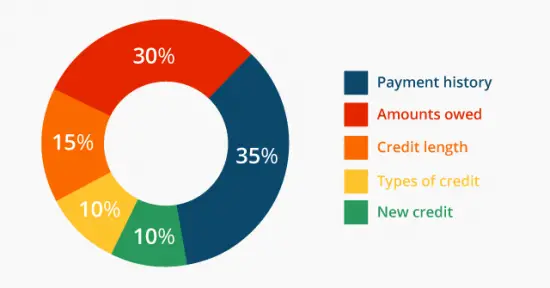
  1. Make sure you pay your bills on time. Looking at the graphic above, you can see that payment history makes up more than a third of your credit score.
  2. Keep the balances low on your current credit cards. Available credit is a key contributing factor when it comes to your credit score makeup.
  3. Open new accounts responsibly. Don’t take credit you don’t need and be sure to always pay your bill on time.
  4. Check your report regularly. You can use an app like Credit Karma to check up on your score weekly and be sure everything looks the way it should as well as track your progress.

Building and improving your credit can be extremely difficult if you aren’t 100% sure how different factors impact your credit score. Avoid making multiple hard inquiries on your credit within a short time period and, of course, stay on top of your finances by regularly monitoring your score.

Photos: airpix and CafeCredit.com

Filed Under: Budgeting Tagged With: credit, credit inquiry, credit score

How Much Income Do You Need to Afford a $1 Million House?

October 12, 2023 | Leave a Comment

<p>I've been looking at the prices of homes in my area more and more recently. Next year I'll be 25 years old and Charlotte will always be my home. However, the real estate prices in Charlotte can be astronomical in some areas (especially the nicer ones most people want to live in). In fact, some of the prices of homes were close to $1 million or more. Thinking about that got me wondering, what does your salary need to be to be able to afford a $1 million house?</p>::Pexels
I’ve been looking at the prices of homes in my area more and more recently. Next year I’ll be 25 years old and Charlotte will always be my home. However, the real estate prices in Charlotte can be astronomical in some areas (especially the nicer ones most people want to live in). In fact, some of the prices of homes were close to $1 million or more. Thinking about that got me wondering, what does your salary need to be to be able to afford a $1 million house?

What Does a $1 Million Mortgage Mean?

A $1 million house isn’t just $1 million. You’ll have to pay for interest, taxes and insurances as well. When you’re trying to figure out what your monthly mortgage payment will be you’ll have to also decide how much each of these factors will add to your bill.


When figuring out how much income you need for a $1 million house there are a few things to take into consideration. Ultimately, you’ll want to decide what your monthly mortgage payment will amount to. Monthly mortgage payments involve a number of factors, including principal and interest (P&I), taxes, private mortgage insurance (PMI) and homeowner’s insurance.

Principal & interest, also known as P&I, is what your flat mortgage payment will be (with no taxes or insurance). On a 30-year mortgage you’ll be paying approximately 4.08 percent interest. On top of that you’ll need to pay property tax on your $1 million house. The average property tax is about 1.21 percent. You’ll also need to add another $1,000 or so monthly for private mortgage insurance and homeowner’s insurance as well.

With P&I, taxes and insurances added in together, the mortgage on a $1 million house is about $6,783.66 per month. That being said, what would your annual income need to be to afford a $1 million house?


Other readers also enjoyed: 

  • Start Saving for Your Home With a Money Challenge
  • How One Couple Paid Off $200K in Student Loan Debt
  • Can Paribus Help Save You Money?
  • Get Mortgage Info: Check Chase Bank Hours

Salary Needed for $1 Million House

Most people don’t need a $1 million house, however, personal finance gurus say your mortgage or housing payment should be no more than 28 percent of your income. With that in mind, your take-home income needs to be around $290K each year to afford the mortgage on a $1 million house.

Taking out a loan on a $1 million house probably isn’t necessary though. You can probably get something a bit cheaper. Here are a few more popular home prices and the annual income needed to afford that home:*

  • $250K home – Estimated monthly mortgage $1,695.92; Annual salary $72,500.00
  • $300K home – Estimated monthly mortgage $2,035.09; Annual salary $87,000.00
  • $400K home – Estimated monthly mortgage $2,713.46; Annual salary $116,000.00
  • $500K home – Estimated monthly mortgage $3,391.83; Annual salary $145,000

* Each of these figures is estimated with the assumption that each individual is taking out a 30-year mortgage.

Although I won’t be buying a home for a few years, it is always a good idea to know what you can and cannot afford, based on your income. The information above is a great starting point when deciding what your budget for a home should be.

Have some advice to new homebuyers? Let us know! 

Photo: Curbed

Filed Under: Budgeting Tagged With: $1 million house, how much money do you need to afford $1 million hous

Which Debt is Worse: Student Loans or Credit Cards?

October 12, 2023 | Leave a Comment

<p>If you've ever been in debt you know that not all debt is created equal. While all debts owed should be paid off, there is a way that you should prioritize your debts so that you're able to pay them off in the most sufficient manner. So, which debt is worse? Student loans or credit cards? How do you pay off your debt in a way that makes sense?</p>::Pexels
If you’ve ever been in debt you know that not all debt is created equal. While all debts owed should be paid off, there is a way that you should prioritize your debts so that you’re able to pay them off in the most sufficient manner. So, which debt is worse? Student loans or credit cards? How do you pay off your debt in a way that makes sense?

Which Debt is Worse?

When it comes down to which debt is worse (student loans or credit cards) there is no black-and-white answer. No matter what you should be sure to remain current on all of your payments. The only time the question “which debt is worse” comes into play is when you are looking to pay it off. If this is the case you will want to jump on paying off your credit card debt before your student loans (while continuing to remain current on your student loan payment installments).

Credit card debt is generally high interest. It will also have the bigger impact on your credit score and finances in the long run. To truly understand why you should tackle credit card debt before student loan debt you need to understand how your debt works.

Understanding Your Debt

Before you decide which debts you should pay when you should fully understand your debt. Sticking to the “student loans vs. credit cards” topic of discussion, you can break down each debt into parts. When you look at your student loans, for instance, most loan companies provide a breakdown of payment towards interest and payment towards the loan itself.

For student loans you’ll be paying between 3 and 5 percent interest (closer to 7 percent if you are paying off graduate loans). If you have multiple student loans then you have to contend with multiple interest rates which is why many institutions will consolidate student loans in most situations. Interest rates on credit cards, however, are much steeper. The average credit card interest rate sits around 20 percent (four times as much or more than student loans). Because of this, you’ll want to pay off your credit card faster than the student loan debt.

How to Prioritize Paying Off Your Debt

There’s not really anything such as “good debt” but not all debt was created equal, which means each type of debt should be prioritized. Here’s how you should tackle your debt:

  • Pay off any debts prohibiting you from living your life. If there is a debt significantly impacting your life, pay it off. For instance, if there is a debt you owe to a rental agency that is making it impossible for you to rent a home you’ll want to pay that off quickly. If an old checking account and hurting your banking, try a bank account without chexsystems until you’re back on your feet.
  • Next, pay off debts with high interest rates. Target the debt that is accruing the highest amount of interest. If you pay this off quicker you’ll pass less over time. Pay off credit cards and other high interest debts before tackling others.
  • Make payments on the interest if you can. Many loan companies offer the option to pay additional money on the interest. You can do this with mortgages as well. Be sure that you know that your payment is going towards the interest though (and not to the loan itself).
  • Pay off the debts that are costing you the most. Once again, all debt is bad but some debt costs you more than others. If you want to get rid of your car payment, for instance, put in some extra work to get it paid off and have that extra cash in your pocket every month.
  • Tackle other debts. Once you’ve taken care of the bigger, more expensive debts in your life, tackle everything else. You can begin paying off the other items aggressively or simply pay them on a regular schedule to help improve your credit.

No matter what your approach may be to paying off debt, understanding your debt and interest rates is an important part of becoming debt free. Have you ever had to tackle a significant amount of debt? What did you do?


You may also enjoy reading: 

  • Paribus: Can It Really Save You Money? 
  • These Debt Reduction Strategies May Seem Radical But They Work
  • Debt Payoff Success Story: $200K in Student Loan Debt Gone!

Photo: The Balance

Filed Under: Budgeting Tagged With: credit card debt, debt, paying off debt, student loan debt, which debt is worse

Is Pet Insurance Worth It?

October 12, 2023 | Leave a Comment

<p>As you know, I got a puppy in June. If you speak to most pet owners they'll talk about their cat or dog like it is a member of the family. For many people, pets are members of the family, which is why you'd want to insure their health (just like you do your own). While it seems like a great idea, is pet insurance all it's cracked up to be?</p>::Pexels
As you know, I got a puppy in June. If you speak to most pet owners they’ll talk about their cat or dog like it is a member of the family. For many people, pets are members of the family, which is why you’d want to insure their health (just like you do your own). While it seems like a great idea, is pet insurance all it’s cracked up to be?

What is Pet Insurance?

Pet insurance is essentially health insurance for your pet. You pay a monthly fee and then any vet visits or health-related procedure your pet needs is either covered partially or in full by the insurance company. Insurance usually covers things like emergency checkups, vaccines and routine checkups. Some policies even include the death of your pet or if they are lost or stolen.

How Much Does Pet Insurance Cost?

Like any other insurance policy, the cost of pet insurance can vary depending on the type of coverage you purchase, your pet and their health as well as how much of their health costs you want covered. Most pet insurance policies cost anywhere from $25 to $100 per month (with a wide variety of coverage). Pet insurance seems like a great idea, especially if you’re attached to your furry friend, but is it worth the price?


Other Our Debt Free Family readers enjoyed: 

  • Try These Three Radical Debt Reduction Strategies
  • Paribus: Can It Really Save You Money? 
  • This Couple Paid Off $200K in Student Loan Debt 

Should You Buy Pet Insurance?

In my opinion, pet insurance is a waste of money unless your pet fits the following:

  • Brand new pets (puppies and kittens). During the first year of a cat or dog’s life there are a ton of vaccines and regular procedures they’ll need to have done. Purchasing pet insurance for the first year of your puppy or kitten’s life can prove to be beneficial. Many pet insurance programs will cover their vaccines, emergency checkups (for when they eat something they shouldn’t have) and their spay/neuter. This makes pet insurance something to consider if you’ve got a brand new pet.
  • Your pet is sickly. Another reason you may consider purchasing pet insurance is if your pet is sick regularly. Many pet owners who have rescued their pet have this issue. Frequent visits to the vet get costly. Having pet insurance can help reduce (or get rid) of that cost.
  • Pure bred pets. If you spent a lot of money on your animal or plan to breed them you may consider getting pet insurance. Some dog or cat owners spend a tremendous amount of money on their animal because it is a pure breed. It is best to place insurance on such a large investment.
  • Older pets. If your pet is older you may also consider getting pet insurance. Just like humans, pets often get sick and need more medical attention in their old age. Some pet insurances will even cover the cost of the death of your pet (if you have to put them to sleep and cremation).

No matter if you decide to purchase pet insurance or not it is always important to do plenty of insurance before buying any type of coverage. Be sure that you are getting the best deal (and the best coverage) for your money! There are many new pet insurance companies that offer affordable pet insurance deals, so make sure to do your research before making your decision!

Do you have pet insurance? Has it proven to be worth it? 

Photo: Healthy Paws

Filed Under: Budgeting Tagged With: insurance, pet insurance, pets

  • « Previous Page
  • 1
  • …
  • 183
  • 184
  • 185
  • 186
  • 187
  • …
  • 192
  • Next Page »
  • Email
  • Facebook
  • Pinterest
  • Twitter

Our Most Popular Articles

ClickCashGo Review: Should You Avoid At All Costs?

Ultimate Guide to Mastering Your Credit Score

The 'YOLO' Mindset is a Dangerous Thing

Dave Ramsey's Financial Peace University Review: Is it Worth the Money?

Cash App Glitch 2025: Is the Free Money Glitch Real?

Five Steps To Debt Freedom

Here are five simple guidlines that will help you pay off debt.  

1) Get an emergency fund so you don’t take on debt when something comes up.

2) List your debts. This way you know where you stand.

3) Use the debt snowball. Pay your debts from smallest to largest, or most expensive to least expensive.

4) Avoid new debt. No new credit cards or loans. Period.

5) Go all cash. After everything is paid off, switch to all cash.

Helpful Resources

U of Tennesse Debt Repayment Plan Basics

Vertex 42's Debt Payoff Calculator

Savingadvice's Helpful Debt Forums

Jackie Becks Debt Blog