Most nonprofit organizations depend on donations for their cause to survive for a long time. However, with today’s technology, many donors choose to donate online since it’s faster and more hassle-free than the physical delivery of donations. [Read more…]
Fast and Easy Ways to Get Cash to Pay off Debt
Are you in a situation where you need money quick? Do you have a bill due and want to avoid getting behind and having late fees tacked on? Did your car suddenly break down and you need emergency repairs? [Read more…]
6 Awesome Money Habits to Teach Your Kids

Saving money might seem difficult for children, but it can actually be easy given you follow a couple of tips. Below are some of the best ways to help your children form awesome money habits. Using these tips can help set your children up for success in the future.
1. Instill the Habit of Saving at a Young Age
The earlier you start teaching your children about money, the better. It’s never too early to start a conversation about finances with your kids. You can begin by simply explaining what money is and how it’s used. As they get older, you can start to instill the habit of saving.
One way to do this is to set up a piggy bank or savings account that they can contribute to. Every time they receive money, whether it’s from an allowance or gifts, encourage them to put some of it into their savings. Help them to set goals for what they want to save up for and praise them when they reach their targets.
2. Encourage Them to Spend Wisely
Teach your children the difference between needs and wants. Needs are things that we must have in order to survive, like food and shelter. Wants are things that we would like to have but don’t necessarily need.
Help them to understand that we can’t always have everything we want and that it’s important to spend money wisely. One way to do this is to give them a set amount of “fun money” to spend each week. Once it’s gone, they can’t spend any more until the following week. This will help them to budget and understand the difference between spending money and saving money.
3. Teach Them About Giving
Giving is an important money habit to teach your children. Not only is it good for others but it can also benefit your children in the long run.
When your children receive money, encourage them to set aside a portion to give to charity. Many websites can help your child give donations online. Giving donations will help them to develop a habit of giving and also show them the importance of helping others.
4. Help Them Understand Debt
Debt is something that many adults struggle with, so it’s important to teach your children about it from a young age. One way to do this is to explain the difference between good debt and bad debt. Good debt is something that we take on in order to improve our lives, like taking out a loan for a house or an education. Bad debt is something that we spend money on that doesn’t increase our net worth, like credit card debt.
5. Create Ways to Earn Money
You can create a chore chart with different earnings attached. You can design your own with your kids or you can find a downloadable chore chart online. With 1.8 billion websites operating at the same time every day, you can find downloadables on sites like Etsy, Pinterest, and more.
Another way to earn money is through an allowance. You can give your kids a set amount of money each week for completing their chores. This is a great way to teach them about budgeting and saving.
6. Teach Your Child How to Budget
One way to help your child budget is by giving them a set amount of money each week for spending. This could be their allowance or money they’ve earned from completing chores. Once the money is gone, they can’t spend any more until the following week. This will help them understand the importance of budgeting and not spending all of their money at once.
Teaching your children about money is one of the most important things you can do. By instilling good money habits, you’ll set them up for success in their future, save them from financial stress, and help them to make smart decisions with their money.
The Art of Co-Living: Exploring the Advantages of Sharing a House

What is House Sharing?
For people who want to strike a balance between a sense of community and financial stability, sharing a home has emerged as an advantageous and sociable choice. The idea of house sharing also referred to as professional house shares, has become extremely popular as people look for methods to divide costs, take advantage of the company, and create comfortable living spaces. The complexities of house-sharing are examined in this article, along with its advantages, the growth of house-sharing websites, and the forces at play when cohabitation becomes a significant relationship.
House sharing refers to a living arrangement where individuals or families share a single house, splitting the rent and expenses. House sharing offers cost savings, companionship, and shared responsibilities. It is a popular option for students, young professionals, and older adults looking for affordable and sociable living arrangements.
The Rise of House Sharing
The housing market has taken an unexpected and disheartening turn for prospective homebuyers and current homeowners alike. Mortgage rates, which have been on an uptrend for the past year , are now delivering a harsh blow to anyone seeking to purchase or refinance their home in the current market where 7% APR is the average.
Finding inexpensive housing can frequently be difficult because of the high cost of living, particularly in urban regions. In response, many people have turned to house sharing as a practical way to control costs. Rent, utilities, and other expenses are divided among a number of housemates in order to greatly lessen the financial load on each person. House sharing is especially tempting to young professionals, students, and those seeking to save money without sacrificing comfort because of this financial advantage.
Benefits of House-Sharing
Sharing a home is a lifestyle decision that offers numerous benefits that go far beyond simple cohabitation; it’s not just about dividing the expenditures. Let’s explore these advantages in greater detail and see how house-sharing changes what it means to live in a single household:
1. Cost Sharing
A significant financial benefit of house sharing is expense sharing. Housemates share the cost of living, including rent, utilities, and maintenance. In the current economic climate, where growing living costs can stretch even the most carefully constructed budgets, this financial respite is especially helpful. Housemates who share financial duties are not only better able to manage their money but also have more money available for other activities like personal development, travel, or investments.
2. Social Connections
More than just a utilitarian arrangement, house sharing serves as a springboard for developing deep interpersonal relationships. People get exposed to a wide range of personalities, histories, and viewpoints when they live with housemates. These encounters encourage the formation of solid ties over time, which may result in true friendships. A sense of community that goes beyond the practical requirements of cohabitation is created by shared experiences, late-night chats, and the camaraderie of daily life. Housemates frequently transform into a chosen family, supporting and encouraging one another through life’s ups and downs, from preparing meals together to celebrating milestones.
3. Shared Responsibilities
In a shared home, the task wheel has a whole new meaning. Sharing duties, such as cleaning, grocery shopping, and home maintenance, promotes a cooperative living situation. By splitting up the labor, each housemate feels more responsible and accountable while simultaneously having a lighter workload. This teamwork-based approach to household management promotes good communication, compromise, and a greater respect for the contributions made by all parties. In response, this culture of cooperation raises the standard of living generally and fosters a peaceful environment.
4. Comfort and Space
House sharing often makes it possible to afford a more luxurious and roomy living situation. Many people discover they may rent larger homes that are out of their price range. Greater personal comfort and flexibility are made possible by the additional space, which improves quality of life. Ample living space, a peaceful study corner, or a backyard garden are just a few examples of how having more space improves well-being and leaves room for leisure and personal hobbies.
5. Shared Experiences and Lifelong Memories
Shared housing memories frequently play a significant role in one’s life story. Housemates will remember these shared events, which range from movie nights to themed parties to unplanned get-togethers, for years to come. These memories hold a special place in the heart and add to the tapestry of life by fostering a sense of nostalgia. That empty spare room could be space that built a lifelong connection.
The Digital Landscape of Professional House-Sharing Platforms
The prevalence of internet platforms designed to match possible housemates and facilitate easy transitions into shared housing has increased along with the popularity of house sharing. House sharing websites have become virtual gathering places where people may connect with others looking for similar living situations. These websites include a variety of services that make it easier to find and book compatible roommates and lodging.
1. SpareRoom: Navigating the House Sharing Universe
In terms of housing-sharing websites, SpareRoom is a shining example. It acts as a virtual hub where people can submit ads for available rooms or search for accommodations that suit their needs, thanks to its user-friendly layout and extensive features. It is simple to filter results depending on location, budget, and desired amenities, thanks to the platform’s user-friendly design.
The emphasis on establishing thorough profiles for both potential housemates and available rooms is one of SpareRoom’s distinctive features. Through this method, people can learn more about one other’s interests, expectations, and way of life, which promotes openness and compatibility. Users can find the appropriate house-sharing arrangement on SpareRoom using its comprehensive search parameters, whether they are looking for a professional house share, a student flat, or a cozy home with other like-minded people.
2. Craigslist: A Diverse Marketplace for House Sharing
The popular classifieds website Craigslist has established a specialized market for house sharing. The platform’s housing segment offers a range of house-sharing alternatives despite covering many different categories.
People can advertise and search for postings for available rooms, establishing direct contact with potential roommates. While dedicated house-sharing services may have a more complex style and organization, Craigslist is still a good alternative for anyone looking for shared housing.
3. Roomster: A Global Approach to House Sharing
Roomster caters to both local and international house-sharing needs, taking house-sharing to a new level. The platform sets itself apart from other house sharing sites by providing thorough profiles with background checks and compatibility scores. These tools improve the safety and standard of house sharing while giving potential housemates’ lifestyles and preferences greater transparency.
The philosophy behind Roomster’s house sharing goes beyond simple postings; it aspires to provide an environment where people may find not just housemates but also friends and other social connections. This more comprehensive viewpoint is consistent with the notion that house sharing is not just about sharing expenditures but also about building a sense of community and companionship.

The Art of Connection and Compatibility
The potential of these digital platforms to link people with similar ideals, lifestyles, and preferences is what makes them unique. Compatibility becomes important as house sharing moves beyond simple cohabitation. People are empowered to make knowledgeable selections regarding potential roommates and accommodations because of the comprehensive profiles and sophisticated search filters supplied by these platforms. These portals enable customized searches that meet specific demands, whether someone is seeking a professional house share, a peaceful study space, or a buzzing social scene.
Navigating the Digital Landscape: Tips for Success
Although house-sharing websites make it easier to find compatible housemates, it’s still vital to take your time and be thoughtful as you travel. Following are some pointers for navigating the online world of house-sharing platforms:
Create Comprehensive Profiles
Be truthful and detailed when describing your lifestyle, routines, and preferences while building a profile. This openness will draw roommates with similar values.
Utilize Filters
Utilize search filters to narrow down choices based on region, price range, and particular needs. Unless you’re in a desperate situation, be as strict as you can with our requirements.
Engage in Conversations
Once you’ve located suitable roommates or lodging, strike up a chat to learn more about each another. This process is essential for determining compatibility and building rapport. Find out as much as you can about their background and reasoning behind taking the house sharing route.
Set Expectations
Potential roommates should be made aware of your expectations and boundaries. This will assist in avoiding misunderstandings and provide a peaceful living situation.
Conclusion
Sharing a home has become a realistic and affordable solution in a world where housing costs can be prohibitive. Finding matching housemates and accommodations is now more straightforward than ever, thanks to the growth of house-sharing services. What starts out as a financial choice typically turns into a journey of making friends, sharing experiences, and establishing a sense of belonging. The art of house sharing continues to alter lives, homes, and how we view the idea of cohabiting as people try to achieve a balance between financial security and a sense of community.
READ MORE:
How to prevent teenagers from allowing social media to impact their spending
Social media is impacting the lives of teenagers more than ever before. For better or worse, these digital platforms are giving young people access to more information, which can ultimately impact them in the real world.
3 Ways to Hack the 52-Week Money Challenge

Have you ever heard of a money challenge? It is something the internet thought up a few years ago that helps people meet savings goals (usually within a specific period of time). The original challenge, the 52-week money challenge, helps people save right around $1,400 over the span of a year. However, that method and timeframe don’t work for everyone. If that includes you, here’s how you can hack the 52-week money challenge…
About the 52-Week Money Challenge
First, before we talk about hacking the challenge, you should have a good understanding of what the 52-week money challenge actually is. It was created online to help motivate people to increase and track their savings. Along with it came message boards and forums for support with people doing the same thing. Pretty cool, right?
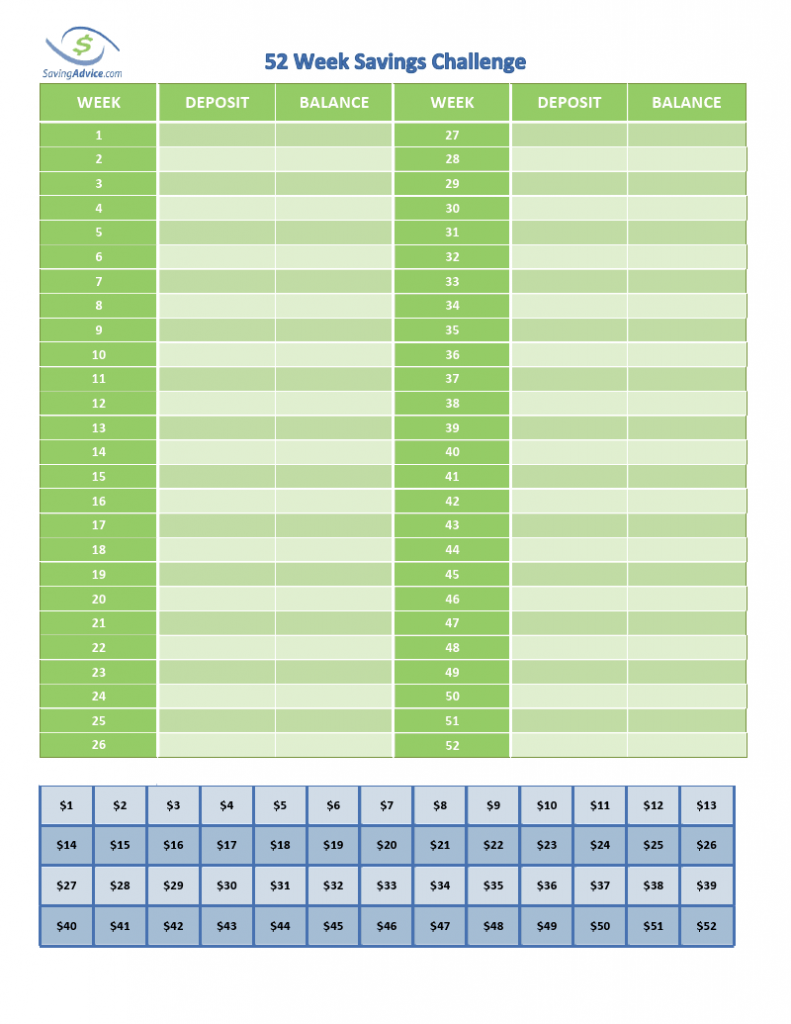
The challenge also introduced free printable tracking sheets where you can record your weekly savings. It also walks you through how much should be saved each week.
With this challenge, you save an additional $1 per week (i.e. $1 on week one, $2 on week two, $3 on week three, and so on). You can see how this adds up in the graphic below (via Saving Advice).
How to Hack the 52-Week Money Challenge
“Hacking” an internet challenge like this is fairly easy. All you need to do is figure out what needs to change for the challenge to better suit your financial needs. Here are three ways you can do it…
- Change the contribution amounts. For instance, if $1,400 over the span of the year is too little for your savings goals, increase the weekly amount you deposit into savings. If the amount is too much, you can also decrease your contributions. Similarly, you can also switch around your contributions. Many people do the 52-week money challenge in reverse to account for holiday spending at the end of the year.
- Switch up your goals. You can also hack the 52-week money challenge by changing its objective. For example, most people use the challenge to save money. Instead, you could use the challenge to pay off debt. So, instead of saving $1 the first week, you’d add $1 to your current debt payments.
- Hustle. Lastly, you can “hack” the challenge by creating money to save. Let’s say you’re living paycheck-to-paycheck and there’s absolutely no way you are saving $1,400 this year. To hack that problem, you just need to find a hustle or sell things to create the cash to save.
Other Challenges to Try
Throughout the article, I’ve been referring to the 52-week money challenge, but that is far from the only internet challenge out there to try. No matter what your goals are, financial or otherwise, there is probably a challenge out there for you. Take a look at these other money challenges you may want to try…
- Save $1,000 With the 12-Week Money Challenge
- Every Penny Counts With the 365 Day Money Challenge
- Pay Off Debt With This Money Challenge
- Earn More Every Week With This Challenge
Read More
The Second Best Time to Make a Change
Here at Our Debt Free Family, our motto is “Commit. Plan. Take action.”
The first step before committing is to decide that a change is necessary.
Maybe you know that you could be smarter with your money. Or perhaps you recognize that if you lose weight, you’ll be able to lead a healthier, more energetic life. Maybe you realize that there should be more to life than counting down to the weekend every day at work. It could be there is a relationship with a loved one that needs some extra TLC.
Reviewing Our Family Finances

There is just a little more than a month left until we get to meet our new addition! While we have most of what we need for our little girl material-wise, we still have a bit of planning to do. There are a lot of things we now need to take into consideration with our little one. Here is a quick review of what we’ve been looking at.
Upcoming Expenses
Of course, having a baby costs quite a bit of money. In the first year alone, parents can spend up to $2,000 on diapers. Just diapers! However, that isn’t the only thing you’ll be spending money on. So, we’ve been trying to plan for some of the following upcoming expenses…
- Delivery hospital bill: Around $5,000 out of pocket
- Health insurance for the baby: Around $300/month
- Clothing (new monthly budget item): $100/month
- Car registration and taxes: $500
- New computers for home office: $3,000 total for two
- Life insurance: $70 per month
- Dental work: TBD
- Rental renewal: TBD
Looking at the rest of the year, we have some hefty expenses coming up. First, my insurance has a maximum out-of-pocket cost per year of $6,000. I have already paid a little over $1,000 out-of-pocket for prenatal care, so when the bill comes for the hospital stay for delivery I expect to pay around $5,000. We will likely make payments on this.
We also need to renew the car’s registration and pay taxes in North Carolina in August. This will likely cost around $500 total. We will want to prep for this cost annually. Another one-time expense we are prepping for is the cost of two new computers for our home office. Because we are both working from home, it is important that we have reliable machines to work on. Right now, we both work on rather spotty laptops. Better performing machines will open more opportunities for us.
Two more one-time costs will be dental work (I desperately need some teeth removed and a deep clean) and our rental renewal. The exact cost of these has yet to be seen.
Lastly, we have some new budget line items to add to our monthly expenses. We will be getting life insurance for ourselves. Now that we have a child, it is important to us that we be prepared in case anything happens to either of us. We also need to get our child health insurance, which will likely cost around $300 per month. As you know, kids grow fast, so we are going to add clothing to our monthly expenses as well.
Planning for the Future
There are a few other financial things we’ve discussed in preparation for the baby as well. Both of us would like to send her to a private school. The public schools in our area aren’t the best and we want her to have a good education. This will cost around $6,000 per year in elementary and climb through middle and high school. We’ve been looking at educational savings plans to help us mitigate some tax liability for paying for her education.
Both of us are looking into starting other savings accounts and opening IRAs for the future as well. Something about having a baby has put us into full preparation mode for retirement and savings. We will start a family vacation fund, Roth IRA, first home fund, and savings account for our little one too.
Main Debt Focuses
Now, let’s shift our focus to our remaining debts. The biggest thing we will be focused on paying off now is our car. The monthly payment on our vehicle is $488. If we were able to eliminate that monthly payment, we will be able to have a lot more wiggle room in our budget and improve our finances significantly. Once that is paid off, we can focus on some of our other smaller debts and begin saving for a down payment on a home.
That’s a lot to think about at once and, sometimes, it feels a little overwhelming. However, both of us are looking forward to a bright future for our family.
Readers, how did you financially prepare for your firstborn?
Read More
Stop the Penny Pinching; DIY Credit Repair in Just 10 Easy Steps

If you have bad credit, your future may feel pretty bleak. This is understandable, as poor credit comes with a number of side-effects including high insurance premiums and problems getting approved for loans. A negative score can even affect your ability to get a good job.
Getting Ready For Tax Day

I’ve talked about tax season on the blog before. As you know, the closer to Tax Day we get, the more anxious I become. However, this year looks a bit different for our family. Thankfully, I’m not feeling very anxious about filing this year and we should have all of our paperwork soon to get things done.
Anxiety Around Tax Season
If you’re like me and feel anxious around tax time every year, we are not alone! In fact, surveys have shown that at least 69% of Americans feel anxious around this time of year. The pressure differs from generation to generation too.
I happen to fall in the category of millennials. Seventy-eight percent of this demographic reports feeling anxious around tax time. Additionally, 82% of Gen Zers, 69% of Gen Xers, and 50% of baby boomers report some kind of anxiety about filing.
This year, it seems the top concern for most people is that they will not get a refund that will make a difference in today’s economy. Many people are reporting refunds of only a few hundred dollars when they may have been expecting thousands. The average refund so far in the 2023 tax season has been about $1,997. That’s a startling 14% lower than last year. For some families, this makes a huge difference.
On top of that, there are worries about refunds being delayed for an extended period of time. Of course, everyone is concerned about getting audited because who wants to go through that?
How To Ease Your Tax Time Anxiety
I’ve been able to relieve some of my tax time anxiety this year by doing a few things to better prepare myself, mentally and otherwise, for Tax Day. First, we’ve been slowly gathering our paperwork since January 1. We both worked at a few different places last year, so there are a few things to sort through.
Next, give yourself time to file. The government is going to take its time getting you your refund either way. So, make sure you leave yourself room to go over your return a few times before submitting it to the IRS. Remember, if you need more time, you can file an extension as long as you do so before April 18.
Don’t ignore the IRS or the fact that you have to file. It’s part of life. Accept it. Grab some snacks and file your taxes! When you are done you can sigh a breath of relief and treat yourself to a nice meal. It can be stressful, but Tax Day doesn’t have to rule your life at this time of year.
Readers, do you have Tax Day anxiety? How do you cope?
Read More
- « Previous Page
- 1
- …
- 9
- 10
- 11
- 12
- 13
- …
- 50
- Next Page »